

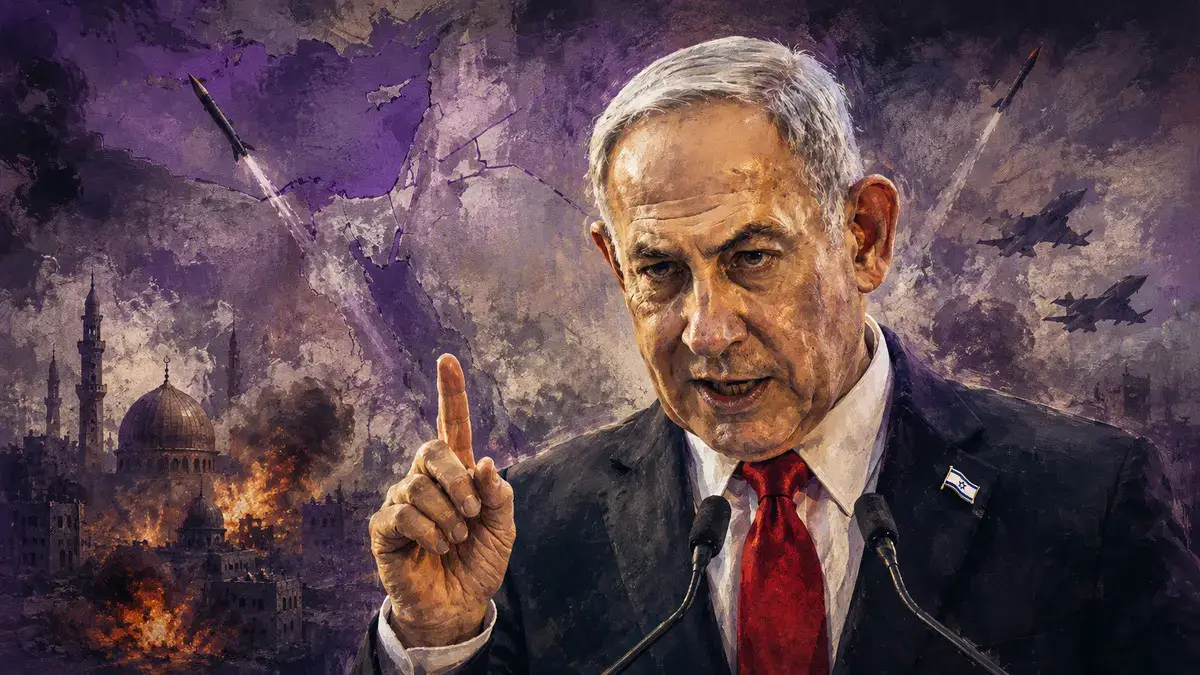

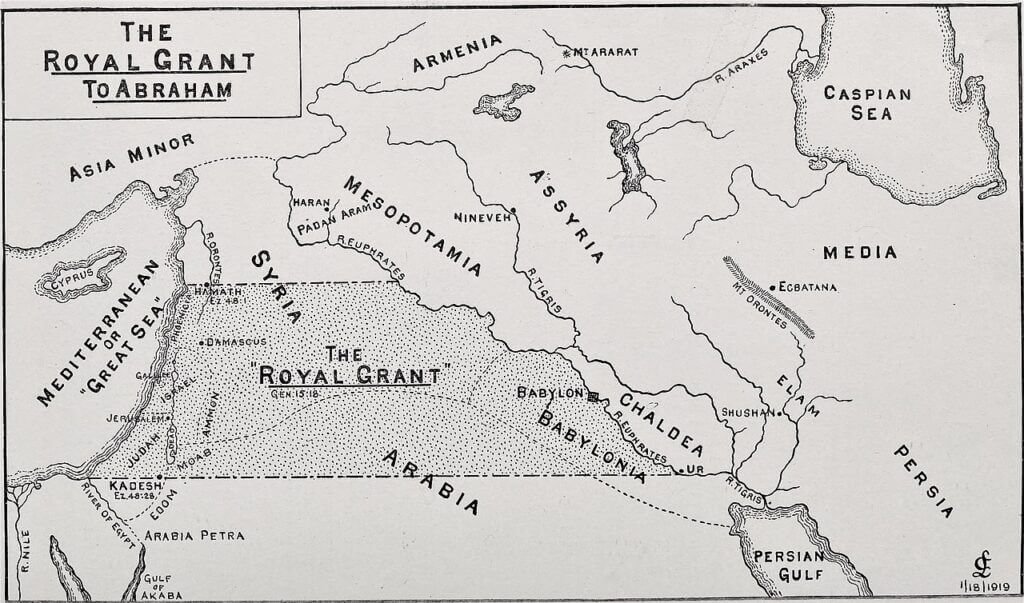
I wonder how the people feel about Netanyahu committing Israel to permanent war? He’s being honest. The far-right Israeli government can’t complete its goal of the Greater Israel Project without doing so.
Something remarkable happened in June, and Israel wasn't in the room for it.
On June 17, President Donald Trump and Iranian President Masoud Pezeshkian signed a memorandum of understanding — Trump from a dinner at the Palace of Versailles, Pezeshkian from Tehran — laying out a 14-point framework to end the war that began February 28.
The deal, mediated by Pakistan, reopens the Strait of Hormuz, begins lifting sanctions on Iranian oil, unfreezes Iranian assets, and starts a 60-day clock to negotiate a final agreement covering Iran's nuclear program.
Israel — the country whose government spent years insisting that Iran posed an existential threat requiring unlimited military action — was not a party to any of it.
A Doctrine of War Without End
How did Prime Minister Benjamin Netanyahu respond to being sidelined? Not with diplomacy. Not with a plan. With a promise of forever.
In a rare interview this week on Channel 14 — the hard-right network that functions as his personal amplifier — Netanyahu was asked when the war would end.
His answer: "The pursuit of total victory will never be over. If you want to live in the world and in the Middle East, you have to be very, very strong." That commits Israel to permanent war. Period.
Read that again.
Not "until Hezbollah disarms." Not "until Hamas/Iran surrenders.” Never.
Israeli analyst Ori Goldberg, writing for +972 Magazine, calls this the clearest articulation yet of Israel's post-October 7 national security doctrine: war not as a means to an end, but as the permanent condition of national life.
And here's the part that should alarm anyone paying attention — Goldberg notes that Netanyahu's political rivals, with an Israeli campaign season approaching, have offered essentially no pushback to Netanyahu’s statement that he commits Israel to permanent war.
Not on the eternal-war framing.
Not on the continued assault on Gaza.
Not on operations in Lebanon, where Defense Minister Israel Katz has refused to withdraw troops from the south even as it undermines the peace framework.
Washington's Patience is Thinning
The signs of a genuine shift in U.S. posture are hard to miss.
Vice President J.D. Vance publicly rebuked the Israeli government's reaction to the deal, saying, "You cannot kill your way out of solving every national security problem that you have."
That's an extraordinary statement from this administration — one that has continued backing Israeli military operations in Lebanon and the ongoing bombing and starvation campaign in Gaza.
But the diplomatic architecture emerging around the U.S.-Iran deal, with quiet support from Gulf Arab governments, points toward a regional order being built without Israeli input.
On the Israeli and American religious right, the response has been cries of betrayal and "abandonment" directed at Trump himself.
The People Who Pay as Netanyahu Commits Israel to Permanent War
It's easy to treat this as a story about Netanyahu's political survival or shifting alliances.
It isn't.


A doctrine of endless war has a body count, and it isn't paid by the politicians who announce it.
Palestinian families pay it in Gaza, where bombing and engineered starvation continue amid what human rights investigators and genocide scholars have called a genocide.
It's paid in the West Bank, where the Israeli army has displaced tens of thousands from refugee camps while settler violence erases rural communities week by week.
It's paid by Lebanese civilians living under intensified Israeli bombardment.
And it's paid by ordinary Israelis, who are being told — and, per polling on the Israeli Jewish public's consensus, largely accepting — that war is simply what life is now.
Goldberg's conclusion deserves the widest possible audience: a state that declares it answers to no law but to the logic of its own eternal war is announcing its exit from the international order.
The U.S.-Iran memorandum, whatever its flaws, represents the radical idea that even bitter enemies can choose to stop.
Netanyahu is offering his citizens the opposite: a future where stopping is treason, peace is naivety, and the war never has to justify itself again — because it never ends.
The rest of the world is starting to move on. The question is how many more people will be killed before Israel's leadership is forced to.