
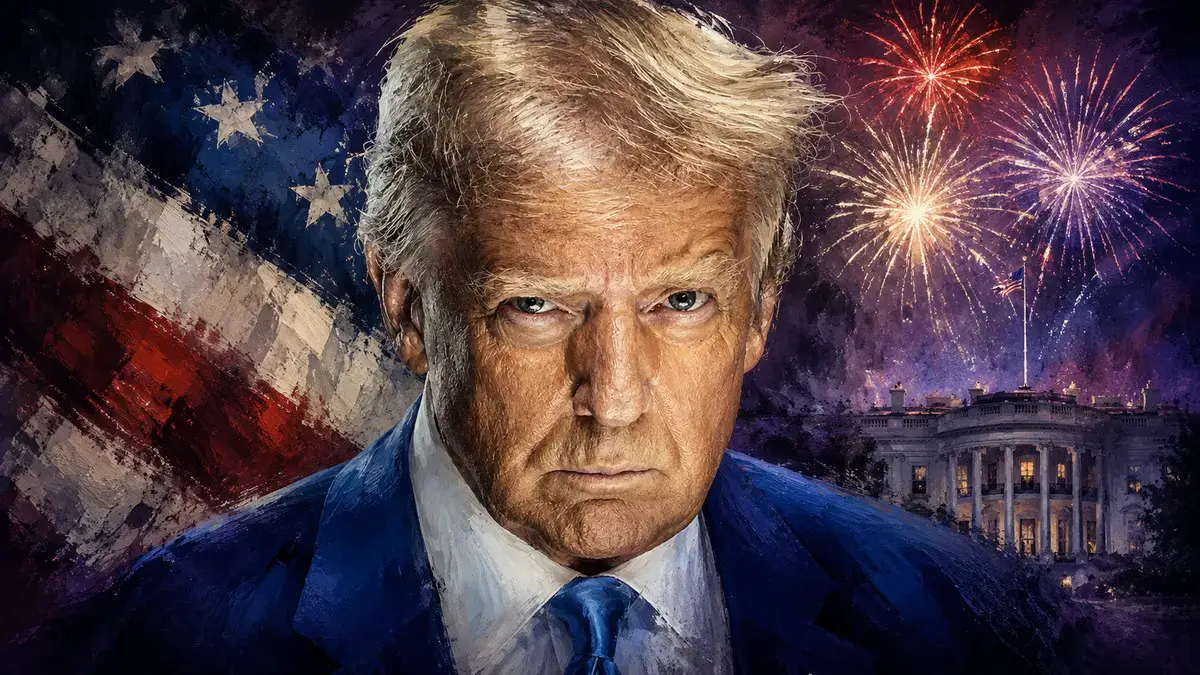

On the night the country turned 250, President Trump stood on the National Mall and gave a speech that had far less to do with 1776 than with November 2026. Trump’s July 4 speech didn't celebrate America; it was just another campaign rally speech.
Trump’s July 4 speech, part of a "Salute to America" event tied to the Freedom 250 celebration, was delayed for two hours after severe weather forced an evacuation of the Mall.
When Trump finally spoke, hours behind schedule, he blended patriotism and history with partisan attacks, inflated military claims, and a fresh push for a voting law the Senate has already rejected.
What was billed as a national birthday played, in practice, like a preview of his party's midterm message.
"Like a Cancer"
Much of the speech was devoted to attacking communism — a thinly veiled shot at Democrats ahead of the midterm elections.
Trump warned that the threat American troops once fought abroad had resurfaced inside the country, and said it was "like a cancer, you got to cut it out."
It was jarring rhetoric for a holiday meant to celebrate a shared national founding.
On the anniversary of American independence, the president described his domestic political opponents as a disease to be surgically removed.
He had struck the same note a day earlier in a speech at Mount Rushmore, where he warned of a "communist menace."
The Incredible Growing Navy
Trump also folded his own record into a list of historic American military victories, claiming the United States had wiped out the militaries of both Venezuela and Iran.
He compared this year's naval campaign against Iran to the U.S. destruction of a Spanish fleet at Manila Bay in 1898, boasting that America had sent 159 Iranian ships to the bottom of the sea almost instantly.
That figure deserves scrutiny, because it keeps growing.
When the naval operation began in early March, Trump announced that nine Iranian ships had been sunk.
By April, the number he cited had jumped to 158.
In Trump’s July 4 speech it was 159.
Even the White House's own account describes more than 150 warships destroyed over a 38-day operation — not, as Trump suggested, in a single moment.
Independent fact-checkers have pointed out that the full scale of the destruction he describes has never been independently verified.
What the victory-lap framing leaves out is the human cost.
In just the first days of the campaign, Iran's Red Crescent reported more than 200 people killed and over 700 injured.
Behind every round number is a body count that rarely makes it into a fireworks-night speech.
An Old Voting Bill, Revived
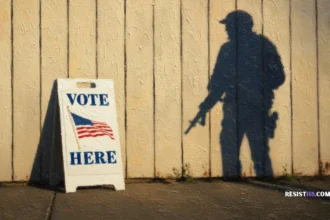
The president used the stage to again promote the SAVE Act — which he called the "Save America Act" — a bill requiring people to produce documents proving citizenship in order to register to vote.
He promised it would put an end to cheating in American elections, and framed the fix as simple.

The trouble is that there is no epidemic of cheating to end.
Voting by noncitizens is exceedingly rare, and it is already illegal several times over under existing federal law.
What the SAVE Act would actually do, according to voting-rights researchers, is erect new barriers for eligible citizens: the more than 21 million Americans who lack easy access to citizenship documents, the roughly 69 million married women whose birth certificates no longer match their current names, and the rural, elderly, and Native voters who would be disproportionately shut out.
The Senate declined to pass the bill as recently as June.
Trump’s July 4 Speech — Honoring the Past, Restricting the Present
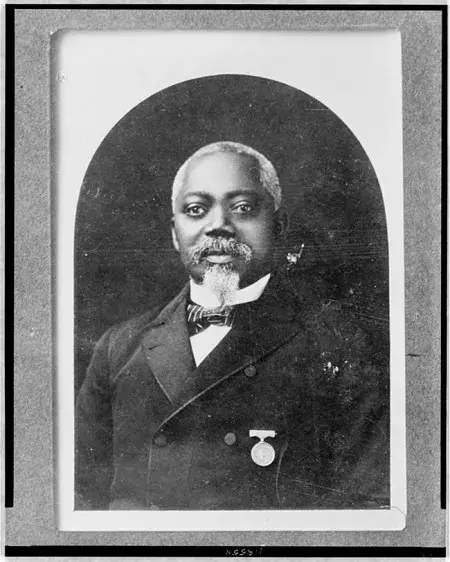
W.E.B. Du Bois Collector. "Sgt. William Carney, head and shoulders portrait, facing front., ca. 1900. Photograph."
Trump opened the speech by honoring veterans, among them William Harvey Carney — a man who escaped slavery, fought for the Union, and became the first Black American awarded the Medal of Honor.
It was a genuine and worthy tribute.
But there is an uncomfortable tension in invoking Carney's legacy in one breath and championing a law that voting-rights advocates say would fall hardest on Black, Native, and women voters in the next.
The right to vote that Carney's generation bled for is the same right the SAVE Act would make harder to exercise.
Celebrating a formerly enslaved hero of American democracy is not the same thing as protecting the democracy he fought for.
Whose Golden Age?
Trump’s July 4 speech ended with him calling the 250th anniversary only the dawn of a coming "golden age," and promising that the best was still ahead.
America's semiquincentennial is overseen by a congressionally chartered, bipartisan commission — a commemoration meant to belong to the whole country.
Trump’s July 4 speech, with its enemies lists and campaign-trail talking points, belonged mostly to one man.
A golden age is an easy thing to promise.
The harder question is who it is actually for — and who, from the immigrant families facing deportation to the eligible citizens a new law would turn away at the polling place, is being asked to celebrate a future designed to leave them out.