

Fifteen years ago, Israel's own defense minister saw a ‘diplomatic tsunami’ coming.
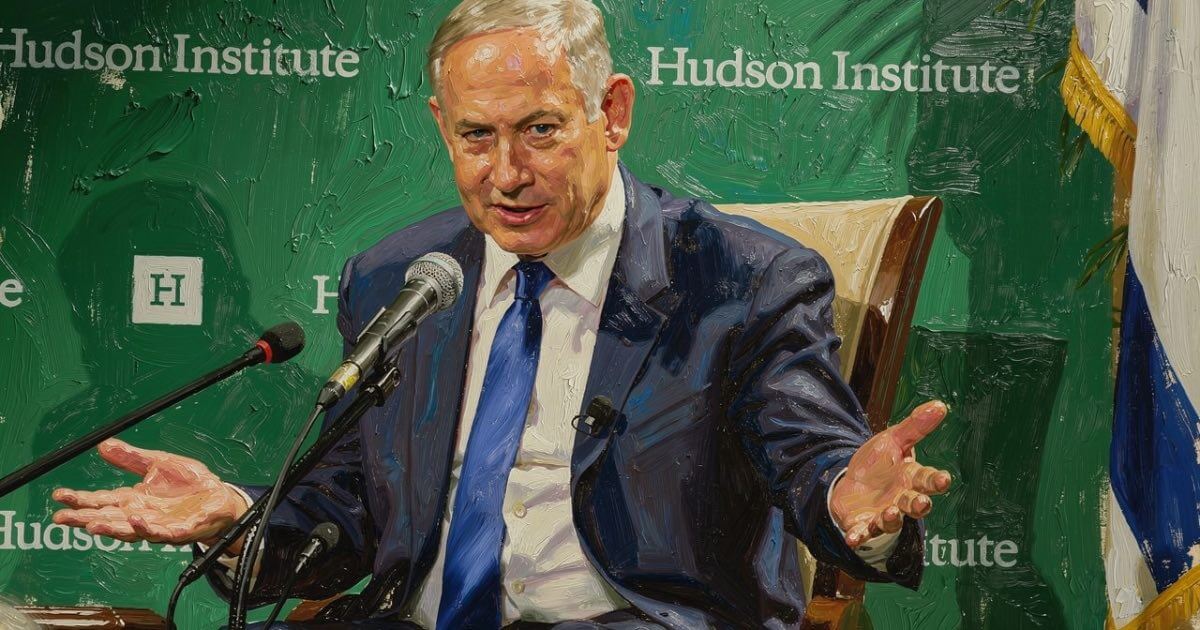
In a 2011 speech at the Institute for National Security Studies in Tel Aviv, then-Defense Minister Ehud Barak warned that Israel was heading toward a ‘diplomatic tsunami’ — a wave of international isolation that most of the Israeli public couldn't yet see.
As Haaretz's Joshua Leifer wrote this month, forms of international pressure and legal consequences that were once unthinkable are now reality — and what's still coming may be bigger.
Successive Israeli governments ignored the warning.
Benjamin Netanyahu bet that military dominance and American protection would always outweigh world opinion.
After nearly three years of devastation in Gaza, accelerating annexation in the West Bank, and a war with Iran, that bet has collapsed.
That ‘Diplomatic Tsunami’ is Here
The evidence is everywhere you look.
At The Hague
The International Criminal Court (ICC) issued arrest warrants for Netanyahu and former Defense Minister Yoav Gallant in November 2024 for war crimes and crimes against humanity.
Those warrants have real teeth: Even though he can visit the U.S. with them, Netanyahu's flights abroad now take circuitous routes around French and Spanish airspace to avoid countries that might enforce them.
Meanwhile, the International Court of Justice (ICJ) has issued multiple rulings finding Israel's policies unlawful: the landmark July 2024 advisory opinion declaring the entire occupation illegal and the binding orders in South Africa's genocide case that Israel remains in breach of.

At the United Nations
A September 2025 wave of recognition — led by France and joined by the United Kingdom, Canada, Australia, Portugal, Belgium, and others — brought the total to 157 of 193 UN member states recognizing the State of Palestine.
That's 81% of the world.
For the first time, G7 countries broke ranks with Washington's position.
An independent UN commission of inquiry has concluded that Israel committed genocide in Gaza.
In Europe
The EU — Israel's largest trading partner — formally found Israel in breach of the human rights clause of the EU-Israel Association Agreement back in June 2025.
In May 2026, Brussels went further, sanctioning settlement movement leaders directly — including Daniella Weiss's Nachala movement, the NGO Regavim, and the Amana settler cooperative — with asset freezes and travel bans.
A European Citizens' Initiative demanding suspension of the trade agreement gathered a million signatures in record time. And in April, UN human rights experts declared that suspending the agreement isn't a political choice for the EU — it's a legal obligation.
Even Netanyahu's friends are disappearing.
Hungary's Viktor Orbán, his closest European ally, lost the April election.
Orbán’s successor, Péter Magyar, reversed Hungary's withdrawal from the ICC and said he would detain Netanyahu if he set foot in the country.
In Culture and Daily Life
Four EU member states boycotted this year's Eurovision Song Contest over Israel's participation.
Thousands of Hollywood actors and filmmakers — including Emma Stone, Olivia Colman, and Andrew Garfield — pledged not to work with Israeli film institutions implicated in the slaughter of Palestinians.

Bike races, chess tournaments, academic partnerships — the isolation now reaches into arenas that sanctions never could.
Why It Matters
None of this is about antisemitism or “Israel's right to exist” — despite what its government claims.
It's about accountability for what the world's highest courts, its human rights institutions, and its own eyes have documented:
Barak's warning wasn't a prophecy.
It was a description of cause and effect.
A state cannot indefinitely occupy another people, expand settlements the world's highest court has ruled illegal, and wage a war that a UN inquiry has called genocide — and expect the international system to look away forever.
The tsunami wasn't unexpected.
It was ignored.
And as Leifer notes, the pressure that has arrived so far may pale next to what comes if nothing changes.
The United States remains the last major holdout shielding Israel from consequences.
As more and more Americans turn against Israel, how long that shield holds — and at what cost to America's own standing — is the question.