

The word “activist” usually conjures one image: a fearless person with a megaphone, front and center at a march, unbothered by who's watching.
In 2026, that image can feel even further out of reach. ICE agents have fired tear gas into American neighborhoods, and in Minnesota, fifteen people who protested those raids were indicted as “antifa terrorists”— even as prosecutors struggled to define what “antifa” actually means.
If speaking up feels scarier than it did a year ago, you're not imagining it.
Here's something nobody tells you: you don't have to be that fearless person to be an activist.
Activism isn't a personality type or a job title.
It's a set of actions ordinary people take when they decide something is wrong and choose not to stay silent.
Most of those actions are quiet. Most of them are safe. And there's a place in activism for exactly who you are right now.
Activism is a Spectrum, Not an Identity
At its core, activism is any intentional effort to make things more fair — socially, politically, economically, or environmentally.
It can be loud or quiet, public or behind the scenes, local or global. You don't apply for it.
You don't need a degree, a big following, or a perfect grasp of every issue.
You become an activist the moment you act with intention to improve the world around you.
A lot of that work is simply being a voice for people who can't safely speak for themselves.
Over the past year, the LGBTQ+ community has faced a wall of attacks — bans on gender-affirming care, new restrictions on trans Americans, even cuts to a suicide hotline built for LGBTQ youth.
Immigrant families are living in fear of a knock at the door. When it isn't safe for the people being targeted to stand up, activists stand up with them.
Start Where You Are: A Ladder of Action
Not everyone can take the same risks — and they shouldn't have to.

A citizen with a stable job can do things an undocumented neighbor can't.
A retiree has time a single parent doesn't.
Movements work precisely because they need every level. So don't measure yourself against the most visible person in the crowd.
Find the rung that fits your life today.
From your couch or your phone. Learn before you share, and double-check a story before you pass it on. Correct misinformation gently when you see it.
Talk to the people in your life — that's where minds genuinely change.
Donate what you can, even a few dollars. Sign up for a tool that lets you contact your representatives in a couple of taps. None of this is “less than.” It's the foundation everything of everything else.



Local and hands-on. Show up to a city council or school board meeting and speak during public comment — local officials hear from far fewer people than you'd think, so your voice carries more weight there than almost anywhere.
Volunteer with a cause you care about. Check on neighbors who are being targeted. Help someone register to vote, or join an effort to get out the vote before the midterms.
Visible and collective. Protests, marches, mutual-aid networks, and rapid-response or jail-support teams put people and resources on the line together.
Be honest with yourself that this tier carries more risk right now — the Minnesota indictments made that painfully clear.
Know your rights, go with people you trust, and never judge anyone for choosing a different rung on the ladder than you.
Why the Quiet Work Counts as Much as the March
A few myths keep good people stuck on the sidelines.
- Activism is about anger. Anger can light the spark, but what sustains a movement is persistence, strategy, and hope.
- One person can't make a difference. Nearly every movement in history, from women's suffrage to the Civil Rights Movement, began as a small group or a single voice that others chose to join.
- Activism has to be public. Plenty of the most important work happens quietly, behind the scenes, and it is no less real.
The Proof: Ordinary People, at Scale
If you want evidence that regular people showing up actually works, look at the No Kings movement.
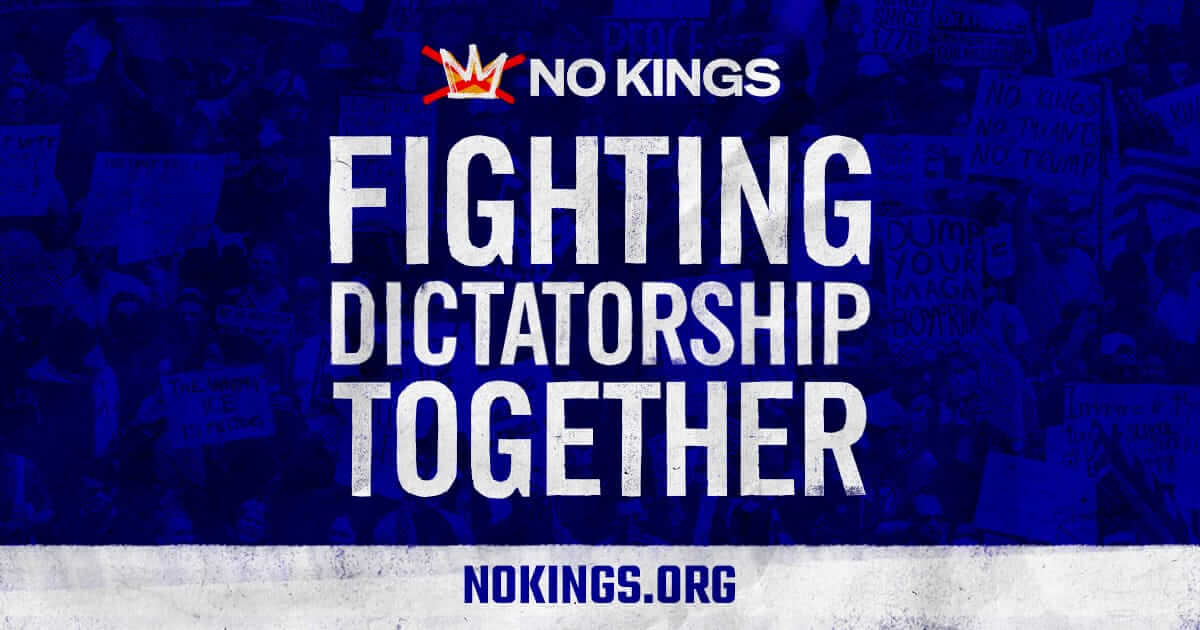
Organizers estimated about five million people turned out for the first nationwide day of protest in June 2025, nearly seven million that October, and around eight million by March 2026.
Even by more conservative independent crowd counts, those numbers rank among the largest single-day protests in American history.
Those numbers didn't come from “professional activists.”
It came from teachers, nurses, parents, retirees, and people attending their very first protest.
It's the clearest reminder that you are not alone in how you feel — and that collective action can accomplish what no individual can.
Protect Yourself and Each Other
This is a marathon, not a sprint. Know your rights before you need them.
Take care of the people around you — check in, share resources, and watch for burnout in yourself and others.
A movement that looks after its own is a movement that lasts.
Activism isn't about standing above other people. It's about standing with them.
One of our slogans here at Resist Hate is simple: make kindness the norm.
You don't need to call yourself an activist to be one.
You only need to care enough to act, learn, and keep going.