
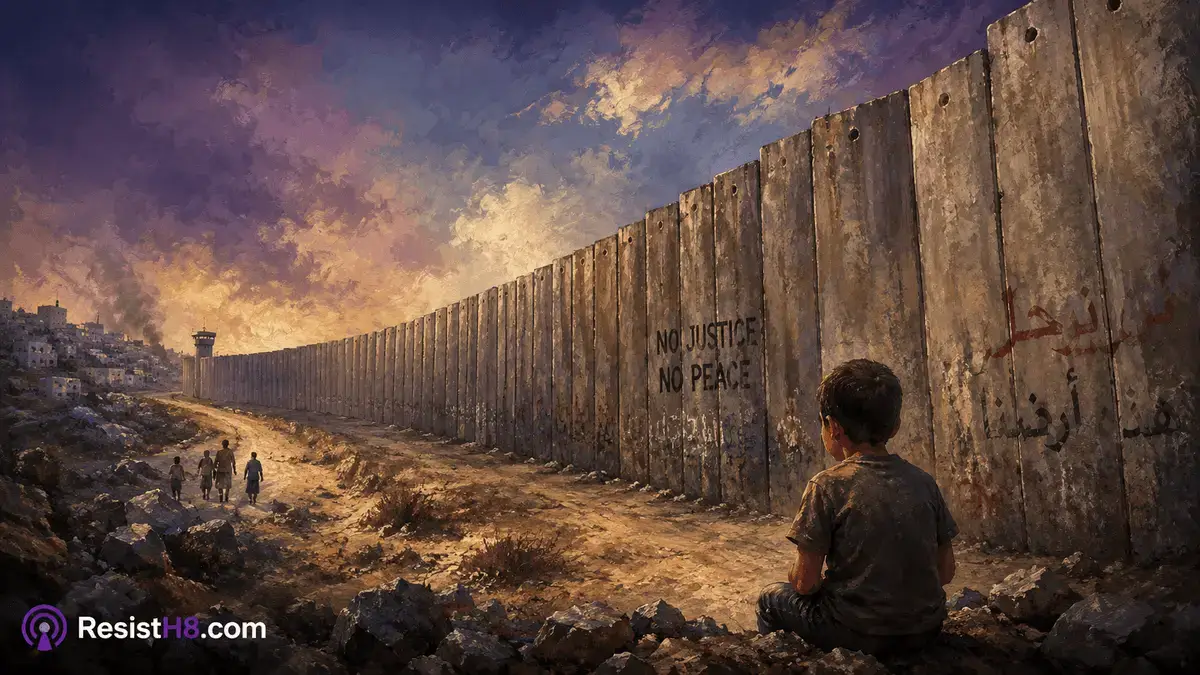

Last Friday, Israeli settler violence occurred in the West Bank; they cut the main electricity line to the Palestinian village of al-Maniya, tore apart family greenhouses near Tulkarem, and seized a spring that serves as the only water source for Bedouin shepherd families and their 1,300 sheep.
That was one day. In one week.
The United Nations says Israeli settler violence in the occupied West Bank has now reached the highest levels ever recorded — more than 1,000 attacks causing casualties or property damage so far in 2026, an average of six per day.
While the world's attention has been consumed by Gaza and the U.S.-Israel war with Iran, a slower campaign of terror has been emptying Palestinian villages one arson attack, one stolen spring, one beaten farmer at a time.
This Resist Hate explainer covers what's happening, who's behind it, and why "settler violence" is a misleadingly small name for what is actually state policy.
This video shows settlers targeting water infrastructure in the West Bank:

First, the Basics: Settlers
The West Bank is Palestinian territory that Israel has militarily occupied since 1967. Roughly 3 million Palestinians live there — alongside about 500,000 Israeli settlers living in settlements built on occupied land.
Those settlements are widely considered illegal under international law, and in 2024 the International Court of Justice ruled that Israel's entire occupation is unlawful and must end.
"Settlers" are not a fringe of squatters.
Settlement is a state project: between 2022 and 2025 alone, the Israeli government approved 69 new settlements, and in April 2026 it authorized 34 more in a single announcement — nearly six times the number approved in the three decades after the Oslo Accords.
Cabinet ministers live in settlements.
The state funds them, guards them, and builds roads to them.
In this video, you’ll see a reporter’s trip to the West Bank with Israeli citizens who support the rights of Palestinians. They go there to protect village residents from settler violence:

Israeli Settler Violence, By the Numbers
The scale is hard to absorb, so here is what organizations monitoring the West Bank have documented:
- More than 4,500 settler attacks have been recorded since Israel's far-right government took office in December 2022 — and residents of 59 Palestinian communities have been driven out by repeated assaults, arson, and threats in that period.
- Over 1,000 Palestinians killed in the West Bank and East Jerusalem since October 2023, including 233 children, by Israeli forces and settlers combined, per UN figures cited by Doctors Without Borders.
- 2026 is the worst year on record. UN human rights experts found settler brutality at unprecedented levels: at least 13 Palestinians killed and nearly 500 injured by settlers in the first five months of the year alone.
- A 130 percent surge in settler attacks on Palestinian villages and farmland since 2023, per a UN inquiry.
- Near-total impunity. Upwards of 96 percent of incidents never result in charges. That includes the killings of three U.S. citizens by settlers — none of which resulted in criminal charges. (A total of 14 Americans have been killed in Palestine since 2003. There have been no investigations or accountability — the U.S. government doesn't seem to care.)
Behind each number is a family.
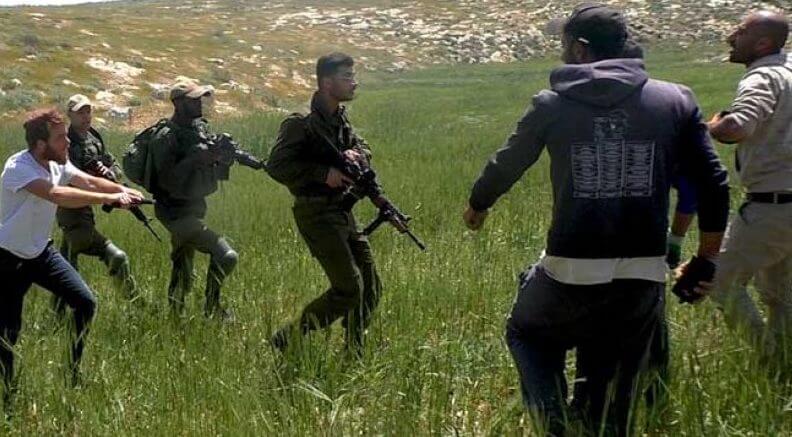
In March, settlers broke into a home in the Bedouin village of Khirbet Humsa, beat the family inside — including children — stole their sheep, and sexually assaulted a man.
Days later, after an Israeli teenager died in a road collision with a Palestinian driver, settlers organized a "revenge campaign" over WhatsApp that burned homes, cars, and fields across at least four villages.
In May, settlers dug up the body of a recently buried Palestinian man while Israeli soldiers stood by — an act the UN human rights office called a "new level of dehumanization of Palestinians." (In Gaza, the IDF dug up the graves in several cemeteries to dehumanize and cause pain and suffering to Palestinians.)
And in Masafer Yatta, residents describe armed settlers entering villages and attacking cars, with one man telling Doctors Without Borders that attackers now "shoot to kill."
In this video, a Palestinian human rights activist describes an attack on his home by settlers:

This Isn't Chaos. It's Strategy.
The most important thing to understand about Israeli settler violence is that it is not random hooliganism the state is failing to control.
It is a tool the state benefits from — and increasingly, directly enables.


Consider who runs the relevant institutions.
Bezalel Smotrich, the minister with governing authority over the West Bank, has unveiled a plan to annex 82 percent of the territory and openly calls for "encouraging the emigration" of Palestinians.
National Security Minister Itamar Ben-Gvir — who controls the police responsible for investigating settler crimes — is himself a convicted supporter of Jewish terrorism.
He has reportedly directed police not to arrest violent settlers.
Ben-Gvir also champions the torture of Palestinians in Israeli prisons (the majority held without charges).
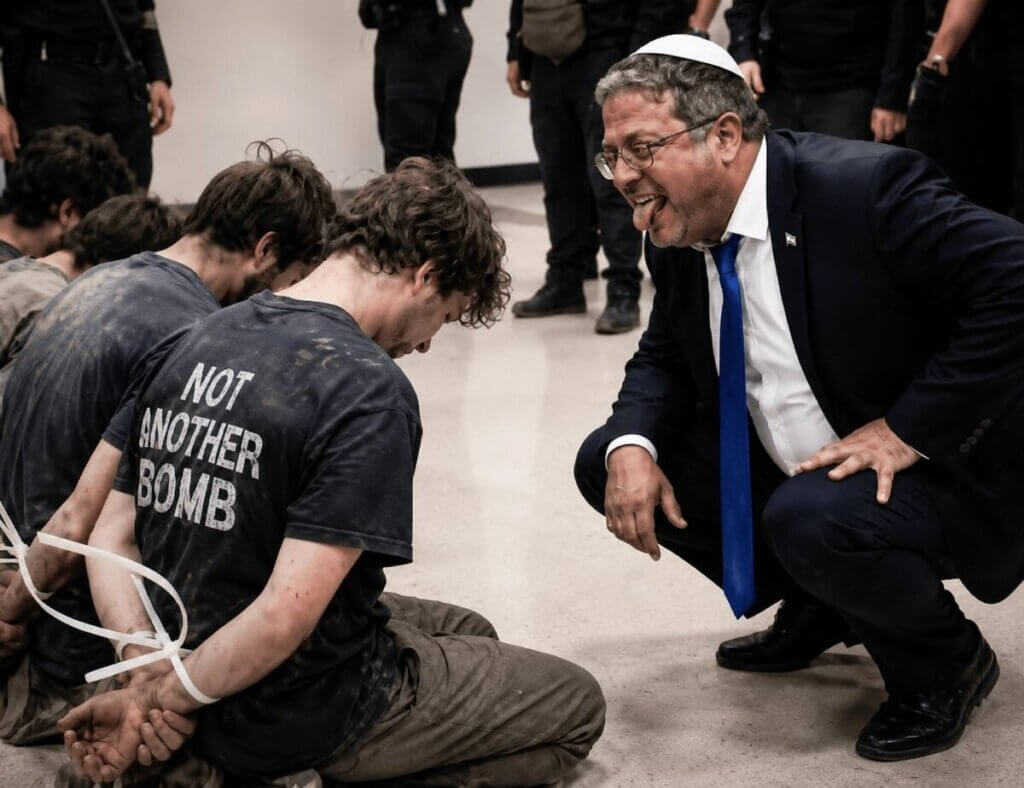
The IDF, under West Bank commander Avi Bluth, has reportedly built a formal mechanism to help settlers establish new outposts — the very outposts that then serve as launching pads for attacks on neighboring Palestinian communities.
In May, Bluth bragged that Israeli troops in the West Bank are “killing like they haven't killed since 1967,” referring to the war against Arab states that resulted in the permanent occupation of the West Bank and Gaz.
The Guardian described his statements:
He said they had shot 42 Palestinian stone-throwers on West Bank roads last year, insisting that such acts amounted to terrorism. Bluth said the army did not shoot Jewish settler militants for doing the same thing, noting that on one occasion when a settler throwing stones at motorists had been wounded by army gunfire, there was a public “ruckus”.
The logic of annexation plans, as analysts at J Street put it bluntly, is "maximum territory with minimum Arabs": annexation requires removing Palestinians, and armed settlers do the removing while the state preserves deniability.
Violence works alongside official tools pointed at the same goal — 1,769 home demolitions in 2024, a military operation that displaced 40,000 people from Jenin and Tulkarem refugee camps, and settlement expansion in the E1 corridor meant to cut the West Bank in half — a move designed to fragment Palestinian communities and solidify Israeli control of the territories.
When Smotrich said the E1 plan "buries the idea of a Palestinian state," he wasn't hiding the ball.
UN experts reached the same conclusion: the violence is carried out with the support and acquiescence of the state and functions as an instrument of forcible displacement — what they describe as facilitating ethnic cleansing.
Where's the Accountability?
Mostly nowhere.
The Biden administration had sanctioned violent settlers and their organizations; Trump rescinded those sanctions on his first day back in office in January 2025, effectively green-lighting the worst actors.
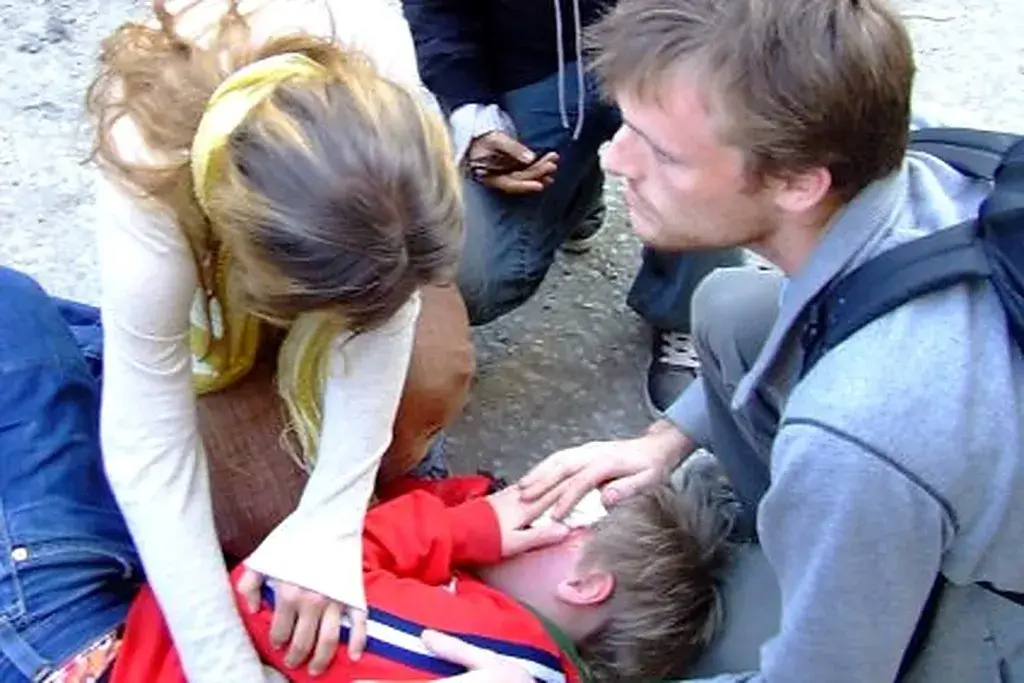
Since then, U.S. pushback has been sporadic — Secretary of State Marco Rubio's public criticism this spring did trigger a rare wave of condemnations from Israeli officials, with even the army's chief of staff calling settler attacks "morally and ethically unacceptable" and former PM Naftali Bennett denouncing "violent gangs."
For the first time, mainstream Israeli commentators are using the phrase "Jewish terrorism."
But researchers who track the settler movement note that the condemnations have produced little change on the ground.
The attacks documented at the beginning of this article — the cut power lines, the stolen spring, the wrecked greenhouses — all happened after that wave of official hand-wringing.
Words without arrests, prosecutions, or dismantled outposts are just public relations.
Why This Matters
Every family driven off its land makes permanent annexation easier and a Palestinian future harder.
In this video, Al Jazeera documents Israeli settler violence:

Nearly 700 Palestinians in nine communities have been displaced by settler attacks in 2026 alone, joining tens of thousands displaced by military operations.
This is happening with American weapons, American diplomatic cover, and — since January 2025 — the explicit removal of American consequences.
Settler violence is not a side story to Gaza. It is the same project by other means: the erasure of Palestinian life from Palestinian land, one village at a time, while the world is looking elsewhere.
The least we can do is look.
More On the West Bank
John Oliver breaks down what’s happening in the West Bank in this full 30-minute episode: