

The second day of the Tyler Robinson hearing in Provo, Utah, delivered the most detailed public accounting yet of what prosecutors say happened on September 10, 2025 — the day Turning Point USA founder Charlie Kirk was shot and killed at Utah Valley University.
It also exposed the legal fault line that may define the entire case: whether the state can prove Robinson targeted Kirk over his political views, and whether prosecutors are improperly blurring the line between politics and religion to get there.
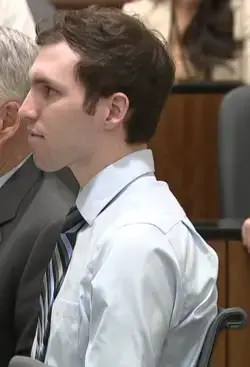
Robinson, who faces aggravated murder and six other counts, has not yet entered a plea.
The weeklong hearing before Fourth District Judge Tony Graf exists to answer one question: is there probable cause to send him to trial?
Prosecutors are seeking the death penalty — a fact worth holding onto as the week unfolds, because every evidentiary fight happening now is a preview of a capital trial.
Sixteen hours of surveillance
Utah Department of Public Safety agent David Hull, the state's lead investigator, walked the courtroom through a compilation of campus surveillance footage spanning roughly 8:30 a.m. on September 10 through the early morning hours of September 11.
Until now, the public had only seen still images and short clips.
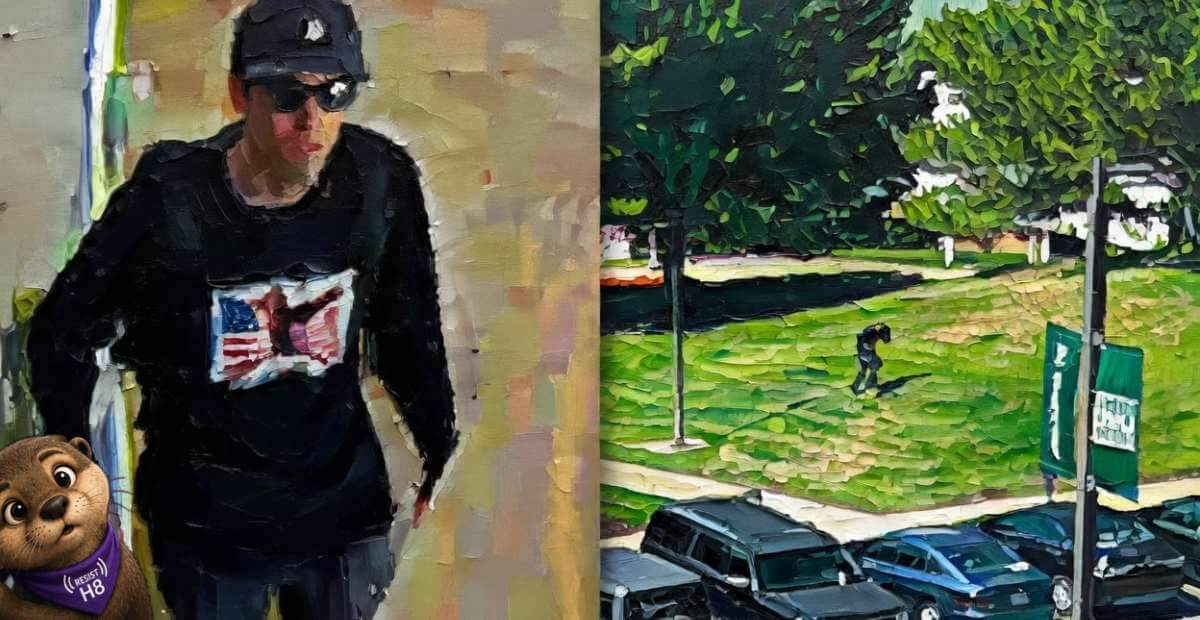
According to Hull's testimony, the footage shows a person prosecutors identify as Robinson arriving in a grey Dodge Charger, walking the campus in a dark red t-shirt and shorts, speaking with Turning Point USA staff, and buying food at a Chick-fil-A roughly two hours before the shooting.
Later, the same person appears without the backpack he arrived with.

Shortly before noon, he returns in different clothing — dark long sleeves and pants, but the same shoes — walking with a pronounced limp.
The video then shows him slowly climbing to the roof of the Losee Center, crouching and crawling toward a corner overlooking the event, and, seconds later, running without any limp to the opposite corner, jumping off, and disappearing toward a wooded area.
The Charger leaves campus after midnight.
Robinson's defense won a round on day one, when Graf agreed that an edited version of the footage — with highlight circles and zoom-ins pointing viewers toward the person prosecutors say is Robinson — risked introducing bias.
Prosecutors came back Tuesday with unaltered footage, which the judge admitted and released to the public.
The affidavit fight: politics, religion, and a capital enhancement
The morning's most consequential battle had nothing to do with video.
Prosecutors asked Graf to admit an affidavit from David Engelhardt, a close Kirk associate, describing Turning Point USA's mission and Kirk's political and religious views.
The state wants it to support a victim targeting enhancement — the claim that Robinson deliberately chose Kirk because of his political expression.
The defense objected forcefully, arguing the affidavit collapses two categories that Utah law treats separately.
"This is not a case about religion," defense attorney Richard Novak told the court, warning that admitting the document could signal otherwise to the future jury pool.
Prosecutor Ryan McBride countered that Kirk's political and religious views were publicly intertwined — particularly on gender identity and LGBTQ rights — and said the state will present evidence of Robinson's own statements about his gender views, which McBride argued placed him among the groups Kirk publicly campaigned against.
Graf provisionally admitted the affidavit but declined to publish it, either in the courtroom or to the public.
For a hearing that is nominally about probable cause, this exchange matters a lot.
The state's motive theory — and the enhancement that helps carry a death sentence — now openly runs through Kirk's anti-LGBTQ advocacy and Robinson's alleged identity and beliefs.
Expect that thread to dominate coverage, and the culture war around it, from here through trial.
The DNA — and the defense's counterattack
The afternoon belonged to forensics.
DPS agent Jennifer Faumuina testified that investigators recovered a bolt-action rifle wrapped in a towel in a wooded area near campus, along with a screwdriver on the Losee Center roof.
FBI testing found DNA consistent with two people on those items: Robinson and Lance Twiggs, his roommate at the time and alleged romantic partner.
Faumuina read likelihood ratios from the lab report reaching into the quintillions — the statistical shorthand forensic labs use to express how strongly a DNA profile points to specific contributors.
The defense spent nearly three hours cross-examining FBI forensic examiner Amanda Bakker, who led the DNA testing, pressing her on sampling, degradation, and the limits of the science.
Bakker stood by her results but acknowledged the role human error can play in collection and testing, and confirmed her report identified Robinson and Twiggs as possible contributors rather than absolute matches.
Graf allowed the defense's exhibits on that point, but repeatedly reined in the scope, reminding attorneys that "that's not the purpose of a preliminary hearing."
Two families, one courtroom
As on day one, Kirk's parents and his widow, Erika Kirk, sat in the courtroom.
So did Robinson's parents, Matt and Amber Robinson.
The two families sat silently on opposite sides throughout.
Robinson, in plain clothes and ankle shackles with only one hand free, showed little emotion, occasionally taking notes or conferring with his attorneys.
The hearing — which a judge ruled would remain open to the press and public over defense objections — resumes Wednesday afternoon and is expected to run through the week.
Whatever Graf decides on probable cause, the deeper contest is already visible: a capital case in which the state's theory of motive rests on identity, ideology, and the meaning of political violence in an America still processing it.
Resist Hate will continue to follow the proceedings.