


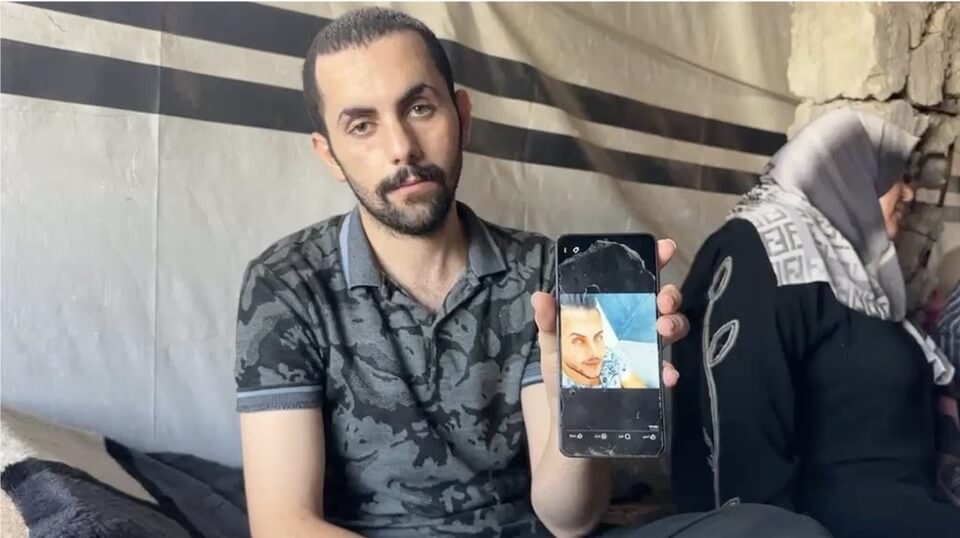
For six months, Yasser Al-Banna believed he had buried his son.
Hamada Al-Banna vanished in July 2025 while trying to get flour for his family near the Zikim crossing in northern Gaza.
His family searched hospitals and morgues. They showed his photo to freed prisoners.
His fiancée — they had been engaged for exactly one month when he disappeared — sold her gold jewelry to pay lawyers to find out whether Israel was holding him.
Then one of those lawyers sent the family a list of the dead.
Hamada's name was on it.
They held a funeral at their home in Jabaliya with no body to bury. He was the third son this family had mourned.
A full year after Hamada was last seen, the phone rang. "He called and said, 'Hello, Dad,'" Yasser recounted to Drop Site News, which reported this story from inside Gaza.
Yasser didn't believe the voice.
He kept demanding to know who was calling.
Days later, his son was home and in his arms — back from a grave he had never been in.
A year inside the void
So where was Hamada? Drop Site's reporting pieces it together, and every detail is an indictment.
That July morning, he and his brother Adham joined the crowds walking toward Zikim, where aid trucks drew thousands of starving people — and where Israeli soldiers routinely opened fire on them.
In just over two months that summer, the UN counted at least 1,373 Palestinians killed while trying to reach food.
The brothers went because their father, an amputee, couldn't.
Hamada got a bag of flour.
Adham never made it home.
And when Hamada turned back to search for his brother among the bodies, an explosion threw him into the air.
He woke up in Soroka hospital, inside Israel, after two months in a coma.
Six months into his hospital stay, still covered in wounds, he was moved to a solitary cell he described as smaller than a bathroom.
He spent four months there and says he tried to end his life more than once.
Interrogators tortured him, he told Drop Site, and claimed his family members had died — one more cruelty stacked on the rest.

Then he was transferred to Sde Teiman, the desert prison camp where whistleblowers and released detainees have described beatings, stress positions, untreated wounds that cost men their limbs, and sexual violence.
UN experts have called Israel's treatment of Palestinian detainees systematic torture running on impunity.
Hamada was never charged with anything.
His family was never told he existed inside the system.
On July 6, soldiers beat him, shackled and blindfolded him, drove him a short distance, struck him one last time, and let him go.
No charge. No apology. No explanation.
He walked home to a family that had already buried him.
Rubble or prison: The question families can't answer
Hamada's story ends in his mother's arms. Most don't.
More than 73,000 Palestinians have been killed since October 2023 in what B'Tselem, Israel's leading human rights organization, calls a genocide — including more than 1,100 people killed after a supposed ceasefire took effect in October 2025.
And beyond the confirmed dead, at least 9,500 people are missing in Gaza.
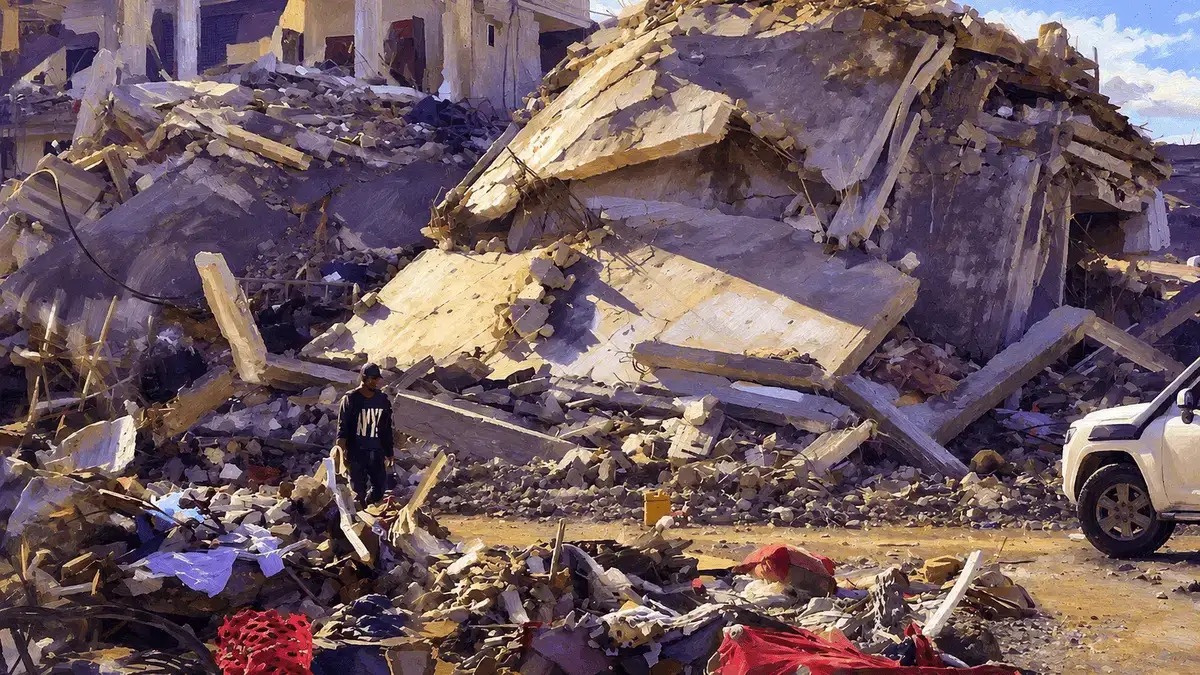
Most of the missing are believed to be under the rubble.
Gaza sits beneath more than 60 million tonnes of debris, and Israel has restricted the heavy machinery needed to dig people out, leaving families to claw through concrete with shovels and bare hands.
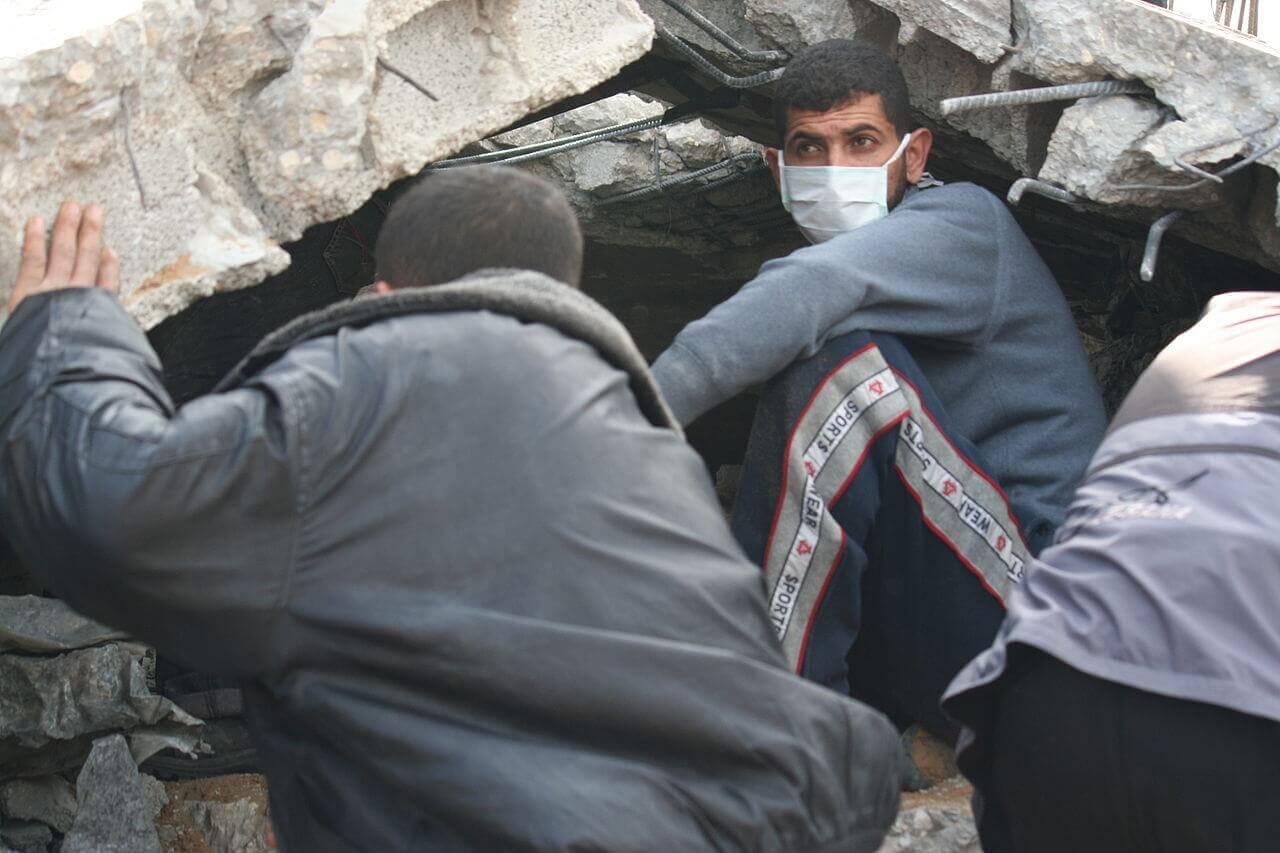
According to the UN, at the current pace of rubble removal, it will take 140 years to complete the task.
The Red Cross now warns that thousands of the dead may never be identified at all.
But an unknown number of the missing are alive — disappeared into Israeli custody.
Israel's "Unlawful Combatants" law lets it hold people from Gaza without charge or trial, indefinitely, and families routinely receive no notice that their loved one is even in the system.
International law has a name for holding people in secret while refusing to acknowledge it: enforced disappearance. It’s a crime.
So every family of a missing person lives inside the same unanswerable question.
Is he under a collapsed building? Is he in a cell? Do we grieve, or do we hope?

Graves marked with numbers instead of names
In Deir al-Balah, there is now a place built around that question.
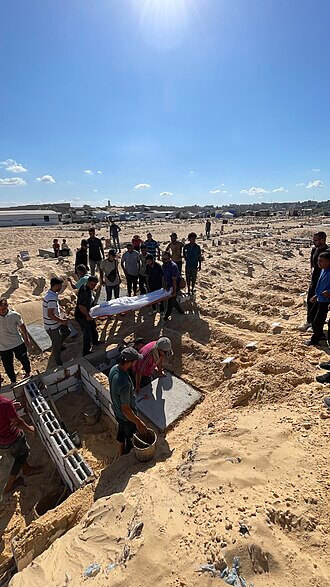
Palestinians call it the cemetery of the missing, or the numbered graves cemetery.
It opened in October 2025, after the ceasefire, because the unidentified dead had nowhere else to go.
It now holds more than 650 bodies, the head of Gaza's cemeteries department told Drop Site.
Half-buried cinder blocks serve as headstones. Each carries a number instead of a name.
The bodies come from two places.
Some are pulled from the rubble, or from the shallow graves people dug in a hurry during the worst of the bombardment.
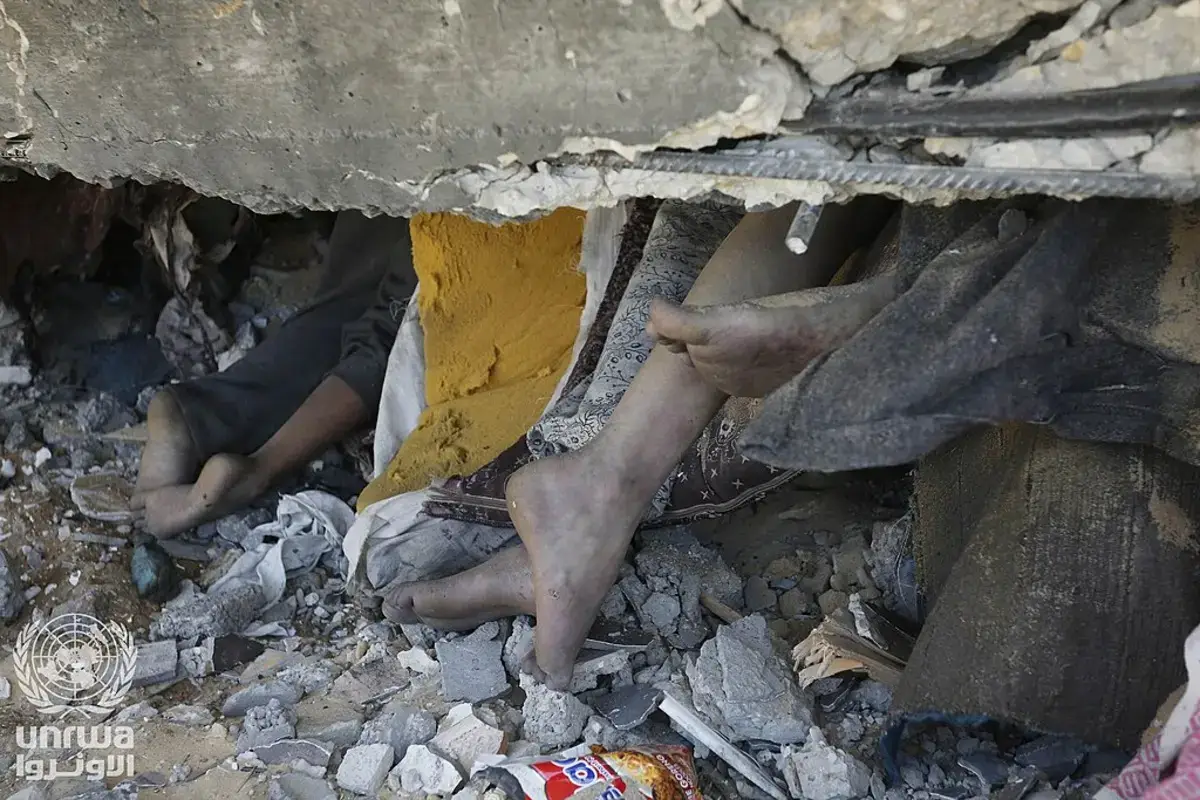
Others come from Israel itself: under the ceasefire deal, Israel has returned the dead in batches, and forensic teams and journalists have documented that many arrived with hands bound, eyes blindfolded, and wounds consistent with torture and point-blank execution.
Some were returned as loose body parts in bags.
Gaza's forensic workers do what they can with almost nothing.
Every body is photographed in detail — teeth, clothing, scars.
Tissue samples are stored at Shifa Hospital for DNA testing that cannot happen, because Israel has blocked DNA testing supplies from entering Gaza.
The photos are displayed in hospital rooms for days and uploaded to an online platform so families can search them.
If no one claims a body, it is assigned a code and lowered into a numbered grave.
Jihan Ammar searches those photographs every few days.
Her son Abdulsalam was 15 when he vanished in Beit Lahia in November 2024 as Israeli troops besieged the area.
Her husband was seized by soldiers east of Jabaliya and is missing too.
She told Drop Site she has looked through every image of every recovered body, and that her deepest fear is that her boy lies somewhere in a mass grave no one can excavate.
She isn't asking for much. She wants to know where her son is.
She wants to hold him, the way any mother would.
Israel knows the answer for at least some of Gaza's missing — the ones sitting in its cells, the ones whose bodies it holds in freezers.
It is choosing not to give it.
That silence isn't the fog of war.
It's policy, and every numbered cinder block in Deir al-Balah is a monument to it.
Hamada came home.
Thousands of families are still waiting for the phone to ring.
This story draws on original on-the-ground reporting by Abdel Qader Sabbah and Mohamed Ahmed for Drop Site News, a reader-funded independent outlet. Read and support their full report.