

WARNING: This story contains testimonials from survivors of extreme torture in Israeli prisons, including sexual assault. Survivors described months of suffering as “hell” and wished for death. To protect readers, the testinonials are hidden behind click-to-reveal prompts. Opening a testimonial block reveals an excerpt and option to view more. Each victim’s page provides an extended version of their testimonial from the B’Tselem (Israeli human rights organization ) website.
U.S. media is ignoring this bombshell report.
If we don’t know it’s happening, we can’t speak out for those who’ve been silenced. Survivors were retraumatized by telling their stories, but did so to save the people still trapped inside—the least we can do is listen.
Looking away only protects the powerful.
When Fouad Hassan stepped off the bus at Megiddo Prison, a soldier greeted him with three words. “Welcome to hell.”
Hassan, a 45-year-old father of five from the village of Qusrah in the West Bank, was one of 55 Palestinians who gave sworn testimony to the Israeli human rights group B’Tselem after being released from Israeli custody — almost all of them without ever being charged with a crime.
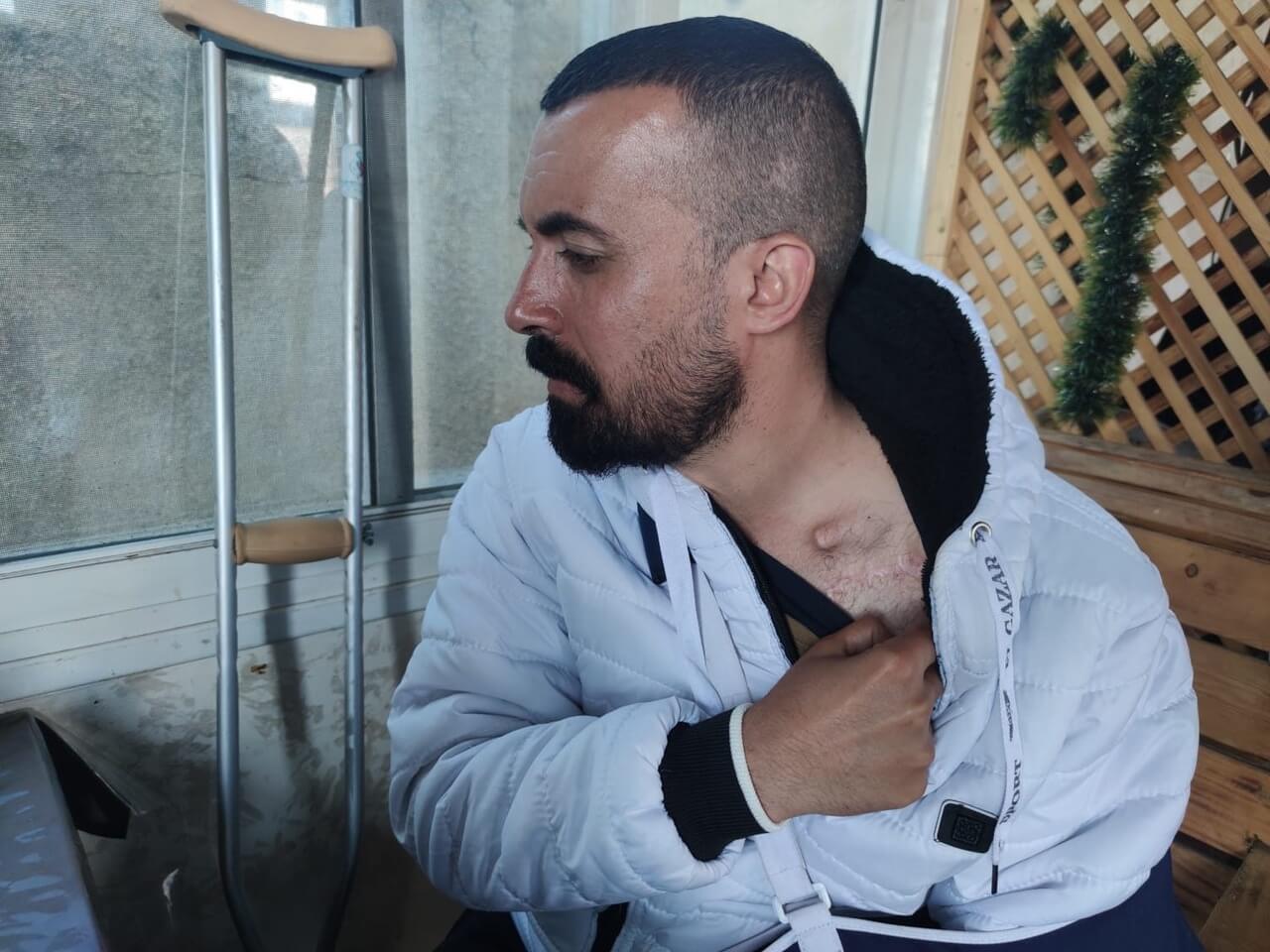
Those testimonies became the 2024 report Welcome to Hell: The Israeli Prison System as a Network of Torture Camps. An updated companion report, Living Hell, released in January 2026, adds 21 more accounts from prisoners freed under the October 2025 Israel-Hamas deal. Together, they describe what human rights investigators now say is not a collection of isolated abuses but a coordinated, top-down policy.
The soldier at Megiddo was not exaggerating. He was telling the truth.
What the Survivors are Saying
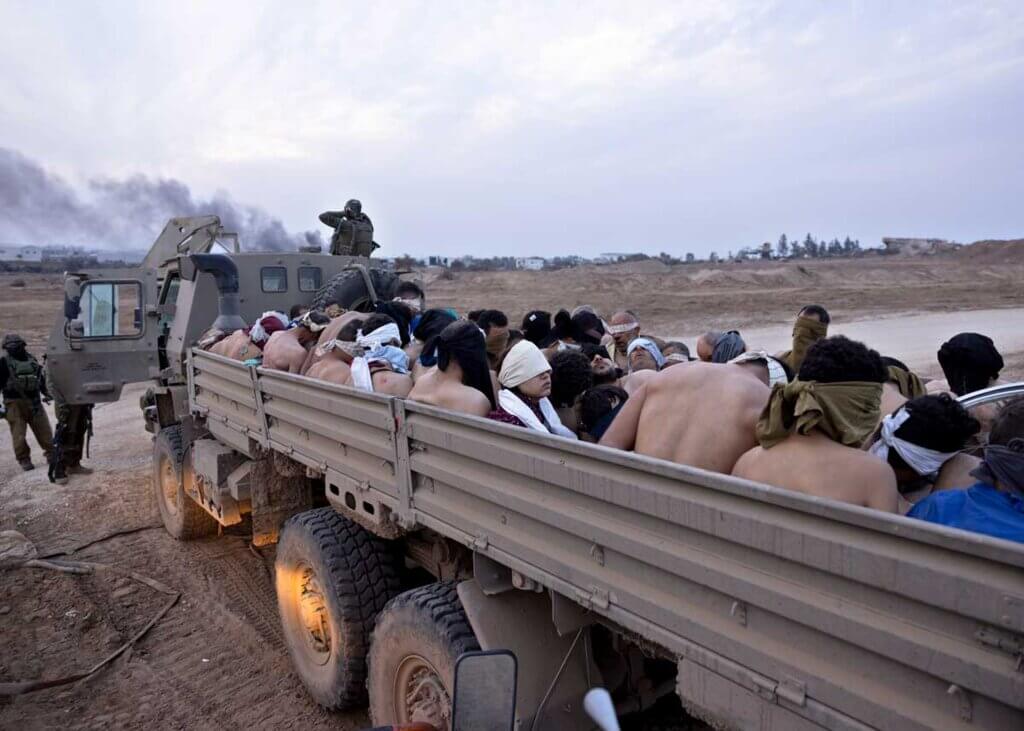
The testimonies are specific, and they are consistent. Men and women from Gaza, the West Bank, and inside Israel itself — held at facilities including Sde Teiman, Ofer, Ketziot (Negev), Megiddo, and Anatot — describe a set of practices so uniform across locations that B’Tselem concluded no other explanation fits except deliberate policy.
Excerpts from the victim’s painful stories—unedited—are in drop-down boxes throughout this article. Click to expand the testimonial of each victim, whose name and age are visible.
Muhammad Mafarajah, Age: 16

… “Then they put the blindfold back on, but about an hour later they took it off and took me to be interrogated. I was still handcuffed, and they also cuffed my legs. They sat me on a chair, and a man in civilian clothes was sitting across the table from me. He showed me pictures of children and teens who’d thrown stones towards the checkpoint in Shu’fat R.C. and asked me who they were. I told him I didn’t know. The interrogator said I was accused of throwing stones and Molotov cocktails at the checkpoint in the camp. I told him I didn't do it.” …
One man, identified only as S.S., was held at Sde Teiman and later at Ofer and Ketziot before his release in October 2025.
His testimony describes being taken naked to a building near Gaza’s al-Shifa Hospital that Israeli soldiers had converted into an interrogation post. “They tied my hands, covered my eyes with a piece of cloth, and left me naked,” he said. During the interrogation, soldiers put out cigarettes on his body, poured hydrochloric acid on him, and burned his back with a lighter.
Shadi Abu Seido, a Palestinian journalist from Gaza, was stripped naked for ten hours in the cold, then moved to Sde Teiman, where he was held handcuffed and blindfolded for a hundred days. When he asked why he had been arrested, a soldier told him: “We have killed all the journalists.”
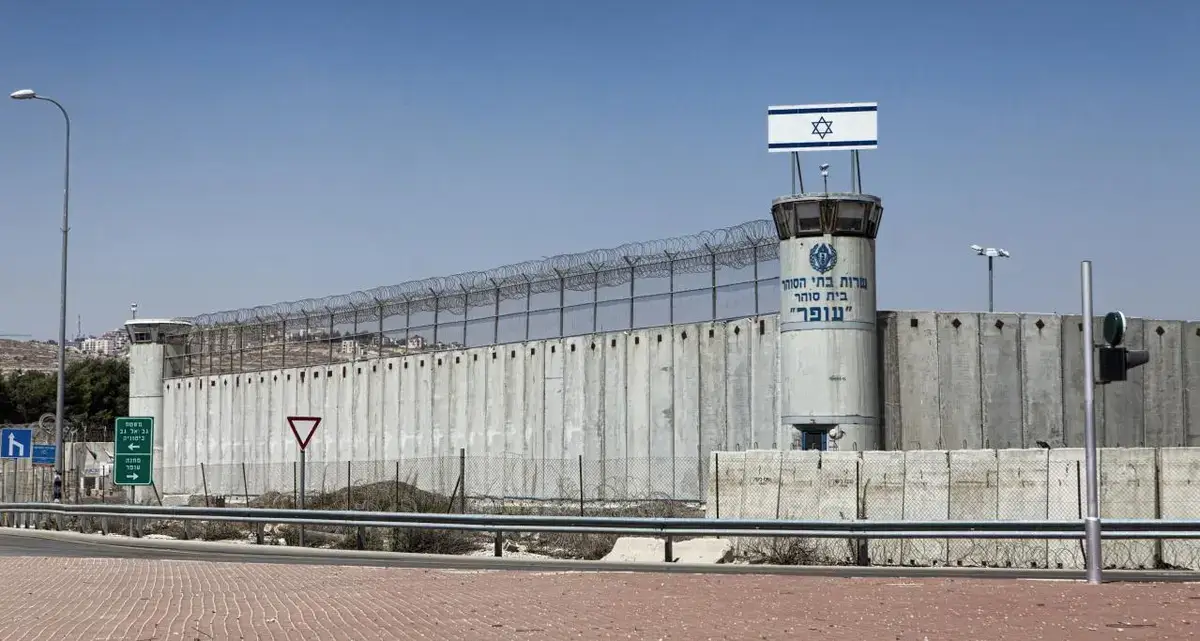
Walid Khalili, a paramedic and ambulance driver, described being suspended from chains connected to metal handcuffs, forced to wear diapers, given electric shocks every other day, doused with cold water, and held in stress positions. An interrogator recited the names of his children and his home address back to him and threatened to harm them if he did not confess.
These are not outlier cases. B’Tselem found the same patterns in testimony after testimony — beatings, sexual violence, deliberate starvation, medical neglect so severe it caused limb amputations, prolonged solitary confinement, and the systematic denial of sleep, water, religious practice, and contact with family or lawyers.

Fadi Baker, Age: 25
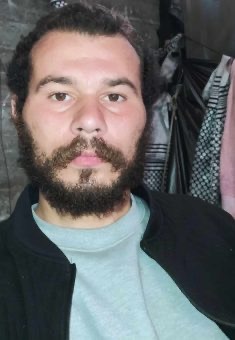
… “In the pen, we were woken up every day at 4:00 A.M. and forced to kneel, handcuffed and blindfolded, until 11:00 A.M. After that, we were supposedly allowed to sleep, but every time we fell asleep, they woke us up.
After five days, I was taken to a very cold room where they played disco music at a very high volume. I was stripped and left there for four days, during which I was only given a little water to drink and a piece of bread each day.
After four days, they took me for interrogation, which was based on beatings and torture. They put cigarettes out in my mouth and on my body. They put clamps on my testicles that were attached to something heavy. It went on like that for a whole day. My testicles swelled up and my left ear bled. I was asked about Hamas leaders and people I didn’t know and hadn’t met. They asked me where I was on 7 October, and I said I was at home and had only gone out to get food for my wife. They beat me. Then they put me back in the freezing room with the loud disco music, and again left me there, naked, for two days, and gave me only very little bread and water.” …
What “Medical Care” Looks Like
Three Israeli whistleblowers who worked at Sde Teiman told CNN in 2024 that detainees there were routinely handcuffed so tightly, for so long, that their wrists developed injuries severe enough to require amputation.
One of them witnessed the procedure himself. A doctor at the same facility wrote to Israel’s defense minister, health minister, and legal adviser, reporting that in a single week, two prisoners had their legs amputated due to wounds caused by leg irons — and that such amputations had become routine.
Sufian Abu Saleh, Age: 42
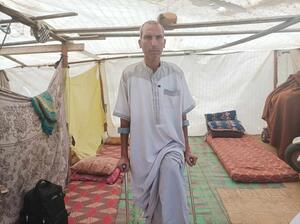
… “I was in pain for a week and had a high fever. The soldiers took me in a minibus to a hospital in the interrogation center, and on the way, they hit my injured leg with batons and with their guns and stepped on my legs. I screamed in pain. A soldier asked me: ‘Which of your legs is hurt?’ and started hitting me hard on that leg, brutally. Even when they took me off the minibus, they kept hitting me on the leg and head. Pus started oozing out of the wound. They swore at me, too: “I’ll do this and that to your mother, your sister and your wife” and “Damn your dignity, you son of a whore,” and other similar abuses.
When I got to the hospital, I heard them saying ‘Shiba in Tel Hashomer.’ A vascular doctor came and told me: “Your leg needs to be amputated. We need to consult an orthopedist.” The soldiers laughed and made fun of me: “Cut off his leg.” …
One Palestinian man told investigators that after his leg was amputated, soldiers forced him to stand on his remaining leg for hours, depriving him of sleep. He was eventually released to his family in Gaza without being charged with anything.
Untreated wounds get infected. Infected wounds turn gangrenous. Gangrenous wounds cost people their hands, their feet, their legs, and sometimes their lives. Between October 2023 and January 2026, B’Tselem identified 84 Palestinians — including one child — who died in Israeli custody.
The real number is almost certainly higher. Israel continues to hold roughly 80 of the bodies and refuses to return them to the families.
Starvation as Policy
The food testimonies are some of the hardest to read because they are so small and so specific. A full day’s ration described by one detained woman in a related complaint: five nuggets, two pieces of bread, and a cup of rice.
In B’Tselem’s investigation, prisoners described being given only spoiled bread and a single cucumber per meal, along with one bottle of water for the entire day.


This is not a supply-chain failure or a budget problem. B’Tselem documents that Israel’s National Security Minister Itamar Ben Gvir, who oversees the Israel Prison Service, has publicly celebrated these conditions — going on television and posting on social media to brag about how Palestinian prisoners are being treated.
A video from OneIndia News shows Ben Gvir visiting an Israeli prison and bragging about torturing Palestinians. Live. On camera.

Sexual Violence
The section on sexual violence is the one B’Tselem found nearly impossible to report on without warning readers first. The forms documented range from forced nudity and verbal threats to beatings of the genitals causing severe injury, to soldiers setting dogs on prisoners, to forced anal penetration with objects, to rape and gang rape.
One Palestinian victim described a female soldier digging her nails into his genitals hard enough to draw blood. Another detainee said soldiers brought in dogs who climbed on him and urinated on him — and that one of the dogs raped him.
Muhammad Nuzzal, Age: 18
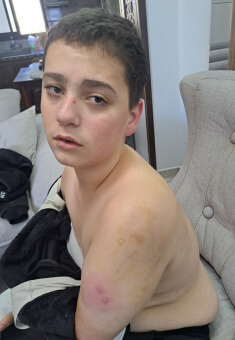
… “The guards turned very violent after the war broke out. One day, I heard shouts from the inmates in the next cell. Later, I found out that one of them asked a guard if there was a ceasefire or any sort of solution because we weren’t getting any news from the outside, and in response to that question, they beat him to death. The guards simply left him there for half an hour after the assault. His name was Thaer Abu ‘Asab. He was from Qalqiliyah, and he was in prison from 2005.
The rules for roll call also changed completely. Each inmate had to stand, put both hands on his head and bend his neck. One of the guards read out the names over loudspeaker, and each inmate had to answer he was present. Once, after roll call, a week before my release, a guard asked if we were Hamas guys and we told him we were prisoners. The guard told his friends to attack us. They kicked us and hit us with metal batons. Every time I tried to cover my head with my hands, they hit me on the hands as well as the rest of my body. It hurt a lot. The assault went on for a long time. When the guards left our cell, cell 10, we were all sitting on the floor beaten and bruised, and some of us wounded.
The night after the assault, when I went to the toilet, I passed out and fell on the floor. Other inmates pulled me back to bed. The next day, a female medic or doctor came and checked me, especially my upper body – my back and shoulders and hands. She disinfected my wounds and put iodine on them. She also bandaged my hands and came back every 48 hours to change the bandages. I felt that she was sad about what happened to me. She seemed sad and upset by what the guards did.” …
A leaked video from Sde Teiman in 2024 showed soldiers sexually assaulting a detainee. When Israeli military police moved to arrest the suspected soldiers, right-wing protesters — including sitting members of the Knesset (the legislature in Israel) — stormed the base to defend them.
“A window into a much broader reality”
B’Tselem, which is Israeli, does not frame this as the behavior of a few cruel guards or one rogue facility. The organization’s conclusion is that the prison system has been restructured, by design and from the top, to function as an instrument of collective punishment against Palestinians as a people.
Executive Director Yuli Novak has called it part of a coordinated effort to destroy Palestinian existence as a collective — a companion piece, she argues, to the genocide in Gaza and the ethnic cleansing in the West Bank.
More than 9,350 Palestinians remain in Israeli custody as of January 2026. Most have never been charged. Many are held under “administrative detention,” a legal status that allows indefinite imprisonment without trial. Some are children.
The soldier at Megiddo said ‘welcome to hell.’ The people who survived it are asking the rest of us to listen.