
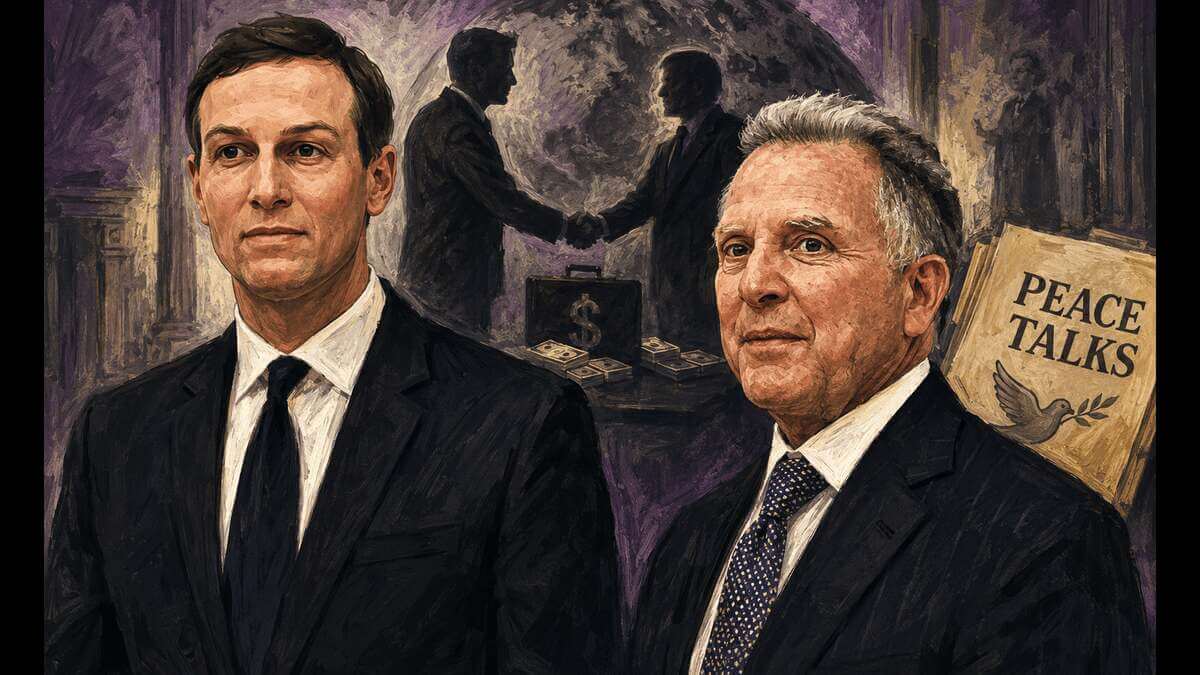

While American and Iranian negotiators were holed up at a luxury resort above Lake Lucerne in late June, Iran's team quietly slipped a message about Kushner and Witkoff to Vice President JD Vance through an intermediary.
The gist, according to new reporting from Drop Site News: Steve Witkoff and Jared Kushner — Donald Trump's special envoy and his son-in-law — were not in Switzerland to end a war.
They were there, Tehran alleged, to cash in on one.
A senior Iranian official told Drop Site's Jeremy Scahill and Ryan Grim that the message warned Vance that Kushner and Witkoff cared more about using inside knowledge of the negotiations to profit in financial markets than about turning the June 17 framework agreement into a durable peace.
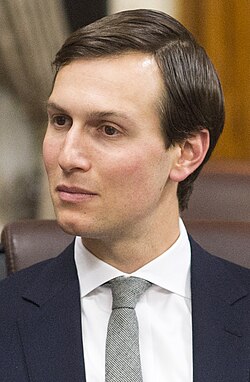
Iranian negotiators also objected to what they described as Kushner's habit of feeding information to Benjamin Netanyahu — a concern that tracks with Axios reporting that Kushner and Witkoff spoke with the Israeli Prime minister and Mossad's chief nearly every day once talks began.
According to the official, Lucerne wasn't Iran's first attempt to raise the alarm.
Tehran says it warned Trump about Witkoff through Pakistani mediators before the April talks in Islamabad, and later handed mediators written material it claimed documented market manipulation by people close to the president.
Then comes the detail that reads like satire but it’s not: Iran calculated the alleged trading profits at $9 billion — and formally requested, in writing, that half be paid to Iran.
Tehran wants its $4.5 billion cut of its own war.
What's confirmed, what's denied
Some clear eyes are required here. Drop Site couldn't independently confirm the intermediary delivered the message, and the sourcing is an anonymous official of a government currently at war with the United States.
The vice president's office flatly denied that any such message reached Vance or his team.
A White House spokesperson went further, denying the story outright and accusing the outlet of running propaganda for Tehran.
Kushner and Witkoff didn't respond at all.
Notably, though, a source close to Vance acknowledged the Iranians had never hidden their objections to the two men's presence at the table.
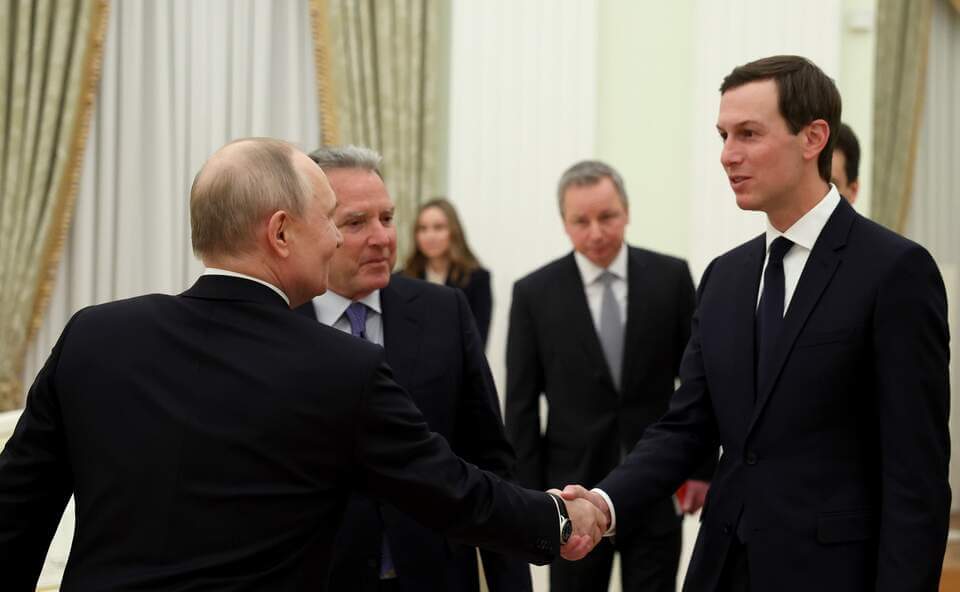
But you don't need Tehran's word for the underlying problem, because much of it already sits in the public record.
Financial analysts have spent months describing a pattern of suspiciously timed, outsized bets in oil futures, energy stocks, and prediction markets around major war and diplomacy news — including presidential announcements that land just before Monday's opening bell on Wall Street.
Kushner holds no government office.
He is a private citizen who runs Affinity Partners, an investment firm managing nearly $5 billion, almost all of it from the sovereign wealth funds of Saudi Arabia, Qatar, and the UAE.
In March, Senate Finance Committee Ranking Member Ron Wyden and House Oversight's Robert Garcia demanded answers about Kushner soliciting billions from Middle Eastern governments while simultaneously co-leading U.S. negotiations in the region.
That is not an Iranian talking point. That is a congressional oversight letter.
The incompetence is its own scandal
The Iranian official's account goes beyond alleged profiteering.
He told Drop Site that in the early indirect talks in Oman and Switzerland — before the war began on February 28 — Witkoff and Kushner arrived without nuclear experts, showed little grasp of the technical file, and relayed distorted versions of Iran's positions back to Trump.


When Iran disclosed the size of its enriched uranium stockpile, a move its negotiators considered proof of flexibility, Witkoff went on Fox News days after the U.S. attacked Iran mid-negotiation and recast that disclosure as a boast about building eleven nuclear bombs.

Whatever you think of Iran's government — and there is plenty to think — the United States put a real estate developer and the president's son-in-law across the table on nuclear weapons, sanctions, and the Strait of Hormuz.
The Lucerne summit, mediated by Pakistan and Qatar, had to survive Trump publicly threatening to hit Iran again while his own delegation was mid-session — and at one point appearing to threaten the negotiators' lives if Iran closed the strait, a taunt that sent the Iranian side out of the room in protest before talks resumed.
Why Iran went to Vance
Iran's turn toward Vance was cold-eyed, not sentimental. Vance led the U.S. delegation at Islamabad and Lucerne — the highest-level American contact with Iran since 1979 — and he wants the Republican nomination in 2028.
A signed peace deal serves his ambitions in a way a smoldering war does not.
Mediators, per the Iranian official, have drawn their own distinction: Vance as the face of a U.S. establishment that wants the war over, Trump as a man managing the war like a ratings problem.
Robert Malley, a lead negotiator of the 2015 nuclear deal, told Drop Site the outreach makes sense but has a hard ceiling: "If today's President Trump cannot speak for tomorrow's, then how could JD Vance?"
That ceiling is now the whole story.
Trump notified Congress on July 10 that combat operations against Iran had resumed, declared the ceasefire over, reimposed a naval blockade while demanding the U.S. be paid 20 percent on cargo transiting Hormuz, and suggested this week that further strikes would leave no one left in Iran.
The framework Tehran hoped to salvage by going around Kushner and Witkoff is back in the shredder — and the people paying for it are Iranian civilians under renewed bombardment, tanker crews in the strait, and American service members postured for a wider war.
Congress cannot subpoena an anonymous Iranian official. It can subpoena trading records.
Every announcement timed to a market open, every position taken by anyone with access to these negotiations, is discoverable.
If the White House is telling the truth and none of this happened, disclosure costs them nothing.
If Tehran is even half right, the peace was being shorted by the very people sent to build it.