

When Nicholas Kristof’s column landed in The New York Times on Monday, May 11, the headline was hard to misread: “The Silence That Meets the Rape of Palestinians.” Inside it, the two-time Pulitzer winner laid out the testimony of fourteen Palestinian men, women, and children who said they were victims of the routine sexual violence against Palestinians in Israeli prisons or by Israeli settlers and soldiers in the occupied West Bank.
By Thursday, Prime Minister Benjamin Netanyahu had ordered his legal advisers to sue the paper for defamation.
That is the shape of this story. A reporter documented sexual violence against Palestinians by a country that the U.S. arms and funds. A government called Kristof’s reporting a “blood libel” and reached for the courts.
And in between, the evidence Kristof relied on did not come from a single source. It came from a stack of them.
What Kristof Reported
Kristof’s NYT column begins:
It’s a simple proposition: Whatever our views of the Middle East conflict, we should be able to unite in condemning rape.
Supporters of Israel made that point after the brutal sexual assaults against Israeli women during the Hamas-led attack on Israel on Oct. 7, 2023. Donald Trump, Joe Biden, Benjamin Netanyahu and many U.S. senators, including Marco Rubio, condemned that sexual violence, and Netanyahu rightly called on “all civilized leaders” to “speak up.”
And yet in wrenching interviews, Palestinians have recounted to me a pattern of widespread Israeli sexual violence against men, women and even children — by soldiers, settlers, interrogators in the Shin Bet internal security agency and, above all, prison guards.
Wajahat Ali Spoke to Nicholas Kristof About his Reporting on The Left Hook

Kristof’s central claim is not that Israeli leaders ordered rapes. He explicitly wrote that there is no evidence of that. His claim is that Israel’s security apparatus has built a culture in which sexual violence has become routine — what a United Nations report last year called one of Israel’s “standard operating procedures” and “a major element in the ill treatment of Palestinians.”
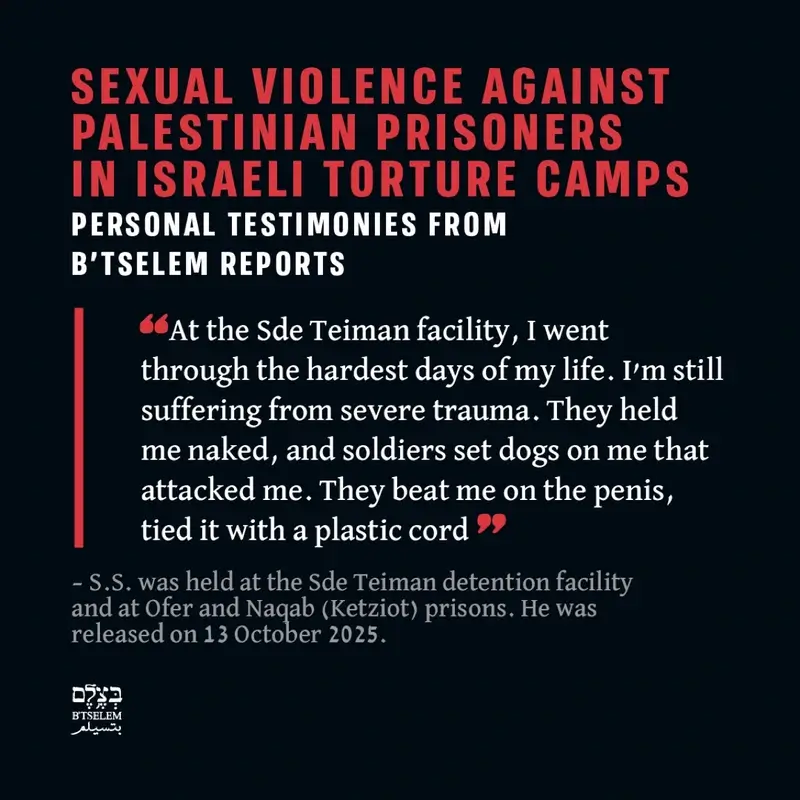
The fourteen people Kristof interviewed described being stripped naked, beaten on the genitals, penetrated with objects, threatened with rape against family members, and in some cases filmed.
One woman said guards brought new shifts of officers into her cell so they could strip her in turn. Another said she was shown photos of her own assault and told they would be released unless she cooperated with Israeli intelligence.

A Gazan journalist described being mounted by a trained dog while handcuffed and blindfolded as guards laughed. (There have been several accounts of dogs trained to assault victims.)
Three of the survivors Kristof interviewed were children.
The Israeli Prison Service told reporters the allegations are “false and entirely unfounded.”
The Sources Behind the Reporting
A lot of the public fight over Kristof’s column has focused on his citation of the Euro-Mediterranean Human Rights Monitor, a Geneva-based NGO that Israeli officials and several Palestinian critics have accused of bias and questionable associations. That fight is real, but it is also a distraction from what Kristof cited.

A 2024 United Nations report — 49 pages — concluded that Israel has been “systematically” subjecting Palestinians to “sexualized torture.” Save the Children commissioned a survey of children ages 12 to 17 who had been detained by Israeli forces and found that more than half reported witnessing or experiencing sexual violence.
The Committee to Protect Journalists surveyed 59 Palestinian journalists released by Israeli authorities after October 7. Three percent said they were raped. Twenty-nine percent said they had endured other forms of sexual violence. The Israeli human rights organization B’Tselem and Amnesty International have both described the current Israeli prison system as a network of torture camps. None of those sources is Euro-Med. All of them point in the same direction.
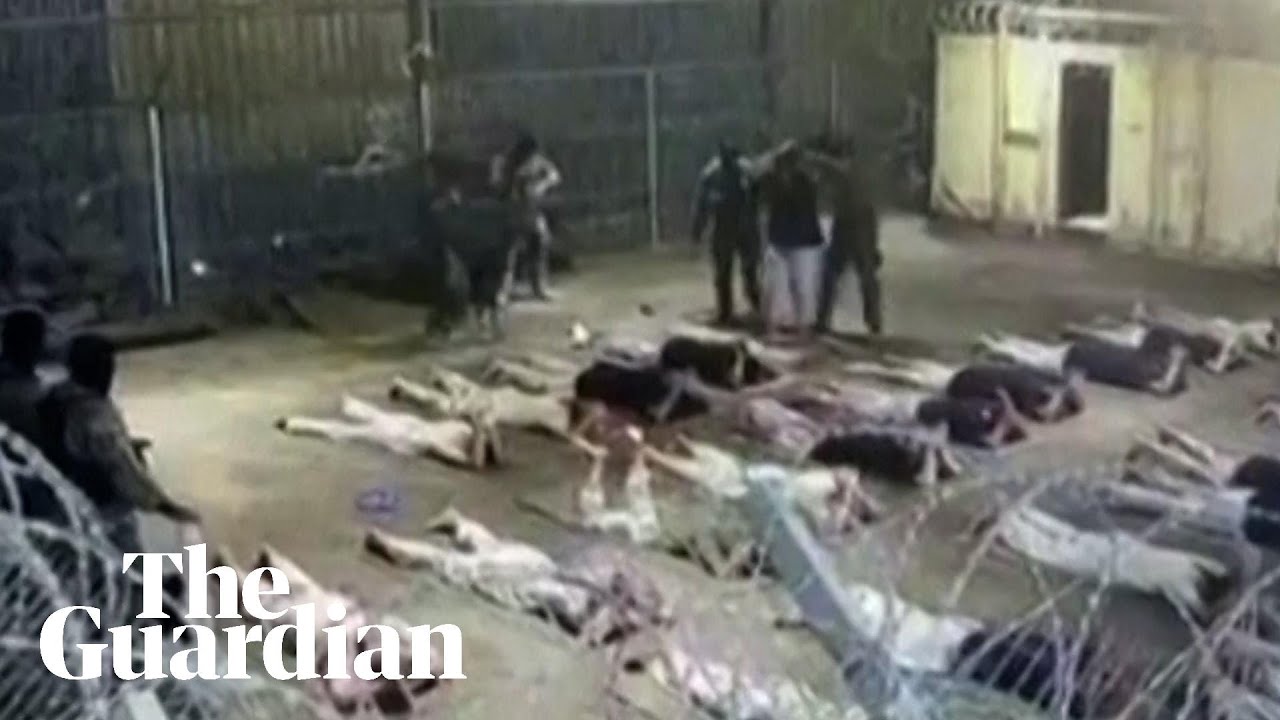
The Sde Teiman case sits at the center of this. In 2024, video emerged of Israeli reservists abusing a Gazan detainee at the Sde Teiman military base. When military police moved to arrest the suspects, a right-wing mob — including sitting Knesset members — stormed the base in protest. Charges against the soldiers were quietly dropped earlier this year.
Sde Teiman Video
“Blood Libel”
The Israeli Foreign Ministry’s response was immediate and severe. It accused The New York Times of publishing “one of the worst blood libels ever to appear in the modern press” and called Kristof a “propagandist” who had turned the victim into the accused.
Nicholas Kristof was being attacked on X for his article. Users claimed it was misinformation or a conspiracy theory. Others called him “antisemitic.” The NYT posted several statements in response to attacks and the Israeli human rights group, B’Tselem, defended it.
The phrase “blood libel” refers to the centuries-old antisemitic myth that Jews ritually murdered Christian children — a serious accusation to level at a newspaper, and one designed to make any further coverage feel radioactive.
By Thursday, Netanyahu had personally weighed in. “Today I instructed my legal advisers to consider the harshest legal action against The New York Times and columnist Nicholas Kristof,” he wrote on X. “They defamed the soldiers of Israel and perpetuated a blood libel about rape.” Foreign Minister Gideon Sa’ar joined the suit. (It’s incredible how Netanyahu can lie so brazenly when videos exist of Ben Gvir praising the “torture policy” of the Israeli prison system. Anyone can read/watch Israeli media and learn the truth. They say it out loud.)
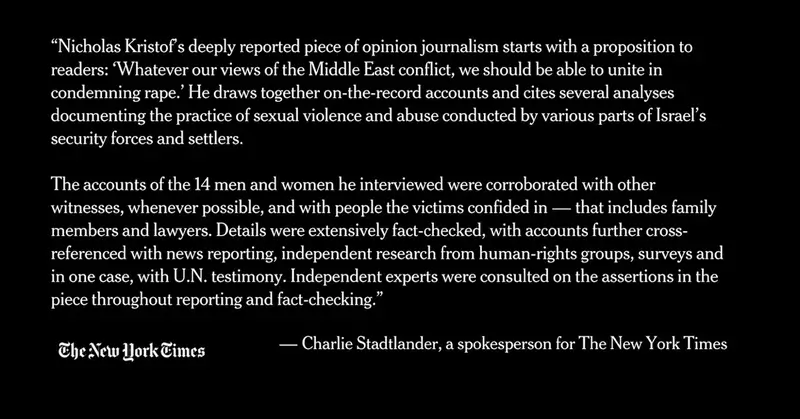
The Times is not backing down. A spokesperson called the piece “deeply reported,” noted that the fourteen accounts were corroborated where possible with family members, lawyers, and outside witnesses, and pointed to the independent human rights research underpinning the column.
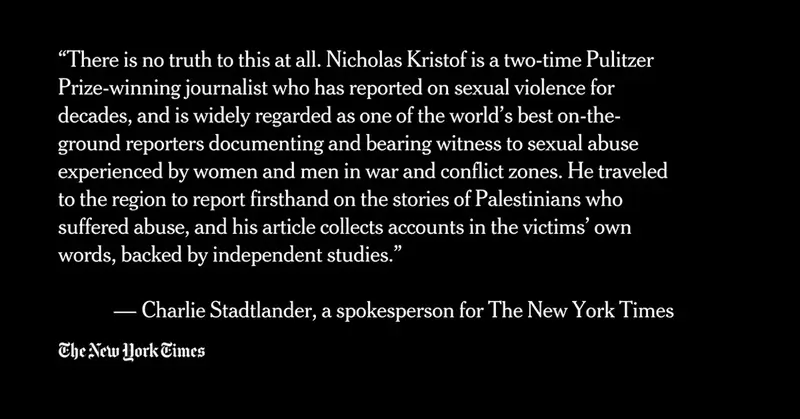
The paper also flatly denied a rumor circulating online that editors were considering a retraction. “There is no truth to this at all,” the spokesperson said.
What Kristof is Asking For
The most striking thing Kristof has said since publication is not in the column itself. It came in a follow-up post on X: if the allegations are false, why not let the Red Cross and independent lawyers visit the roughly 9,000 Palestinians currently held by Israel as security prisoners?



That is the question with no good answer. Israel has not allowed the Red Cross to inspect conditions inside its prisons for Palestinians in years. Since October 7, 2023, most of the more than 20,000 Palestinians detained from the West Bank have been denied lawyer visits and held under loosely defined security grounds, many without charge.
If the abuse Kristof documented is fabricated, monitoring would prove it. The refusal to allow monitoring is itself part of the evidence.
Kristof closed his column with a line that has been quoted widely since: “The horrific abuse inflicted on Israeli women on Oct. 7 now happens to Palestinians day after day. It persists because of silence, indifference and the failure of American and Israeli officials alike to answer Netanyahu’s query: Where the hell are you?”

That question was Netanyahu’s own, asked of world leaders after Hamas’s sexual violence on October 7, 2023. Kristof has turned it around. Two years later, the Israeli government’s response is not to answer it but to sue the journalist who asked.
Why This Matters in the United States
Kristof made the American connection explicit in his column. American tax dollars subsidize the Israeli security establishment. That makes the United States, by his framing, complicit in sexual violence against Palestinians in Israeli prisons — including children.
The Trump administration has continued the flow of weapons and political cover, and the U.S. ambassador to Israel, Mike Huckabee, has been one of the Israeli government’s most enthusiastic defenders.
There is one practical step Kristof asked for: that the U.S. ambassador visit Palestinian rape survivors with cameras present, and that arms transfers be conditioned on an end to sexual assault in Israeli custody.
Neither will happen under this administration. But the proposal exists now, in print, in the country’s paper of record. That is harder to bury than a single op-ed.
The lawsuit Netanyahu is threatening will not be easy. American defamation law makes it extraordinarily difficult for a public official, much less a foreign government, to win a case against a U.S. newspaper. What the suit will do is signal to other journalists what reporting on this beat now costs.
Which is, of course, the point.