

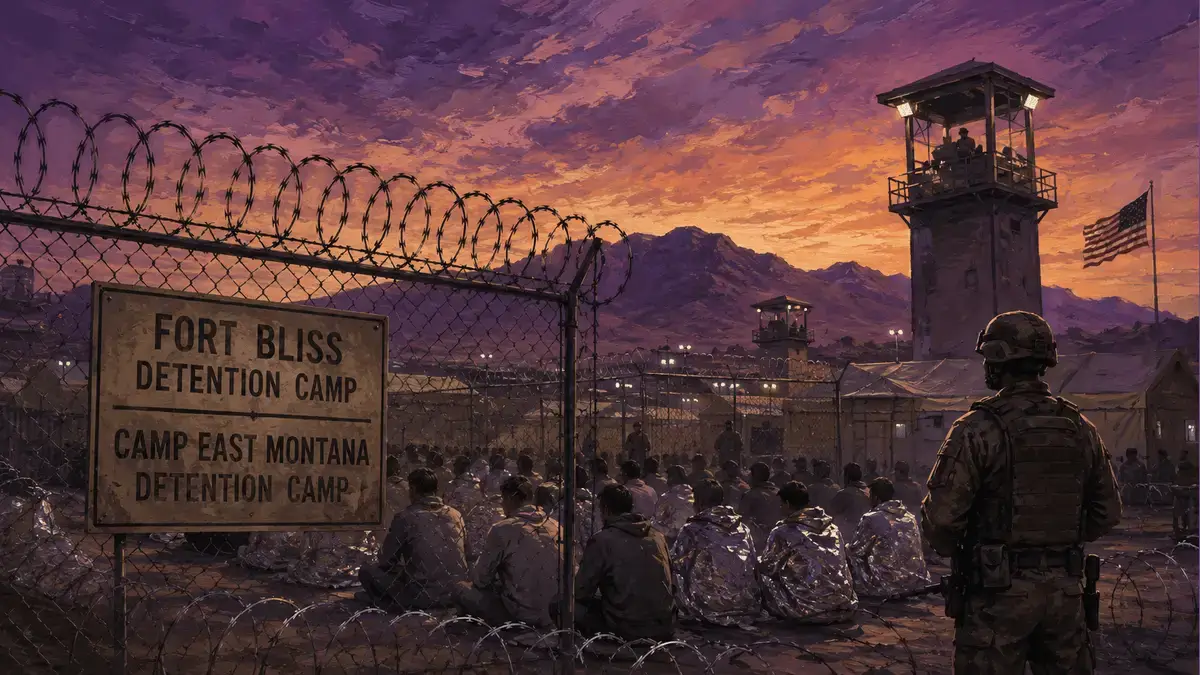

In the desert outside El Paso, on a stretch of Fort Bliss that once held Japanese Americans in a World War II internment camp, the federal government built its largest immigration jail out of tents. It’s called Camp East Montana.
This is a camp where innocent people are dying from a preventable illness, taking their own lives, being murdered by guards for asking for an inhaler, or volunteering to self-deport just to escape the cruelty
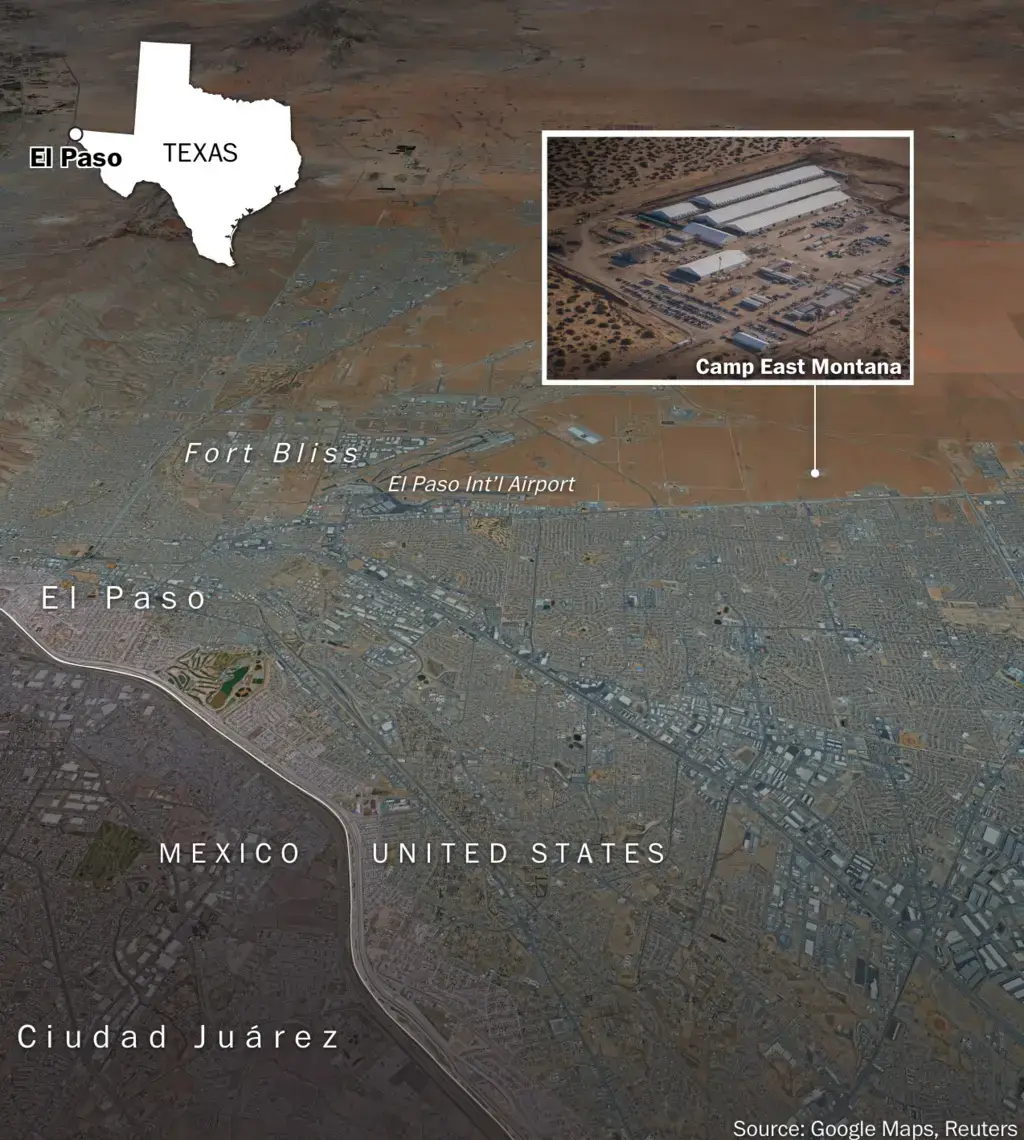
It was designed to hold 5,000 people, thrown up in a matter of weeks by a contractor that had never run a detention facility, and filled with human beings before ICE ever inspected it.
Now a sweeping New Yorker investigation by Jonathan Blitzer, "Locked Away," pulls together everything we know about this place — the deaths, the medical neglect, the families split across a border — and when you piece it all together, it is far more damning.
The camp's misery isn't a management failure. It's the point.
One former detainee told the AP he overheard staff running a betting pool on which detainee would kill himself first.
Detention as a weapon
A former senior ICE official told Blitzer that the administration wants detention to look and feel so bad that people abandon their legal cases and leave the country.
Talking to NPR's Fresh Air this week, Blitzer described how that works on the ground.
Detainees at Camp East Montana almost never see an actual ICE official — the camp runs on layers of private subcontractors — but when one does show up, it's to ask a single question: ‘who's ready to sign deportation papers and go?’
The context makes the strategy obvious.
More than 60,000 people now sit in ICE detention nationwide, up from about 39,000 when Trump retook office.
Fifty-two people have died in ICE custody since then, a significant share of them by suicide.
Agents are arresting roughly 2,000 people a day. And at Camp East Montana, ICE's own data shows 80 percent of detainees have no criminal record at all.
What the government built at Fort Bliss
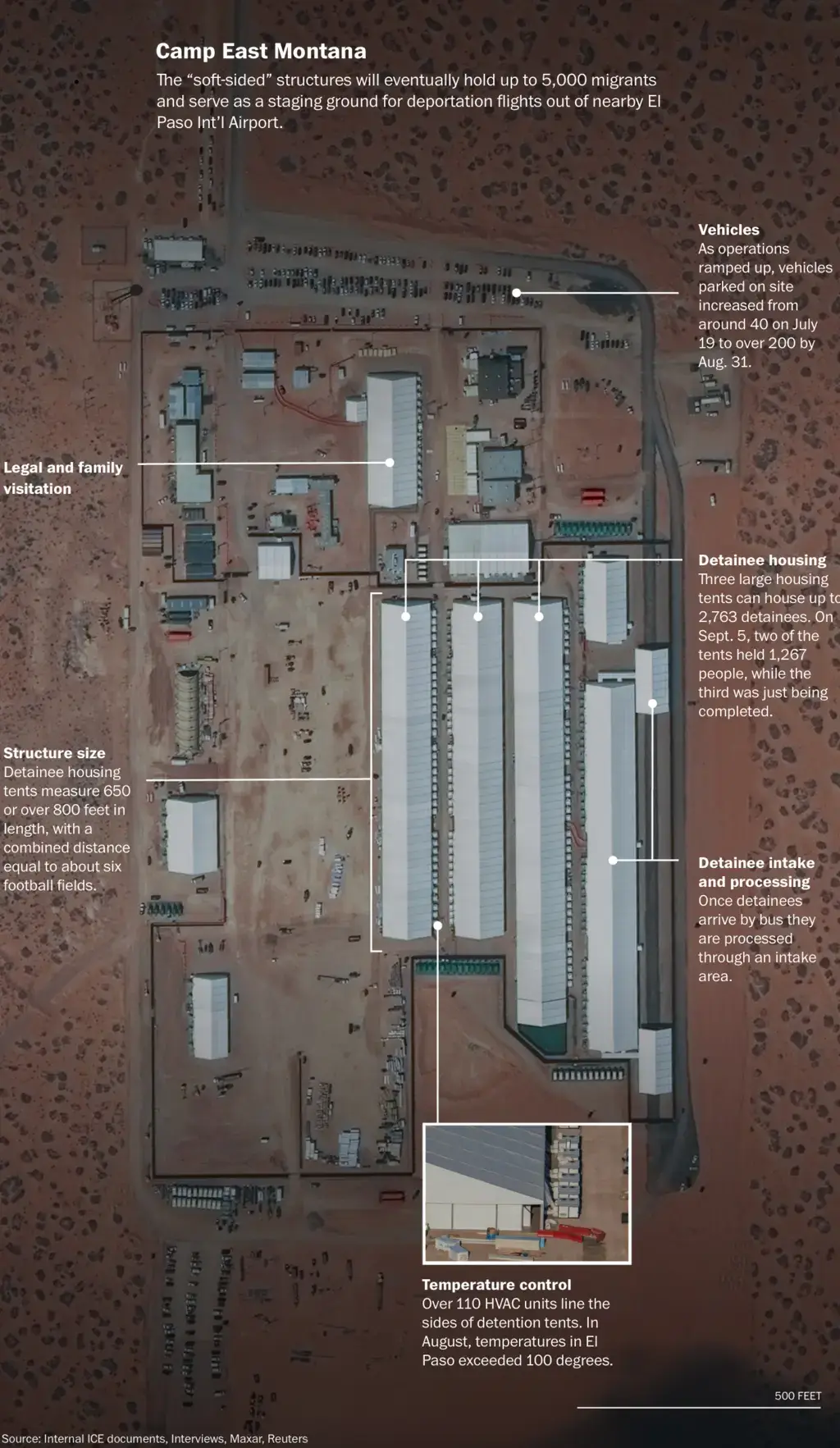
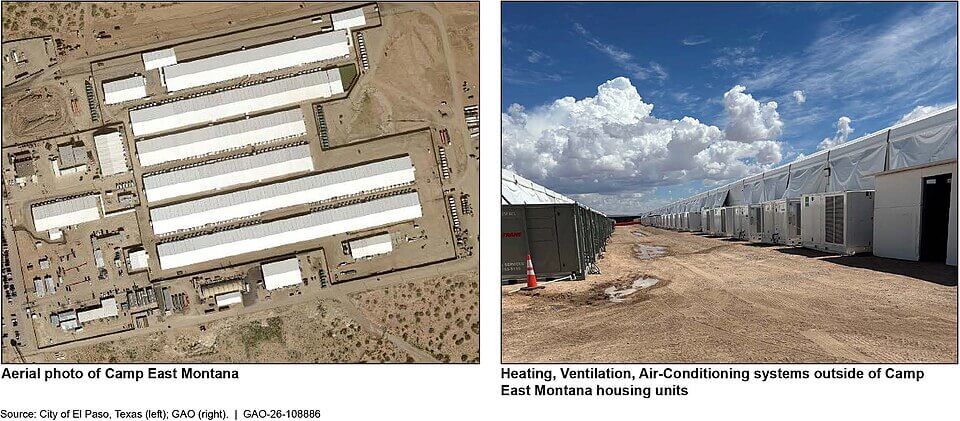
The camp opened in August 2025 after a rushed contracting process handed Acquisition Logistics LLC — a company with zero detention experience — a deal worth up to to $1.3 billion.
A June report from the Government Accountability Office found the expedited award wrecked basic planning, that ICE billed taxpayers for 5,000 people's meals and services while holding around 1,600 by late February, and that the agency violated its own policy by never inspecting the site before sending people there.
In March, after months of scrutiny, ICE quietly swapped in a new contractor. The tents stayed.
The earliest detainees, in sworn declarations gathered by the ACLU, described living inside an active construction site: dust filling the tents, water that worked sporadically, sewage leaking into the areas where people ate and slept, weeks with no outdoor access, and broken tablets and phone booths that left them cut off from lawyers and family.
Medical care amounted to Advil.
Some men mopped up fetid bathroom leaks with their own underwear because no one else would clean.
El Paso dispatch records show 130 911 calls from the camp between August 17 and January 20 — chest pain, seizures, breathing crises, suicide attempts.
The emergency logs back them up.
An Associated Press investigation found staff called 911 nearly every day for five months while the camp held as many as 3,000 people.
One former detainee told the AP he overheard staff running a betting pool on which detainee would kill himself first.
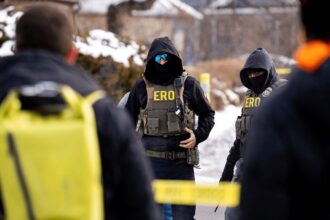

In May, the ACLU, the Texas Civil Rights Project, Human Rights Watch, and others filed a federal class-action lawsuit alleging people are confined to crowded, windowless tents 23 hours a day, beaten and harassed by guards, thrown into solitary, denied care, and exposed to measles, tuberculosis, and Valley fever — conditions the suit says violate the Fifth Amendment.
Three deaths in six weeks
Between December 2025 and mid-January 2026, three men died at Camp East Montana.
One was Geraldo Lunas Campos, a Cuban man with asthma who also needed psychiatric medication he was never given.
On January 2, other detainees heard him pleading for his inhaler while guards threatened him with solitary confinement.
He told them fine — solitary — just bring the medicine.
At least five detainees heard or saw what happened next, as guards piled on to restrain him. His last words, witnesses said: "I can't breathe. You're choking me."
ICE initially framed the death as a suicide. The El Paso County medical examiner ruled it a homicide by asphyxiation.
After a September site visit, a government inspector had warned superiors that someone was going to die at this camp — that even the cells meant for people on suicide watch weren't built to keep them alive.
Rey and Lidia
Blitzer builds the story around people, and two of them will stay with you.
Rey
Rey fled Cuba on a raft in 1994, spent eleven months at Guantánamo, and then did everything the government asked for three decades — including checking in with ICE every few months, without fail.
He built a family in El Paso and adopted his wife's son.
In October, at one of those routine check-ins, he was detained.
Rey is diabetic, has high blood pressure, and had recently been hospitalized with sepsis.
His first request was simple: call my wife, she has my medication.
They refused.
After six weeks without his medicine, convinced he would die in that tent, Rey signed the papers.
Within 72 hours he was in Mexico — a country he had never lived in.
He's in Ciudad Juárez now, a few miles and an entire world from his family, while his wife works to support two households.
Some weeks he goes without food.
Lidia
Lidia, a grandmother from Mexico, was driving to her cleaning job outside Minneapolis at 5:45 one January morning, on her daily Zoom prayer group, when two ICE cars boxed her in.
Her family learned of her arrest because she announced it into the prayer call.
Agents held her in a van disguised as a construction vehicle — ladders on top, safety vests in the windows — so neighbors wouldn't notice while they kept hunting.
Her 21-year-old son is a U.S. citizen serving in the Minnesota National Guard; she had a pending application for legal relief based on his service.
None of it mattered.
Swept up in Operation Metro Surge, she was shipped to Camp East Montana, where she spent three weeks in the clothes she was arrested in before anyone gave her a health screening, and caught COVID in a tent where warning signs went up for contractors — but no one told the women inside.
Half the women in her unit signed their own deportations. Lidia refused. Her son had told her from the first minute not to sign anything.
Stonewalling is part of the design

Congress has the legal right to make unannounced inspections of detention facilities. When El Paso's own representative, Veronica Escobar, asked to visit last August, ICE emailed back that the camp wasn't open yet.
Fifteen people were already locked inside.
It took a federal judge to force the government to admit lawmakers; Escobar now wants the camp closed.
And DHS's answer to the autopsy, the GAO report, the 911 logs, and the sworn testimony has been to stamp it all, in capital letters, "FALSE" — insisting detainees enjoy comprehensive medical care and dietitian-reviewed meals.
This same system killed two men in traffic stops in a single week this month — Lorenzo Salgado Araujo in Houston and Johan Sebastián Durán Guerrero in Biddeford, Maine — neither of them the target of the operation.
And the administration is budgeting billions for more detention warehouses across the country.
A lawyer told Blitzer that Camp East Montana is a preview of every one of them.
The people holding the line — groups like Las Americas Immigrant Advocacy Center, which helped Rey's family, and Estrella del Paso, which represents unaccompanied children — are being deliberately starved, with canceled contracts and nearly $1 million the government refuses to pay even after losing in court.
U.S. GAO
Remember what legal immigration detention is: civil confinement, not punishment.
No one in those tents is serving a sentence. The government is not allowed to weaponize detention to force outcomes — and that is precisely what it has built in the desert at Fort Bliss. The tents are still standing. The plan is to build more.