
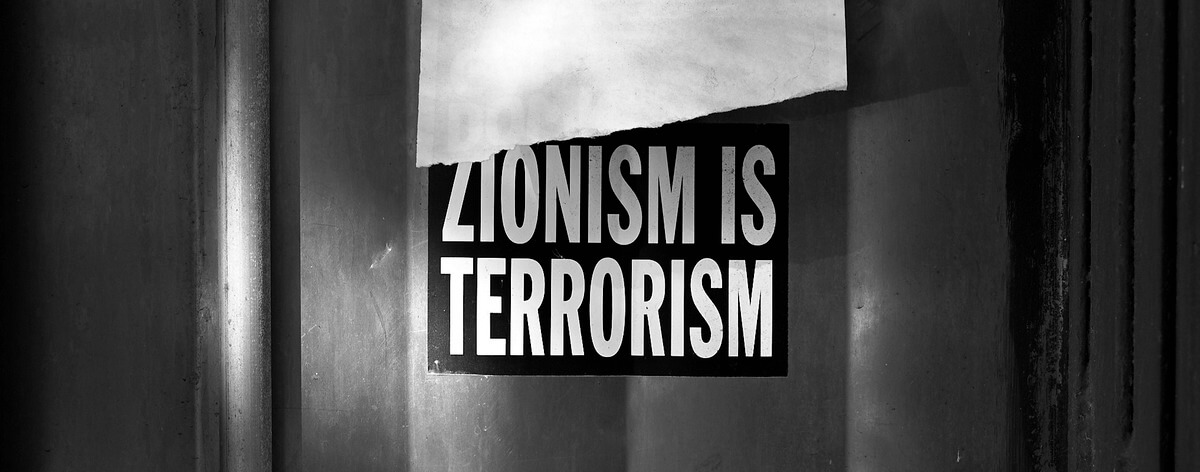

You have seen the word everywhere lately — shouted at protests, printed on placards, hurled as an accusation, worn as a badge. “Zionist” now gets stretched to mean everything from a settler torching an olive grove in the West Bank to a college sophomore who posted a flag emoji.
That blur is not an accident. When a word can mean anything, it can be aimed at anyone — and right now it is being aimed at a lot of people, including Jews.
The majority of Americans now have a negative opinion of Israel. It’s almost comical how news anchors and content creators will question “why?” with a straight face. The genocide in Gaza is a major contributor to the country’s shift away from our “special ally.”
Then there was a video of Ben-Gvir taunting and torturing activists from countries around the world.
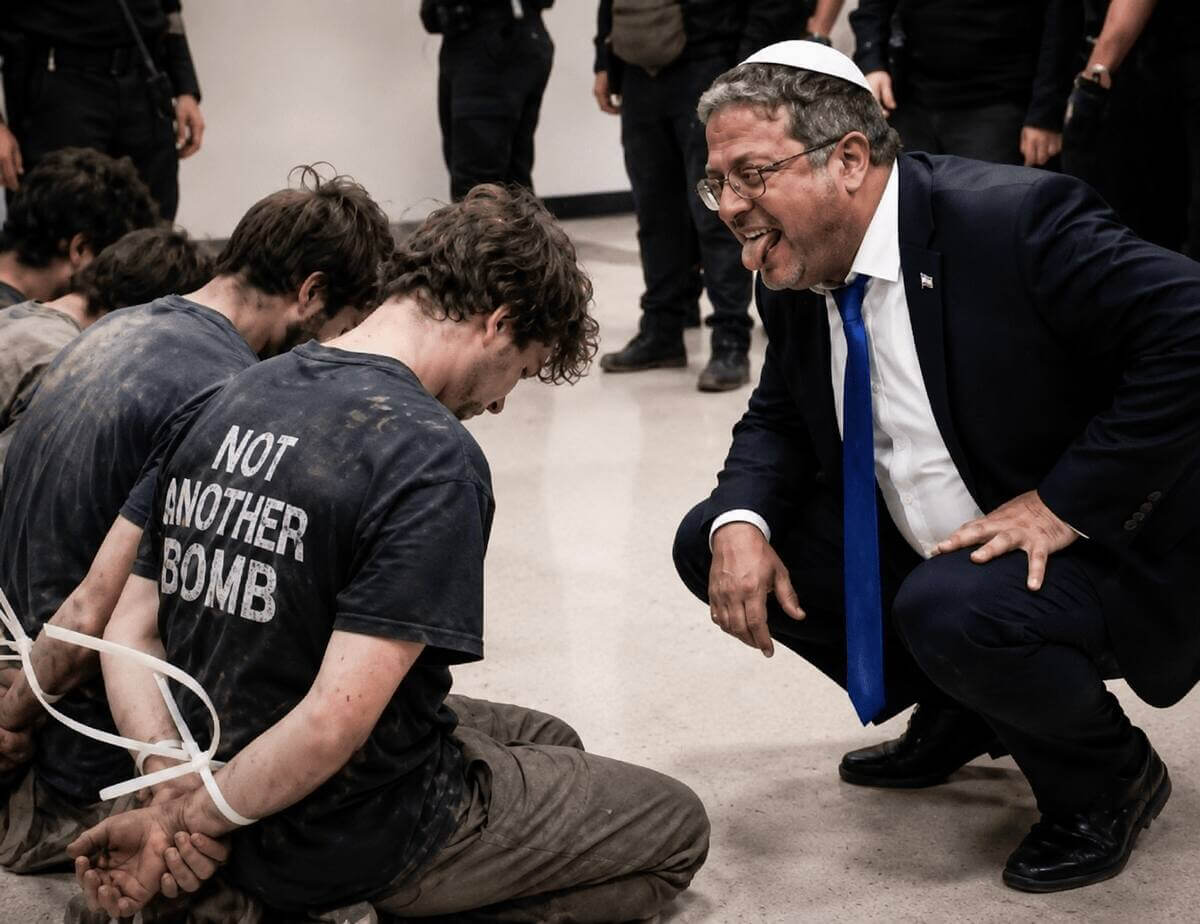
His statements and the brutal treatment of the people who were trying to save Palestinias from starving to death, angered world leaders.
Let’s define some terms, because facts are the one thing the other side of this fight doesn’t want you to have.
Zionism is not a vague insult, and it is not a synonym for being Jewish.
It is a specific political ideology, with a specific history and a specific record — and once you can see it clearly, you can say so out loud without anyone getting to call you an antisemite for it.

“Zionism is a political ideology and not Judaism itself: Jews are walking away from it in droves.”
What is Zionism?
Zionism is a 19th-century political ideology built around a Jewish ethnostate.
It emerged in a Europe that had decided Jews were permanently foreign, and the antisemitism it answered was lethally real — pogroms, exile, and the Holocaust to come.
None of that is in dispute, and no honest account erases it.
The disagreement is about the answer Zionism offered. As Jewish Voice for Peace — the largest anti-Zionist Jewish organization in the country — puts it, Zionism was “a false and failed answer” to a real question. It defined Jewish “self-determination” in a narrow nationalist sense that treated Jewish life everywhere else as something to be ashamed of.
The classical Zionist concept of shlilat hagalut — “negation of the exile” — wrote off centuries of Jewish culture and community, sometimes in nakedly antisemitic language.
“Shlilat HaGalut” is unequivocal – life outside of Israel is unsustainable. To be “galuti” (diasporic) is inherently “shlili” (negative). Zionist ideologues and writers cast the Jews of the Diaspora as weak, rootless and compromised…
Haaretz
JVP documents the receipts: the Zionist writer Micah Josef Berdichevsky called diaspora Jews “not a nation, not a people and not human.”
The literary icon Yosef Hayyim Brenner called them “gypsies, filthy dogs and inhuman.”
And A.D. Gordon — not a fringe extremist but a founding figure of Labor Zionism, the movement’s supposedly gentle, kibbutz-building left — called them “a parasitic people.”
That quote from Gordon dismantles the most common dodge: that the ugliness is just the settler fringe and the rest of Zionism is fine. It was never confined to the fringe.
From the start, Zionism also ranked Jews against each other by ethnicity. It was an Ashkenazi-led — that is, European — movement that othered and discriminated against the Jews of the Middle East and North Africa it lumped together as Mizrahim, “the Eastern Ones.”
In Israel, Jews of color from the Arab world, North Africa, and East Africa have faced systemic discrimination, harassment, and violence for generations.
One of Israel’s chief rabbis called black people “monkeys” in 2016. In 2018, he said that “All non-Jews – Africans, Arabs, or otherwise – could only live in Israel if they agree to serve the country’s Jewish population.”
The starkest case is the Beta Israel — Ethiopia’s Jews, airlifted to Israel in the 1980s and ’90s and then treated as a problem to manage rather than a community to welcome.
They remain among the poorest and most marginalized people in the country, funneled into poorer neighborhoods and separate school tracks, shut out of jobs, and policed as suspects — Ethiopian Israelis are about 1.7 percent of the population but, by the government’s own anti-racism unit, more than 3 percent of arrests.

The specifics are hard to read as anything but racial: Israeli blood banks were caught quietly throwing away blood donated by Ethiopian Jews; Ethiopian women reported being pressured into long-acting birth control that pushed down the community’s birth rate; and police violence has killed unarmed young men, from the 2015 beating of soldier Damas Pakada to the 2019 killing of 18-year-old Solomon Tekah, which sent thousands into the streets chanting “Black lives matter.”
And the deepest cut goes to the core of the ideology itself: a state that flew them in as Jews under the Law of Return then let its religious establishment question whether they were really Jewish, at times demanding conversion rituals to prove it.
The hierarchy was built in.

Strip away the euphemisms and what you have is ethnonationalism: a state defined by and for one ethnic group, where belonging is ranked by blood and the land’s existing inhabitants are an obstacle to be moved.
That is the comparison a growing movement now draws — that Zionism functions, in the Israel of today, the way other supremacist nationalisms function in the countries they capture.
White nationalism in the United States is the closest analogy most Americans will recognize: an ideology that sorts human beings into who belongs and who is in the way.
The internal arguments Zionism has always had — secular versus religious, faster versus slower, where to draw the borders — were arguments about tactics and timing.
They were not arguments about whether to build an ethnically defined state on land where another people already lived.
What Was Built, and at What Cost
The land was not empty. It was home to a Palestinian Arab majority, and building a Jewish-majority state there required removing them.
That is what happened in 1948. As the British Mandate ended and Israel declared independence, more than 700,000 Palestinians — roughly half the Arab population — were expelled or fled, in the catastrophe Palestinians call the Nakba.
Hundreds of villages were emptied and destroyed, massacres like the one at Deir Yassin sped the exodus, and Zionist forces ended the war holding about 78 percent of historic Palestine.
This was carried out under David Ben-Gurion’s Labor Zionist leadership — the mainstream, not the margins.
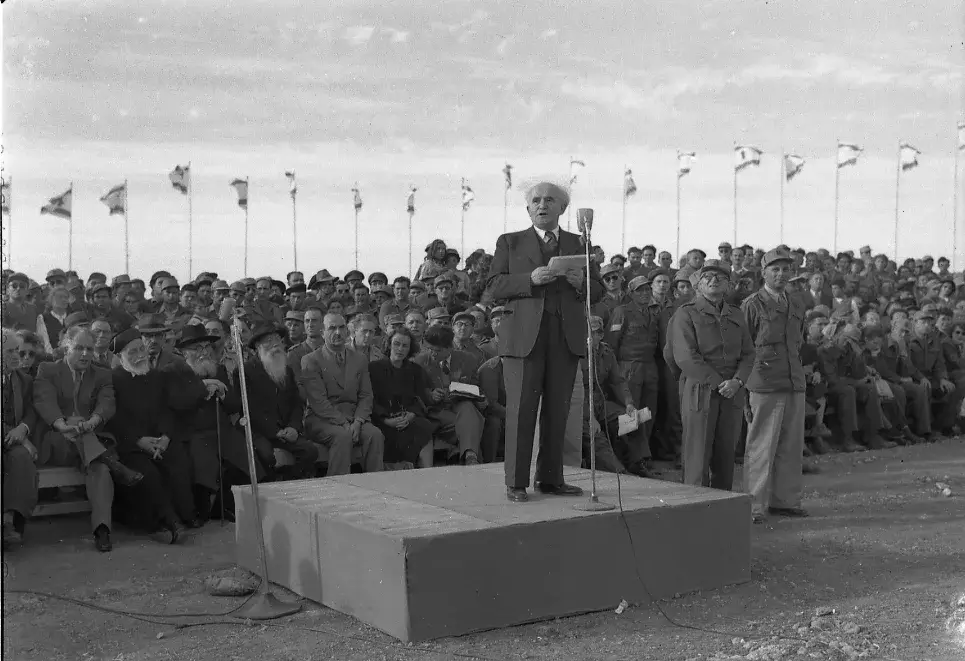
The idea of “transfer,” of moving the Arab population out, runs straight through mainstream Zionist planning and leaders’ private writing well before a single shot was fired.
Israel’s own “New Historians” later confirmed the expulsions from the state’s archives.
The dispossession was not a tragic accident at the edges of an otherwise noble project. It was the project working as designed.
The Mask Off: “Greater Israel” and the Cabinet
What you are reacting to in the news — the settlers, the annexation maps, the “God gave us this land” certainty — is that same logic with the mask off.
After Israel seized the West Bank in the 1967 war, a messianic religious-nationalist movement read the conquest as the literal hand of God — the recovery of the biblical “Judea and Samaria,” the start of redemption.
The ideologue was him; the vehicle was the settler movement Gush Emunim; the goal was Jewish sovereignty over everything from the river to the sea. That is the “promised to us 3,000 years ago” theology, and for most of Israel’s history it lived on the political fringe.
It does not live there now. It sits in the cabinet.
Finance Minister Bezalel Smotrich and National Security Minister Itamar Ben-Gvir built their power from Benjamin Netanyahu’s need for a coalition and spent it without restraint.

In September 2025, Smotrich unveiled a plan to annex 82 percent of the West Bank, leaving Palestinian cities as disconnected islands. Listen to Smotrich say it in his own words below.
In February 2026, the security cabinet handed administrative control of the West Bank from the military to government ministries — what legal scholars call de facto annexation.
Smotrich said that the next government should “encourage migration” of Palestinians out of the territory, while settler violence runs essentially unpoliced under Ben-Gvir’s ministry.
This is not a betrayal of Zionism. It is Zionism’s hierarchy of belonging turned into open policy.
ABC News aired a report on Israeli Settler violence in the West Bank and how it had been “ramping up” a few months ago.

Gaza
The same government has prosecuted a war in Gaza that international investigators no longer hedge about.
In September 2025, the UN Commission of Inquiry concluded that Israel has committed genocide against Palestinians in Gaza — four of the five acts named in the 1948 Genocide Convention — and found that Israel’s president, prime minister, and former defense minister had incited it.
A June 2026 follow-up report documented the deliberate targeting of Palestinian children, with more than 70,000 Palestinians killed and children still dying after the October 2025 ceasefire.
Israel rejects the findings as a “libelous” smear; the International Court of Justice has separately ordered Israel to prevent genocidal acts, orders the Commission says Israel has ignored.
These are children. That is not a flourish — it is the finding of the UN’s own investigators, and it is the human heart of why people are in the streets.
Before the UN Commission’s report, a journalist from the New York Times released an investigation into the horrific torture and sexual violence that was happening in Israeli prisons.
The Israeli human rights group, B’Tselem, provided testimonials from Palestinian prisoners who were released from those prisons. The stories — from victims as young as 16 — were difficult to read.
Resist Hate published a story about that investigation, including testimony from several victims.
“Not in Our Name”: the Jewish Argument Against Zionism
Here’s something the people “keeping lists” need you to forget. Opposing Zionism is not self-hatred, and it is not new.
As JVP says, as long as Zionism has existed, so has Jewish dissent against it.
When the movement was being organized, much of the Jewish world said no — Reform Jews who saw themselves as full citizens where they already lived, socialist Bundists who wanted liberation in the diaspora, Orthodox Jews who held that a state before the Messiah was a sin, a tradition that survives in groups like Neturei Karta.
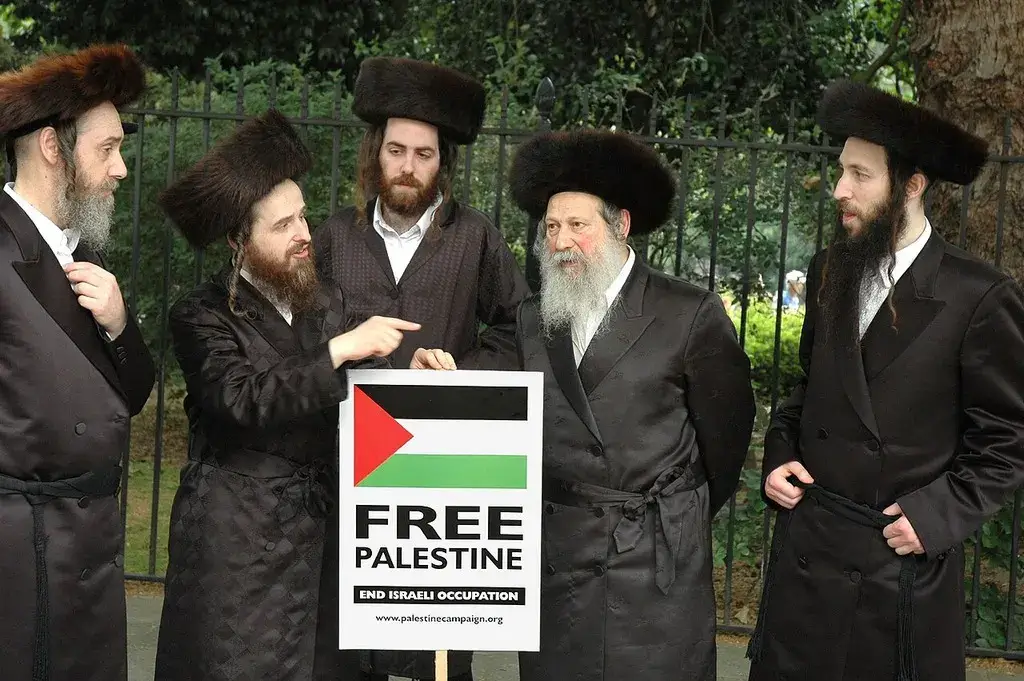
That dissent never disappeared, and today it is surging. Jewish Voice for Peace, explicitly anti-Zionist, has tens of thousands of members and packs convention halls.
IfNotNow mobilizes young Jews against the occupation.
Rabbis for Ceasefire, Jewish Currents, and the new Jewish Diaspora Movement are building parallel Jewish institutions on the argument that you do not have to be a Zionist to be a Jew.
The numbers tell the same story.
A Washington Post survey found that 61 percent of American Jewish adults believe Israel has committed war crimes in Gaza, 39 percent called it genocide, and nearly half of Jews under 35 now favor a single democratic state for everyone “between the river and the sea.”
Researchers who actually sit down with Jewish anti-Zionists find that most arrived there out of conscience and Jewish values — because of their Jewishness, not in spite of it.
That is the cleanest proof there is that Zionism is a political ideology and not Judaism itself: Jews are walking away from it in droves.
Which is Exactly Why the Lists Exist
If criticizing Israel were truly the same as hating Jews, the people running blacklists would have a case.
The reason they don’t is in every one of those polls — so to keep the smear alive, they have to erase the Jews who disprove it.
And they do: the lists go after Jewish critics and Jewish organizations by name.
Sites like Canary Mission and StopAntisemitism exist to collect names, photos, and employers of people who speak up for Palestinians, and to make them pay.
Canary Mission has published profiles of roughly 5,000 people; StopAntisemitism brags that of more than 1,000 people it doxxed after October 2023, over 400 were fired.
In 2025, DHS built a “tiger team” to comb those profiles, and the government used them to detain people like Tufts student Rümeysa Öztürk, whose entire offense was co-writing one op-ed, and Columbia’s Mahmoud Khalil.

The dragnet is so wide it sweeps up Jewish activists, anti-Zionist Jewish students, and Jewish groups like JVP and IfNotNow — the ADL has branded those Jewish organizations “hate groups.”
The blacklist does not check your synagogue membership before it ruins your life, because its real target was never antisemitism. It was dissent.
This is McCarthyism with a search function, and it is now facing class-action lawsuits for it. (See Resist Hate’s full reporting on these blacklists and the people they’ve targeted.)
The Bottom Line
Zionism is a specific political ideology, born of real persecution, that built an ethnostate by displacing another people and by ranking human worth — including Jewish worth — by ethnicity.
The government running Israel today is that logic with nothing left to hide it: annexation as policy, “encourage them to leave” said into a microphone, named by the UN’s own investigators.
And the loudest evidence that none of this is simply “the Jewish position” is the Jews refusing it — in the streets, in the polls, in growing numbers.
That is precisely why the smear machine has to come for them too.
Knowing what the word actually means is what lets you say all of this without fear, name a government’s crimes without apology, and recognize that some of the bravest voices against this slaughter are Jewish ones.