

Summary
In March 2025, the country's leading fascism scholars fled to Canada and were called alarmists.
Sixteen months later, protesters are serving 100-year "terrorism" sentences, teachers are on trial as "Antifa," and the United States is no longer rated a liberal democracy. This is the path to fascism we were warned about.
This article looks at America’s journey towards authoritarianism. It examines how far we’ve moved away from liberal democracy and how close we are to fascism in America.

(CC BY-SA 4.0)
In late March 2025, three of America's most respected scholars of fascism — historians Timothy Snyder and Marci Shore, and philosopher Jason Stanley, author of How Fascism Works — announced they were leaving Yale for the University of Toronto.
People who spend their lives studying how democracies die had looked at their own country and made a decision.
Shore was blunt: "The lesson of 1933 is that you get out sooner rather than later."
Plenty of people rolled their eyes. Alarmist. Dramatic. Tenured hysteria.
Sixteen months later, eight anti-ICE protesters are serving federal prison sentences of 30 to 100 years as convicted "Antifa" terrorists.
Fifteen Minnesotans — teachers, a professor, a union carpenter, transgender rights organizers — are awaiting trial under the same label.
The State Department has invented a "Far-Left Terrorism" category and named American citizens under it.
And for the first time in more than 50 years, the United States is no longer classified as a liberal democracy.
The scholars weren't being dramatic. They were reading the map.
The Warnings Were Specific — and Testable
The experts didn't offer vibes. They offered predictions.
Snyder's On Tyranny opens with the lesson he considers most urgent: "Do not obey in advance." Authoritarians don't seize most of their power — it's handed to them by institutions that comply before they're forced to.
Stanley's work laid out the machinery: a mythic past, a nation described as "occupied," enemies within, and the redefinition of political opposition as criminality.

Ruth Ben-Ghiat, the NYU historian who literally wrote the book on strongmen, warned before the inauguration that the second term would follow the authoritarian playbook: purges of civil servants, immunity for loyal enforcers, and the military turned inward against the "enemy within."
The political science profession agreed.
In Bright Line Watch's benchmark survey, more than 500 scholars rated American democracy at 67 out of 100 after the November 2024 election.
Weeks into the new term, the rating had plunged to 55 — a collapse with no precedent in the survey's history.
So the predictions were on the record. What happened next was the test.
2025: Obeying in Advance
Day one delivered the first data point: pardons for roughly 1,500 January 6 defendants, including those convicted of assaulting police.
The message was unmistakable — political violence in service of the leader is forgivable.
Political opposition, as the country would soon learn, is not.
Then the institutions began folding, exactly as Snyder warned. Columbia University capitulated to federal demands after $400 million in funding was held hostage — the event Stanley says finalized his decision to leave.
Major law firms cut deals.
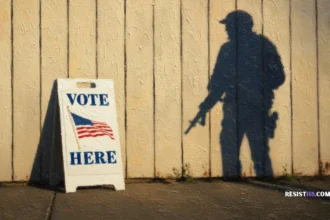
Legal residents were shipped to a foreign prison without due process.
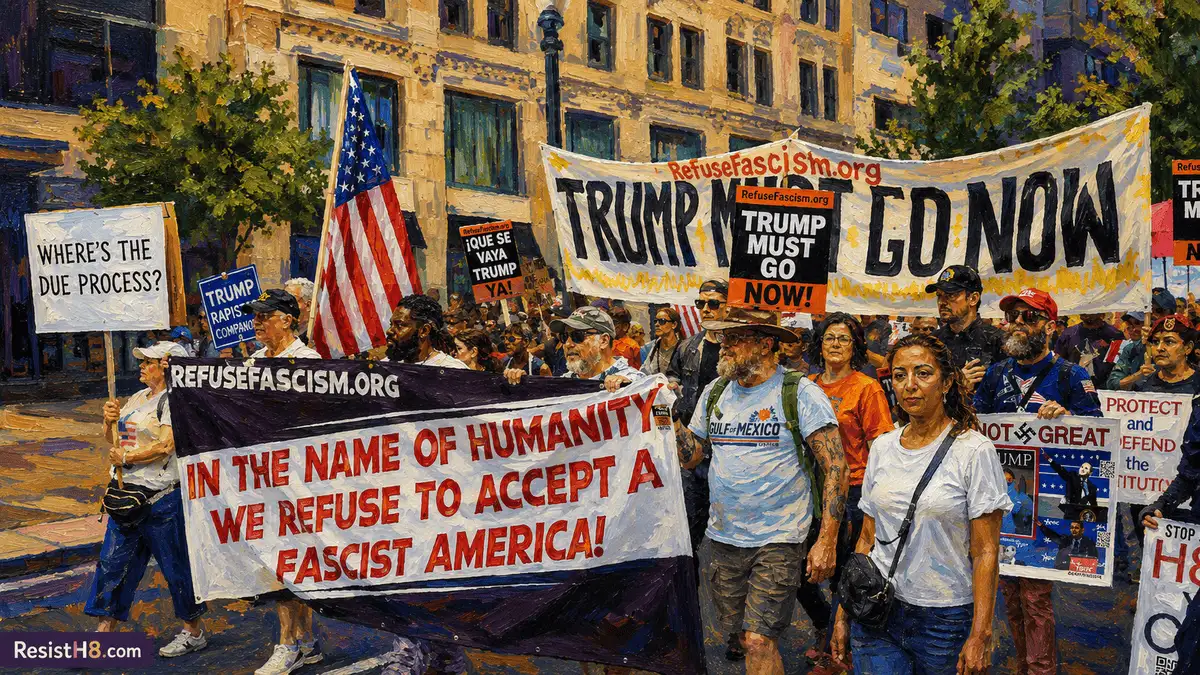
By June, Marines and a federalized National Guard were on the streets of Los Angeles over the governor's objection.
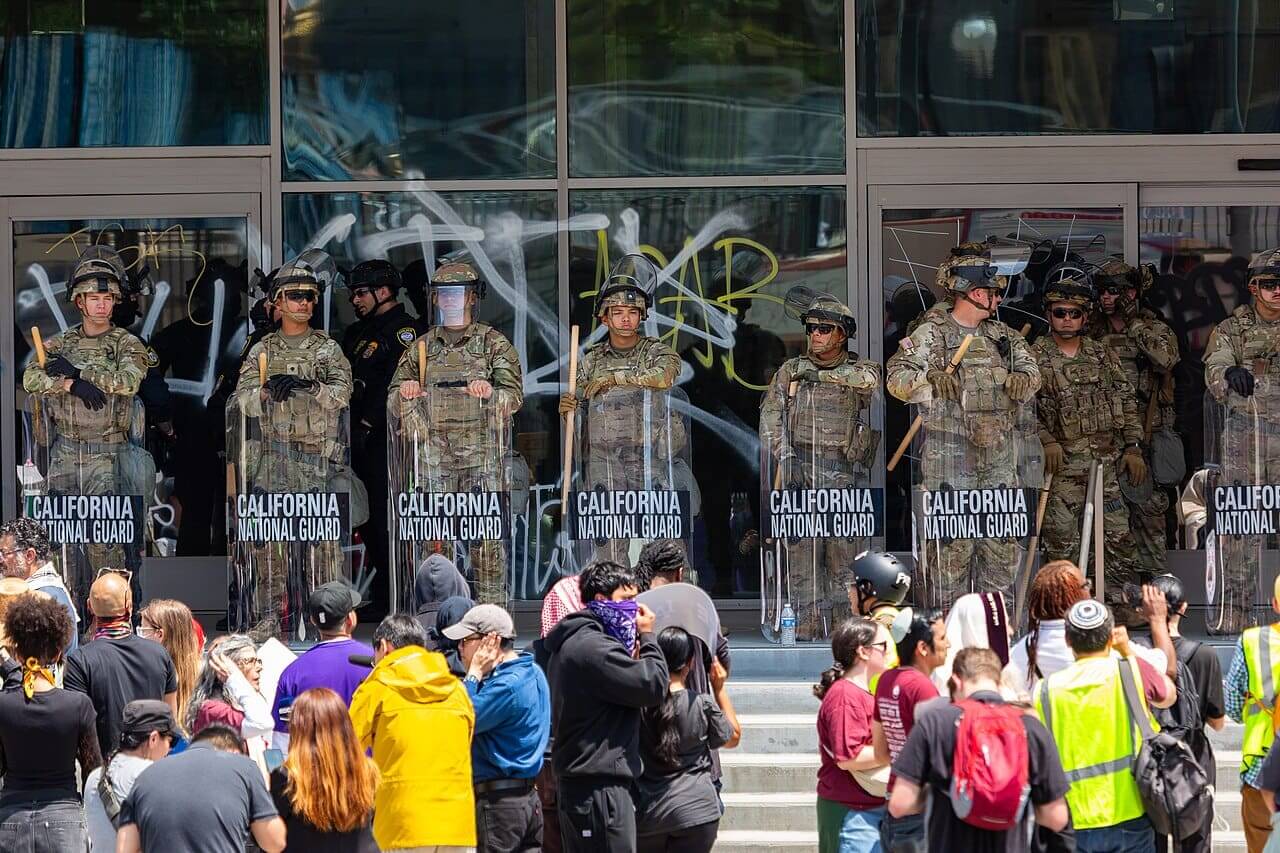
Washington, D.C., followed in August. Chicago and Portland after that.
September brought the legal architecture. Days after declaring "Antifa" a domestic terrorist organization — a designation with no basis in law, applied to something that isn't an organization — the president signed National Security Presidential Memorandum 7, directing federal agencies to disrupt networks "animated" by beliefs including "anti-Americanism, anti-capitalism, and anti-Christianity" and hostility toward traditional views on family and religion.
The ACLU warned that those categories sweep in views held by millions of ordinary Americans.
The Brennan Center called the orders an attempt to criminalize opposition itself.
That's not a slippery slope argument. It's the text of the policy: targeting people for what they believe.
2026: The Destination Comes Into View
In January, Operation Metro Surge brought thousands of federal agents to the Twin Cities.
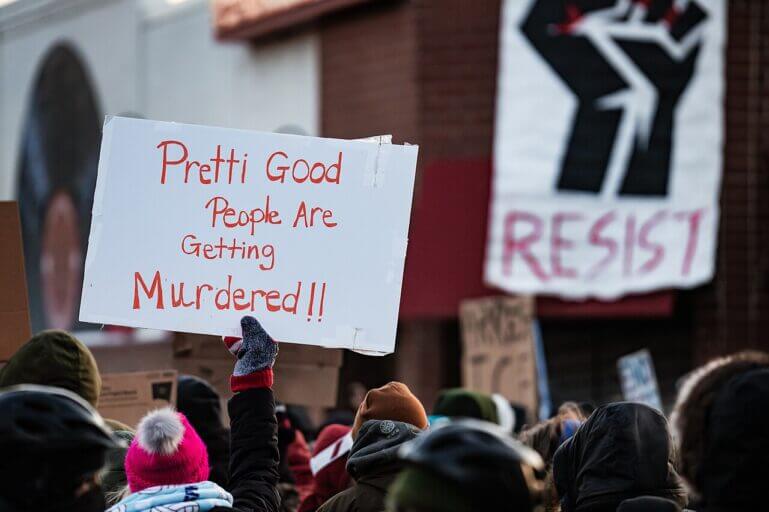
Residents who came out to observe and protest were met with force; more than 150 protesters were charged federally, and 37-year-old Alex Pretti was shot and killed.
Then the machinery built in September 2025 engaged.
On June 16, prosecutors indicted 15 Minnesotans — the "Minnesota 15" — for conspiracy to impede federal officers, in a case the Justice Department explicitly tied to NSPM-7 and the White House celebrated as a blow against the "Antifa terrorist network."
The defendants are teachers, trade workers, artists, and activists. At his own press conference, the U.S. attorney bringing the case could not define what "Antifa" is.
Here you go, Mr. U.S. Attorney:
One week later, a federal judge in Texas showed them what's at stake.
On June 23, eight defendants from the July 4, 2025 protest outside the Prairieland ICE detention center — billed as the first federal "antifa" terrorism case — received sentences ranging from 30 to 100 years.
Benjamin Song, convicted of wounding a police officer, got 100 years. One man received 30 years for conspiring to conceal documents—the combined total: 450 years.
For perspective, the longest sentence handed to any January 6 defendant — for seditious conspiracy against the United States — was 22 years. And every one of them was pardoned.
Those Texas sentences now hang over the Minnesota 15 as they await trial.
And in July, Secretary of State Marco Rubio convened a global summit on "Far-Left Terrorism" while a State Department report named 43 American citizens and organizations — including elected officials and the Democratic Socialists of America — as threats.
So Where Are We on the Path?
Here's the honest scorecard, from the people whose job is keeping score.
The V-Dem Institute, which has measured democracy in 202 countries for decades, downgraded the United States in March from "liberal democracy" to "electoral democracy" — the first time in over half a century — and found American freedom of expression at its lowest point since the end of World War II.
The pace of the collapse, V-Dem wrote, is "unprecedented in modern history." Freedom House still rates the U.S. "free," but at 81 points and falling — a 12-point slide since 2005, triple the average decline of European democracies.
Harvard's Steven Levitsky, co-author of How Democracies Die, says the country now fits the definition of competitive authoritarianism: elections still happen, but the state's machinery is weaponized against opponents and wielded as a shield for allies.
He coined the term in 2002 for countries like Serbia and Peru, and he "never imagined that we would apply it to the United States."
To be fair to the full debate: some scholars maintain America remains a democracy, pointing to courts that still rule against the administration, juries that still acquit protesters, enormous street demonstrations, and a press that — battered as it is — keeps reporting.
They're not wrong that resistance is alive. Federal judges have dismissed politically tainted prosecutions and threatened ICE officials with criminal contempt.
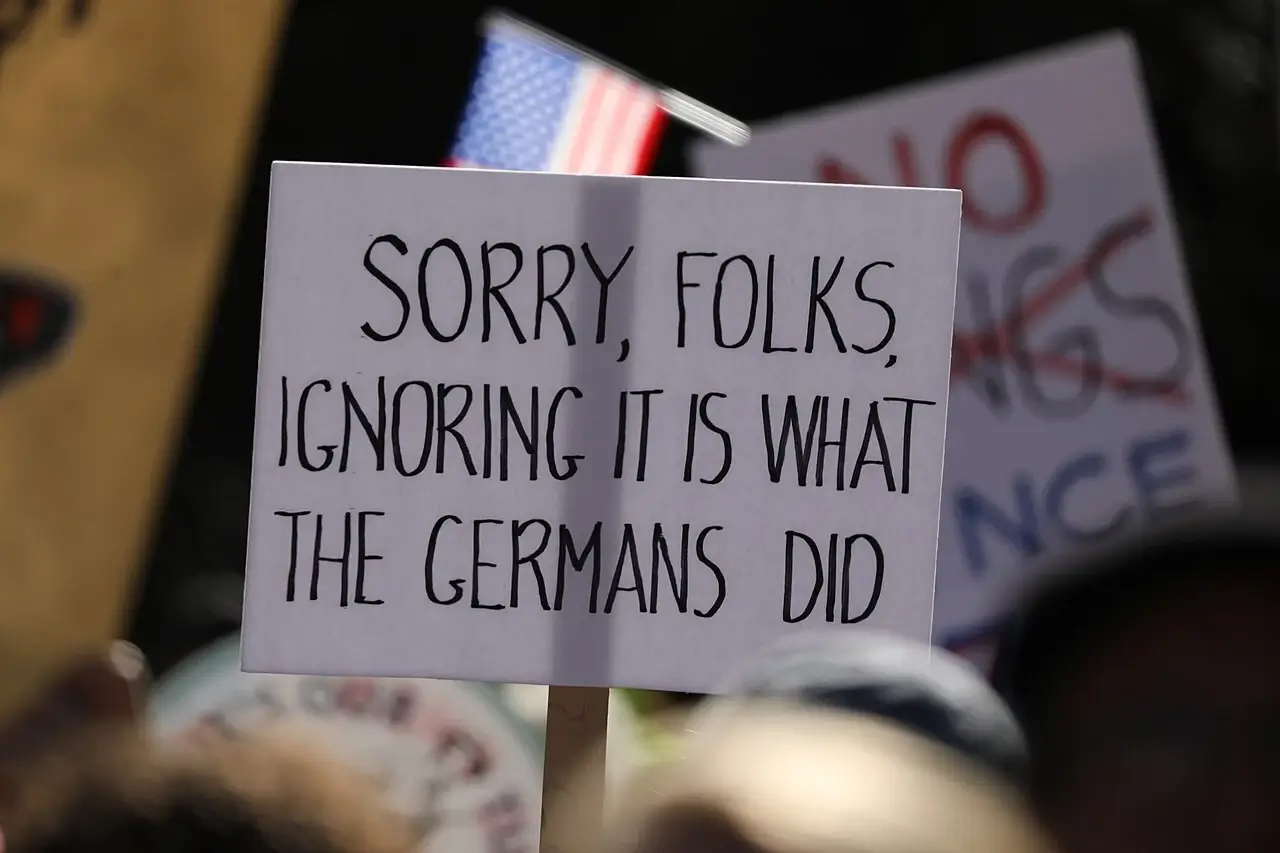
Juries in Los Angeles and Washington have refused to convict. Those are real brakes, and they matter.
But notice what the optimists' evidence actually is: the system still sometimes says no. That is not the description of a healthy democracy.
It's the description of a country partway down a road — far enough that the destination is visible, not so far that the exits are gone.
So, are we already there?
If "fascism" means the finished product — a one-party terror state with no elections and no courts — then no, and that distinction is precisely why this moment matters.
But if the question is whether the fascist playbook is being run, the people who wrote the field guides have answered: they warned us, they left, and everything they predicted is now a court record.
V-Dem's director says the November midterms will be the critical test of whether American democracy falls further.
One last data point, for hope rather than comfort: this spring, after 16 years of perfecting the competitive-authoritarian playbook, Viktor Orbán's party lost Hungary in a landslide to a unified opposition.
These regimes are not invincible. They fall when people refuse to obey in advance — which was, you'll remember, lesson one.