
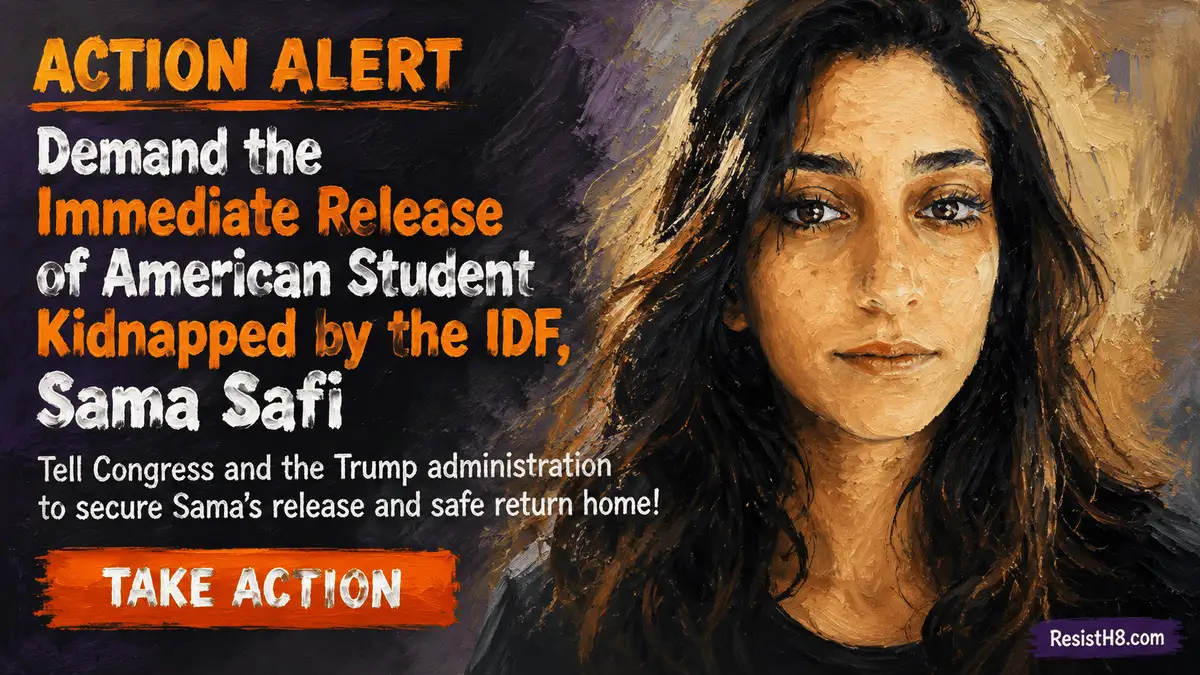

The soldiers came for Sama Safi at three in the morning.
Ahmed Safi woke to pounding on the door of his apartment building in Birzeit, a town just north of Ramallah in the occupied West Bank. He assumed they were there for someone else.
They weren't. He told Middle East Eye the family was "surprised, even shocked" when it became clear the raid was for his 20-year-old daughter.
Sama Safi is a psychology student at Birzeit University, the largest university in the West Bank. She is also an American citizen. She told the soldiers that.
According to Sen. Chris Van Hollen of Maryland, who spoke with her mother, it made no difference. They took her anyway, without explanation, and for days neither her family nor the U.S. Embassy knew where she was.

That was June 2. As of the most recent public reporting, Sama Safi is still in an Israeli military prison. She has never been charged with a crime.
What Israel Says, and What the File Actually Holds
An Israeli military spokesperson told The Guardian that Safi and three other Birzeit students were arrested for "promoting hostile terrorist activity and additional terrorist-related activities."
That sounds similar to the U.S. State Department’s new designation, “Far-Left Terrorism.”
Specifically, Israeli authorities have linked her to a campus group called al-Qutub, which they say is tied to the Popular Front for the Liberation of Palestine, an organization both the U.S. and Israel designate as terrorist.
Here's the part that doesn't make the headlines. Safi's attorney is Lea Tsemel, an Israeli human rights lawyer who has spent five decades defending Palestinians in Israeli courts and who shared France's top human rights prize in 1996.
Tsemel says the case against her client comes down to one thing: a list of student names handed to the military by an informant.
Two other detained students, she says, gave up those names under interrogation — likely under duress. Belonging to a student bloc isn't a crime under Israeli law. Tsemel says the prosecution doesn't even dispute that the list is the whole of it.
No charges. No indictment. Just a list.
A Young Woman Who Needs Medicine
Safi lives with familial Mediterranean fever, a chronic autoinflammatory disease.
Newsweek reported that it can spike her fever to 105 degrees and cause severe inflammation and pain.

Her family says she spent months bedridden before the right treatment finally stabilized her: daily medication, plus an injection every three months that she has to leave the country to receive, in Italy.
She is now classified by Israel as a "security prisoner," a designation that comes with harsher conditions.
Tsemel has described what that looks like — Safi is brought to meetings bent forward, head down, hands cuffed behind her. She has been getting her daily medication, her lawyer says, but she is thin, and food for security prisoners is scarce.
Whether she'll be allowed to travel for her quarterly injection is a question that will be answered by a military judge.
Her family, some of whom flew in from Florida after her arrest, has not been allowed to see her.
She Is Not an Exception
This is where the story stops being about one student.
As of June 2026, Israel was holding 3,324 Palestinians in administrative detention — locked up with no charge and no trial — out of roughly 9,000 held as "security" prisoners overall, according to the Israeli rights group HaMoked.



The organization calls it one of the highest counts in decades. B'Tselem, another Israeli human rights group, has described the country's prison system since October 2023 as a network of "torture camps."
Palestinians in the West Bank are tried in military courts. Israeli settlers living in the same territory are tried in civilian courts. Same land, two legal systems, and the outcome depends on who you are.
A U.S. passport, it turns out, doesn't provide Americans with protections if they travel to Israel.
Sixteen-year-old Mohammed Ibrahim, a Florida-born American, spent more than nine months in Israeli detention over an accusation of throwing stones.
Rep. Ayanna Pressley shared a post about Ibrahim at the time.
He was released only after a sustained pressure campaign back home.
While inside, he witnessed the death of Walid Ahmad, a 17-year-old detainee; an autopsy by Israeli experts found severe, prolonged malnutrition. And in September 2024, Aysenur Ezgi Eygi, a U.S.-Turkish citizen, was shot and killed by Israeli forces at a West Bank protest.
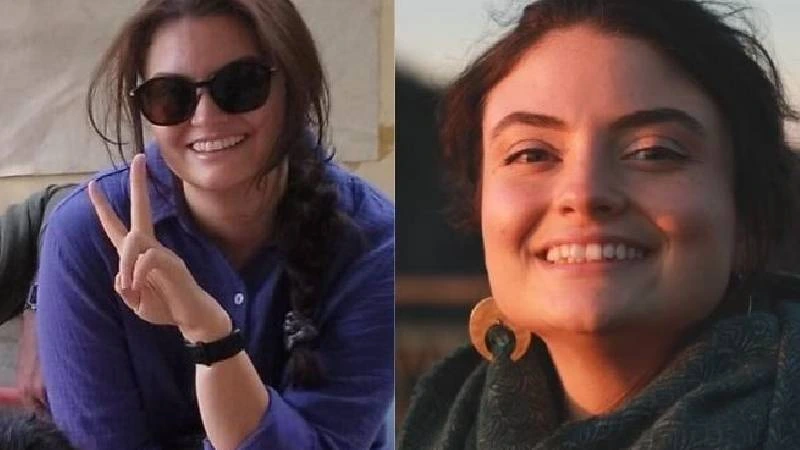
Brad Parker of the Center for Constitutional Rights told Truthout: for a Palestinian prisoner, American citizenship "means very little to Israeli authorities."
His comment was confirmed when U.S. Representative Ro Khanna was detained by armed Israeli settlers in the West Bank. When IDF soldiers arrived, they didn't help Khanna and his team — they aided the settlers who were detaining them by blocking the road.
What Washington Has Done, and What It Hasn't
At least five members of Congress have demanded Israel either charge Safi or free her. Van Hollen said he is tired of the Netanyahu government "taking American taxpayer dollars and then mistreating Americans."
Sen. Jeff Merkley of Oregon called it a "five-alarm fire." Rep. Ayanna Pressley said soldiers terrorized the family. Rep. Derek Tran of California wrote that the U.S. must "hold our allies to basic standards of equal justice under the law." Sen. Peter Welch and Rep. Rashida Tlaib have joined them.
A total of 9 Americans have been murdered in the West Bank since 2022. The U.S. government has not demanded accountability for any of their deaths.
Senator Van Hollen sent a letter demanding answers about the deaths that was signed by 30 of his colleagues.
In the past, Van Hollen called for the return of his constituent, Kilmar Abrego Garcia after he had been “mistakenly” deported to a “torture prison in El Salvador.
The Trump administration has done the minimum. The State Department says it's monitoring the Sama Safi case and cites privacy rules. A consular officer visited her and attended her first hearing. That's standard consular assistance — the floor, not a rescue.
There is a stronger tool available. The Secretary of State can formally designate an American as wrongfully detained, which hands the case to a special presidential envoy whose job is to negotiate that person home. Secretary Marco Rubio has not applied it to Sama Safi.
The Council on American-Islamic Relations, which led the campaign that freed Mohammed Ibrahim, has also pointed to the U.S.-Israel Mutual Legal Assistance Treaty, in force since 1999, as a way to compel Israel to show its evidence.
Robert McCaw of CAIR argues that U.S. Ambassador Mike Huckabee could resolve this with a single sentence: charge her or release her. He hasn't said it.
The Question In the Headline
Israel receives billions of dollars in American military aid every year. That is the relationship. So it is fair — necessary, really — to ask what the United States gets in return when a 20-year-old American girl is dragged out of her bed at 3 a.m., held for weeks on an informant's list, kept from her family, and left to hope a military judge lets her travel for the injection her body depends on.
Allies answer questions. Allies produce evidence. Allies do not hold your citizens indefinitely and then decline to say why.
Sama Safi should be in a classroom in Birzeit. Instead she's a test case for whether an American passport means anything at all when the person holding it is Palestinian.
You Can Help
If you want to do something: CAIR and the American Muslims for Palestine action alert both have tools for contacting your representatives, and the IMEU Policy Project is running a call campaign. It worked for Mohammed Ibrahim. Pressure is the only thing that has ever worked.