

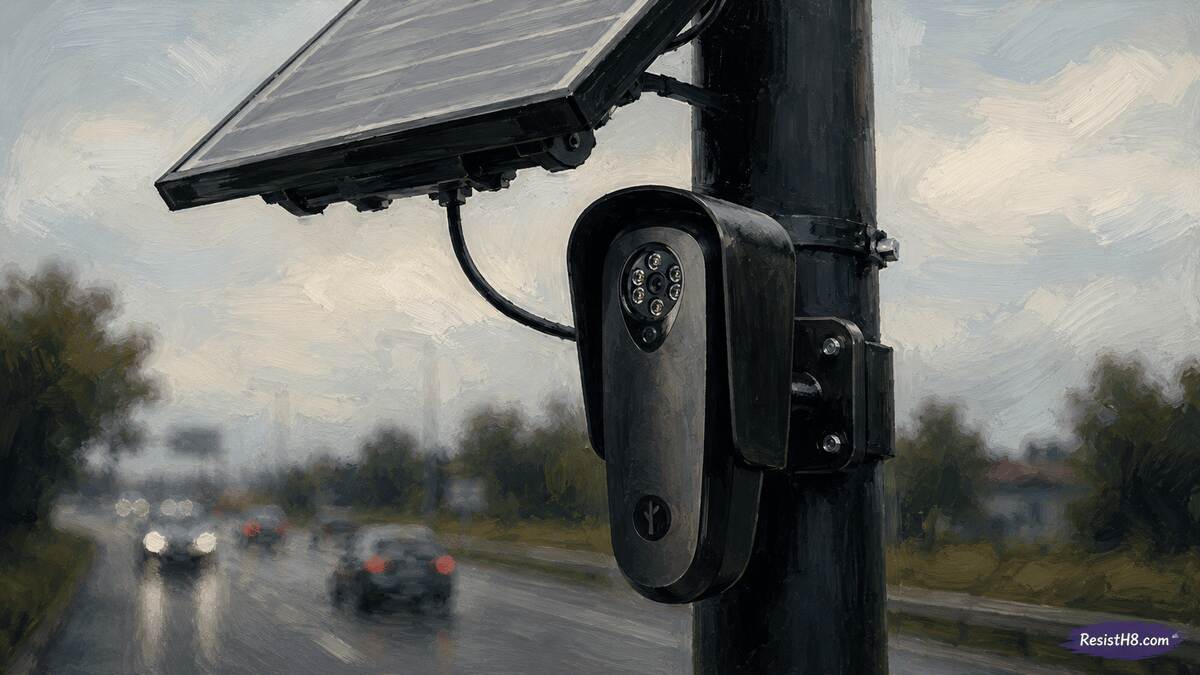

Somewhere in America right now, a city employee is filling out purchase orders for the city’s Flock cameras: new camera poles, new solar panels, and new wiring harnesses. That paperwork has gotten very familiar this year.
Across at least 23 states, small black cameras mounted on poles have been sawed off, smashed, painted over, and hauled away.
In Winona, Minnesota, every single license plate reader the police department operated was cut down and stolen in one night — all eight of them, discovered only after a patrol officer noticed the alerts had gone quiet for 24 hours.
In Oakland, someone has been coating the lenses with paint. In Florida, cameras have come down across Volusia and Lake counties, one of them filmed lying in the grass by a driver whose video hit nearly a million views.
In Oregon, six poles were cut and a handwritten note was left behind, taunting the people watching.
The headline is that vandals are destroying surveillance equipment. The more useful story is what those cameras have been doing.
What are Flock Cameras?
Flock Safety is an Atlanta company that makes automated license plate readers, or ALPRs. Each unit is a small solar-powered camera bolted to a pole.
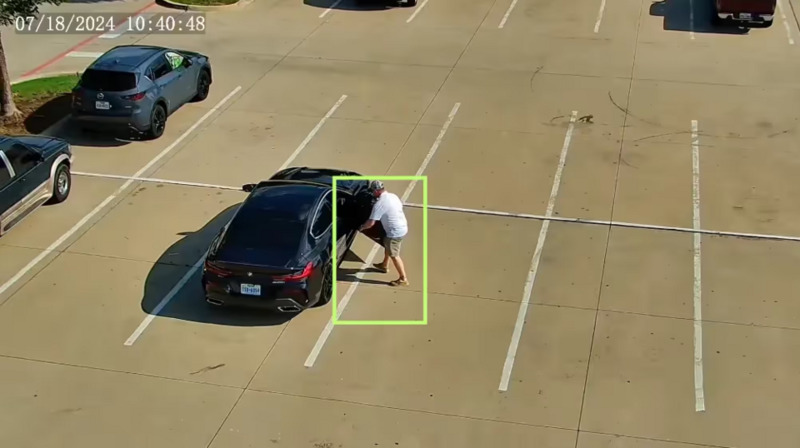
It photographs every vehicle that passes and logs the plate number, the make, the model, the color, and any distinguishing feature — a roof rack, a dent, a bumper sticker.

That data goes into a searchable database. A police officer types in a plate and gets back a map of where that car has been.
No warrant required. No judge involved. The driver isn’t notified.
The company has grown fast, and it’s enormous now — somewhere between 100,000 and 120,000 cameras nationwide, with customers in every state but Alaska. Texas alone has more than 20,000.
Most people driving past one every day have no idea it’s there, and were never asked if they wanted it.
Flock’s pitch is public safety, and the company says its technology helps with more than a million crimes a year — stolen cars recovered, missing people found. Those numbers are real. So is everything below.
Why People are Angry
Two things happened at once, and together they broke a lot of public trust.

The first is immigration enforcement. Flock insists it has no contract with ICE and does not share data on its own. But that was never the mechanism people worried about.
A federal agent doesn’t need to log in — he just asks a local cop to run the search for him. A 404 Media investigation documented roughly 4,000 immigration-related lookups run by state and local police, some logged with reasons as blunt as “ICE” or “immigration.”
It kept surfacing. In Bend, Oregon, records revealed that federal immigration officials queried the city’s small four-camera pilot 279 times in three weeks — in a state with sanctuary laws.
Researchers at the University of Washington found at least eight Washington agencies had opened direct sharing with Border Patrol.
During a federal enforcement surge in Minnesota, Twin Cities departments ran plate searches labeled as civil immigration enforcement, prompting Brooklyn Park and Columbia Heights to tear up their contracts entirely.
Think about what that means for a family in one of those towns. A father drives to work, drops his kid at school, goes to church. Every one of those trips is a data point, and any officer anywhere in the country might be able to pull the whole pattern up on a screen and give it to someone with handcuffs.
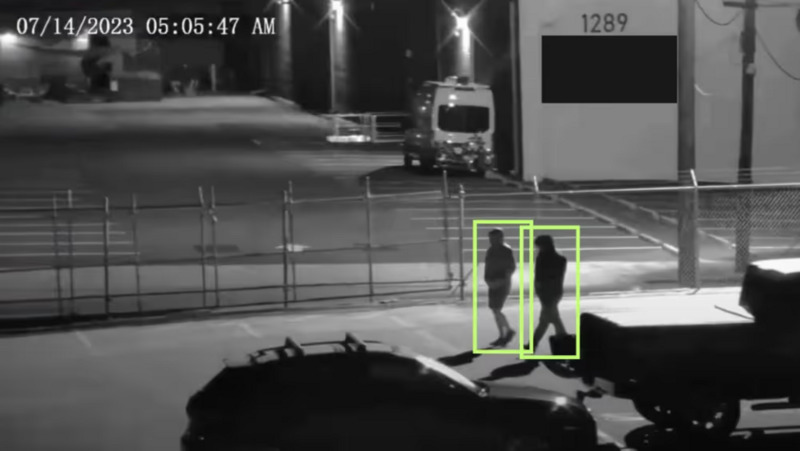
That’s not paranoia. That’s the documented function of the product.
The second thing is cops using the system on the people in their own lives.


In Georgia, five Albany officers were arrested in July, followed by Cherokee County deputies and a Greene County deputy fired after an audit — nine officers in roughly 30 days, in one state.
Three former Bibb County deputies were arrested August 10, and a Milledgeville police major was charged August 13.
A Milwaukee officer ran 179 searches on his partner and her ex, logging every one as an investigation.

Now You Can Find Out if it Happened to You
That’s the backdrop for a tool that launched this month. A site called Have I Been Flocked lets drivers type in their license plate and see whether it turns up in publicly released Flock audit logs.
It was built around public records. Jason Hunyar, of Dunwoody, Georgia, got skeptical after filing his own open records requests locally and finding what he described as misuse.
He now works on a site that compiles the audit logs agencies release and makes them searchable by plate. His argument is simple and hard to beat: those logs are the public’s information.
The catch is that the database only holds what agencies have actually turned over, so it’s patchy — incomplete for some departments, missing entirely for others.
Hunyar’s answer to that is for people to file their own records requests and add to it. That’s how the Milwaukee case cracked open in the first place.
The Trap
Police use Flock’s own cameras to catch the people destroying Flock’s cameras.
In Alexandria, Virginia, a suspect was reportedly identified after a nearby reader flagged distinctive damage on his own vehicle.
The dragnet built to find car thieves works just as well on the guy trying to blind it, because a network designed with no blind spots doesn’t have one for you either.
The consequences are not small. Cameras run $3,000 to $3,500 apiece, and prosecutors are stacking charges per unit.
In Suffolk, Virginia, Air Force engineer Jeffrey Sovern faces 25 counts — 13 felony destruction-of-property charges plus larceny and burglary-tool counts — over 13 cameras. He has pleaded not guilty.
He told police he considers the cameras unconstitutional and wrote that he hopes the case becomes “a catalyst in a bigger movement to roll back intrusive surveillance.”
In New Mexico, Jevon Martinez was arrested over 13 devices.
In West Virginia, a 20-year-old and an accomplice were arrested this month.
Whatever you think of the tactic, the math is brutal. A destroyed camera gets replaced in a week on the taxpayer’s dime. A felony conviction sticks to a person for life.
The Route That’s Working
The quieter campaign has done far more damage to Flock than any hacksaw.
Roughly 80 municipalities have canceled contracts, and DeFlock — an activist group that crowdsources a national map of camera locations — counts 100 communities that have rejected ALPRs outright.
The LAPD declined to renew.
Mountain View, California pulled out after discovering roughly 600,000 searches of its data in a single year by more than 250 agencies it had never approved.
Texas Attorney General Ken Paxton opened a civil investigative demand into the company’s data-sharing.
A class action filed in San Francisco alleges federal and out-of-state agencies searched the city’s database more than 1.6 million times in seven months.
Flock felt it. On August 13, the company announced a package of changes: default data retention cut from 30 days to seven, a case number required for every search by the end of 2026, mandatory automated audits that flag unusual activity, automatic lockouts for suspicious users, and a filter letting cities block outside agencies from searching their data for immigration enforcement.
CEO Garrett Langley, after hearing about a woman who was stalked through his product, said flatly, “I apologize. It kills me that she went through that.”
Read the fine print, though. Existing customers keep their current retention periods unless they choose to opt in, and most requirements don’t bite until January 1.
The reforms also arrived only after a year of investigative reporting, felony arrests of officers, lawsuits, and a national wave of contract cancellations.
That’s not a company getting ahead of a problem. That’s a company getting caught.
The cameras coming down are a symptom.
The disease is a private surveillance network built across 100,000 American street corners with no warrant requirement, no meaningful oversight, and no one asking permission first. You can replace a pole. You can’t unrecord the data.