
A punishing heat dome is locking down over the central and eastern United States this week, putting nearly 145 million people under heat alerts just as the country heads into the Fourth of July weekend.
Temperatures are forecast to climb into the upper 90s and triple digits, with the heat index — what the air actually feels like on human skin — reaching a dangerous 105 to 115 degrees in some areas.
Overnight lows will offer little relief, and that is exactly when heat turns lethal: a body that never gets the chance to cool down is a body that starts to fail.
This is not a beach-day inconvenience.
The National Weather Service warned that Thursday and Friday could bring "the possibility of all-time record highs" across the eastern third of the country.
AccuWeather estimates that across the full stretch of late June into early July, more than 200 million Americans will feel the heat in some form.
Chicago, New York, Philadelphia, Boston, Baltimore, Washington and St. Louis all sit squarely in the danger zone.
The West Is Already Paying in Lives
While the East braces, the West is burning.
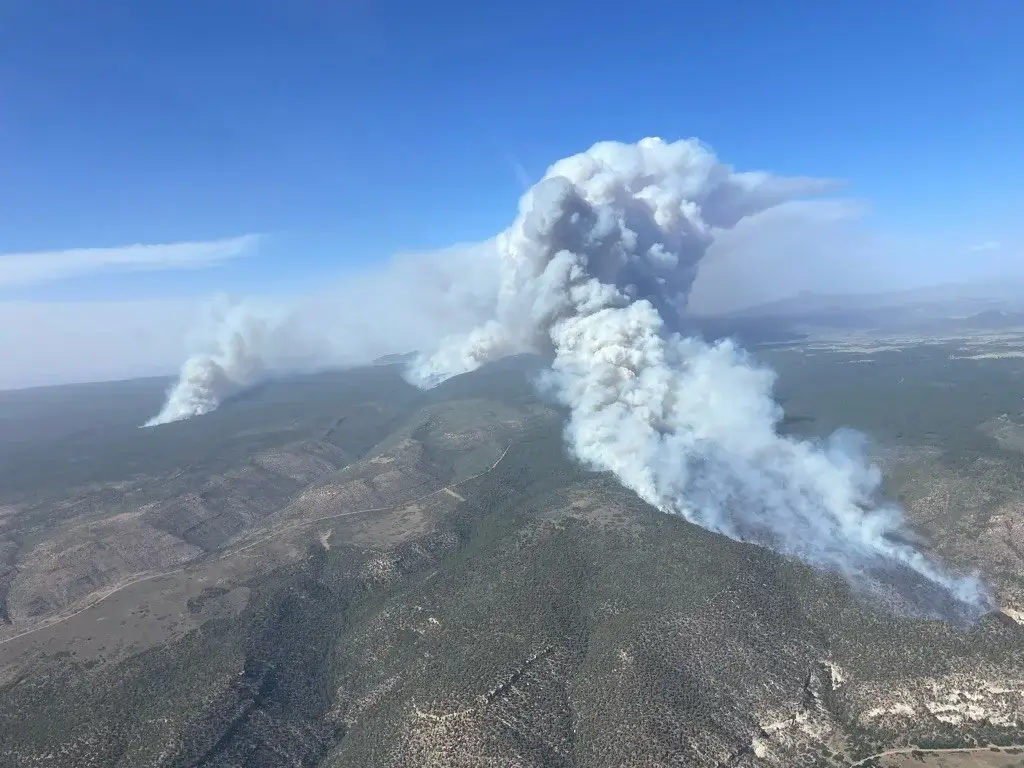
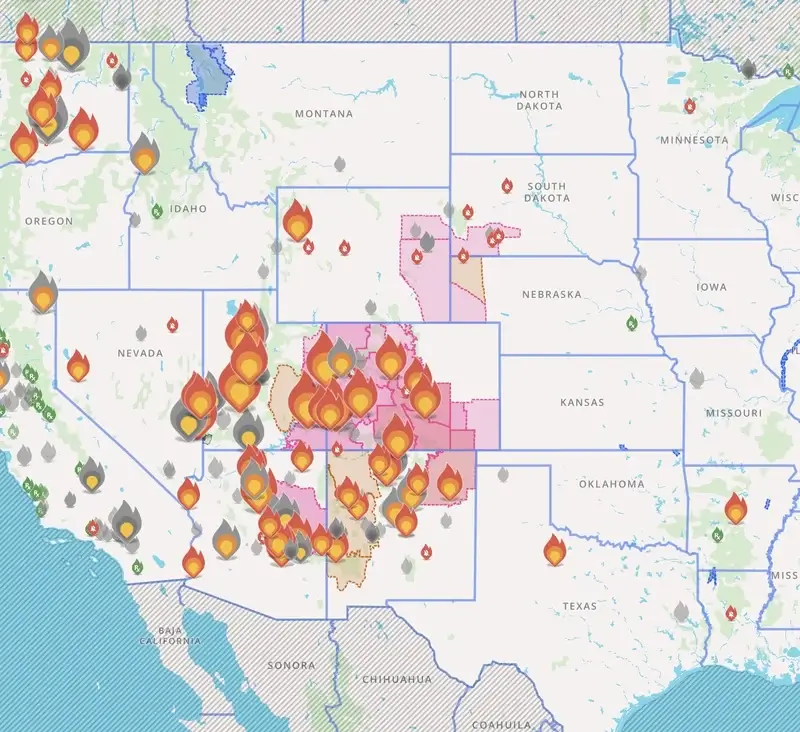
Over the weekend, new wildfires erupted across Utah, Colorado and the wider interior West, driven by heat, drought and wind.
Three firefighters were killed battling blazes along the Colorado-Utah border: Sydney Watson, 27, Nick Hutcherson, 27, and Emily Barker, 38, all identified by the U.S. Forest Service.
Two of their colleagues were injured.
They were doing the hardest and most dangerous work there is.

The fires they fought are part of a brutal season. The 93,607-acre Cottonwood Fire had 1,200 personnel assigned to it and zero containment by late Sunday afternoon.
Nationally, the country had already logged more than 35,000 wildfires that scorched 2.9 million acres by late June — above the recent ten-year average for this point in the year.
This is What a Warming Planet Looks Like
None of this is random bad luck.
Climate scientists have been blunt: human-caused warming is making heat waves more frequent, more intense and longer-lasting.
The record-shattering European heat wave earlier this month — linked to roughly 1,000 additional deaths in France alone — is the same story playing out on a different continent.
Extreme heat now kills more Americans in a typical year than hurricanes, floods or tornadoes, and it kills quietly: often indoors, often alone, often among people no one was checking on.
The Cruel Timing
As extreme heat and wildfires intensify, the Trump administration has spent the past year and a half hollowing out the very agencies meant to see these disasters coming and help people survive them.

The National Weather Service has lost roughly 600 employees to buyouts and DOGE-driven cuts, and NOAA — its parent agency — shed close to 1,900 workers, leaving thousands of vacancies.
The administration's budget blueprint targets NOAA's entire research arm for elimination, and Trump's "Big Beautiful Bill" cut some $200 million from NOAA's weather forecasting and public-alert programs along with $50 million in climate research.
The weather service has even begun automating some forecasts, with one internal note warning that longer-range predictions now get "little to no human intervention."


To be fair about the facts: Congress has pushed back on the deepest cuts, and the weather service has scrambled to rehire for critical roles.
But the damage to morale and hard-won institutional knowledge is real — NOAA's own leadership has said staff are "burning out" heading into what scientists call "Danger Season."
FEMA, meanwhile, has shed about 14 percent of its workforce, and one analysis found it has become roughly three times harder for Democratic-led states to secure disaster funding under this administration.
Strip it down: the government is pulling the batteries out of the smoke detectors while the house is on fire.
Who Pays
As always, the people with the least cushion absorb the most damage.
Outdoor workers — farmhands, roofers, delivery drivers — can't clock out when the heat index hits 110.
Elderly neighbors on fixed incomes ration air conditioning they can barely afford.
Unhoused people have nowhere to retreat.
Children's bodies heat up faster than adults'.
And the people locked inside jails, prisons and immigration detention centers — many of those facilities without adequate cooling — simply cannot leave, no matter how high the thermometer climbs.
Pets are vulnerable too. Bring them indoors during the worst of the day, give them constant fresh water, and never leave them in a parked car.
Stay Alive, and Remember Who is Responsible
If you're in the heat zone, the advice is old but it saves lives: drink water before you're thirsty, find air conditioning or a public cooling center, check on elderly and isolated neighbors, and never leave a child or a pet in a parked vehicle, where the inside can turn deadly in minutes.
Take the warnings seriously — even the automated ones.
And remember who is supposed to keep those warnings coming, and who has spent the last eighteen months trying to make them quieter.
The heat is a fact of a changing climate.
The decision to face it with fewer forecasters, less research and a frayed safety net is a choice — and someone in power made it.