
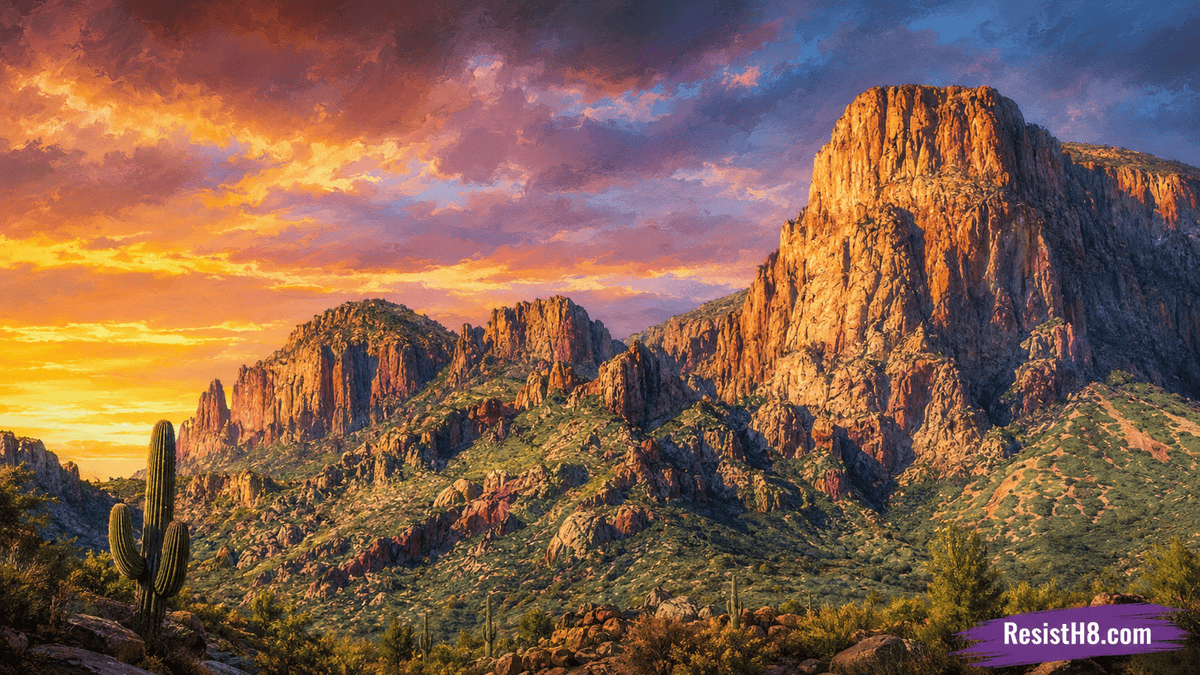

Construction on the Big Bend border wall started Thursday, August 6, inside one of the most remote national parks in America — over the objections of sheriffs, county judges, former park superintendents, business owners, and a Republican state land commissioner.
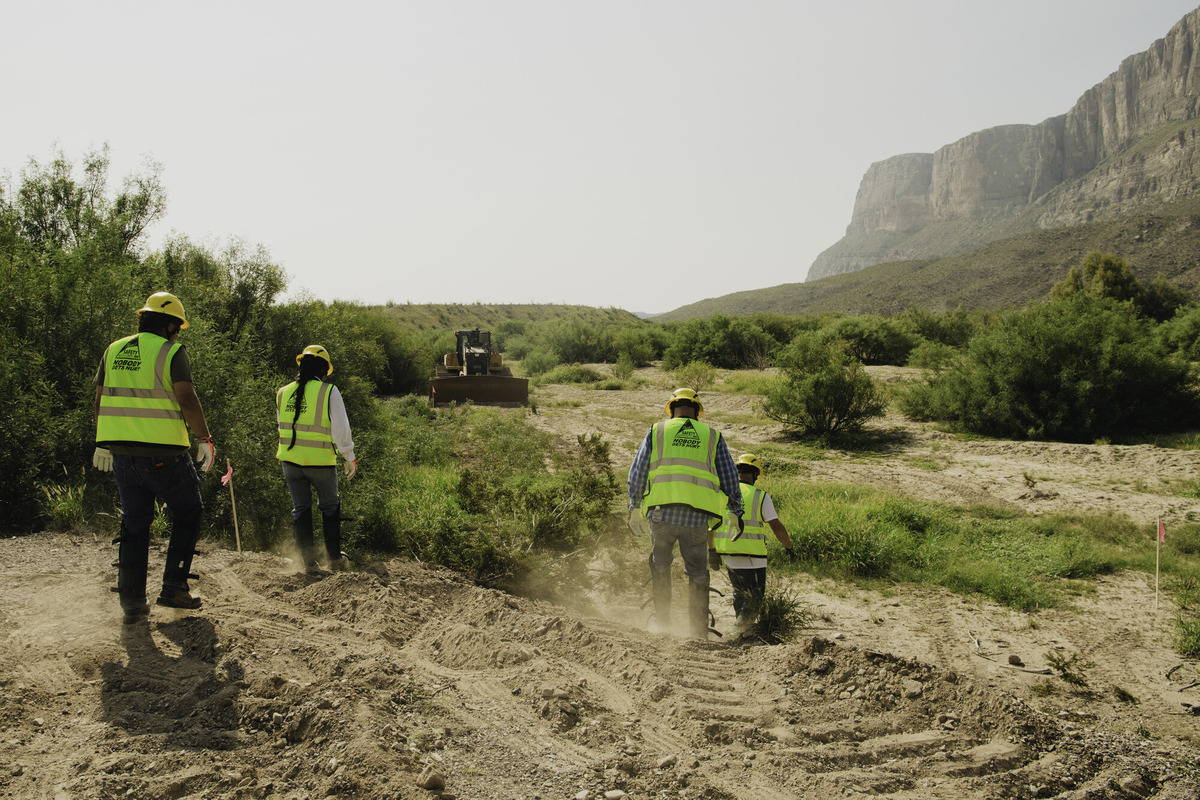
Videos shared with the Center for Biological Diversity by conservationist and photographer Natalie Newman show a bulldozer tearing through native vegetation along the Rio Grande's riparian corridor.
Santa Elena Canyon — the postcard shot, the one on every Texas travel poster — can be seen in the background of one of the videos as workers in hard hats watch a bulldozer.
That's the update to the story we covered in March, when this was still a map and a stack of waivers. It isn't a plan anymore. It's happening.
What Was Built, and What's Coming
In May, the Department of Homeland Security awarded New Mexico-based Southwest Valley Constructors — a Kiewit subsidiary — $1.7 billion for work inside Big Bend National Park. It was the largest border wall contract in U.S. history.
DHS has now committed roughly $7 billion across the Big Bend Sector.
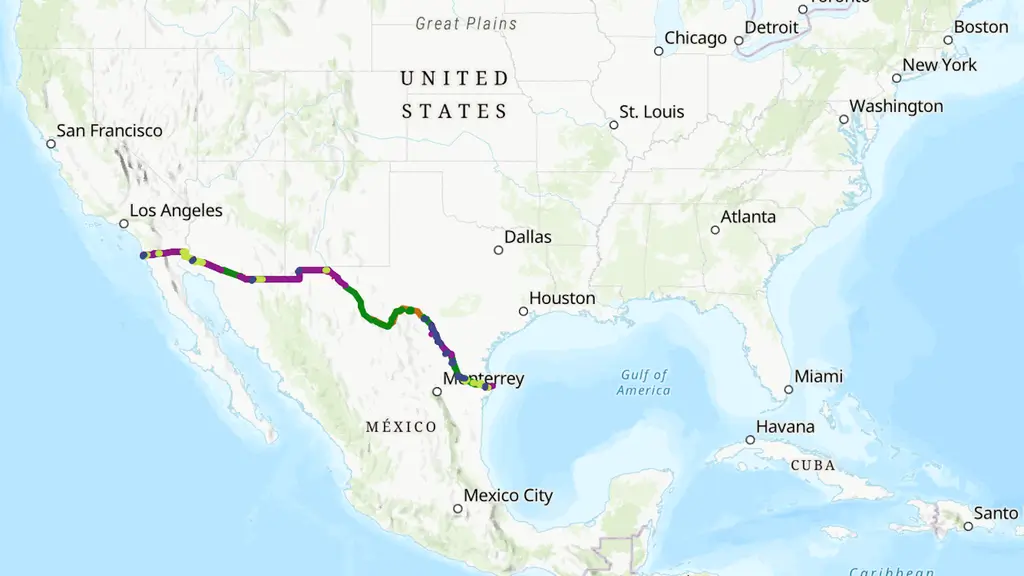
Here's what that money buys: about 17 miles of vehicle barriers — steel posts four feet apart, four to six feet tall, tied together with a cross beam — plus roughly 205 miles of what Customs and Border Protection calls "system attributes."
Cameras. Lights. Sensors. And patrol roads that CBP has said could run up to 24 feet wide.
Two hundred miles of road, will be paved through desert that’s never seen one.
The Waivers Went Further Than We Knew in March
Our March piece reported 28 waived federal laws. In June, DHS went bigger, waiving dozens more — including the National Park Service Organic Act, the Endangered Species Act, and the National Wild and Scenic Rivers Act.
It was the first time in American history the federal government waived that broad a set of environmental protections to build something inside a national park.
The Center for Biological Diversity sued, arguing the waivers give the agency the power to erase acts of Congress without Congress.

That case is still pending.
The bulldozers didn’t wait.
Mariscal Mountain and the Dynamite Question
The planned patrol road crosses Mariscal Mountain, which rises 1,700 feet above the Rio Grande at the park's southeastern edge. There’s no way to build a 24-foot road over that.
Most of Texas' Democratic congressional delegation wrote to DHS on July 31 warning that dynamiting and bulldozing across Mariscal's cliffs would dump rock and debris into the river and alter its flow — which would put the U.S. in violation of the 1970 Boundary Treaty with Mexico.
CBP responded that it has no plans to blast Mariscal Mountain.
Bob Krumenaker, who ran Big Bend as superintendent from 2018 to 2023 and now chairs Keep Big Bend Wild, told Marfa Public Radio that building that road without explosives would be "physically impossible."
He spent 41 years working for the federal government. Now he says the mood among people who love the park is "anger, resignation and fear of what's to come."
This is Not a Partisan Fight in West Texas
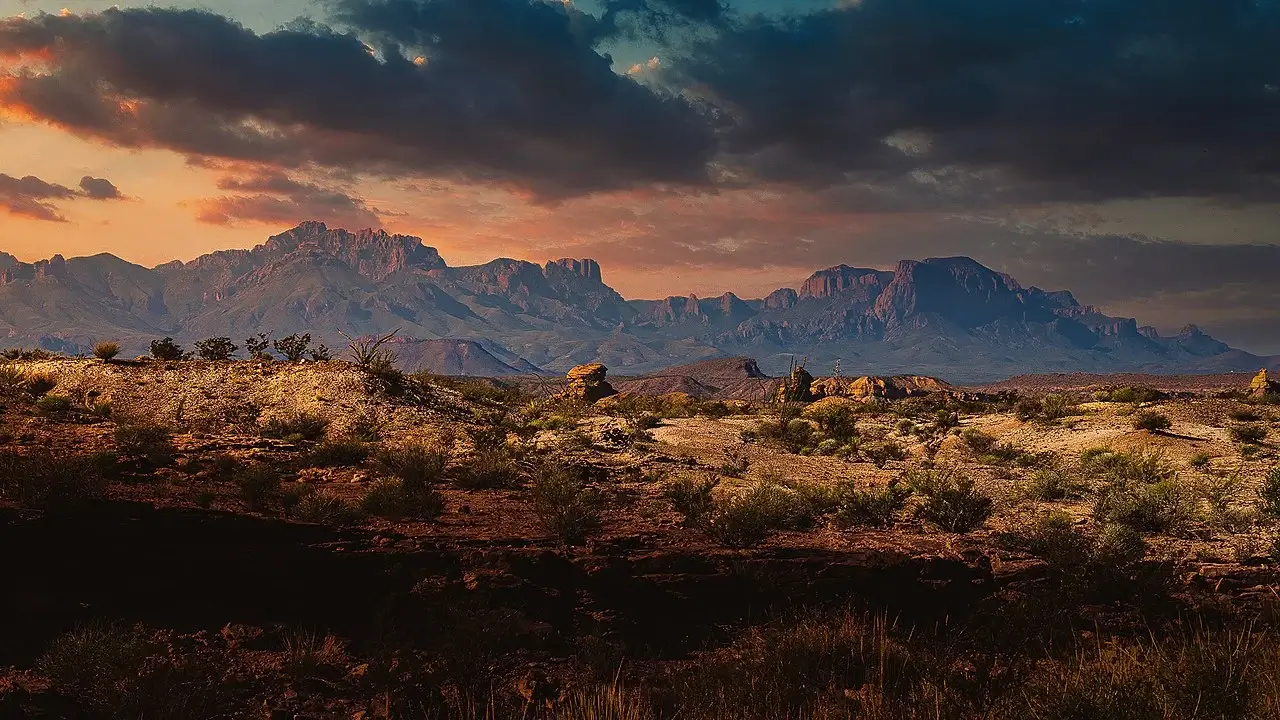
Everyone local said no. That's not narrative or spin — it's the record.
All five sheriffs along the Big Bend border oppose the barriers, pointing out that mountains, canyons, and a river already do the job. All 14 Texas border county judges demanded transparency and terrain-appropriate security.
Seven former Big Bend superintendents asked DHS to drop the waivers.



On July 31, Republican Texas Land Commissioner Dawn Buckingham sent cease-and-desist letters to CBP and contractor Barnard Construction, accusing them of illegally clearing more than a mile of state-owned land in Presidio County without written permission.
She framed it as a defense of Texas sovereignty and ordered the land restored.
Weeks earlier, the city of Presidio and the county's economic development corporation had already sued over flooding risk.
And on August 3, more than 140 outfitters, local businesses, and recreation groups — Patagonia among them — asked Sen. John Cornyn, Sen. Ted Cruz, and Gov. Greg Abbott to save public access to the Rio Grande.

Abbott's office sent back the same statement it has been recycling for months: rugged, isolated country like Big Bend is a great place for border technology.
What it Costs the People Who Live There
Big Bend drew 561,459 visitors in 2024. They spent about $56.8 million in the small towns around the park and generated roughly $63.7 million in regional economic output.
Across the wider Big Bend region, tourism brings in about $4.6 billion a year.
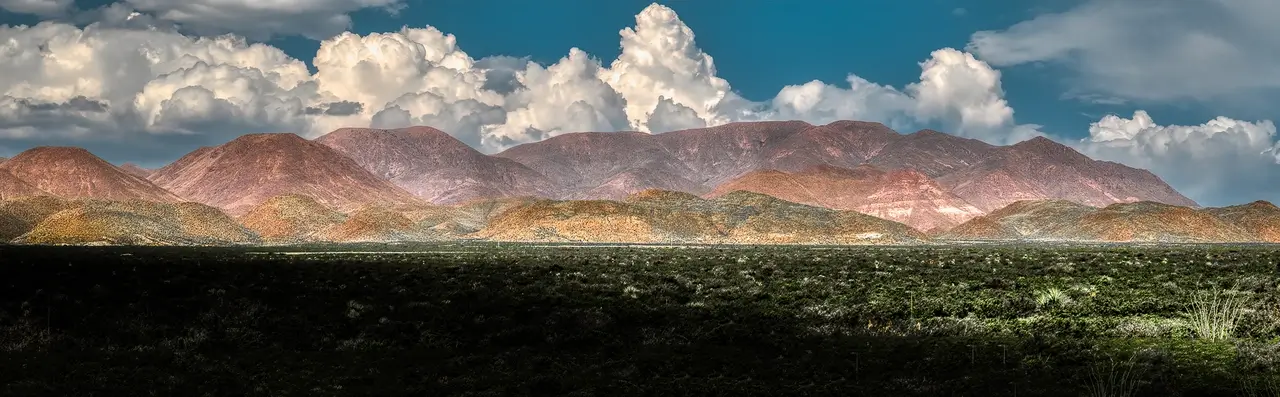
River outfitters have said plainly that if the canyon corridor is walled and roaded and the river is closed to the public, they're finished. These are not abstractions to the people in Terlingua, Marathon, and Alpine. It's the mortgage.
And the Security Math?
The Big Bend Sector covers 517 miles — more than a quarter of the entire southern border. In 2025, it accounted for 1.3% of all border apprehensions. Inside the national park itself, apprehensions were 0.045% of the national total. No unauthorized vehicle crossings have been documented in the region — and CBP's map still calls for vehicle barriers in walled canyons where a vehicle physically cannot reach the border.
Laiken Jordahl of the Center for Biological Diversity called it "the most heinous attack on an American national park in generations."
Strip away the flag-waving and what's left is $7 billion moving from the public treasury to private contractors, paid for with a piece of the country that took a few million years to make and about a week to ruin.
Big Bend belongs to all of us. Somebody should have had to ask.