


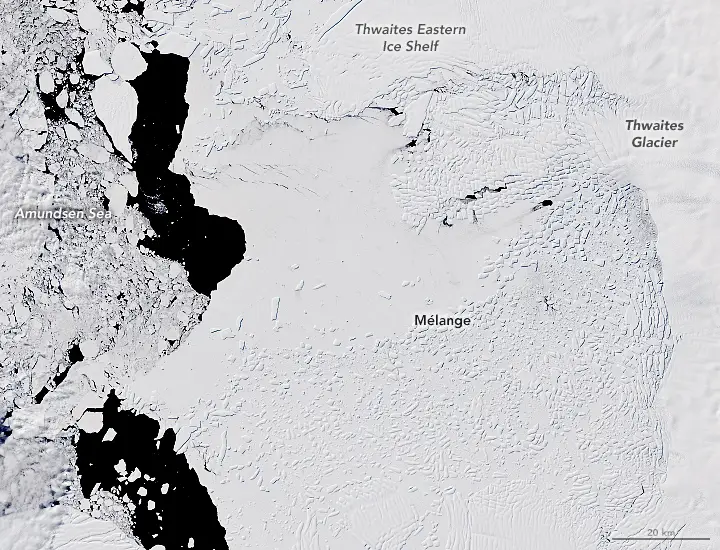
Somewhere under the Amundsen Sea, warm salty water is chewing through the underside of a glacier roughly the size of Florida. Nobody is watching it as closely as they used to. That is not an accident. Antarctica's Thwaites Glacier earned its "Doomsday Glacier" nickname the hard way.
It is the widest glacier on the planet, about 120 kilometers across, and it currently accounts for roughly four percent of all global sea level rise on its own.
More importantly, it functions like a cork. Behind it sits the West Antarctic Ice Sheet. If the cork goes, a lot more than the cork goes with it.
Two years ago, Yale Environment 360 reported on an audacious idea to save it: build a giant curtain on the seafloor to hold back the warm current melting the ice from below.
It sounded like science fiction then. In 2026 it has investors, a nonprofit, sensors in the water, and a pitch deck.
What Is Happening to the Doomsday Glacier?
Strip away the doomsday branding and the underlying picture is genuinely bad, just slower and stranger than the headlines suggest.
Thwaites is not melting from the top down in the sunshine. It is being eaten from underneath.
Warm, dense, salty water flows along channels carved into the seafloor and reaches the glacier's grounding line — the place where the ice stops resting on rock and starts floating.
Erode that contact point and the whole thing slides faster.
The International Thwaites Glacier Collaboration, a seven-year, $50 million joint U.S.–U.K. research effort involving more than 100 scientists, published its findings in 2025.
Using a torpedo-shaped robot called Icefin, researchers found that tides are pumping warm seawater as far as ten kilometers beneath the ice at high pressure, punching through a thin insulating layer of cold water that had been protecting the glacier's base.
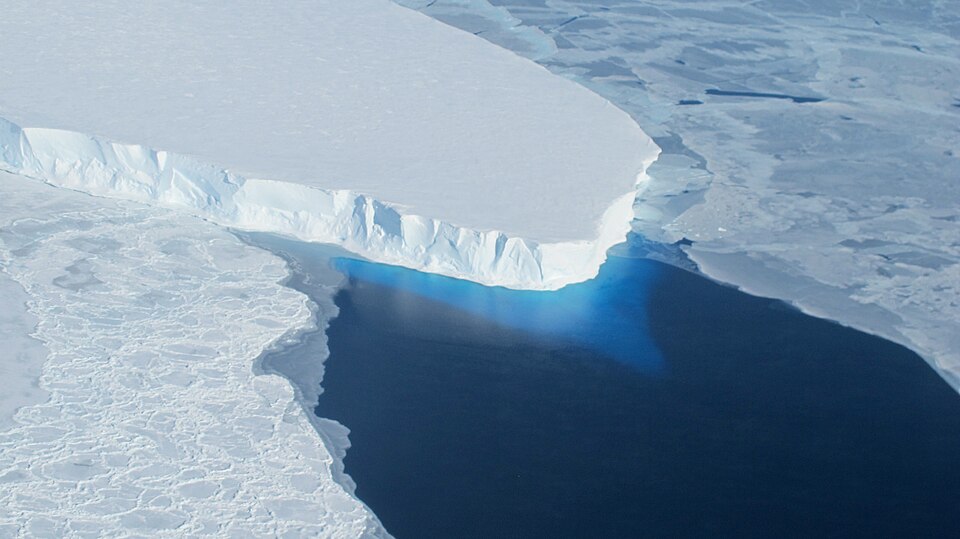
They also determined the retreat started back in the 1940s and has sped up dramatically over the last 30 years.
British Antarctic Survey geophysicist Rob Larter summarized it: the glacier is set to retreat further and faster.
There is one piece of qualified good news. A Dartmouth-led team published in Science Advances found that "marine ice cliff instability" — the runaway domino-collapse scenario baked into some of the scariest IPCC projections — is unlikely to play out this century.
That is real, and it deserves to be said out loud. It also does not mean Thwaites is fine.

The same researchers expect rapid, continued ice loss. It just probably will not happen all at once while we watch.
The numbers, if it fully collapses: about 65 centimeters of global sea level rise, roughly 26 inches. If it drags the rest of the West Antarctic Ice Sheet down with it, closer to 3.3 meters — more than ten feet.
That is Miami, Norfolk, New Orleans, Bangladesh, Jakarta, and every low-lying Pacific island nation that has spent three decades begging wealthy countries to take this seriously.
The Curtain
The proposal, developed by glaciologist John Moore of the University of Lapland's Arctic Centre along with Michael Wolovick and engineer John Keefer, is to stop the warm water before it ever reaches the ice.
Not a wall. A curtain — buoyant panels anchored to the seafloor about 650 meters down, rising maybe 150 meters, stretching some 80 kilometers across the trough that funnels warm water toward Thwaites and neighboring Pine Island Glacier.
Icebergs would drift over the top instead of shearing it off. Damaged panels could be swapped out individually. Crucially, the whole thing could be removed if it turned out to be a mistake.
The Seabed Curtain Project is now a multinational nonprofit pulling in researchers from Cambridge, the University of Chicago, the Alfred Wegener Institute, NYU, Dartmouth, Norway's NIVA, and the offshore engineering firm Aker Solutions.



During a Korean Polar Research Institute expedition between January and March of this year, the project deployed autonomous moorings in the Pine Island–Thwaites trough to record temperature, salinity, currents, and turbulence over the long term.
In March, the project was unveiled to institutional investors at a climate finance summit in London.
The stated goal is not to build anything now — it is to have enough peer-reviewed science and legal framework for the world to make a real decision in about 15 years.
Estimated cost: $40 to $80 billion up front, plus $1–2 billion a year to maintain over a 25-year lifespan.
The Scientists Saying Absolutely Not
In September 2025, 41 researchers published a critical assessment in Frontiers in Science arguing that polar geoengineering schemes are a dangerous distraction.
Their objections aren't just vibes. Antarctica is 1,500 miles from the nearest ice-free land. The working season is brutally short.
Nobody knows what a barrier that size does to the marine ecosystems that krill, whales, and penguins depend on.
Curtains might simply shove the heat somewhere else and melt different ice. And sea level rise would keep going anyway from ocean thermal expansion, Greenland, and land subsidence (sinking of the ground because of underground material movement).
Then there is the political objection, which is the one that should worry us most.
Glaciologist Ted Scambos has warned that negotiators at COP28 already floated the idea that decarbonization could slow down now that these fixes exist.
A fossil fuel industry that spent forty years denying the problem would love nothing more than a $80 billion engineering project to point at.
The Part Nobody is Pitching to Investors
Here is what makes this genuinely infuriating.
To know whether a seabed curtain is brilliant or catastrophic, you need continuous, high-quality measurements of what is happening under Thwaites right now.
The U.S. was, until recently, the largest single funder of polar research on Earth.
The Trump administration's FY2026 budget request terminated the lease on the RV Nathaniel B. Palmer — the only research icebreaker that has ever fought through the sea ice and building-sized icebergs to reach the critical zone at Thwaites.
The termination was buried in a single sentence on page 102 of a 222-page document.
The same request cut polar science research funding by 70 percent.
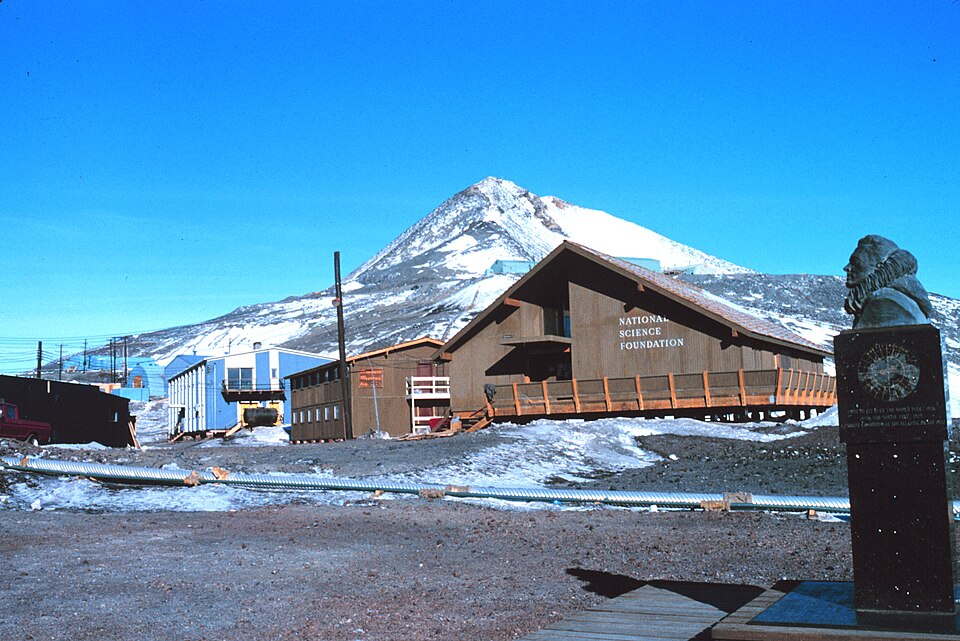
The administration's FY2027 request asks Congress to slash the National Science Foundation from $8.75 billion to $4 billion, a 54 percent cut, while offering $900 million for a replacement vessel that does not yet exist.
Congress has so far refused to go that far. That is not the same as safety.
As Carbon Brief documented, multi-year grants awarded before the cuts are now expiring, and early-career polar scientists are being pushed out of the field entirely.
You cannot un-fire a generation of researchers with a supplemental appropriation.
So the position the United States currently holds is this: gut the monitoring, kill the ship, defund the graduate students, and let a private investor summit in Mayfair decide what happens to the coastline your grandchildren live on.
The curtain may or may not be a good idea. That is a legitimate scientific argument, and it deserves real research, real ethics review, and real consent from the countries that will drown first.
What it does not deserve is to become the only game in town because we torched the alternative.
The Doomsday Glacier (Thwaites) has been retreating since before most of us were born. The ice does not care who is in office. It is just going to keep going.