
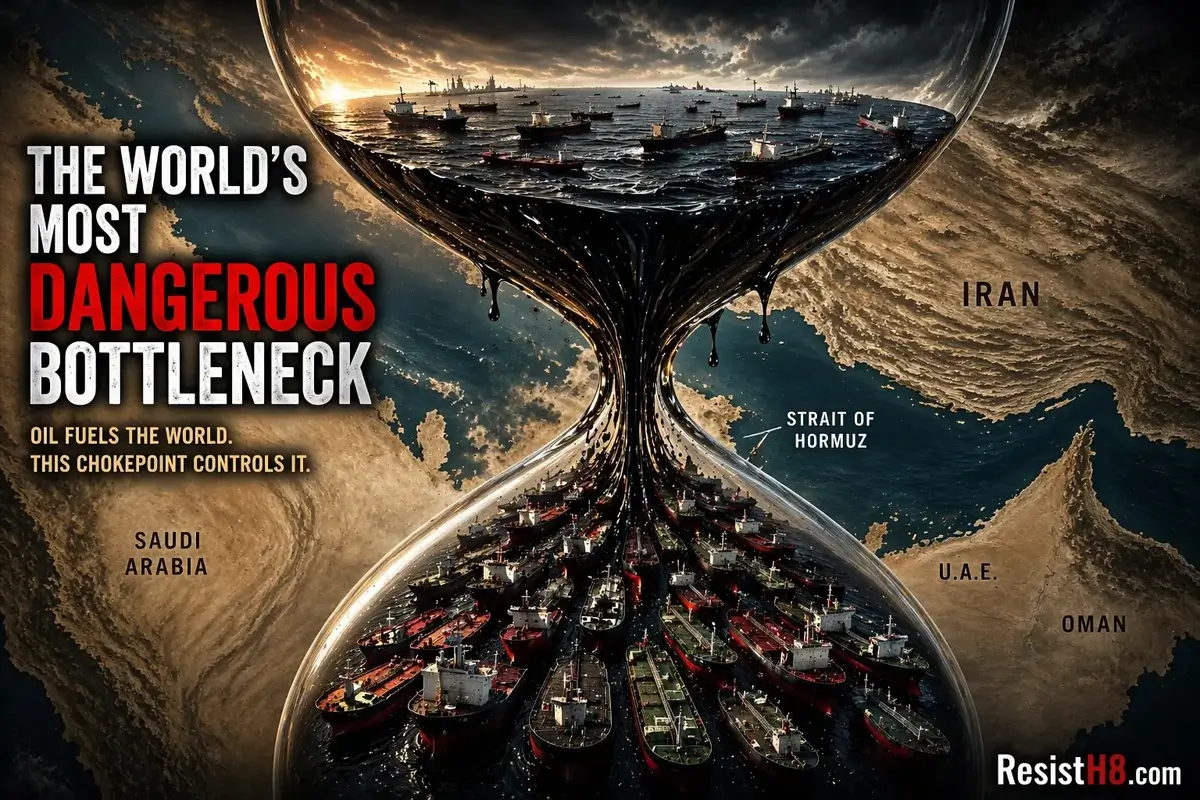

The first commercial tanker hit by an Iranian drone on Monday belonged to Abu Dhabi’s state oil company. The second one might belong to a country that listened to Donald Trump.
On Sunday, the president announced “Project Freedom” — a U.S. military operation to “guide” stranded commercial ships out of the Persian Gulf and through the Strait of Hormuz, the narrow chokepoint where roughly one-fifth of the world’s oil typically passes between Iran and Oman.
By Monday morning, Iran’s Revolutionary Guard had answered: any ship that tries to use the strait without Tehran’s permission “will be stopped with force.” Hours later, the United Arab Emirates announced that two drones had targeted an ADNOC-affiliated tanker in what it called an “Iranian terrorist attack.” (Is it a “terrorist attack” when they told the world “we will do this if you do that?”)
This is the part of the war Trump told Congress had “terminated.”
What Trump Actually Promised
Project Freedom is not a small operation. U.S. Central Command says it involves guided-missile destroyers, more than 100 land- and sea-based aircraft, unmanned drones and surface vessels, and 15,000 American service members. The Joint Maritime Information Center has set up an “enhanced security area” south of the usual shipping lanes and is telling mariners to coordinate with Omani authorities.
The center also warned that the normal routes “should be considered extremely hazardous due the presence of mines that have not been fully surveyed and mitigated.”
Translation: there are explosives in the water, the United States does not know where all of them are, and 15,000 troops are about to operate in the middle of it.
Trump framed the whole thing as charity. On Truth Social, he called it a “Humanitarian gesture” on behalf of the United States, Middle Eastern countries, “and, in particular, the Country of Iran,” noting that the trapped ships are running low on food and supplies.
He also added the part that matters: “If, in any way, this Humanitarian process is interfered with, that interference will, unfortunately, have to be dealt with forcefully.”
A humanitarian operation backed by 100 aircraft and a guided-missile destroyer fleet is not a humanitarian operation. It is a military escort under a softer name, and Iran is treating it that way.
Iran’s Answer
Within hours of the announcement, Major General Ali Abdollahi of Iran’s central command warned that “any foreign armed force — especially the aggressive U.S. military — if they intend to approach or enter the Strait of Hormuz, will be targeted and attacked.”
Brigadier General Mohbi of the Revolutionary Guard followed up with the rule for civilian ships: transit must be coordinated through “designated routes,” and “violating vessels will be stopped with force.”
Then came Monday morning. The UAE’s foreign ministry said two drones struck a tanker tied to ADNOC, the state energy giant, while it transited the strait. No injuries were reported. The UAE called the strike an act of “piracy” by Iran’s Revolutionary Guard Corps. It was not clear whether the tanker had tried to coordinate its passage with the U.S. military, with Omani authorities, or with Iran.
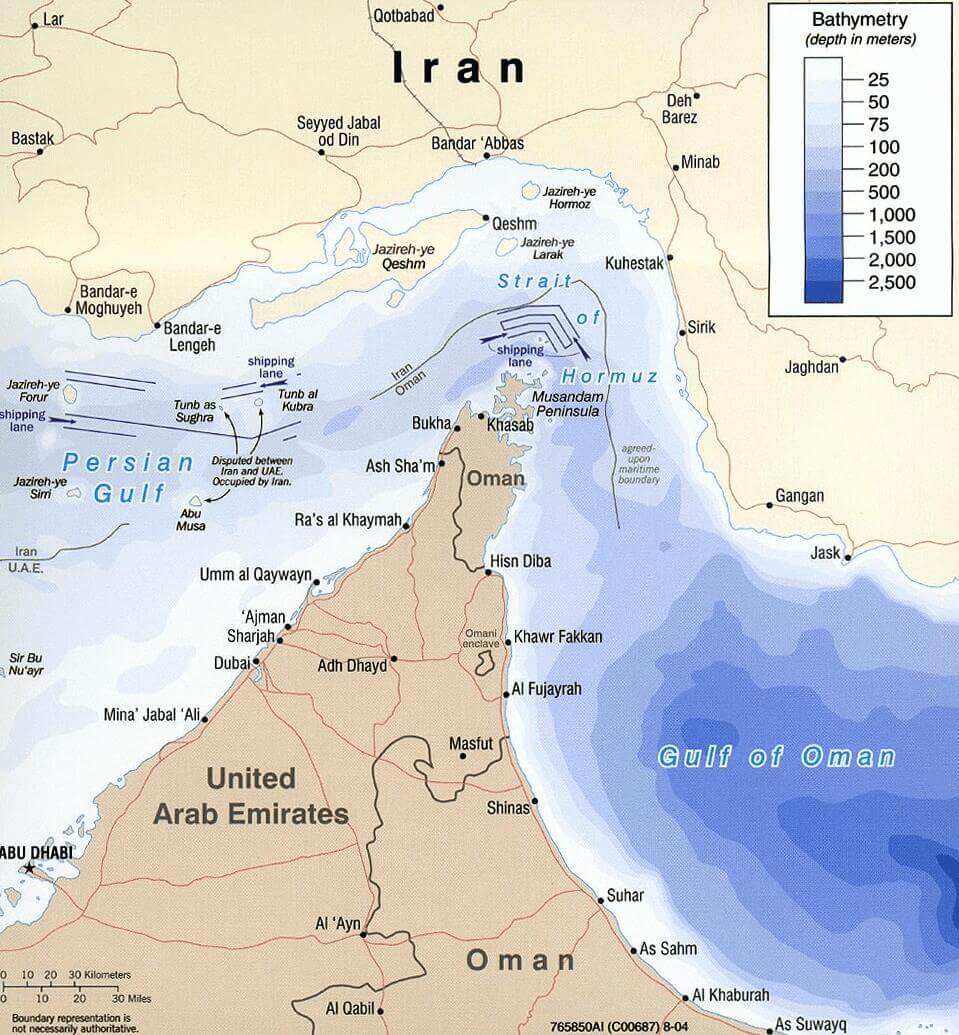
What is clear is that within a single news cycle, Iran threatened to sink any ship that defied its rules and a Gulf-state tanker took two drones.
Iranian state media also claimed Monday that an American warship had been struck by two missiles near the strait. CENTCOM denied it. A spokesperson, Captain Tim Hawkins, told CBS News the report was not true, and the command followed up on social media: “No U.S. Navy ships have been struck. U.S. forces are supporting Project Freedom and enforcing the naval blockade on Iranian ports.”

That last line is the part Iran keeps pointing to. The U.S. and Iran are technically in a ceasefire. But Washington is enforcing a naval blockade on Iranian ports, has seized at least one Iranian-flagged cargo ship — the Touska, intercepted in the north Arabian Sea last month — and is now moving warships through a waterway Iran insists is under its control. Tehran calls all of this a breach of the truce. Hard to argue it isn’t.
France Walks
The most telling reaction came not from Tehran but from Paris. French President Emmanuel Macron, speaking to European leaders in Armenia, said France would not be joining. “What we want above all is a coordinated reopening by the United States and Iran — that is the only solution for reopening the Strait of Hormuz,” he said. “We are not going to take part in any military operation in a framework that to me seems unclear.”
France and the U.K. spent months trying to assemble a European coalition to help secure the strait once the war ended. They are now declining to participate until there is actually a deal. That is a European ally publicly saying the U.S. plan is not coherent enough to get behind.
Pakistan, meanwhile, is doing the diplomatic work nobody else seems interested in. Islamabad facilitated the transfer of 22 sailors from the seized Touska to Iranian authorities Sunday night, calling it a “confidence-building measure.”

Pakistan has been the only mediator able to get Washington and Tehran in the same room since the war began on Feb. 28. Tehran says it submitted a 14-point peace proposal “focused on ending the war.” Trump said over the weekend he would likely reject it because Iran has “not paid a big enough price.”
Who Pays the Bigger Price
The war launched on Feb. 28 has now stretched into May. The U.S. and Israeli joint strikes on Iran were supposed to be quick. They were not. Lebanese authorities say more than 2,600 people have been killed in Israeli operations against Hezbollah and over a million displaced.
At least 40 people have been killed inside Israel by Iranian and Hezbollah fire. The cost of the war to the United States is now closer to $50 billion than the $25 billion originally floated, according to U.S. officials. Gas prices are still climbing. The Senate has rejected six separate war powers resolutions trying to rein the operation in.



Now the administration is sending 15,000 troops into a mined waterway where Iran has promised to attack any vessel that disobeys it, the day after a Gulf-state tanker took two drones and a European ally publicly declined to participate. Trump is calling it humanitarian.
The crews on the trapped ships, the sailors on the U.S. destroyers, and the civilians who live on every coastline of the Persian Gulf are the ones who will find out what it actually is.
If Project Freedom works, oil flows and the administration takes the win. If a ship gets hit — an American one, an allied one, a civilian one — the ceasefire that Trump told Congress had ended hostilities ends in the open. There is no third option being offered. There is only the choice the Revolutionary Guard described on Sunday: a deal, or a fight Iran says the U.S. cannot win.
The 14-point proposal is sitting in Washington. So far, the answer has been more warships.