
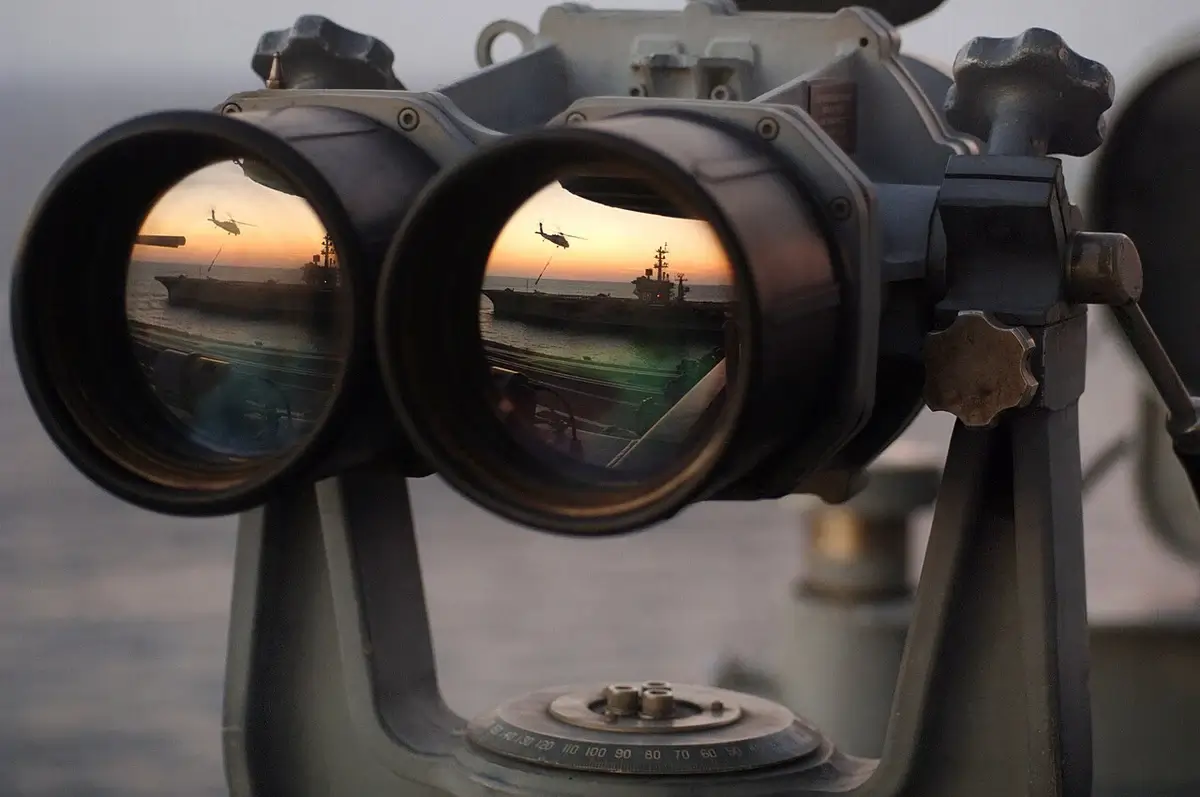

They were sent to enforce a naval blockade in one of the most dangerous stretches of ocean on earth. Now, families of U.S. sailors and Marines deployed near Iran are raising alarms about something that should never happen to people in uniform: there isn’t enough food. U.S. sailors are hungry.
USA Today broke the story this week, and it’s as troubling as it sounds. Service members aboard the USS Tripoli and the USS Abraham Lincoln — two warships currently enforcing the U.S. blockade of Iranian ports — are reportedly going hungry.
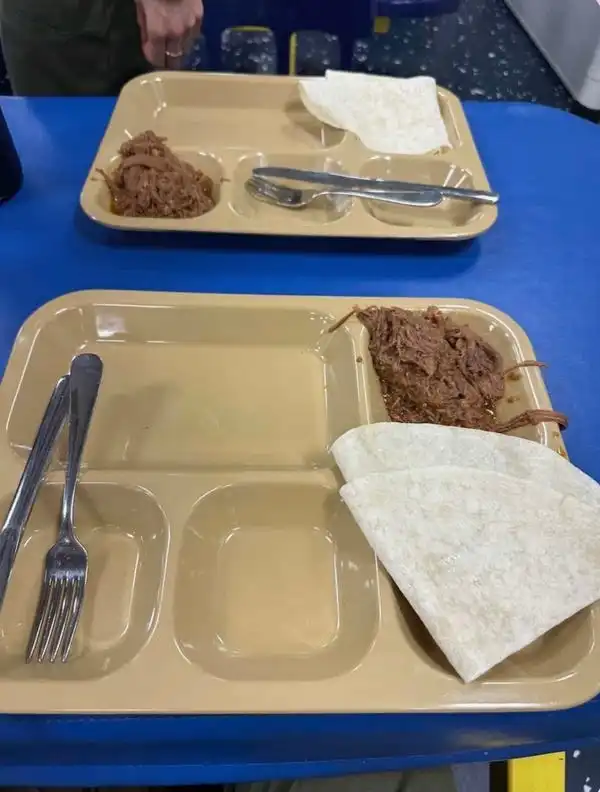
Photos taken by crew members and shared with their families back home show trays that are barely half-filled: a lone tortilla with a scraping of shredded meat.
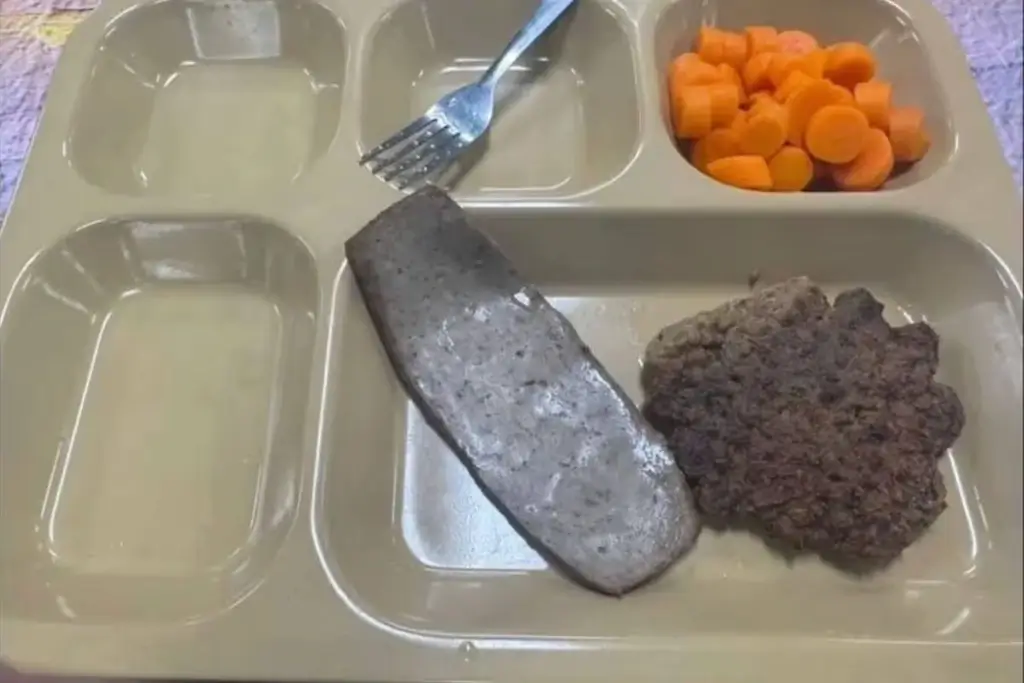
Another tray contains a few boiled carrots, a dried-out meat patty, and what one report described as an “unidentifiable gray piece of processed meat.”
These are the meals being served to people risking their lives in a war zone.
What Families Are Saying
Karen Erskine-Valentine, a pastor from Shepherdstown, West Virginia, learned about the situation through a congregation member whose son is deployed on the USS Abraham Lincoln.
“The food is tasteless, there’s almost not enough of it, and they’re hungry all the time,” she told USA Today. “It breaks my heart.”
A Texas mother whose son serves aboard the USS Tripoli said she panicked when she found out how bad it had gotten. Her family has spent at least $2,000 sending care packages — and not a single one has arrived.
The postal service suspended deliveries to dozens of military ZIP codes in the Middle East after the U.S. and Israeli strikes on Iran began, with no timeline given for when deliveries might resume. Thousands of packages from families across the country are sitting in limbo.
A Marine veteran named Dan — who asked USA Today not to publish his last name to protect his daughter, who is serving aboard the Tripoli — put it plainly: “We have the strongest military in the world. You shouldn’t be running out of food, and you shouldn’t not be able to get mail on the ship.”
His daughter reportedly told him that fresh food had disappeared entirely. Crew members have been sharing rations, grabbing meals whenever food is available, making sure everyone gets something even when portions are thin.
One sailor aboard the Abraham Lincoln sent his family a message on March 11 that supplies “are going to get really low” and warned that no port stops were expected before the mission ended. “Morale is going to be at an all-time low,” he wrote.
How This Happened
The USS Tripoli has been at sea for more than a month, having left its home port in Japan to participate in the Iran war. According to U.S. Central Command, 3,500 sailors and Marines aboard the Tripoli and its two accompanying warships are tasked with enforcing the blockade of ships leaving Iranian ports.
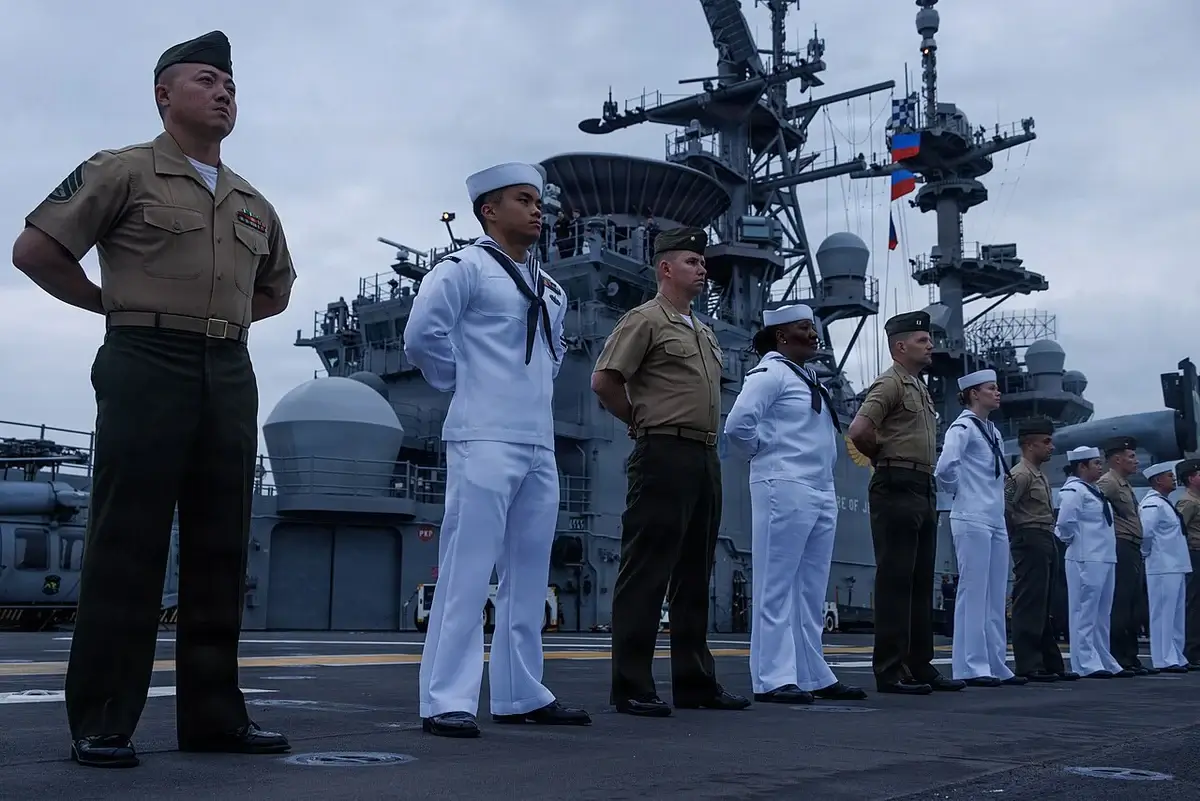
Warships on extended deployments typically rely on a combination of onboard food stores, periodic resupply from support vessels, and care packages from home to keep morale and nutrition stable.
When the war began and postal deliveries were suspended, that last line of support — the packages parents, spouses, and friends had loaded with snacks, toiletries, and personal items — vanished entirely.
Resupply operations in an active war zone with a contested waterway and active Iranian naval threats are significantly more complicated than normal. The result, according to the families speaking out, is that some ships are running low on provisions with no clear resupply timeline.
The Pentagon did not respond to USA Today’s request for comment on either the mail suspension or the food shortage reports.
That silence speaks volumes.
This is Not a Small Thing
It’s easy to abstract military deployments into strategy and geopolitics — ship positions on a map, blockade enforcement statistics, oil price movements. The sailors and Marines aboard these ships are real people.
Many of them are young. Some are teenagers. They left their families, their homes, and their lives to serve, and they are now enforcing a naval blockade in waters where Iranian drones and mines have already struck other vessels.
The idea that these same service members are being served a single tortilla with a spoonful of meat because the military can’t get food to them — while the administration posts all-caps Truth Social messages about how powerful America’s military is — is a humiliating failure.
Dan, the Marine veteran whose daughter is on the Tripoli, said what any parent would say: “The one thing we had over our adversaries — we fed our people.”



The USS Gerald R. Ford, also deployed to the region, recently set a record for the longest carrier deployment in more than three decades at 295 days.
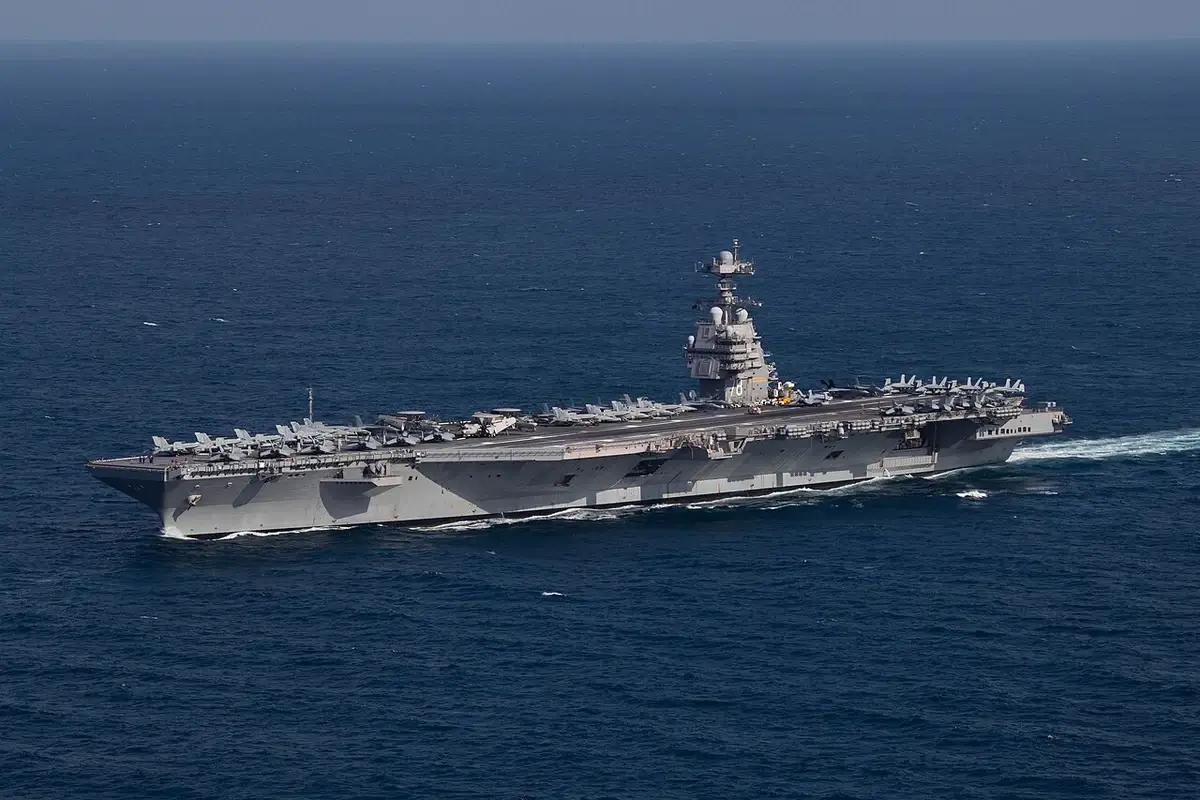
The human cost of this war — in resources, in morale, in the basic dignity of the people we ask to fight it — is accumulating in ways that don’t show up in press briefings or Truth Social posts.
What Needs to Happen
Families are asking for two things: food on the ships, and mail delivery resumed. Neither of these is an unreasonable request. Neither requires a diplomatic breakthrough or a ceasefire agreement.
It requires the Pentagon to treat the logistics of feeding deployed service members as a priority — not an afterthought.
Members of Congress with military families in their districts should be demanding answers. The Pentagon’s silence in response to press inquiries isn’t a policy — it’s an abdication.
These are people who were sent to fight in a war of choice. The least we owe them is a full meal tray.