

What do you actually believe — and how do you know?
Most people never stop to ask whether the “facts” they’ve heard all their lives are things they actually believe. It’s a habit: we absorb the common wisdom of mainstream society and repeat it without ever running it through our own judgment.
Everyone should pause at some point and ask: Have I ever actually thought about this? Or have I just accepted it because everyone around me has this opinion?
Researching the story of three journalists who were killed by an Israeli airstrike on a marked press vehicle in southern Lebanon, forced me to ask that question about a belief I’d held for years without examining.
What I found was that the truth is complicated, nuanced, and nothing like what Americans have been told. The federal government, both political parties, and U.S. allies have been feeding the American people the same disinformation for decades.
I can’t know the truth and stay quiet while everyone around me is being misled. You may not reach the same conclusion I did — but you deserve the facts to decide for yourself.
For most Americans, Hezbollah exists as a single word: terrorist. That is the word U.S. politicians use. It is the word cable news anchors use. It is the word printed under every photograph, attached to every headline, invoked every time an Israeli airstrike kills civilians in Lebanon and reporters need a justification.
But that word does a lot of work. It does so much work that it replaces understanding. It tells Americans nothing about what Hezbollah is, where it came from, why millions of Lebanese people support it, or why a journalist killed by an Israeli missile last month was also one of its members —mourned by his colleagues as a serious, decades-long war correspondent, not a murderer.
This is the explainer American media would never publish. Resist Hate gives readers the truth without apology — all of the facts, data, expert analysis, and even opinions from authoritative sources. Only then can you form your own answer to the question we’re here to help you work through:
What is Hezbollah?
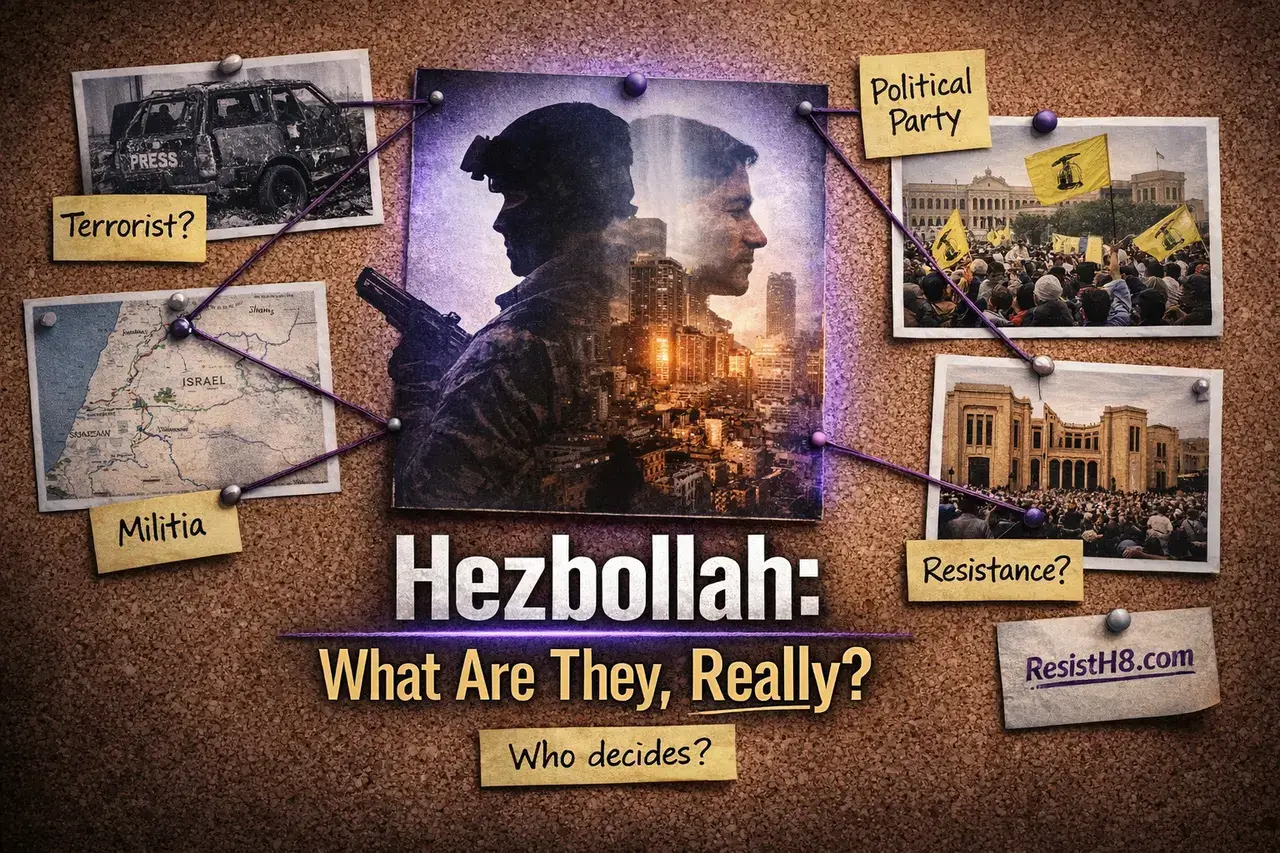
Hezbollah — Arabic for “Party of God” — is not a shadowy terror cell. It is a mass-membership Lebanese political and military organization with three functions that operate in plain sight.
It is a political party. Hezbollah has held seats in Lebanon’s parliament since 1992 and cabinet positions since 2005. It runs candidates, wins elections, and forms coalitions. It is one of the two major political parties representing Lebanon’s Shia Muslims, the country’s largest single religious community.
“Hezbollah, a major Iran-backed Shiite political party and militant group in Lebanon, has been a significant part of the Lebanese government since 1992, when its members first entered Parliament, and it has held cabinet positions since 2005. The group holds 13 seats in the 128-member parliament and maintains influence through social services, though its political power has faced challenges and it lost its majority in 2022.”
It is an armed force. Hezbollah maintains what is widely described as the most heavily armed non-state military in the world, with tens of thousands of fighters and a substantial arsenal. That arsenal exists for one stated reason: to defend Lebanon from Israel.
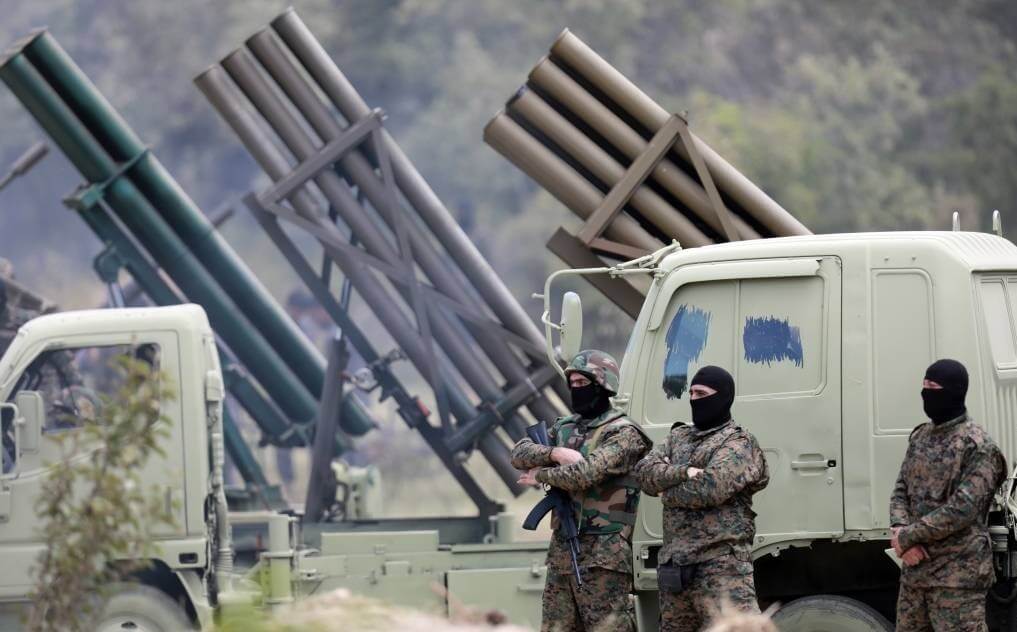
It is a social welfare network. Hezbollah runs hospitals, clinics, schools, agricultural cooperatives, news outlets, and reconstruction programs across the Shia-majority regions of Lebanon — southern Lebanon, the Bekaa Valley, and southern Beirut.
CNN once observed that Hezbollah “did everything that a government should do, from collecting the garbage to running hospitals and repairing schools.” When the Lebanese state collapsed economically and could not provide basic services, Hezbollah did.
When Israel bombed Beirut and water stopped running, Hezbollah trucked it in. That is a large part of why its support runs so deep.
None of this is hidden. Hezbollah is not a secret. It is a government within a government, and the Lebanese people who depend on it know exactly what it is.
Why Hezbollah Exists: The Part U.S. Media Skips
Americans are told Hezbollah “hates Israel” as if this hatred arrived out of nowhere, a product of pure ideology. The actual history is this: Hezbollah was founded in 1982 in direct response to Israel’s military invasion of Lebanon.
That invasion killed thousands of Lebanese civilians and began an eighteen-year Israeli military occupation of southern Lebanon that did not end until 2000.
During those eighteen years, Israeli forces, working with their Christian militia proxies, were responsible for mass atrocities — including the Sabra and Shatila massacre of Palestinian and Lebanese civilians in 1982, which a subsequent Israeli commission found its own defense minister, Ariel Sharon, personally responsible for enabling.

Hezbollah was organized, with Iranian support, to fight that occupation. When Israel finally withdrew in 2000, Hezbollah’s fighters had forced out a far more powerful conventional army — something no Arab state had ever done.
That victory is not small. It is why Hezbollah is viewed across much of the Arab world not as a terrorist group but as a resistance movement.
It is also why, when the 2006 war broke out and Israel again invaded Lebanon, Hezbollah emerged with its popularity dramatically increased.
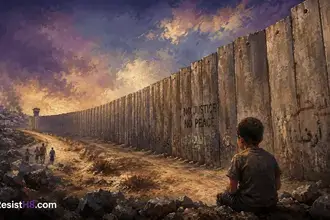

The context that U.S. outlets erase is simple: Hezbollah’s entire existence is a response to Israeli military action on Lebanese soil. Strip out that history and the group makes no sense.
Include it, and the word “terrorist” starts looking like a way to avoid talking about occupation.
The Ceasefire That Wasn’t
Consider what happened in late 2024. After more than a year of cross-border fighting that followed October 7, 2023, and a devastating Israeli invasion of southern Lebanon that killed roughly 2,300 people and displaced more than a million, a ceasefire took effect on November 27, 2024.
Hezbollah’s response was not what you’d expect from a “murderous terrorist group.” Hezbollah publicly urged displaced Lebanese civilians not to return home yet. The group warned its own supporters that Israel had “a history of violating pledges and agreements” and asked them to remain patient until the ceasefire’s terms were verified.
That warning turned out to be correct. According to the UN Interim Force in Lebanon, Israel violated the ceasefire more than 10,000 times in the year that followed — over 7,500 airspace violations and nearly 2,500 ground violations.

The UN documented four instances of projectiles fired from Lebanon toward Israel during that same period, none of which caused casualties.
Israeli strikes, meanwhile, killed more than 330 people in Lebanon during the so-called ceasefire, including at least 127 civilians and more than 13 children.
Roughly 64,000 Lebanese remained internally displaced a full year later, unable to return to homes that had either been destroyed or sat inside areas Israel still occupied.
A ceasefire that one side violates 10,000 times is not a ceasefire. And the organization that warned civilians this would happen — the organization American media calls terrorist — was right about it.
The Journalist in the Press Vehicle
On March 28, 2026, an Israeli strike hit a marked media vehicle on a highway in southern Lebanon. Four precision missiles. Three journalists dead: Ali Shoaib of Al-Manar TV, Fatima Ftouni of Al-Mayadeen TV, and her brother Mohammed Ftouni, a freelance photojournalist. A paramedic was also killed as ambulances responding to the scene came under fire.
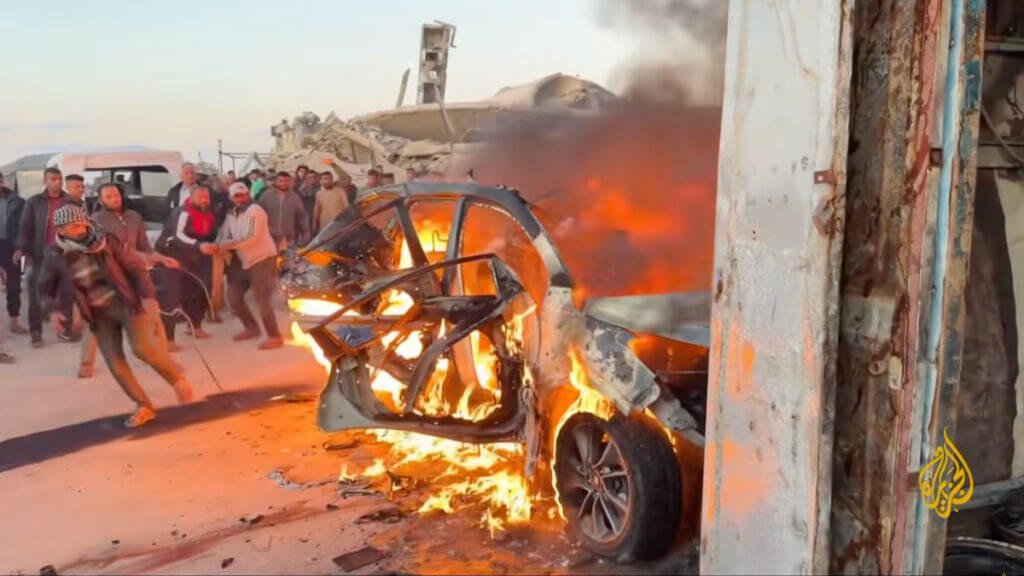
Ali Shoaib had been a war correspondent for decades. Al-Manar, the network that employed him, is owned by Hezbollah. He was also, Israel said, a member of Hezbollah’s Radwan Force — though the Israeli military offered no evidence for its claim that he had been using journalism as cover for intelligence operations.
The Committee to Protect Journalists noted that “journalists are not legitimate targets, regardless of the outlet they work for.” Lebanon’s president called the killings “a blatant crime.” A colleague stood next to the burned-out car afterward, holding up a press vest with its bottom torn away, and said: “This vest was supposed to protect my colleagues.”
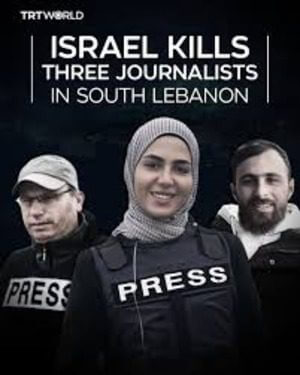
This is the moment that cuts through the propaganda for a lot of people, including the editor of this publication. Here was a man — a journalist, a father, a person — who was a Hezbollah member and who also spent his career reporting under fire.
His colleagues described him as an icon of resistance journalism. His death was mourned the way any reporter’s would be. He was not a cartoon. He was a human being in a political organization his community saw as legitimate, doing a job that got him killed by a foreign military.
The “terrorist” framing cannot hold both of those facts at once. That’s why the framing is used. It exists precisely to prevent you from having to hold both of those facts at once.
The Criticisms That Are Real
None of this means Hezbollah is above criticism. Honest reporting requires honest reporting.
Hezbollah has carried out acts of violence abroad, including the 1983 bombing of U.S. Marine barracks in Beirut and the 1994 bombing of a Jewish community center in Buenos Aires.
It intervened in Syria’s civil war on behalf of the Assad regime, which bombed its own civilians. In 2008, it briefly turned its weapons inward against the Lebanese state.
It is funded and ideologically aligned with Iran, and its leadership has used language, particularly about Israel, that is violent and dehumanizing. Its social services network, while real, is tied to a political project that discourages dissent.
It is not a human rights organization. It is a political-military organization operating in a region shaped by a century of war, occupation, and foreign interference.
The designation question reflects that complexity. The United States, United Kingdom, Canada, Australia, Germany, the Netherlands, the Arab League, and the Gulf Cooperation Council classify all of Hezbollah as a terrorist organization.
The European Union only classifies its so-called “military wing” as such — a distinction France in particular has defended on the grounds that Hezbollah is a major player in Lebanese democracy and cutting it off would destabilize Lebanon itself.
Reasonable governments, looking at the same facts, reach different conclusions. That alone should tell you the single word “terrorist” is inadequate.
Who Benefits From the Cartoon
So who gains when Hezbollah is reduced to a one-word slur?
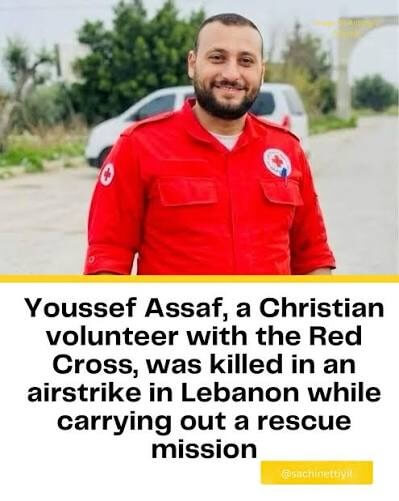
Israel does. The “terrorist” label allows Israeli strikes on Lebanese territory — schools, hospitals, press vehicles, residential villages — to be described as targeting terrorism, rather than as what they often are: attacks on a sovereign country that kill civilians.
The U.S. government does. The label allows American weapons transfers, diplomatic cover, and war powers to proceed without public debate.
Cable news does. The label saves producers the trouble of context.
What the label does not do is help Americans understand the actual country of Lebanon, the actual people who live there, or the actual reasons a substantial portion of them continue to support a political party and armed movement that fights a foreign military occupying their land.
Hezbollah is not simple.
It is a political party that wins elections. It is an army that has protected civilians from foreign invasion. It is a social safety net in a country whose government collapsed. It is also an organization that has committed real violence and whose ideology many in Lebanon reject.
It is, in other words, a political force — shaped by history, capable of both protection and harm, accountable to real human beings who know more about it than the U.S. State Department does.
The first step to honest foreign policy journalism is admitting that. The second step is asking why our own government has spent forty years making sure we never hear it.