
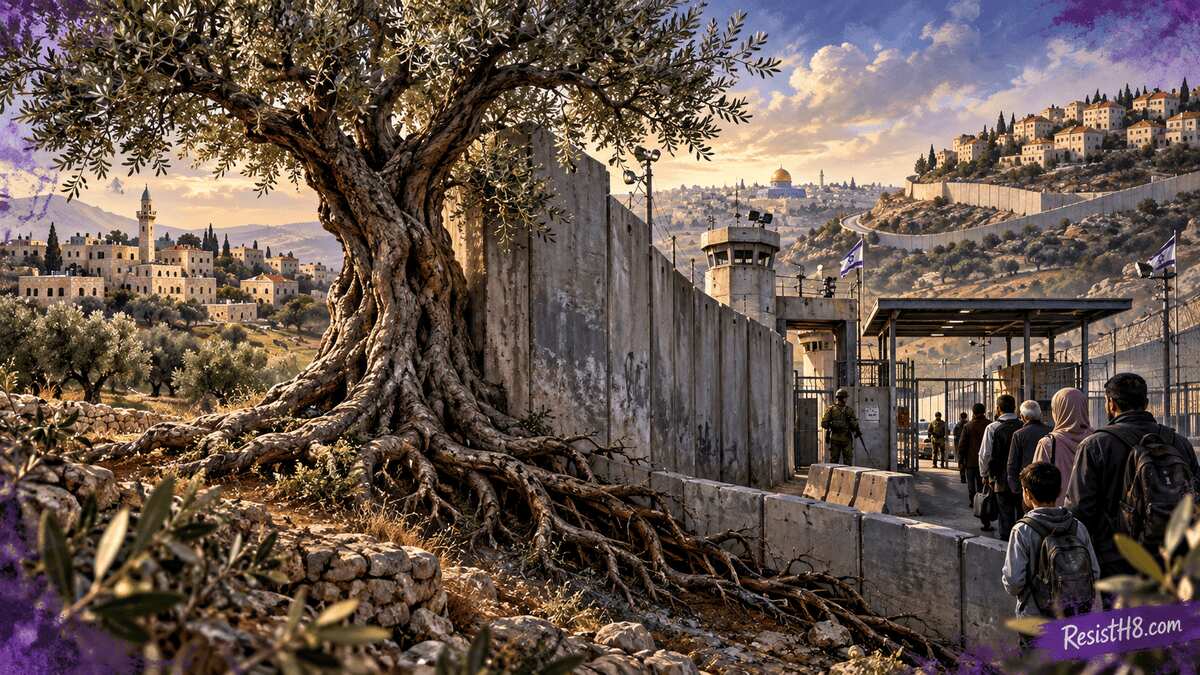

For millions of Americans, the genocide in Gaza shows up in photos on social media, and the Israel—Palestine conflict in discussions on cable news. You’ve probably heard pro-Palestinian protesters or advocates mention “Israel’s occupation of Palestine,” but if you live in the U.S., there’s a good chance you dont know much about it.
There’s a reason for that.
Actually, there are two reasons: American media’s pro-Israel bias and the Hasbara campaign (propaganda) that the Israeli government spends millions to fund in countries around the world.
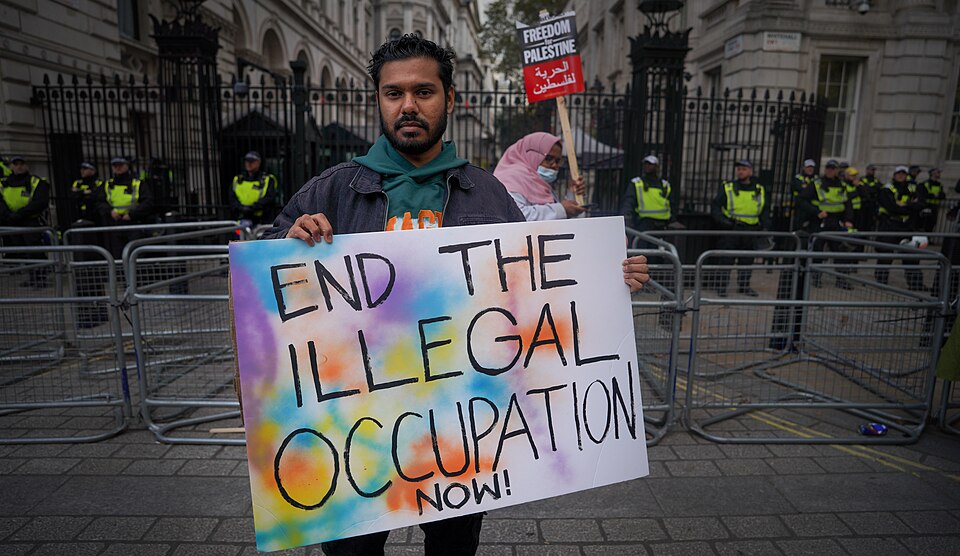
A rocket is fired. Israel bombs Gaza. Palestinians are starving. Israeli soldiers conduct raids in the West Bank. Politicians call for negotiations. Then the story disappears until the next explosion.
What’s often missing is the framework built by historical events that came before those news stories.
Millions of Palestinians have lived for decades under varying degrees of Israeli military control without citizenship in the state exercising that control. Israeli citizens have been moving into settlements throughout occupied Palestinian territory and live under separate legal and political systems.
That situation didn’t begin on October 7, 2023. It didn’t begin with Hamas.
And although the Israeli-Palestinian conflict stretches much further back, the military occupation recognized under international law began in June 1967.
Understanding that distinction is key to understanding almost everything that has happened since.
First: What Does “Occupied Palestine” Mean?
The word occupation is sometimes used as a political term.
- First: What Does “Occupied Palestine” Mean?
- Palestine Before Israel
- 1947: The UN Proposes Partition
- The Nakba
- 1949 to 1967: There Was Still No Palestinian State
- The Six-Day War Changes Everything
- What Occupation Originally Meant
- Israeli Settlements and Settler Violence in Occupied West Bank
- Jerusalem
- Then Came Oslo
- Does the Palestinian Authority Mean Palestinians Govern Themselves?
- Checkpoints, Permits and Freedom of Movement
- Two Populations, two Legal Systems
- Did Israel’s Occupation of Palestine End in 2005?
- 2024: The International Court of Justice Goes Further
- The UN Demanded an End to the Occupation
- Why Many Americans Don’t Understand Israel’s Occupation of Palestine
- Why Israeli Occupations Matter
- Myths and Facts
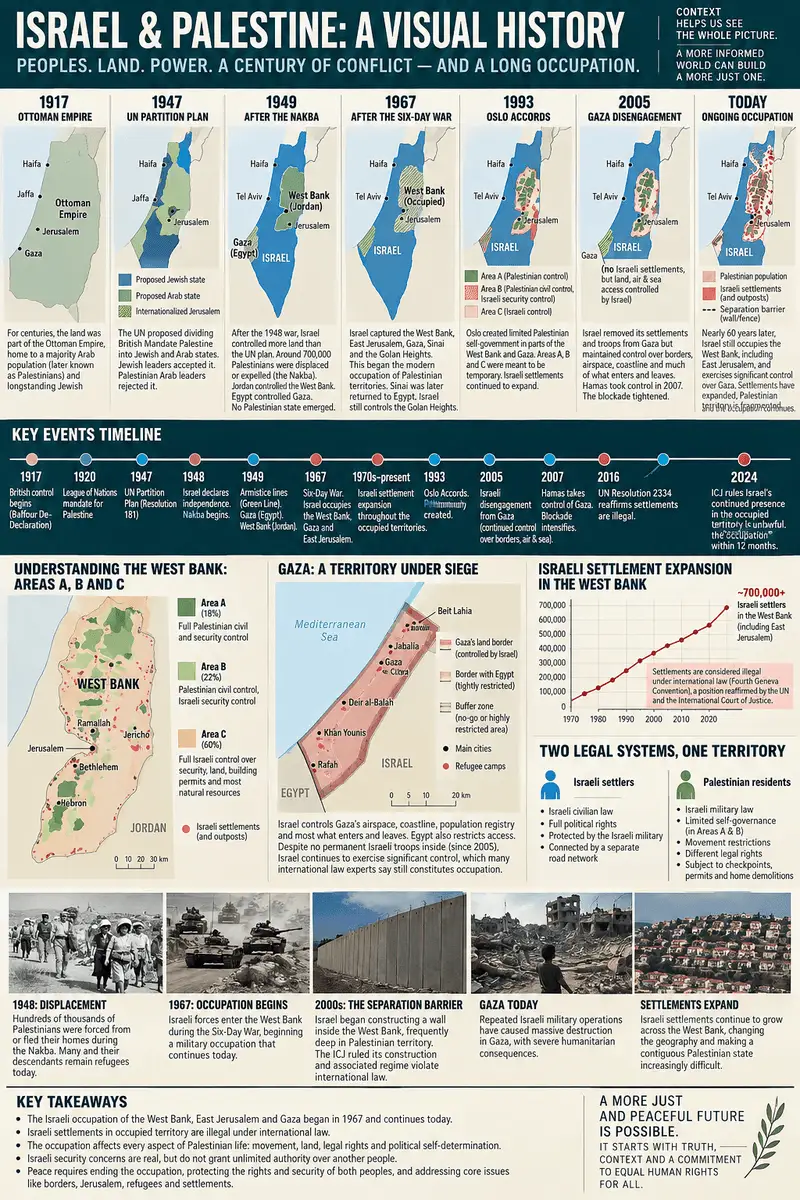
Legally, its not.
Under international humanitarian law, territory is considered occupied when foreign armed forces exercise effective control over territory that doesn’t belong to them.
The International Committee of the Red Cross explains that occupation is a factual legal determination, not a political label. The ICRC considers Israel the occupying power in the West Bank, including East Jerusalem, and Gaza.
These areas are commonly referred to collectively by the United Nations and international courts as the Occupied Palestinian Territory, or OPT.
There’s an important distinction here.
Some Palestinians and advocates use “occupation” more broadly to describe Palestinian dispossession beginning with Israel’s creation in 1948. But when international courts and humanitarian organizations discuss the Israeli occupation, they are generally talking about the Palestinian territories Israel captured during the 1967 Six-Day War.
Those are:
- the West Bank
- East Jerusalem
- the Gaza Strip
Israel also captured Egypt’s Sinai Peninsula and Syria’s Golan Heights during that war. Sinai was later returned to Egypt. Israel continues to control the Golan Heights.
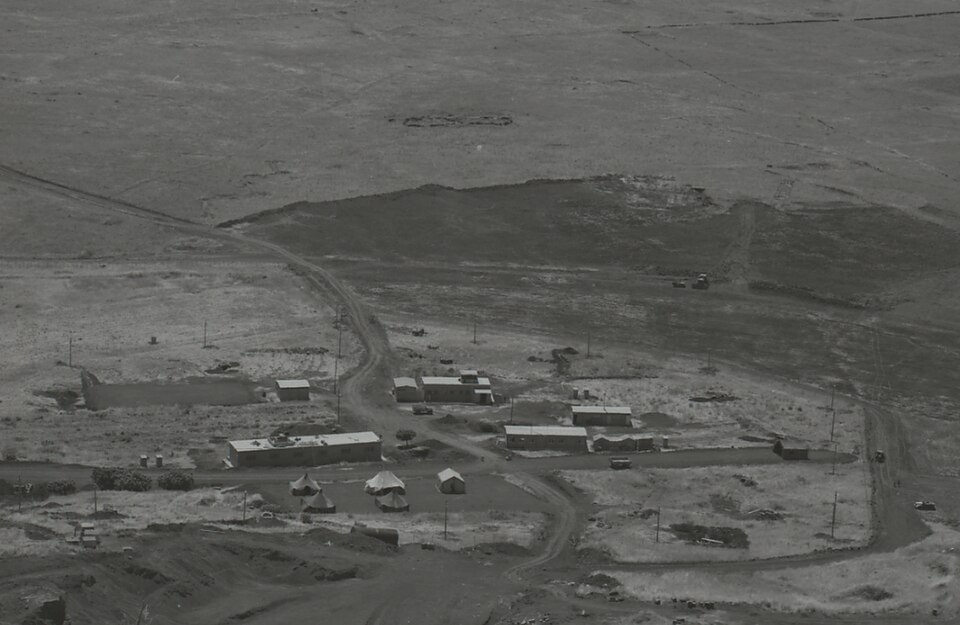
Golan Heights under Israeli occupation in 1969. (Boris Carmi /Meitar Collection / National Library of Israel / The Pritzker Family National Photography Collection / CC BY 4.0)
Palestine Before Israel
Before Israel existed, the territory was governed by the Ottoman Empire for centuries.
Following World War I and the collapse of the Ottoman Empire, Britain took control of Palestine under a League of Nations mandate.
During this period, two national movements frquently collided.
Palestinian Arabs sought political independence in the country where they constituted the majority population.


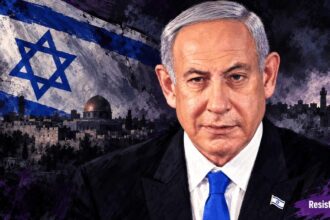
The Zionist movement sought to establish a Jewish national homeland in Palestine, driven partly by European nationalism and especially by centuries of persecution and antisemitism against Jews.
Jewish immigration increased substantially during the early twentieth century, particularly as antisemitic persecution intensified across Europe.
The Holocaust would make the demand for a safe Jewish homeland immeasurably more urgent, but Palestine wasn’t available land.
It was already inhabited primarily by Palestinian Arabs, alongside longstanding Jewish communities and a growing number of Jewish immigrants.
That created a fundamental political problem: two groups of people were claiming national self-determination in the same territory. Britain never successfully resolved it.
1947: The UN Proposes Partition
In November 1947, the United Nations General Assembly approved Resolution 181, recommending the division of British-controlled Palestine into two countries:
A Jewish state and an Arab state.
Jerusalem would be placed under a separate international administration.Jewish leadership accepted the partition (emphasis on the word accepted in this sentence).
Palestinian Arab leaders and surrounding Arab governments rejected it, arguing, among other objections, that the plan partitioned a country whose population was still majority Arab and allocated a disproportionately large portion of the land to the proposed Jewish state.
You can read the original UN partition proposal here: United Nations Resolution 181 and the Partition Plan
Violence between Palestinian Arabs and Jewish forces escalated into a civil war. Then, on May 14, 1948, Israel declared independence as Britain’s mandate ended. Armies from neighboring Arab countries entered the former mandate territory, beginning the first Arab-Israeli interstate war.
Israel survived the war and ultimately controlled significantly more territory than the UN partition proposal had assigned to the Jewish state. Egypt controlled Gaza, while Jordan controlled the West Bank and East Jerusalem.
No Palestinian state emerged.
And hundreds of thousands of Palestinians were driven from the territory that became Israel.
The Nakba
Palestinians call what happened during the 1947-1949 war the Nakba, Arabic for “catastrophe.”
Roughly 700,000 to 750,000 Palestinians fled or were expelled from their homes. The historical record does not support either simplistic version sometimes used in political arguments. It's inaccurate to claim every Palestinian was personally forced from their home at gunpoint. It’s equally inaccurate to claim Palestinians simply left voluntarily because Arab governments told them to.
People fled for different reasons in different places: direct expulsions, military attacks, massacres or fear of massacres, collapsing communities, combat, intimidation and panic.
UNRWA, the United Nations agency established to assist Palestinian refugees, began operations in 1950 serving roughly 750,000 refugees.
Hundreds of Palestinian communities collapsed. For Palestinians, the refugee question has never been a historical footnote. It remains one of the central unresolved issues of the conflict.
1949 to 1967: There Was Still No Palestinian State
Following the 1948 war, armistice lines separated Israel from surrounding Arab-controlled territory. The generally recognized boundary between Israel and the West Bank became known as the Green Line.
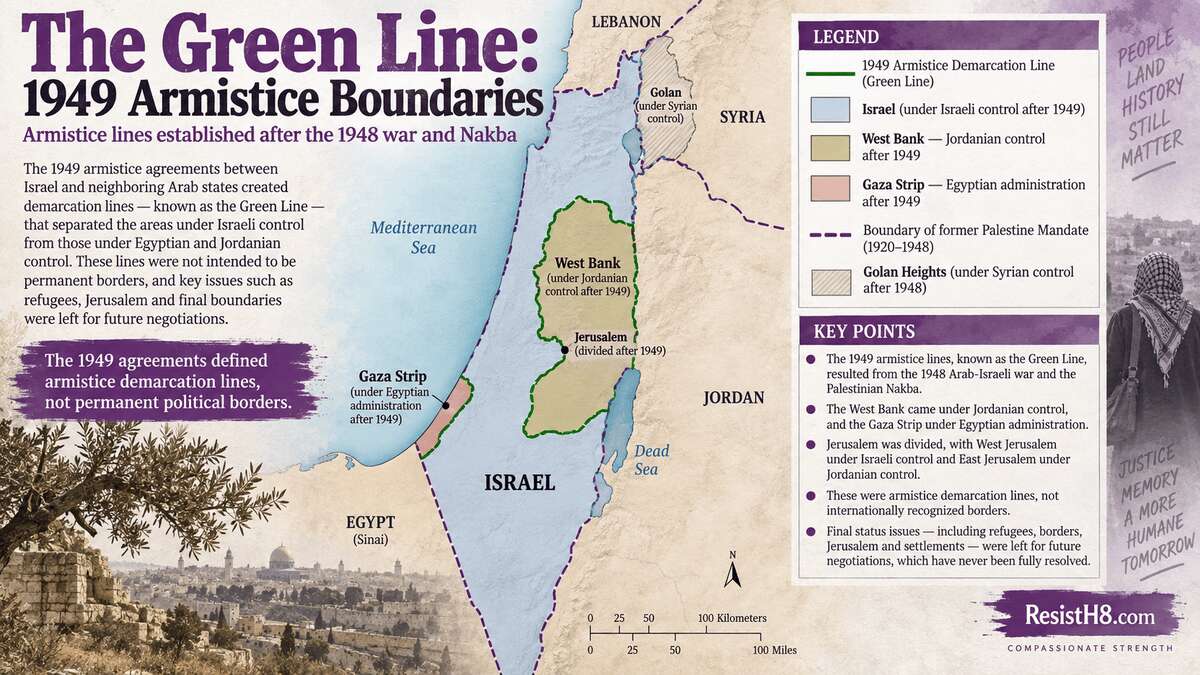
Jordan controlled the West Bank and East Jerusalem, and Egypt administered Gaza. For the next 19 years, there was no independent Palestinian state in either territory. Then came June 1967.
The Six-Day War Changes Everything
Tensions between Israel and surrounding Arab states had been escalating for months.
Egypt moved troops into Sinai, demanded the withdrawal of UN peacekeepers and closed the Straits of Tiran to Israeli shipping. Palestinian guerrilla attacks, Israeli reprisals and clashes with Syria were also contributing to the crisis.
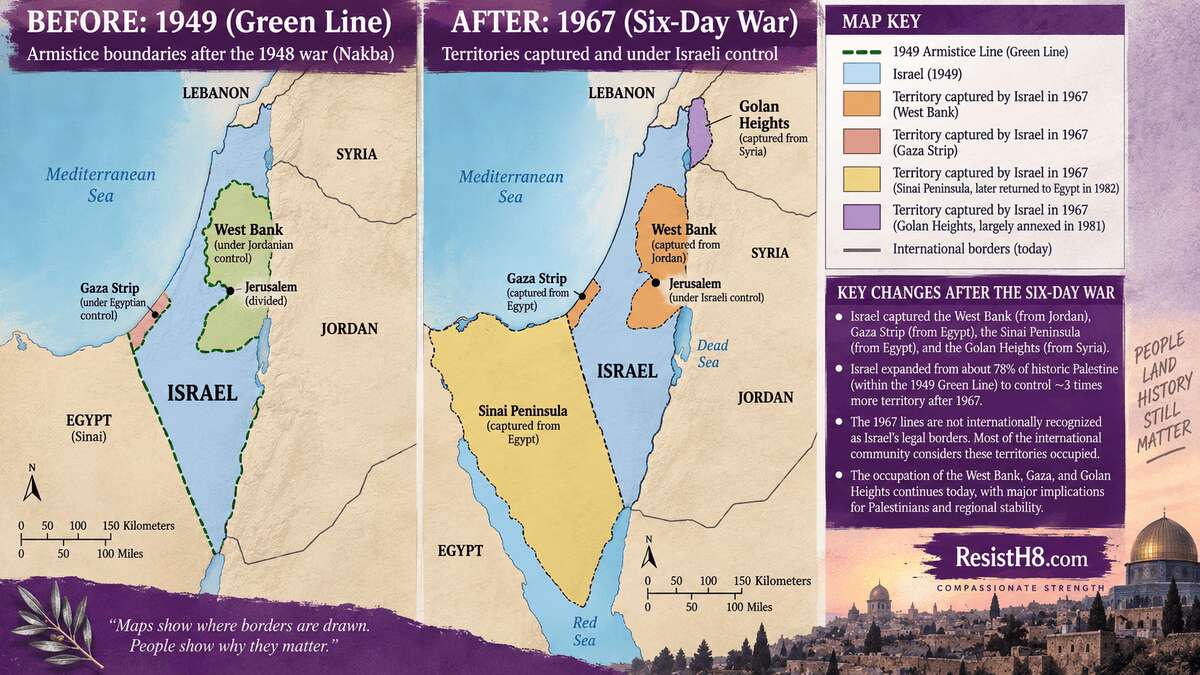
On June 5, 1967, Israel launched a massive preemptive attack against Egypt. Within six days, Israel defeated Egypt, Jordan and Syria.
It captured: the West Bank and East Jerusalem from Jordan, Gaza and Sinai from Egypt, and the Golan Heights from Syria.
This is the moment the modern Israeli occupation of Palestinian territory begins.
What Occupation Originally Meant
Occupation law doesn’t automatically make military occupation itself illegal. Wars happen. Armies sometimes end up controlling territory belonging to someone else. International law created rules governing what an occupying power is legally allowed to do until the conflict is resolved.
The basic premise is important: Occupation is supposed to be temporary.
Read the next few sentences several times. They’re important points to make in any discussion or debate about Israel’s occupation of Palestine. The occupying state does not acquire sovereignty simply because its army controls the territory. It must administer occupied territory while protecting the civilian population. It can’t treat the land as its own.
After the 1967 war, the UN Security Council adopted Resolution 242, emphasizing the “inadmissibility of the acquisition of territory by war” and calling for Israeli withdrawal in the context of a peace settlement guaranteeing states in the region secure and recognized boundaries.
More than half a century later, Israel's occupation of Palestine remains, and the temporary military arrangement has gradually become permanent. Israel also occupies the West Bank, where they have been forcibly removing Palestinians from their homes — killing them if they refuse to leave — and building illegal Israeli settlements there.
Israeli Settlements and Settler Violence in Occupied West Bank
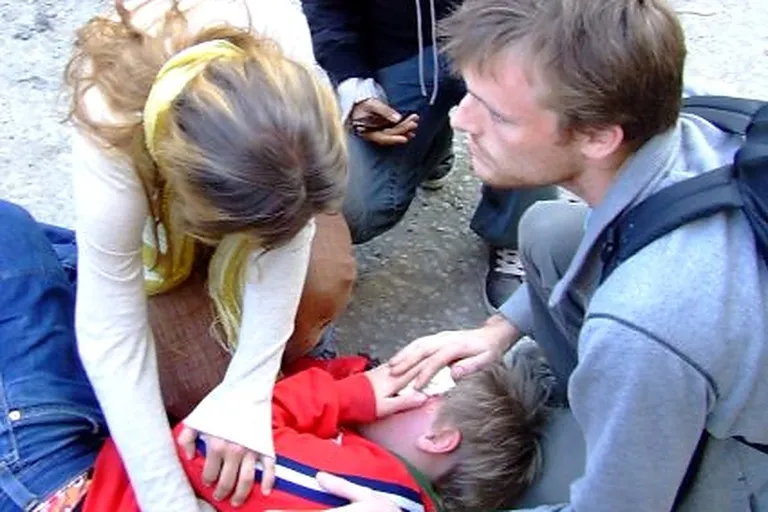
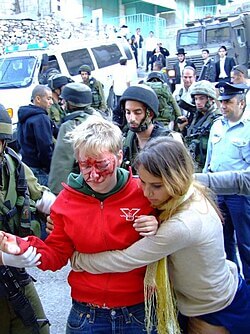
Soon after the occupation began, Israeli civilians began establishing communities inside the occupied territories.
These became settlement enterprises. Israeli settlements now exist throughout the West Bank and East Jerusalem. There are events held in synagogues in the U.S. where Americans can purchase homes that are part of illegal settlements in the occupied West Bank.
Israel recently started bulldozing entire villages in preparation for Israeli settlements in southern Lebanon. Israeli government officials say the IDF is doing the same thing it did in Gaza in Lebanon.
The Gaza genocide, the Iran war, and Israel’s occupation of Palestine, the West Bank, and the Golan Heights are all part of the Israeli government’s expansion plan called the Greater Israel Project.
Israeli settlers have violently attacked or killed Palestinians living in the West Bank. There are videos of settlers intimidating the Israeli activists who volunteer to protect the Palestinians still living in the West Bank.
They also attacked an NBC News crew that was reporting on the harassment of a Palestinian woman trying to save her home. She was hospitalized after the violent attack.
Video: A member of the news crew recounts the attack (below).
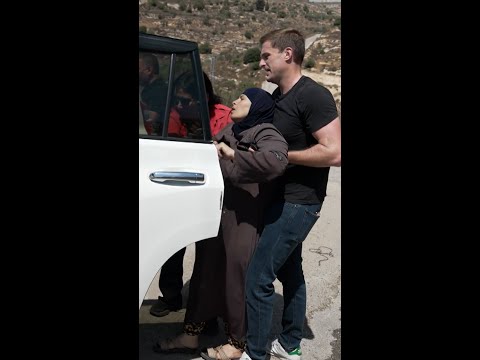
Settlers have attacked reporters from other news organizations before.
And in an event that didn't receive nearly enough coverage in American media: a group of Israeli settlers, assisted by IDF soldiers, detained Representative Ro Khanna when he visited the West Bank to assess the increase in Israeli settler violence.
Both Israeli settlers, and the IDF soldiers who support them, have killed several American citizens — with no accountability. This isn’t a dispute over where people choose to build houses. Settlements require land, roads, utilities, military protection, and security zones.
And they change the geography of the territory where Palestinians hoped to build an independent country. The E1 settlement project is meant to divide the West Bank and prevent the establishment of a future Palestinian state.
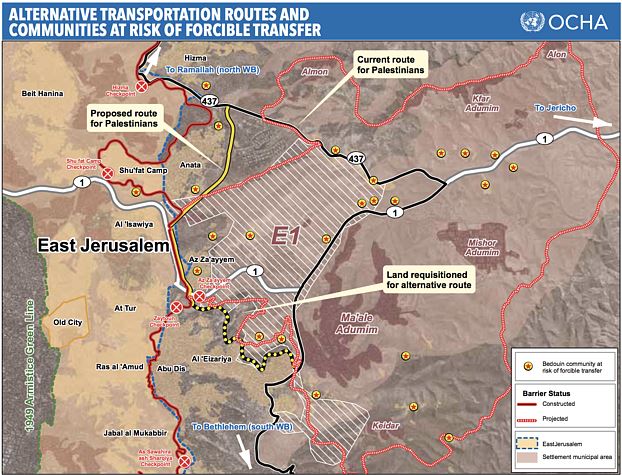
The Fourth Geneva Convention prohibits an occupying power from transferring parts of its own civilian population into territory it occupies.
The International Court of Justice concluded in 2004 that Israeli settlements in occupied Palestinian territory had been established in breach of international law.
The UN Security Council reaffirmed the same position in Resolution 2334 in 2016, declaring that the settlements have “no legal validity.” Israel disputes this legal interpretation.
A 2012 Israeli government commission argued that the traditional law of occupation does not properly apply to the West Bank’s unique historical circumstances and that Israeli settlement there is not inherently unlawful. That position, however, has not been accepted by the International Court of Justice, the International Committee of the Red Cross or the UN Security Council.
Jerusalem
Jerusalem is one of the conflict’s most sensitive issues.
Israel captured East Jerusalem in 1967 and later extended Israeli law and administration over it. President Trump named Jerusalem as the capital of Israel and opened a U.S. Embassy there during his first term. He did so at the request of his largest pro-Israel donor.
Palestinians claim East Jerusalem as the capital of a future Palestinian state. International bodies generally regard East Jerusalem as occupied territory.
Israel’s annexation of East Jerusalem has not been broadly recognized internationally. This means two populations living in the same city can possess dramatically different political status. Jewish Israelis generally hold Israeli citizenship. Many Palestinians hold permanent residency status, which carries different rights and can, under certain circumstances, be revoked.
The dispute isn’t over who gets to call Jerusalem a capital. It affects citizenship, housing, residency, building permits, property rights, voting and family life.
Then Came Oslo
In 1993, something extraordinary happened.
Israel and the Palestine Liberation Organization formally recognized one another and signed the Oslo Accords. The agreement was supposed to begin a transitional peace process lasting roughly five years.
A newly created Palestinian Authority would gradually administer parts of Gaza and the West Bank while negotiations continued over the hardest questions: Jerusalem, Borders, Israeli settlements, Palestinian refugees, and security.
The goal was a permanent settlement. In 1995, Oslo II divided the West Bank into three administrative categories.
Area A
The Palestinian Authority received responsibility for civil administration and internal security in major Palestinian population centers.
Area B
The Palestinian Authority received civil responsibility and public-order functions, while Israel retained overriding security authority.
Area C
Israel retained control over security and most land-related civil administration.
Area C accounts for roughly 60% of the West Bank and surrounds many of the disconnected Palestinian population centers located in Areas A and B. These divisions were intended to be temporary, but they remain.
Does the Palestinian Authority Mean Palestinians Govern Themselves?
Partly.
But not in the way citizens of an independent country normally understand self-government. The Palestinian Authority governs many everyday matters in Palestinian population centers: schools, municipal services, policing and other civil functions.
But it’s not sovereign over the West Bank.
Israel controls or heavily influences borders, external security, large areas of land, movement between many communities, and significant parts of the territory’s infrastructure and permitting systems.
Israeli forces also conduct military operations inside areas nominally administered by the Palestinian Authority.
That produces one of the strangest political arrangements in the world. A Palestinian living in Ramallah may have a Palestinian mayor, Palestinian police and Palestinian government agencies while simultaneously living in territory ultimately subject to Israeli military power.
Checkpoints, Permits and Freedom of Movement
For Palestinians, occupation is not simply a line on a map.
It can determine whether someone can drive to work, whether a farmer can reach agricultural land, whether a patient can reach a hospital, and whether someone can travel from one Palestinian city to another.
Israel says many movement restrictions are security measures designed to prevent terrorism and attacks against Israeli civilians. Security concerns aren’t imaginary.
Israelis have suffered suicide bombings, shootings, kidnappings, rocket attacks and other violence committed by Palestinian armed groups and individuals.
While any serious explanation of the occupation has to acknowledge that reality, it’s only fair to acknowledge why there are security concerns. Could it be Israel’s occupation of Palestine? For some reason, legacy media doesn't think it’s normal for a population forced to live in an open-air prison to defend itself and fight for freedom and sovereignty.
To those news organizations, we’d like to pose a question: “Do Palestinians have a right to defend themselves?”
Security measures have also become a sprawling system affecting millions of people, including innocent Palestinians.
By December 2025, the UN humanitarian office had documented 925 movement obstacles throughout the West Bank, including checkpoints, road gates, roadblocks, earth mounds and other barriers restricting the movement of approximately 3.4 million Palestinians.
Security explains why restrictions may sometimes be imposed, but it doesn’t automatically establish that every restriction, settlement, land seizure, or permanent system of control is lawful.
Two Populations, two Legal Systems
One of the least understood aspects of the West Bank is that Israeli settlers and Palestinian residents can live only a short distance from one another while being governed by different legal systems.
Israeli settlers are generally governed through Israeli civilian law. Palestinians are governed through Israeli military law.
The International Court of Justice examined this arrangement in detail in 2024.
It found that Israeli laws and policies had created extensive physical and legal separation between settlers and Palestinians in the West Bank and East Jerusalem.
The Court found that Israel maintained a regime of systemic discrimination and that its laws and policies created a “near-complete separation” between the two communities, violating Article 3 of the International Convention on the Elimination of All Forms of Racial Discrimination.
There’s an important nuance: Article 3 prohibits both racial segregation and apartheid. The Court found a violation of Article 3 but did not explicitly determine that Israel’s system constituted apartheid.
Several major human-rights organizations have separately concluded that Israeli policies meet the legal definition of apartheid, while Israel strongly rejects that characterization.
That debate shouldn’t overshadow what the Court itself actually found: systematic discrimination and near-complete physical and legal separation.
Did Israel’s Occupation of Palestine End in 2005?
In 2005, Israeli Prime Minister Ariel Sharon’s government removed approximately 8,000 Israeli settlers from Gaza and withdrew permanent Israeli ground forces from inside the territory. Israel maintains that this ended the occupation of Gaza.
Its disengagement plan explicitly stated that after withdrawal there would be “no basis” for claiming Gaza remained occupied.
But read a little farther into that same document.
Israel also said it would continue monitoring Gaza’s external land perimeter, retain authority over Gaza’s airspace, exercise security control over its coastal waters, and reserve the right to conduct military operations.
After Hamas seized control of Gaza in 2007, Israel imposed a sweeping blockade, while Egypt also tightly restricted its border with Gaza. Israel has argued that the blockade and other restrictions were necessary to prevent weapons and militants from entering the territory.
The ICRC continued to regard Gaza as occupied because occupation law is primarily about effective control, not whether soldiers are permanently stationed on every street.
The ICJ addressed the disagreement in 2024.
It concluded that after the 2005 withdrawal, Israel continued exercising important elements of authority over Gaza, including aspects of land, sea and air access, movement of people and goods, and other functions.
The Court concluded that Israel’s obligations under occupation law continued to the extent of its effective control. That’s more precise than either slogan: “Israel completely occupied Gaza after 2005” or “Gaza was totally independent after 2005.”
It was neither a conventional military occupation with Israeli soldiers permanently stationed throughout the territory nor a fully sovereign independent state controlling its borders, airspace and territorial waters.
2024: The International Court of Justice Goes Further
For decades, international institutions described Israeli settlements as illegal while treating the occupation itself as a situation that might eventually be resolved through negotiations.
In July 2024, the International Court of Justice issued a landmark advisory opinion.
Its conclusion went significantly further. The Court found that Israeli policies including settlement expansion, annexation, discriminatory laws, and prolonged denial of Palestinian self-determination had transformed the situation. It concluded that Israel’s continued presence in the Occupied Palestinian Territory is unlawful.
The Court said Israel must: cease new settlement activity, end its unlawful presence “as rapidly as possible,” and evacuate settlers from occupied Palestinian territory. It also concluded that Israeli policies had effectively annexed large portions of occupied territory despite the prohibition on acquiring territory through force.
The decision was an advisory opinion, not a judgment in a lawsuit between two states, so it doesn’t operate exactly like a binding court order. But it is the legal judgment of the United Nations’ principal judicial body and carries substantial authority in interpreting international law.
Several judges disagreed with portions of the majority’s reasoning, particularly whether the occupation itself had become unlawful and how security considerations should affect withdrawal. Those disagreements are part of the record, but they don’t change the Court’s majority ruling.
The UN Demanded an End to the Occupation
In September 2024, the UN General Assembly responded to the ICJ opinion by adopting a resolution demanding that Israel end its unlawful presence in occupied Palestinian territory within 12 months. The vote was 124 countries in favor, 14 against and 43 abstaining.
The General Assembly can’t enforce withdrawal in the way a national government can enforce domestic law. Israel didn’t end the occupation within that period. So is this simply a land dispute?
After nearly six decades, that description becomes increasingly difficult to defend. A land dispute suggests two parties arguing over a boundary. The occupation is a system of governance that determines who controls land, who can build, where people can travel, which roads they can use, which courts prosecute them, which army can enter their community, whether settlements can expand, whether Palestinians can establish a sovereign state, and whether millions of people can exercise political self-determination.
That’s why the occupation matters even during periods when Israelis and Palestinians are not actively at war. It exists every day.
Why Many Americans Don’t Understand Israel’s Occupation of Palestine
Part of the problem is vocabulary.
American news reports frequently describe events as occurring “in the West Bank,” without reminding audiences that the West Bank is occupied territory.
Reports refer to “clashes” without always explaining who controls the land where the clash occurred. Settlement construction may be described as a housing controversy rather than part of an international legal dispute over transferring an occupying power’s civilian population into occupied territory.
Palestinian Authority buildings, flags and police can create the impression that Palestinians already possess a functioning sovereign government. They don’t.And Gaza is sometimes discussed as though it were simply another neighboring country at war with Israel.
It isn’t internationally recognized as a separate sovereign country. Without knowledge of the history, Americans see hundreds of disconnected news events. Once they understand the history, many of those events become connected.
Why Israeli Occupations Matter
The Israeli-Palestinian conflict contains genuine historical trauma on both sides. Jewish history includes centuries of persecution, pogroms, expulsions and ultimately the Holocaust. Israeli civilians have also endured wars, terrorism, hostage-taking and attacks deliberately targeting civilians.
Palestinian history includes mass displacement, refugeehood, military occupation, land confiscation, settlement expansion, and generations born without national sovereignty. Recognizing one history doesn’t erase the other. Just like acknowledging both doesn’t mean you have to pretend that claims from either side are equally supported by evidence.
Some facts are no longer seriously ambiguous. Israel captured the West Bank, East Jerusalem and Gaza in 1967. The occupation has endured for nearly six decades. Israeli settlements have expanded throughout occupied territory.
The UN Security Council and International Court of Justice consider those settlements illegal. The ICJ has found that Israeli policies in the occupied territory systematically discriminate against Palestinians.
And in 2024, the world’s highest UN court concluded that Israel’s continued presence in the Occupied Palestinian Territory had itself become unlawful.
None of those conclusions requires hatred of Israelis or Palestinians. They simply describe a reality that millions of Palestinians live with every day, while much of the American public hasn’t been taught that it exists.
For decades, the world called the occupation temporary. A child born when Israel captured the West Bank in June 1967 would be 59 years old in 2026. At some point, “temporary” stops describing what exists on the ground. And that may be the most important fact Americans need to understand about Israel’s occupation of Palestine.
Myths and Facts
Click on a myth to view the facts that debunk it.
Myth: “Palestine never existed, so Palestinians have no claim to the land”
This argument confuses modern statehood with the existence of a people. Many modern countries did not exist as sovereign states in their current form until relatively recently. Palestinian identity developed historically like other national identities.
The right to self-determination doesn’t require proving that a modern sovereign state with identical borders existed hundreds of years earlier. The right to self-determination doesn’t require proving that a modern sovereign state with identical borders existed hundreds of years earlier. The International Court of Justice treats the Palestinian people and their right to self-determination as established matters of international law.
Myth: “Israel stole all of Palestine in 1948”
This is also too simplistic. Jewish communities legitimately purchased land in Palestine before Israel existed. The UN proposed partition in 1947. Israel then emerged through war, and the boundaries it controlled after the war extended beyond those proposed by the UN. At the same time, hundreds of thousands of Palestinians were displaced and prevented from returning. Those realities can coexist.History doesn’t become more accurate by flattening it into one sentence.
Myth: “Israel left Gaza, so Gaza could have become Singapore”
Israel did remove its settlements and permanent military installations from inside Gaza in 2005. That fact matters.So does the fact that Gaza did not obtain normal sovereign control over its airspace, coastline, movement and many aspects of its external access.
Hamas governance, corruption, authoritarianism, armed conflict, Palestinian political division, Israeli restrictions and the blockade all contributed to Gaza’s isolation and economic devastation. No single sentence adequately explains what happened.
Myth: “The occupation exists because Palestinians refuse peace”
Assigning the entire history to one side’s refusal to make peace is politics, not analysis. Palestinian political leaders have rejected or failed to conclude proposed agreements. Palestinian armed groups have also carried out attacks that badly damaged negotiations and Israeli public confidence. But the occupation predates Hamas and predates the Palestinian Authority. Settlement construction also continued during decades of negotiation. .
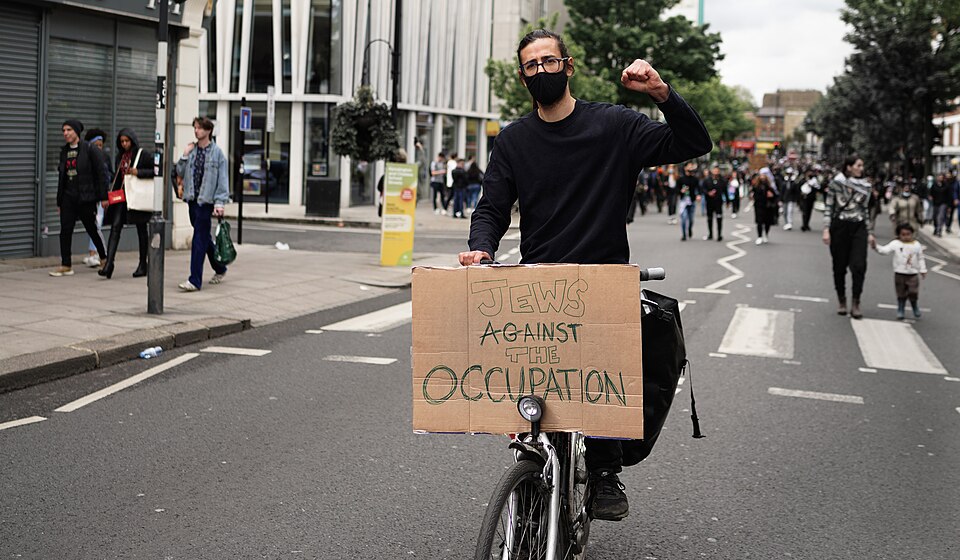
Myth: “Criticizing the occupation means opposing Israel’s existence”
No. Opposing Israeli military rule over Palestinians isn’t the same as arguing that Israeli Jews should lose their rights, homes or state. Likewise, supporting Palestinian rights does’t require supporting Hamas. And supporting Israel’s right to protect civilians doesn’t require endorsing settlement expansion or permanent occupation. These questions are constantly bundled together politically. They shouldn’t be.