
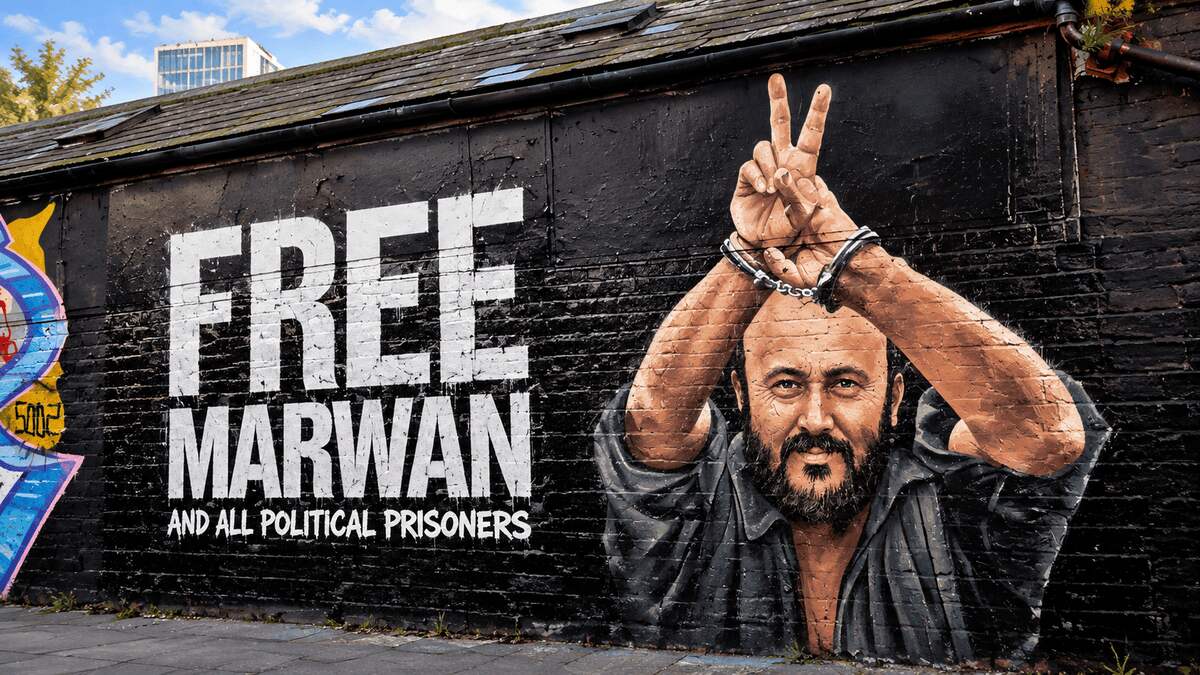

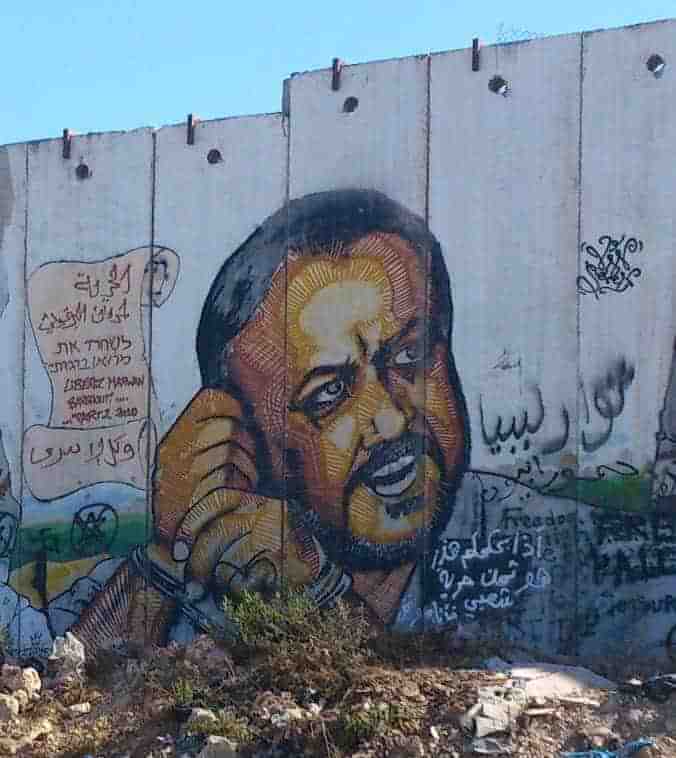
Palestinians are scheduled to vote for the first time in more than twenty years. The man leading every poll can't campaign. He can't give an interview, hold a rally, or record a video. He hasn't been allowed a family visit since October 2023. He is 67 years old, held in isolation in an Israeli prison, and according to his lawyer, he has been beaten repeatedly by guards over the past year. Marwan Barghouti is running for president in Palestine from a prison cell in Israel. If the election happens, he’s expected to win it.
Who is Marwan Barghouti
Barghouti grew up in Kobar, a village near Ramallah, and got into politics as a student at Birzeit University.
He became a household name during the first Intifada in the late 1980s, was elected to the Palestinian Legislative Council in 1996, and spent the Oslo years building working relationships with Israeli politicians.
He speaks fluent Hebrew. For a while he was the guy Israelis called when they wanted to talk.
That ended in 2002, when Israeli forces arrested him during a raid on Ramallah.
In 2004 an Israeli civilian court convicted him on five counts of murder tied to attacks during the second Intifada and sentenced him to five life terms plus 40 years.
He refused to mount a defense, telling the court it had no authority over him. He was acquitted of dozens of other counts because prosecutors couldn't show direct involvement.
Supporters call him Palestine's Nelson Mandela. Israeli officials call him a terrorist. Both sides agree on one thing: he is the most consequential Palestinian political figure alive.
Israel Had a Chance to Release Him
Under the Gaza ceasefire that took effect on October 10, 2025, Israel released roughly 2,000 Palestinian prisoners. Barghouti was not one of them, even though Hamas negotiators reportedly pushed for him.
An Israeli government spokeswoman said “he will not be part of this release.”
Days later, Trump was asked by Time whether he'd press Israel to free him. His answer: “So I'll be making a decision.”
Nearly a year has gone by. No decision has come. National Security Minister Itamar Ben-Gvir answered for Israel on social media instead, writing that Barghouti will not be released and will not lead Gaza.
Ben-Gvir had already made his position clear in person. In August 2025 he walked into Barghouti's cell with a camera crew and taunted him on video — “You won't win” — then posted the footage.
It was the first public image of Barghouti in over a decade. His wife Fadwa said she barely recognized him.
The UN human rights office called the stunt an attack on his dignity.
His Experience Inside
Barghouti has been in solitary confinement since October 2023, cut off from the Red Cross and from his family. What we know has been shared by his lawyer.
In spring 2026, attorney Ben Marmarelli reported three assaults in a matter of weeks. Guards “stormed his cell with a dog” that attacked him repeatedly.
He was assaulted again the next day during a transfer between prisons.
On April 8 he was beaten at Ganot Prison and left bleeding, with medical care denied. An earlier beating in September 2025 left him with four broken ribs and head injuries.
In July 2026 his family said guards shot him in the leg with a rubber bullet. The Israel Prison Service denies all of it, but based on reporting about the policy of torture in Israeli prisons, his lawyer’s claims sound similar to testimonies from former Palestinian prisoners.
Marmarelli said the two of them had to shout at each other through glass for five hours. He also said Barghouti was alert, focused, and following the news closely.
He is one of roughly 9,400 Palestinians in Israeli custody, including about 3,200 held under administrative detention with no charge and no trial, and around 370 children.
Meanwhile, the Knesset passed a death penalty law in March 2026 making execution by hanging the default sentence for West Bank Palestinians convicted of deadly attacks in military courts.
It isn't retroactive, so it doesn't apply to Barghouti — but it tells you exactly where things are heading.
Ben-Gvir was recently celebrating the construction of a gallows. He touted its viewing area for families of victims to watch.
The Numbers Israel is Worried About
In May 2026, Fatah held its first internal congress in a decade. Barghouti, in solitary, won more votes than any other candidate for the party's 18-member Central Committee.
His wife, Fadwa Barghouti, placed second in the Revolutionary Council vote.
Then came the polling. The Palestinian Center for Policy and Survey Research surveyed the West Bank and Gaza in early August 2026. If a presidential election were held today, Barghouti takes 54% among likely voters. Hamas's Khalil al-Hayya gets 26%. Mahmoud Abbas gets 14%, and 79% of Palestinians want him to resign.
The same poll found support for negotiations as the best path forward climbing to 44%, its highest in four years, while support for armed struggle fell to 27%. Hamas and Fatah are tied at 24% each, and 44% say neither one deserves to lead.
That's a population begging for a different option. There's one obvious candidate, and he's in a cell.
The Election, if it Happens
Abbas issued a decree on July 9, 2026 setting legislative elections for November 28, with presidential elections expected in the first quarter of 2027. It would be the first Palestinian vote since 2006. Abbas, 90, is in year 21 of a four-year term.
Barghouti has told his lawyer he intends to run and will not withdraw. Nothing in Palestinian law stops a prisoner from being a candidate — he ran in 2005 from a cell before pulling out, and he was preparing to run in 2021 before Abbas canceled that vote.
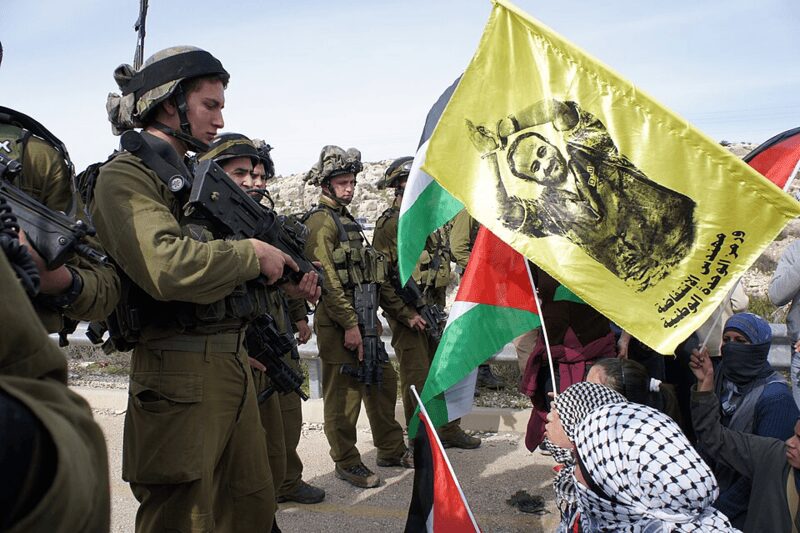
The obstacles are real. Israel hasn't said whether it will permit voting in East Jerusalem, which is the excuse that killed the 2021 election. Gaza's voter rolls are a mess. And a president who cannot leave his cell, take a phone call, or sign a document is a president in name only.
Why They Won't Let Him Out
The honest answer is that a free Barghouti is more dangerous to the current arrangement than a jailed one. He's the rare figure who can pull Fatah and Hamas voters onto the same ballot line, and he has credibility with Arab governments that Abbas lost years ago.
A unified Palestinian leadership with an actual mandate would make it much harder to argue there's no partner to negotiate with — and much harder to keep expanding settlements while the world looks away.
Keeping him in isolation solves that problem without anyone having to say so out loud.
The Campaign Outside
His family launched the international “Free Marwan” campaign in December 2025. More than 200 writers, actors, and musicians signed an open letter demanding his release, Margaret Atwood and Javier Bardem among them.
In August 2026, twenty actors from the Marvel films — Mark Ruffalo, Cate Blanchett, Tilda Swinton, Ian McKellen and others — added their names.
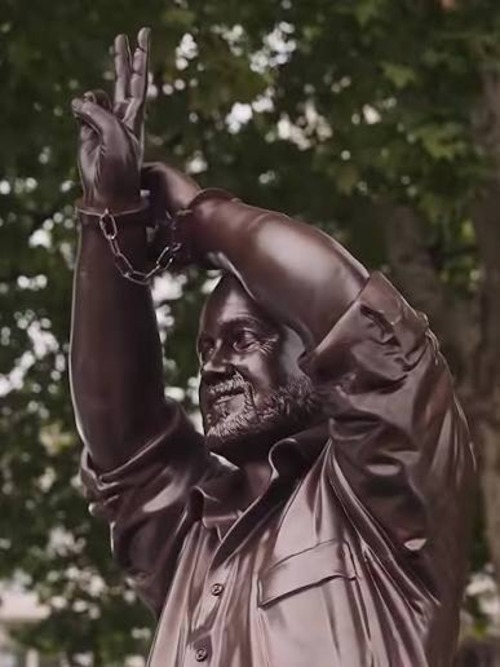
Activists tried to erect a statue of him in London's Parliament Square in June, but police intervened and removed it.
His son Arab has taken the campaign onto festival stages and into newsrooms, including a Berlin concert with Massive Attack.
None of it has moved the Israeli government an inch. What it has done is make it impossible to pretend like nobody's watching. If the Israeli government knows that the world is watching what happens to Barghouti, they’re less likely to do anything reprehensible. If you don’t think they would kill him to prevent a win in the Palestinian election, you haven't been paying attention to what’s happening in Gaza or southern Lebanon.
Whether November 28 produces a real election or another postponement, the underlying fact doesn't change: the person Palestinians most want to lead them has spent 24 years in a cell. Those who hold the key have decided that a leader who might actually be able to make peace is the last thing they want. That should tell you what the goal has been all along: The Greater Israel Project.
For more of our coverage, see our Gaza Genocide content hub.
FAQs
Why is Marwan Barghouti in prison?
Israel arrested him in 2002 and convicted him in 2004 on five counts of murder connected to attacks during the second Intifada. He received five life sentences plus 40 years. He refused to defend himself in court, saying the court had no legitimate authority over him, and human rights groups have long criticized the trial as politically driven.
Can he actually run for president from prison?
Yes. Palestinian law doesn't bar imprisoned candidates. He appeared on the ballot in 2005 before withdrawing and planned to run in 2021 before that election was canceled. Governing from a cell is the harder question.
Why won't Israel release him?
Israeli officials say he's a convicted terrorist. Critics point out that Israel has released thousands of convicted prisoners in exchange deals and specifically excluded him each time — because he is the one Palestinian figure capable of uniting the factions behind a single negotiating position.