

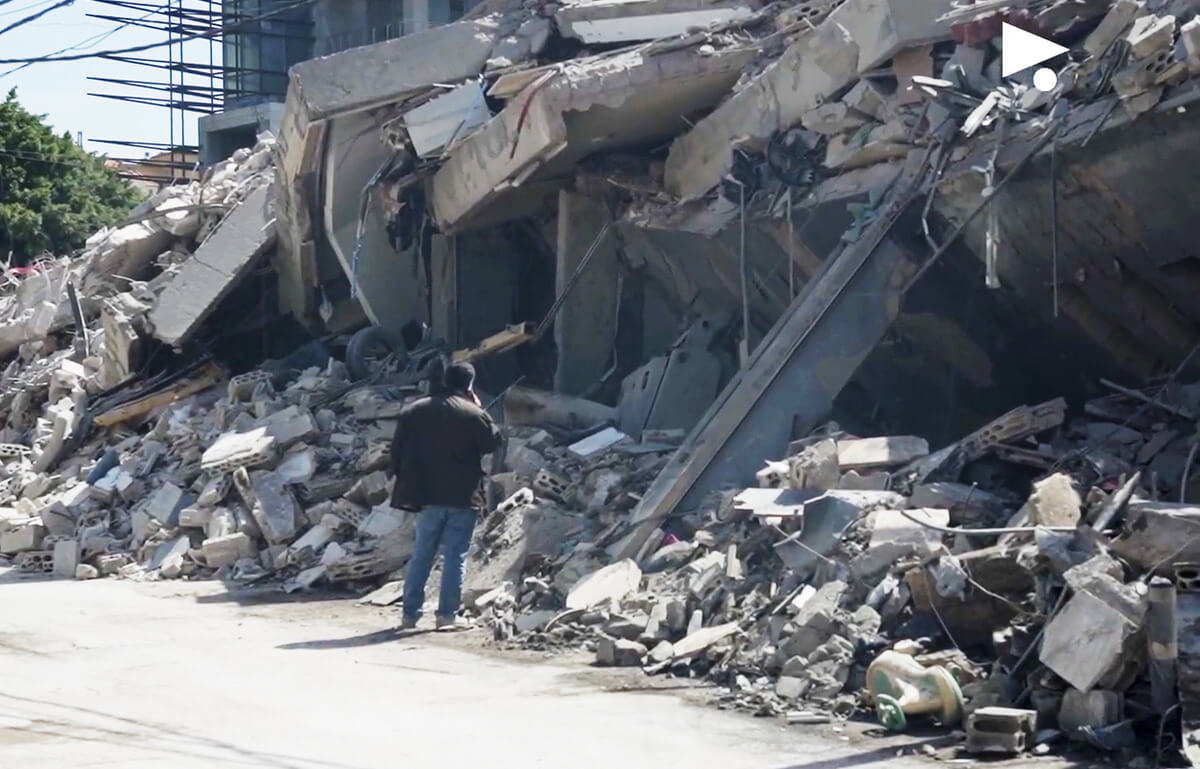

A ceasefire is supposed to stop the killing. In southern Lebanon, it hasn't.
Just days after a 10-day ceasefire took effect on April 16, Israeli forces are still flattening villages, shelling Lebanese towns, and bombing civilians who dare to approach what Israel calls its new "yellow line." United Nations experts are now using a precise word for what they're witnessing: domicide. The deliberate, systematic destruction of homes to make return impossible.
And they're saying plainly what Western governments keep refusing to say out loud—this isn't self-defense. It's the Gaza playbook, running again, in a new country.
The Ceasefire That Never Really Started
On Friday, April 17, President Donald Trump announced Israel was "PROHIBITED" from continuing to strike Lebanon. Within hours, Israel struck Lebanon anyway.
By Saturday, Israeli Army Radio confirmed the military had drawn a "yellow line" roughly 10 kilometers north of the Israeli border—a unilateral redrawing of the map that lets Israeli forces occupy about 10% of Lebanese territory and control 55 Lebanese towns and villages. No negotiation. No agreement from the Lebanese government. Just a line, enforced with airstrikes.
It's the same tactic Israel used in Gaza, where a similar yellow line has already cost roughly 100 Palestinian lives since October 2025. At least 36 of those killed near Gaza's yellow line were women, children, or elderly people, according to TRT World.
Now Lebanon is getting the same treatment.
More Than 1,000 Homes Destroyed Per Day
The numbers coming out of Lebanon are almost impossible to process.
According to Lebanon's National Council for Scientific Research, Israeli forces have been destroying more than 1,000 Lebanese homes every single day since March 2, 2026. More than 40,000 homes across southern Lebanon have been damaged or destroyed. Entire villages—not military installations, not fighting positions, but villages where families lived, where kids went to school, where grandparents kept gardens—have been reduced to rubble.

And the destruction didn't stop for the ceasefire. Al Jazeera reporters on the ground confirmed that demolitions and land-clearing operations continued through Friday and into Saturday. Israeli artillery has shelled areas around Beit Lif, al-Qantara, and Toul since the supposed cessation of hostilities.
A resident displaced from his home in Nabatieh put it simply to reporters: "There's destruction, and it's unlivable. We're taking our things and leaving again."
That's the point. When you destroy the homes people flee to return to, the displacement becomes permanent. That's what domicide means.
"The Gaza Model"—Said Out Loud
We don't have to guess at Israel's strategy. Israeli officials have stated it explicitly.
Earlier this month, Israeli Defense Minister Israel Katz ordered the military to "accelerate the destruction of Lebanese homes" near the Israeli border, based on what he called "the model in Gaza." In Gaza, that model has produced the destruction of roughly 90% of all infrastructure and left most of the population sheltering in tents.
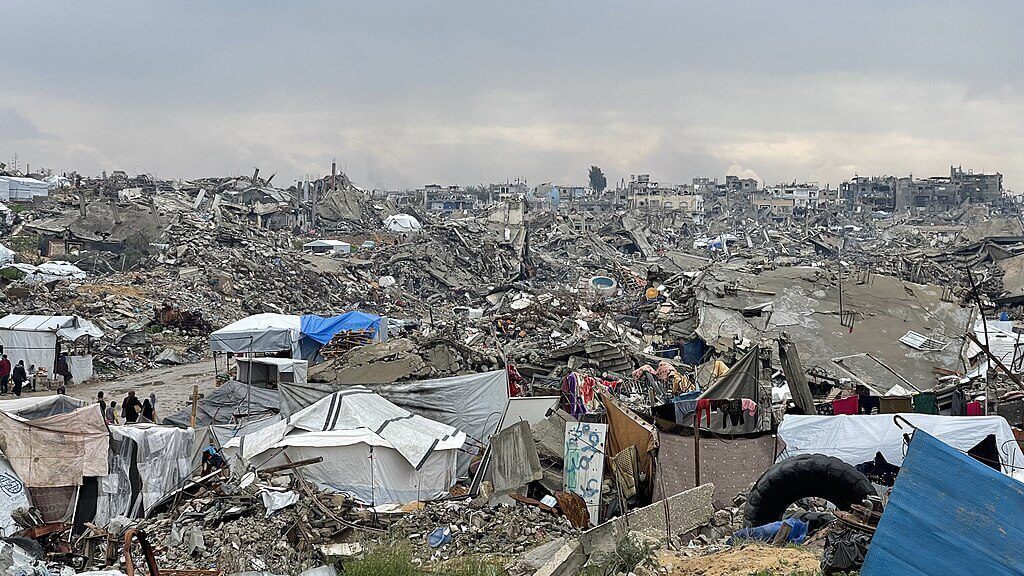
That's what's being transplanted to Lebanon. And it's being transplanted openly, as stated policy.
Israel claims it's targeting Hezbollah infrastructure. But as Al Jazeera has documented, the attacks have hit schools, hospitals, healthcare facilities, and civilian homes—with a pattern that looks far less like precision counterterrorism and far more like collective punishment. Since Israel renewed its attacks on Lebanon on March 2, more than 2,167 people have been killed, according to Lebanon's Health Ministry. Thousands more have been wounded.
The April 8 attacks alone—what Lebanon has started calling "Black Wednesday"—killed at least 303 people in a 10-minute onslaught that struck more than 150 locations simultaneously. Hundreds more are still buried under the rubble. Many of those strikes hit densely populated residential neighborhoods and commercial districts in central Beirut.
The UN Uses a Word Governments Won't: Domicide
On April 16, a group of UN human rights experts issued a formal condemnation that cut through the diplomatic fog.
They called Israel's campaign "illegal aggression and indiscriminate bombing" aimed at occupying Lebanese land in violation of the UN Charter. They warned that blanket evacuation orders combined with the destruction of the homes people would return to is "consistent with the pattern of domicide that was initiated during the genocide in Gaza."
"This is not self-defense," the experts said. "It is a blatant violation of the UN Charter, a deliberate destruction of prospects for peace, and an affront to multilateralism and the UN-based international order."
They called on Israel to halt all operations immediately, withdraw from Lebanese territory, and allow displaced civilians to return home. They called on the United States to use its influence to make Israel stop. And they called on all UN member states to suspend weapons transfers to Israel while credible evidence of war crimes continues to accumulate.
Over a million Lebanese people—roughly one in five of the country's population—have been displaced. More than 140,000 are crammed into overcrowded shelters. The UN's High Commissioner for Refugees has said the pace of displacement is faster now than it was during the 2024 escalation.


An Attack on UN Peacekeepers
On Saturday, the situation grew darker still. Peacekeepers serving with the United Nations Interim Force in Lebanon (UNIFIL) came under attack, and a French soldier was killed. French officials and UN peacekeepers indicated the attack was most likely carried out by Hezbollah, though Hezbollah denied responsibility. Lebanon's Foreign Ministry condemned the attack and pledged to find those responsible.
Whatever the source, it's a reminder of how brittle this ceasefire is—and how quickly it can collapse entirely.
The Stakes Reach Beyond Lebanon
Israel's refusal to stop bombing Lebanon isn't just a Lebanese problem. It threatens to unravel the broader U.S. ceasefire with Iran.
On Friday, Iran briefly reopened the Strait of Hormuz to unrestricted travel following the Lebanon ceasefire announcement. By Saturday, after Israel's violations became impossible to ignore, Iran closed the strait again. Iranian officials have made clear they want Israel to stop attacking Lebanon as a condition of regional de-escalation.
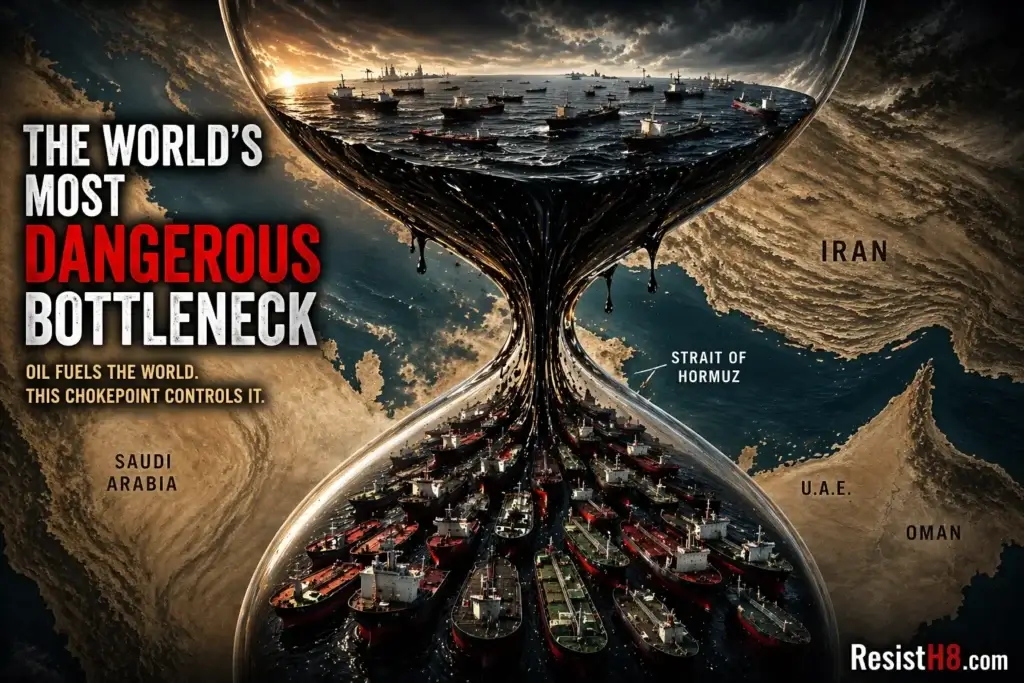
Meanwhile, the Trump administration's naval blockade of the strait continues—an action UN experts have called "an act of war" that has further destabilized the region.
What This Moment Really Shows
For years, critics of Israel's wars have warned that the tactics developed in Gaza wouldn't stay in Gaza. They warned that a government permitted to flatten entire cities, starve civilian populations, and destroy the homes of displaced families would eventually apply those tactics elsewhere, with the same international silence greasing the wheels.
Lebanon is that warning made real.
The word "domicide" isn't a metaphor. It describes a specific pattern: the destruction of homes and infrastructure designed to make civilian life impossible and return unthinkable. UN experts are now telling the world it is happening in Lebanon, in the same form it took in Gaza, under the same political cover.
A ceasefire that ignores this pattern doesn't bring peace. It just puts a thin layer of paperwork over ongoing destruction. Lebanese families returning to what used to be their neighborhoods are finding rubble where their kitchens were, craters where their children's bedrooms were, silence where their neighbors used to be.
They are not soldiers. They are not militants. They are people whose leaders did not start this war and whose homes are being erased anyway—because somewhere above them, someone decided their villages should serve as a message.
That's not a war being won. That's a principle being broken, over and over, in real time, while the world watches and calls it something else.