



On Saturday, Aug. 29, while walking down a hill toward the house of a Palestinian woman with her and her family, an NBC News crew was attacked by Israeli settlers wearing masks.
Moments before, Aida Ahmed Abdullah had been telling the reporter about how many Palestinians in the West Bank live.
The 51-year-old had been forced out of her home in Jalud, a village south of Nablus, by Israeli settlers. She was taking the crew to the house to tell them what happened.
As the crew was walking down the hill with Aida, a gray car with Israeli license plates reversed up the hill toward them.
A masked man in a blue tracksuit was leaning out the rear window holding a stick. When the car stopped, at least four masked men jumped out and started swinging.
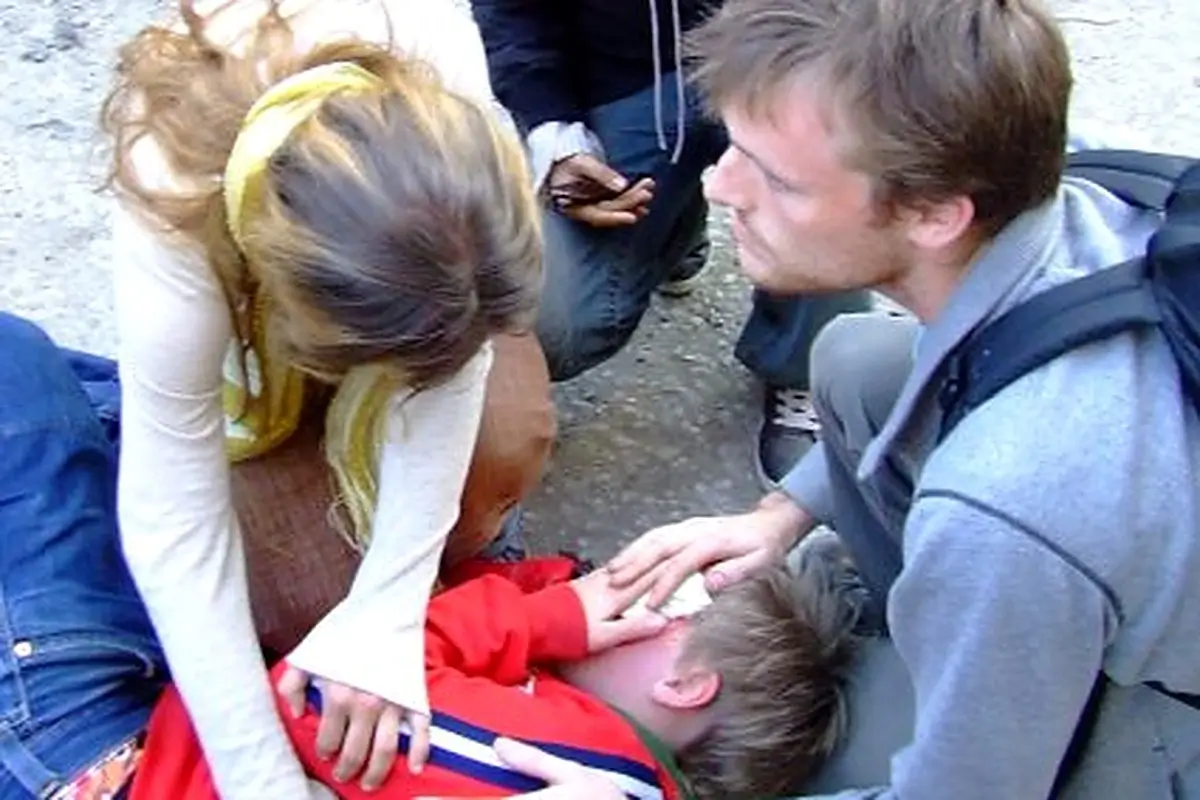
They beat Aida unconscious.
They hit the journalists with clubs, threw rocks, smashed the windshield of the crew's vehicle and destroyed camera equipment.
Then they got back in the car and drove away.
"They jumped out, beat us, then jumped back in the car," said NBC international correspondent Matt Bradley, who was struck twice in the arm and treated at a nearby clinic.
Producer Lawahez Jabari said one of the attackers had a gun but didn't use it.
Cameraman Khaldoon Eid, who lives in the area, said they hadn't expected it — "We were in the middle of a Palestinian area next to Palestinian houses."
Aida was taken by a Palestinian Red Crescent ambulance and hospitalized. Her injuries were not life-threatening. Her husband said she remained in the hospital that night.
As of this writing, no one has been arrested.
The NBC News crew was attacked by Israeli Settlers on video
This wasn't a he-said-she-said situation. Masked men in a car with plates beat a woman in broad daylight, all in front of a network news camera.
NBC News published the footage.

And the men who did it apparently calculated — correctly, so far — that the presence of an American news crew — with lawyers backing it — wouldn’t change what happened to them afterward.
Israeli Prime Minister Benjamin Netanyahu condemned the attack, calling it the work of "a handful of rioters" whose conduct harms Israel's standing in the world.
The Israeli military said security forces were operating in Jalud to restore order and that it condemns all forms of violence.
Editor’s Note: Neither Netanyahu nor the IDF gave truthful statements.
The Israel Press Council demanded the perpetrators be found and tried.
The Foreign Press Association, which represents hundreds of journalists working in Israel and the occupied territories said they were deeply alarmed and the attack was "part of a recurring pattern of violence against members of the press and Palestinian civilians."
They're right, and the pattern is documented in numbers.
Six attacks a day
The UN's humanitarian office has been counting.
In 2026, settler attacks that caused casualties or property damage have been running at an average of about six per day — the highest pace on record.
By late July, OCHA had logged more than 1,380 settler-related incidents this year alone, affecting over 250 Palestinian communities. Around 900 Palestinians were injured in those attacks, more than half of all documented Palestinian injuries in the West Bank.
Between January 2023 and early July 2026, settler violence displaced more than 6,200 Palestinians, including over 3,000 children. 123 communities have been emptied in whole or in part.
47 of them are simply gone.
Jalud shows up in those reports by name. OCHA documented two households — seven people, three of them girls — displaced in April 2026 after settlers established an outpost near their homes.
Human Rights Watch, in an August 2026 investigation, explained that settlers who carry out these attacks operate with the financial, material and legal backing of the Israeli state, and the attacks frequently happen alongside army units or with soldiers standing by.
When Israeli settlers detained U.S. Representative Ro Khanna and his team during a visit to the West Bank, they called for help. When IDF soldiers arrived, they didn't rescue Khanna and his team; they assisted the settlers.
Why nobody gets arrested
The Israeli human rights group Yesh Din has monitored police investigations into ideologically motivated crimes by Israelis against Palestinians in the West Bank since 2005.
Their finding explains the "no arrests" line better than anything else: 93.6% of those investigations ended without an indictment.
Only 3% produced a full or partial conviction. Police failed the investigation in 82% of cases.
Yesh Din also documented nearly 30 incidents of organized mass settler violence between 2023 and November 2025. In 16 of them, soldiers or police were reported present — and assisted the attack, directly or indirectly.
The crew was the third in five days
The attack on the NBC News crew got international coverage because the victims included Americans with a network behind them. But it was not unusual, and it wasn’t even the only one that week.
Four days earlier, on Aug. 25, a three-person AFP team was covering Israeli activists helping Palestinians fence their own land in Jannatah, south of Bethlehem when masked settlers surrounded them and hit them with clubs — in front of Israeli soldiers.
Five people were treated for injuries. Nobody was arrested.
The same weekend as the Jalud attack, settlers stormed the village of Qusra and seized a Palestinian home with the owner still inside.
Don't lose the woman on the ground
Don’t let this story get filed under "attack on journalists" and stop there. Press freedom matters, and reporters who go into the West Bank to document what's happening deserve protection.
But the story NBC's crew went to Jalud to tell was Aida Ahmed Abdullah's, and she is the one who was beaten unconscious.
The crew flew in, but Aida lives there. When the cameras leave, the masked Israeli settlers in the gray car will still know exactly where her house is — and they will still know that in roughly 94 out of 100 cases, nothing happens to them.
Aida’s life and the lives of hundreds of Palestinians in the West Bank are the real story. The news crew just happened to get caught up in it, which is the only reason most Americans heard about it at all.