

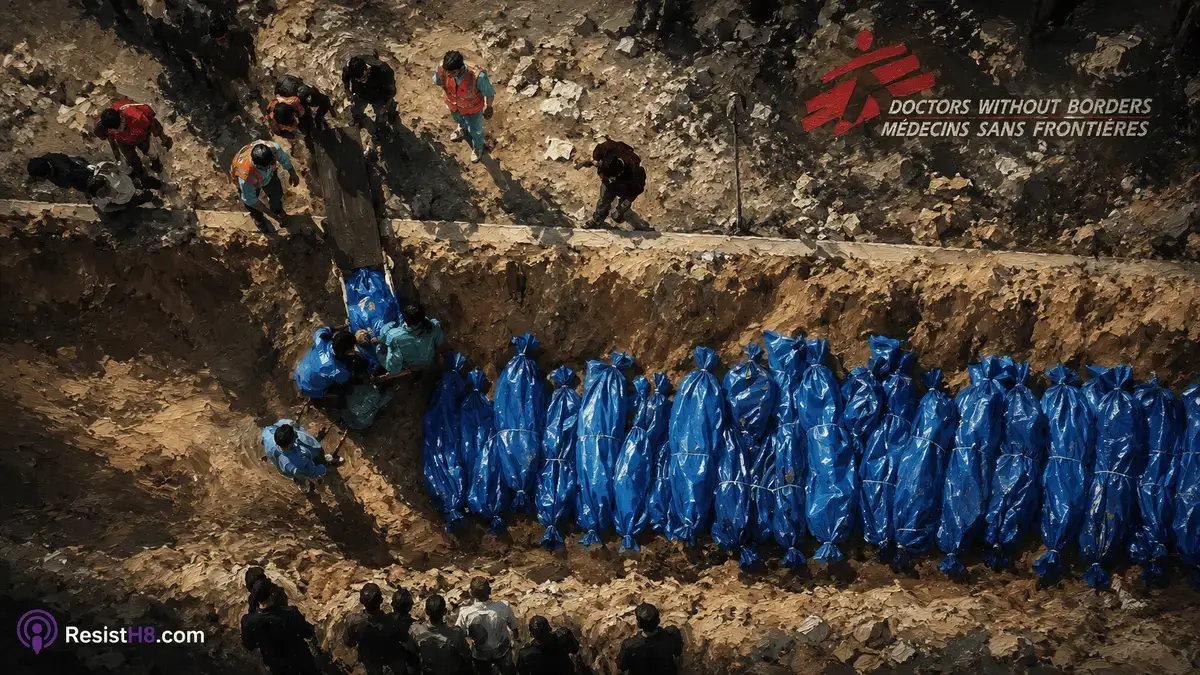

When Doctors Without Borders put it into words, there was no way to soften it. "Gaza has been turned into a mass grave of Palestinians," said Amande Bazerolle, the group's emergency coordinator in the enclave — a grave that swallowed not only the people who lived there but the aid workers who came to help them.
Her teams, she said, watched an entire population being displaced, starved, and killed in real time, with nowhere left that counted as safe.
That was the medical charity's warning as Israel's offensive ground on.
More than a year later, the body count is worse and the plan for the people still breathing is, somehow, more chilling.
The Scale of the Killing

More than 73,000 Palestinians have been killed since October 2023, according to Gaza's Health Ministry — a tally Israel's own military quietly accepted as broadly accurate in early 2026, after years of branding it ‘Hamas propaganda.’
Independent researchers believe the true number is far higher; one demographic analysis estimated deaths had already passed 100,000 by late 2025.
UN Women counted more than 38,000 women and girls among the dead — an average of 47 every single day.
Nearly a third of those killed have been children.
These are not abstractions.
They are teachers, newborns, grandparents, whole families erased in a single strike.
MSF, the United Nations, and genocide scholars have described what happened to them as genocide. Israel denies it.
Even the Rescuers Were Buried
The cruelty MSF documented reached the people trying to save lives.
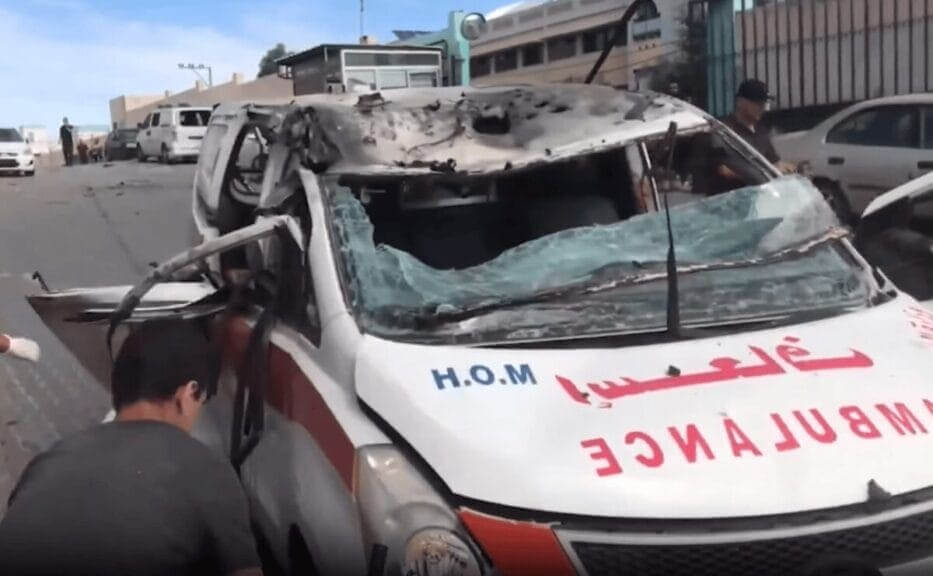
The UN says more than 400 aid workers have been killed since the war began, most of them UNRWA staff; eleven were MSF's own colleagues.
In one case the group described, the bodies of fifteen emergency responders were found in a mass grave in Rafah alongside their ambulances — vehicles that were clearly marked, contradicting the account Israeli authorities first gave.
A U.S.-brokered ceasefire has technically been in place since October 2025.
In practice, Israel has kept up near-daily strikes; the Gaza Health Ministry has recorded hundreds of Palestinians killed in the months since the truce supposedly began.
The siege continues, and the World Food Programme reports that roughly three-quarters of Gaza's population still faces acute hunger.
Enter Trump's "Board of Peace"
This is the wreckage into which President Trump inserted his Board of Peace — a body created from his 20-point plan and blessed by the UN Security Council, which Trump chairs and has said he intends to lead for life.
Its charter, critics note, barely mentions Gaza or Palestinian self-rule, and the board includes Israeli Prime Minister Benjamin Netanyahu — wanted by the International Criminal Court — while including no Palestinian representation at all.
The vision his son-in-law Jared Kushner pitched at Davos was Gaza as a beachfront resort of skyscrapers and "modern miracle cities."
The money has not followed: of roughly $17 billion pledged, almost none has reached the board's official World Bank account, with donations instead routed through a private J.P. Morgan account with no public oversight.
Middle East editor Sharif Abdel Kouddous called the whole apparatus a parody of a colonial body.

The ‘Humanitarian Compound’
Now comes the part reserved for the survivors.
Israeli media reported this week that the Board of Peace will soon begin running what it calls "Hamas-free humanitarian zones," with the first site opening near Rafah within weeks, policed by a "multinational force" carrying so-called less-lethal weapons.
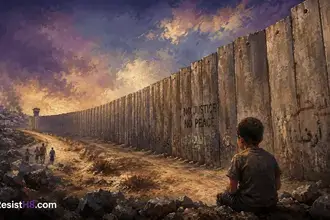
Strip away the branding and this is the operational version of a plan Israeli Defense Minister Israel Katz unveiled in 2025: a walled zone built on the ruins of Rafah that would hold 600,000 displaced Palestinians at first and eventually all 2.1 million.
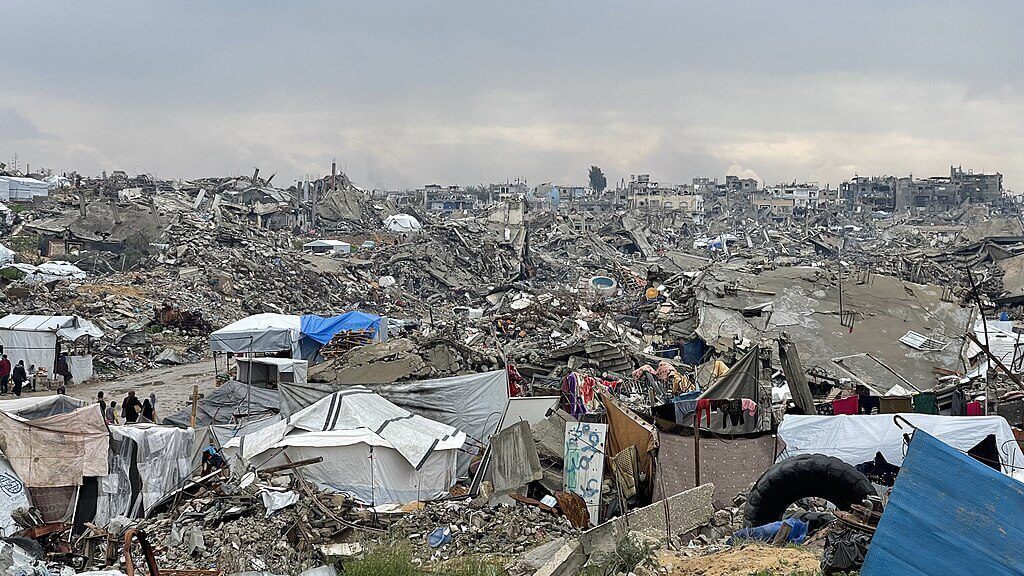
People would be screened before they were let in, the perimeter would be sealed by the military, and — this is the key detail — they would not be permitted to leave.
Once inside, Katz said, residents would be encouraged to "voluntarily emigrate" out of Gaza entirely.
The people who study this for a living did not reach for euphemisms.
Former Israeli Prime Minister Ehud Olmert said flatly, "It is a concentration camp."
Amos Goldberg, a historian of the Holocaust at Hebrew University, said of the scheme, "It is neither humanitarian nor a city" — a transit camp before expulsion.
Israeli human rights lawyer Michael Sfard called it a well-organised plan for a crime against humanity.
Law professor Nimer Sultany told Middle East Eye that the evidence of genocide is overwhelming.
The Euro-Mediterranean Human Rights Monitor described it as forced transfer and mass detention banned outright by the Fourth Geneva Convention.
We already know what the "aid" version of this looks like.
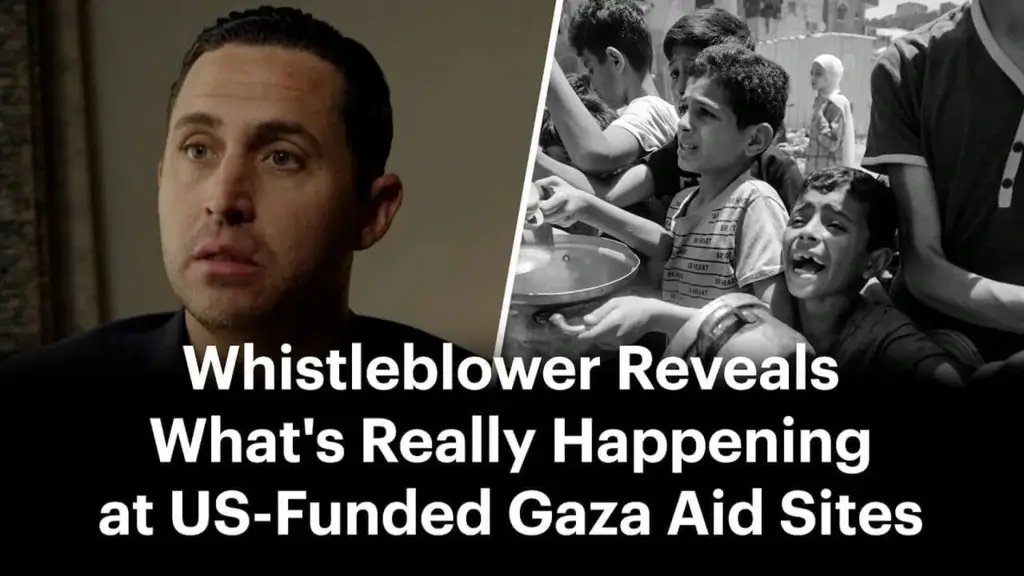
The Gaza Humanitarian Foundation's distribution sites — the model for these zones — became death traps, with hundreds of starving people shot dead trying to reach food.

And satellite imagery of the Rafah site shows the infrastructure being prepared: sorting stations equipped with facial recognition that one Gaza analyst called a continuation of the genocide by other means, echoing Nazi-era selection points.
What Israel Says, and What the Evidence Says
Israeli officials insist they do not target civilians, blame Hamas for operating among the population, and frame the compounds as protection and any departure as a free choice.
Set that against the documented reality: a fence no one is allowed to walk out of, a death toll north of 73,000, and the plain fact that people fleeing bombs and engineered starvation cannot meaningfully "volunteer" to leave their homeland.
As Doctors Without Borders put it, this was never a humanitarian accident — it was a political choice.
The survivors of a mass grave are now being offered a sealed camp and told it is for their own good.
Resist Hate has followed this story from the flotilla to the detention cells, and the through-line has not changed: the language keeps getting gentler while the machinery keeps getting harsher.
‘Humanitarian compound’ is just the newest coat of paint on a very old crime.
What we’re doing in America: