
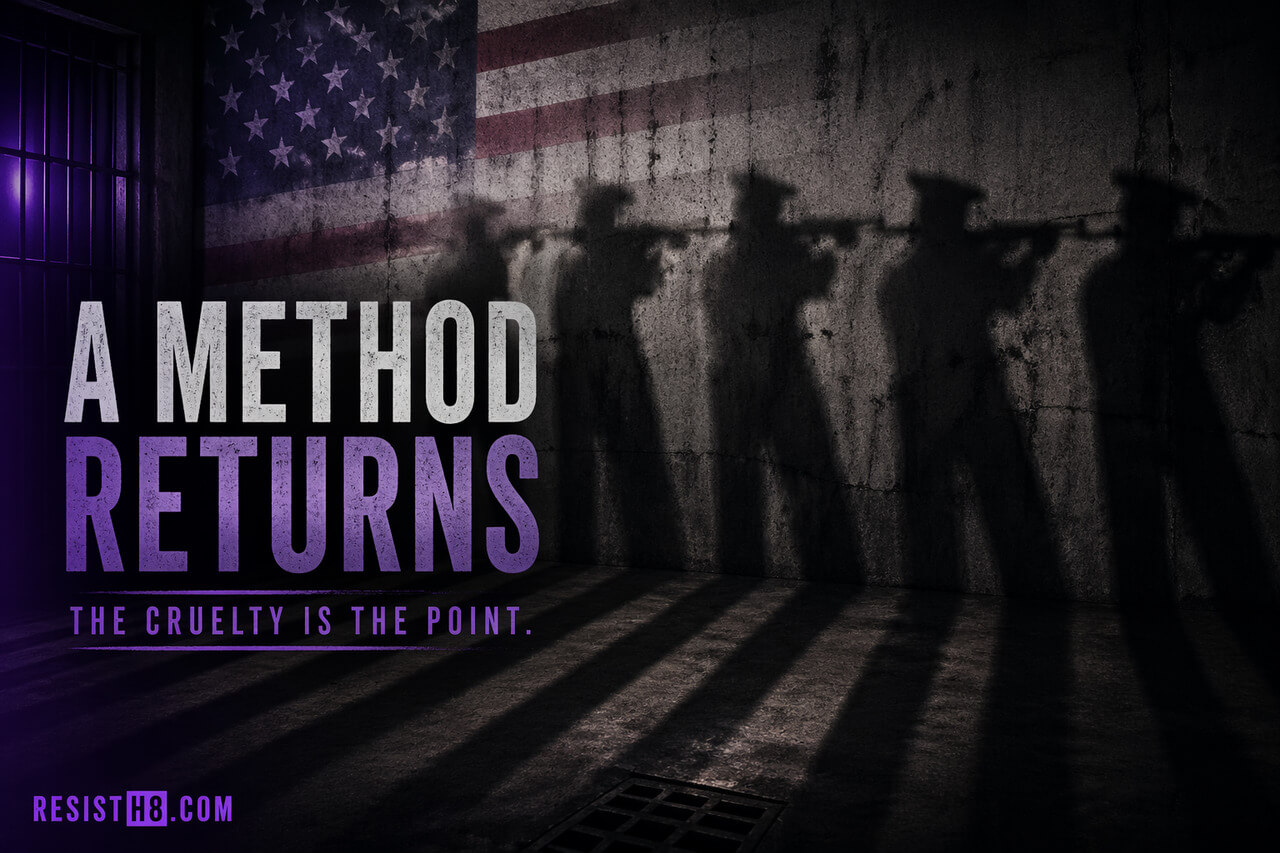

The DOJ announced on Friday that it is formally reviving the firing squad as a federal execution method, along with electrocution and gas asphyxiation. The announcement, delivered by Acting Attorney General Todd Blanche, also reinstates a lethal injection protocol from Donald Trump’s first term and directs the Bureau of Prisons to consider expanding federal death row and building new execution facilities.
Let me repeat that last part, because it invokes thoughts of certain historical events: The Bureau of Prisons was directed to consider expanding federal death row and build new execution facilities.
In a statement released Friday, the DOJ framed the move as restoring its “solemn duty” to carry out capital sentences. Blanche instructed the Bureau of Prisons to modify its execution protocol to include methods currently authorized under the laws of certain states, specifically naming firing squads, electrocution, and the gas asphyxiation method Alabama pioneered in 2024.
Following the first execution using gas asphyxiation, a faith leader who was present spoke out about the horrifying event he had witnessed, describing the prolonged death the man had suffered.
The ACLU wrote about the execution, describing how the man gasped for breath 660 times before he finally died. That's torture.
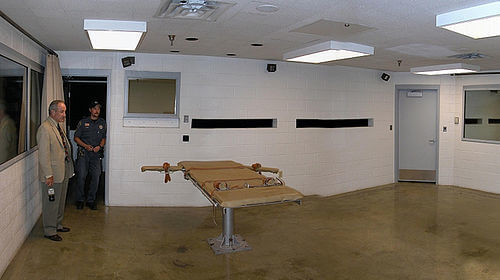
The department said the expansion is necessary to ensure executions can continue even when lethal injection drugs are unavailable.
That drug shortage is not a mystery. For years, pharmaceutical companies have refused to supply the chemicals used in lethal injection because they do not want their medicines associated with state killing.
Rather than treat that corporate refusal as a signal that something is deeply wrong with the practice itself, the administration has chosen to reach backward, past the needle, to the rifle.
What This Actually Means
Blanche has already authorized seeking death sentences against nine people after Trump rescinded the federal execution moratorium his predecessor Joe Biden had put in place. During Trump’s first term, the federal government executed 13 prisoners by lethal injection in the final months before he left office in January 2021, ending a roughly 20-year pause on federal executions.
This new policy clears the runway for the next wave, and it broadens the menu of ways the government can kill.
The firing squad is not a historical curiosity being dusted off for symbolism. It has been used four times in the modern era, all in Utah or South Carolina, and it is gruesome by design.
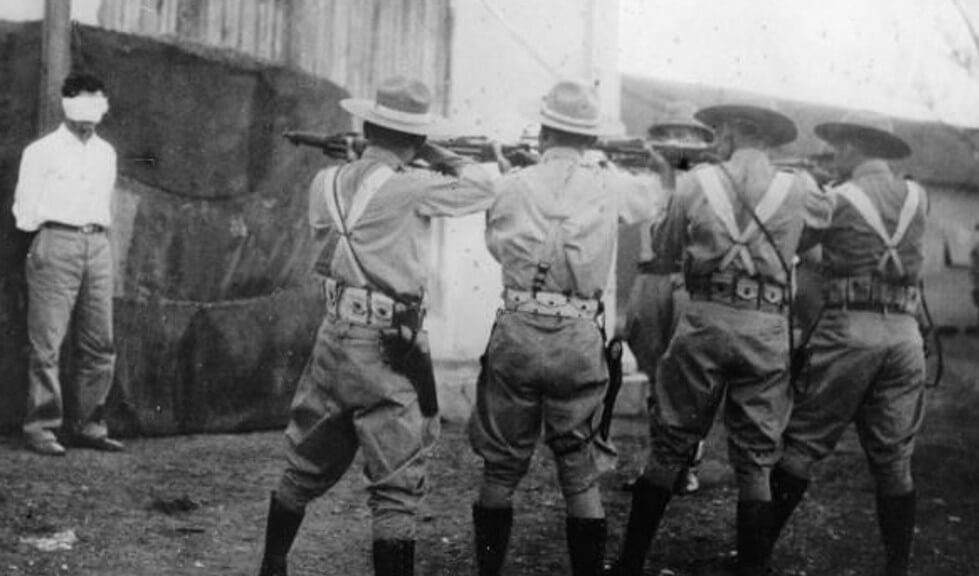
In recent South Carolina firing squad executions, autopsies and witness accounts have described bullets that missed the heart, internal organs shredded while the person remained alive, and blood spreading across the chest as the body took minutes to die.
The ACLU has long called the practice “archaic” and warned that those killed by firing squad “likely experience extreme levels of pain and torture.”
The Biden administration had specifically barred the use of pentobarbital, a drug now being restored to the federal protocol, on the grounds that it caused “unnecessary pain and suffering.” The current DOJ disagrees, asserting the drug’s use is consistent with the Eighth Amendment’s ban on cruel and unusual punishment.
It is a striking legal claim to make about a method your predecessors concluded tortures people to death.

The Political Frame
Blanche accused the previous administration of failing to protect Americans by refusing to pursue “the ultimate punishment against the most dangerous criminals, including terrorists, child murderers, and cop killers.” The list is carefully chosen. It is always carefully chosen. Capital punishment expansions are sold using the worst imaginable defendants, and then applied to a much broader pool of people, including people who turn out to be innocent.
Since 1973, more than 200 people on U.S. death rows have been exonerated, often after decades behind bars. The machinery the DOJ is now accelerating, described openly as “streamlining internal processes to expedite death penalty cases,” is the same machinery that has repeatedly sent innocent people toward execution.
Speeding it up does not make it more accurate. It makes it harder to catch the mistakes. Maybe that's the idea?
What’s Driving This
Trump campaigned on reviving and expanding capital punishment, and this announcement fulfills that promise. But it also fits a broader pattern across this administration, one this publication has documented extensively: an embrace of state violence as policy, whether through mass immigration enforcement, lethal strikes on boats in the Caribbean, military posture at home, or the steady erosion of the procedural protections that separate a government from a regime.
Execution by firing squad, by electric chair, by gas, all revived in a single memo, is not about public safety. A country that wanted to reduce violent crime would invest in the conditions, such as housing, mental health care, education, economic stability, and community infrastructure, that are known to prevent it.
This is about spectacle. It is about signaling that the state is willing to kill people, visibly and brutally, and that it wants the public to know it.
Five states currently authorize the firing squad. None of them execute significant numbers of people by that method, precisely because it is widely understood to be barbaric. The federal government’s decision to adopt it, alongside the electric chair and the gas chamber, is a choice to normalize what the rest of the developed world long ago abandoned.



The majority of countries on Earth have abolished the death penalty in law or in practice. The United States is moving in the opposite direction, and doing so with methods that most Americans probably assumed had been left in the last century. They haven’t been. They’re being written into federal protocol as we speak.