
The Supreme Court’s ruling on birthright citizenship Tuesday rejected President Donald Trump's attempt to end it, ruling 6-3 that the Constitution guarantees citizenship to nearly every child born on American soil — no matter where their parents came from or what immigration status they hold.
The decision in Trump v. Barbara throws out Executive Order 14160, which Trump signed on his first day back in office and which sought to deny automatic citizenship to babies born to parents who are in the country without legal status or only temporarily.
The order never actually took effect. Every lower court that reviewed it blocked it, with one federal judge calling it "blatantly unconstitutional."
Writing for the majority, Chief Justice John Roberts grounded the ruling in the plain text of the Fourteenth Amendment and more than 150 years of settled law.
"Citizenship, then and now, was the right to have rights — to freely participate in our political community," Roberts wrote.
"The Framers of the Fourteenth Amendment extended that promise to 'every free-born person in this land.' We keep that promise today."
What the Court Actually Decided
The Fourteenth Amendment, ratified in 1868 after the Civil War, says that "all persons born or naturalized in the United States, and subject to the jurisdiction thereof, are citizens."
In plain terms, that phrase — subject to the jurisdiction — has always meant people who have to follow U.S. laws, which is nearly everyone physically here.
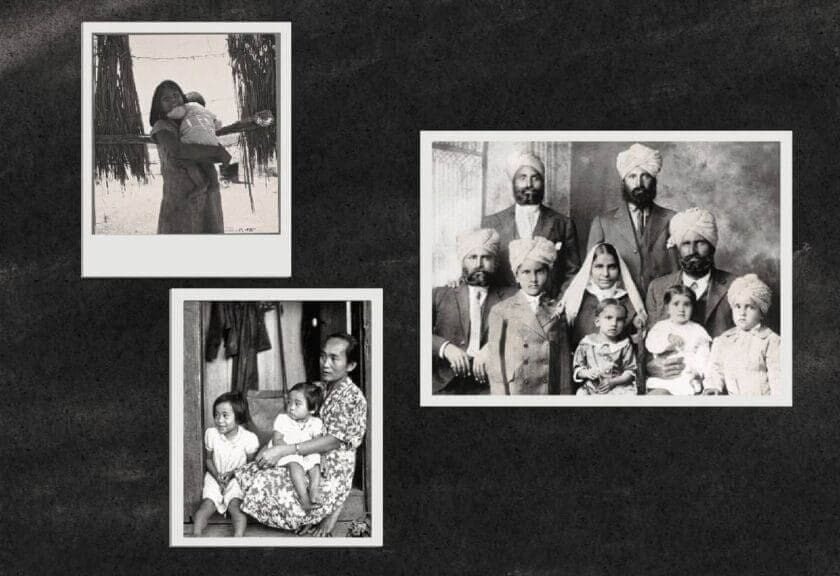
The Supreme Court confirmed that reading in the landmark 1898 case United States v. Wong Kim Ark, which involved a man born in San Francisco to Chinese immigrant parents and ruled that he was an American citizen.
Trump's lawyers argued that the children of undocumented immigrants somehow fall outside that jurisdiction and therefore don't qualify.
The Court flatly rejected the argument.
Children born in the United States to parents who are here unlawfully or temporarily are "subject to the jurisdiction" of the country and are citizens at birth, the majority held.

Roberts was joined by fellow conservative Justice Amy Coney Barrett and the Court's three liberal justices — Sonia Sotomayor, Elena Kagan, and Ketanji Brown Jackson.
Justice Brett Kavanaugh agreed with the outcome but broke with part of the majority's reasoning, and Justice Jackson wrote a separate concurring opinion.
The result was a clear, cross-ideological rejection of the president's order.
What Was at Stake for Families
This is where the human cost lives. An estimated 250,000 to 255,000 babies are born each year in the United States to parents without permanent legal status, according to the Migration Policy Institute.
Under Trump's order, every one of those newborns would have been denied citizenship — and a U.S. birth certificate would no longer have been enough on its own to prove a child is American, even for kids born to citizens.
Immigrant families and civil rights groups had warned that the order would create a new underclass of children with no clear claim to citizenship anywhere — some of them effectively born stateless, locked out of Social Security numbers, passports, and the basic protections most Americans never have to think about.
During oral arguments in April, Justice Sotomayor warned that the government's own logic could one day be turned around to strip citizenship from people already born here.
Behind the case name is a real family.
The challenge was filed in New Hampshire by the American Civil Liberties Union on behalf of parents and babies who stood to lose everything — including the lead plaintiff, identified in court papers only as "Barbara" to protect a child.
The Reaction
Outside the Court, the League of United Latin American Citizens (LULAC), the nation's oldest Latino civil rights organization, celebrated.


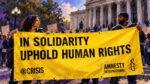
"This decision confirms a truth that generations of Americans have lived by: a child born on this soil is a citizen of this nation," said national president Roman Palomares.
"The Court has made clear that no president can override the Constitution by decree."
Three of the Court's conservatives — Clarence Thomas, Samuel Alito, and Neil Gorsuch — dissented.
Alito, writing only for himself, called the ruling "a serious mistake" that "preserves a powerful incentive to enter or remain in this country illegally."
Thomas accused the majority of having "repurposed the Fourteenth Amendment."
But for the roughly quarter-million babies born to immigrant parents in this country every year, the ruling means what it has always meant: born here, American.
The decision also marks the second major piece of Trump's second-term agenda the Court has knocked down this year, after it struck down many of his tariffs in February.