
"American Dystopia" is part of Resist Hate's Life in Trump's America Series.
What follows is fiction.
Nobody announces the end of a country.
There's no broadcast, no surrender, no man on a balcony. There's a Tuesday. There's a form you have to fill out that you didn't have to fill out last year. There's the word temporary, stapled to a rule that never goes away.
Then one morning you wake up and realize you haven't said what you actually think out loud in eleven months.
American Dystopia
You wake at 6:40 to your phone buzzing with the day's directives. Three new prohibited assembly zones. A reminder that Loyalty Verification renewals close Friday.
A note that yesterday's curfew is extended "pending review."
You check it the way your grandmother used to check the daily weather forecast.
Outside, the billboard across from the bus stop cycles through the same four messages it's cycled through for two years. SEE SOMETHING. SAY SOMETHING. THINK SOMETHING. REPORT SOMETHING. A drone drifts past the third-floor windows, unhurried, the way a hawk glides over a field.
You don't look up. Nobody looks up anymore. Looking up is what gets you flagged.
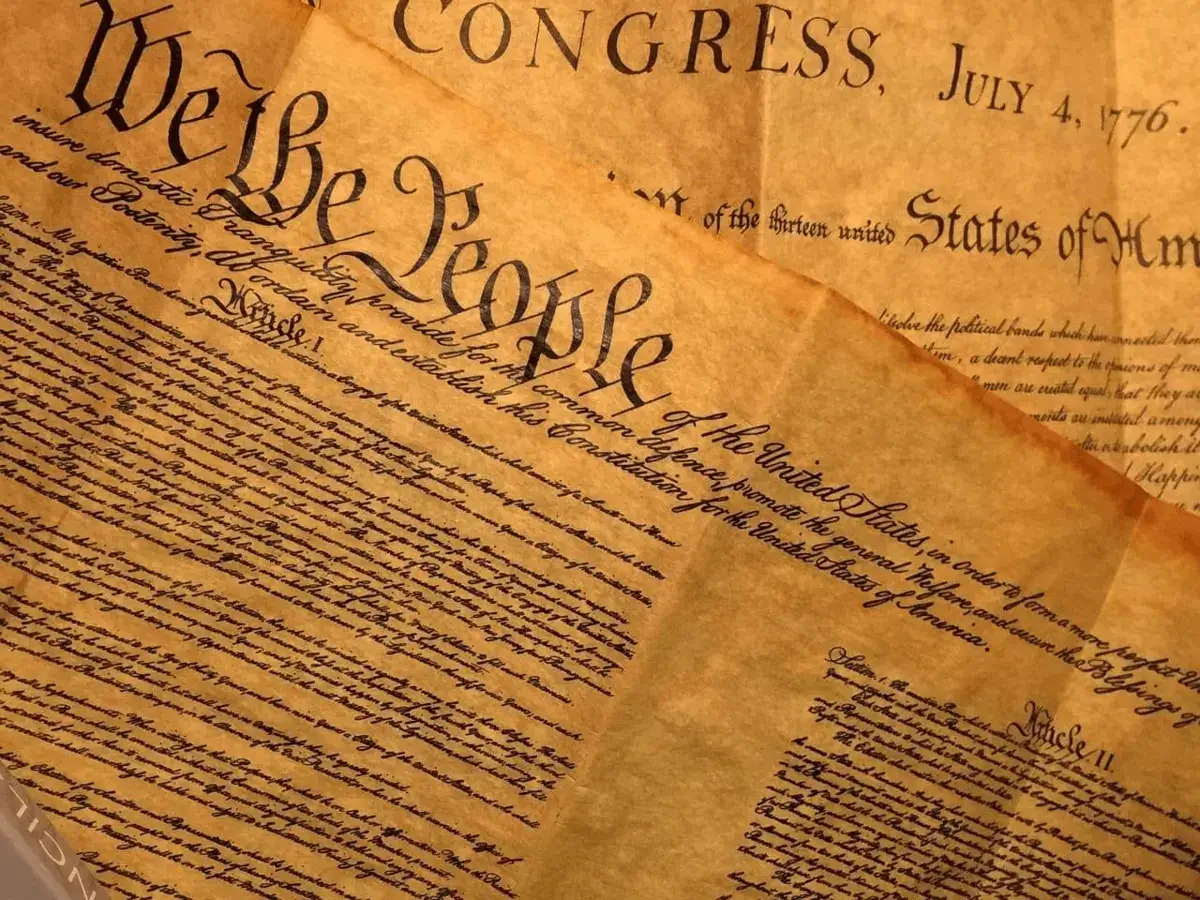
The Constitution still sits in a case in Washington. You can visit it. School groups do, single file, as a guide explains that the document was an important attempt at governance for a simpler, more forgiving era.
Nothing replaced it. That's the part people get wrong when they try to imagine our country this way.
There was no new charter, no rewritten social contract. There was just one man's mood, and a bureaucracy that learned to read it.
Your downstairs neighbor stopped speaking to you after the Charlie Kirk assassination and the year of mandatory mourning that followed.
You'd said something in the stairwell — not even critical, just tired. She went pale and went inside. You've nodded at each other for three years since. Neither of you has ever mentioned it.

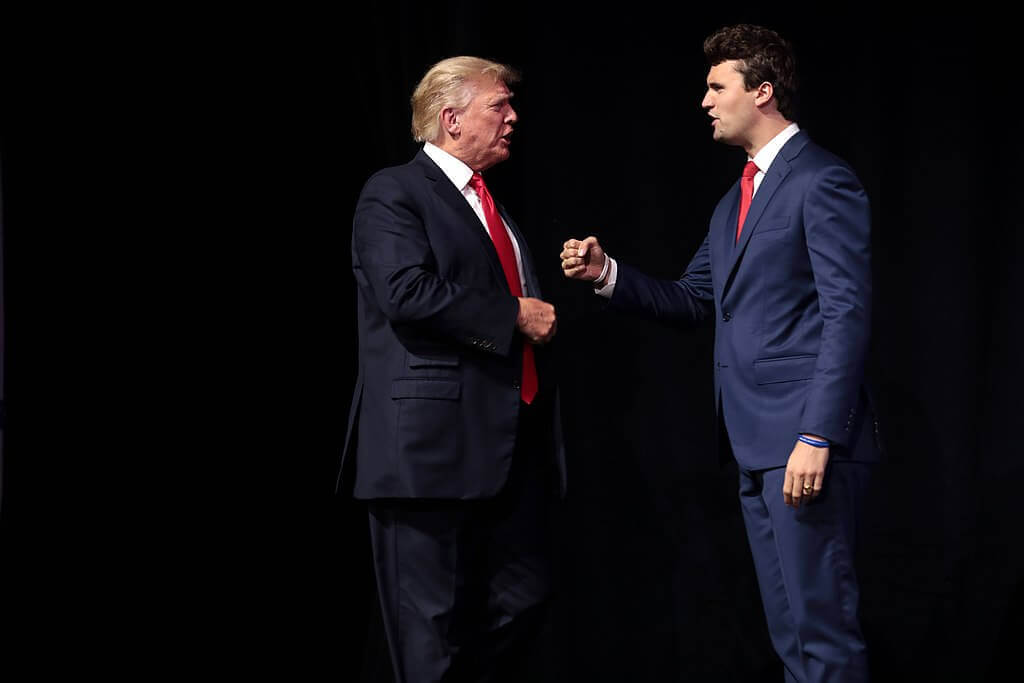
The regime's handling of Charlie Kirk's death helped usher in American dystopia. Photo: Gage Skidmore CC 2.0
What Happened to the Constitution?
It was never repealed. It was outlasted.
Every restriction arrived with a reason attached, and the reasons were always good. A spike in crime — the numbers turned out to be invented, but that came later, and by then nobody was checking. An emergency that required emergency powers. A protest that required a response. A response that required permanence.
Speech laws came in as protection from extremism and dangerous misinformation. Nobody ever published the list of what you weren’t allowed to say.
That was the design. A rule you can read is a rule you can argue with. A rule you have to guess at makes you cautious about everything.
The pitch was simple and it worked: liberty is a luxury, and the country can't afford luxuries right now.
Safety. Stability. Unity. Repeat anything for long enough and people stop hearing it as an argument.



Most Americans didn't believe it. They just didn't want to be the one who said so first.
The Erosion of Rights
Speech went first, because speech is where everything else lives.
Reporters file through review boards now. Novelists too. The boards don't reject much — they don't have to.
Writers learned what comes back stamped and what comes back with a phone call, and they adjusted.
The “adjusting” happens at the sentence level, months before anything reaches an editor.
Social platforms didn't die. They got better. The algorithms stopped chasing engagement and started rewarding loyalty, and the feeds filled with people performing enthusiasm at each other in a tone that sounds almost like the old internet.
Your family stopped talking politics at dinner in 2027. Not by agreement. It just stopped, the way you realize a song stops hasn't been played on the radio for weeks.
Diversity programs are federal crimes now, classified with domestic terrorism. State media explains, patiently and constantly, that a country cannot survive being asked to include people.
The Right to Protest: A Distant Memory
Public assembly was reclassified as domestic terrorism by executive order. Anyone who shows up is an enemy of the state, which is a phrase that used to sound theatrical.
The crowds that once filled downtowns in solidarity get broken up in under nine minutes now. The timing is deliberate. A protest that never reaches a hundred people is never reaches a camera.
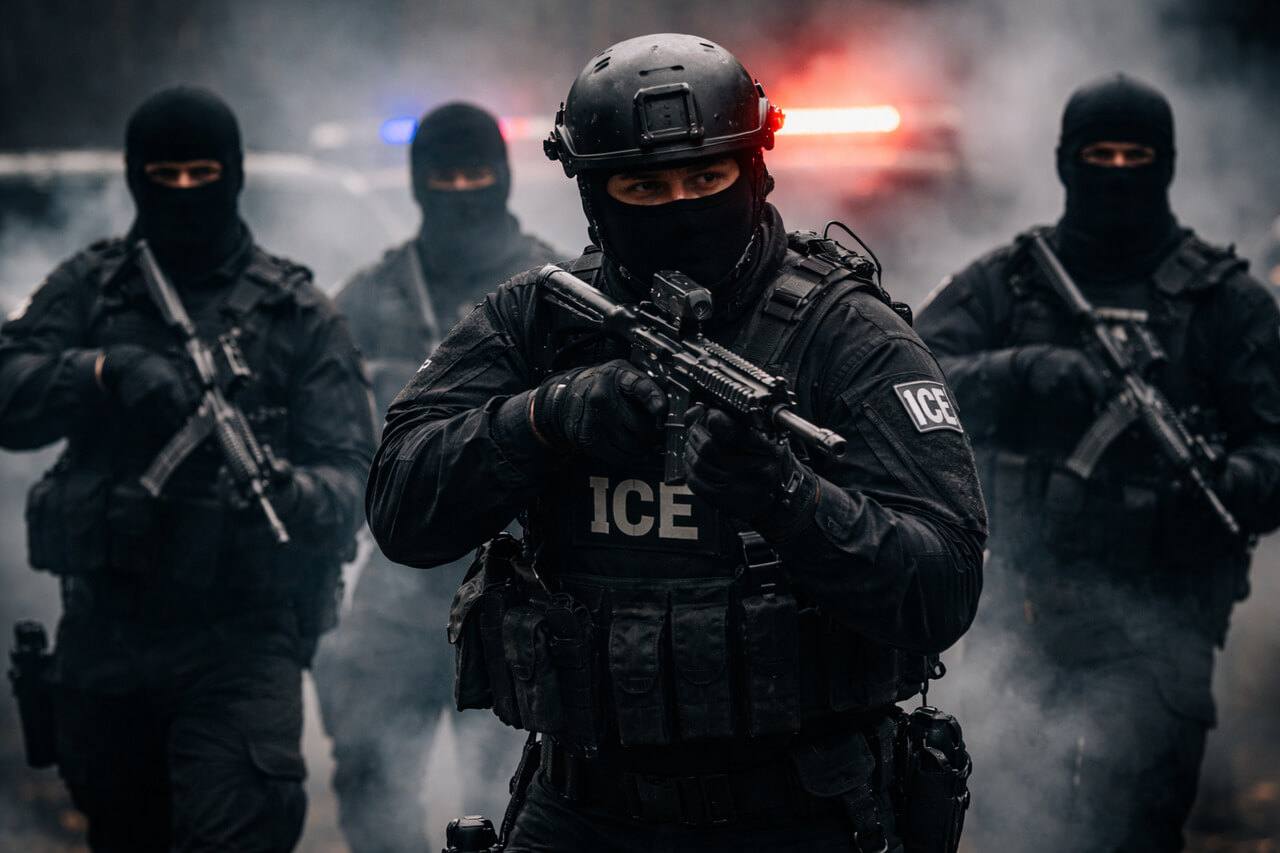
The officers doing the breaking used to work for Immigration and Customs Enforcement. When the deportations ran out of people to deport, nobody shut the agency down. They handed it the country instead — the same tactical gear, the same black masks, the same budget, a new map.
The detention centers didn't close either. They grew.
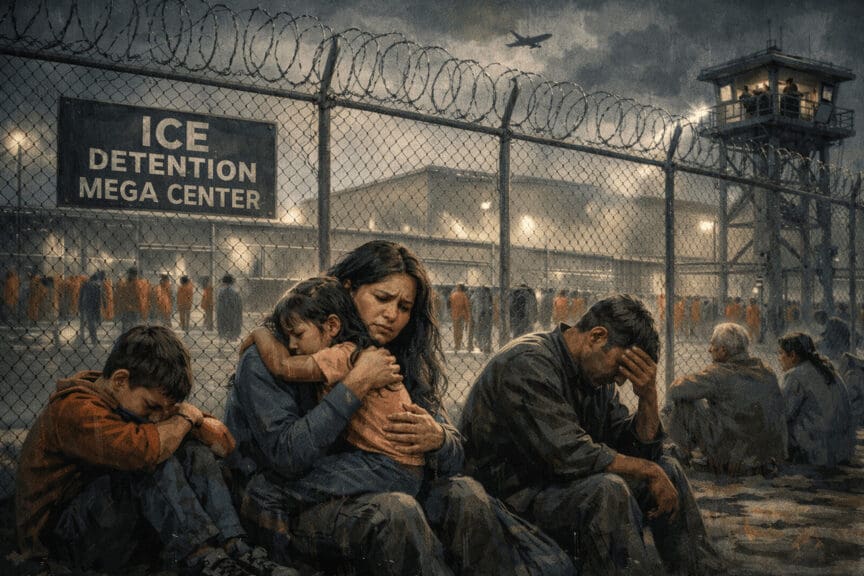
The regime couldn't deport Black and brown U.S. citizens, so they're held indefinitely in prison camps scattered across the country. (Serena/Resist Hate)
They're called relocation and processing centers. Millions of people live inside them — American citizens, born here, classified as demographic or ideological risks. You can't deport a citizen. You can hold one.
A woman two floors up was taken in the spring. Her mail still comes. Her son, who is nine, was taken with her, and the neighbors on that floor have gotten very good at not looking at her door.
The state calls the camps a preventative measure to preserve cultural unity. Everyone learned to say it back.
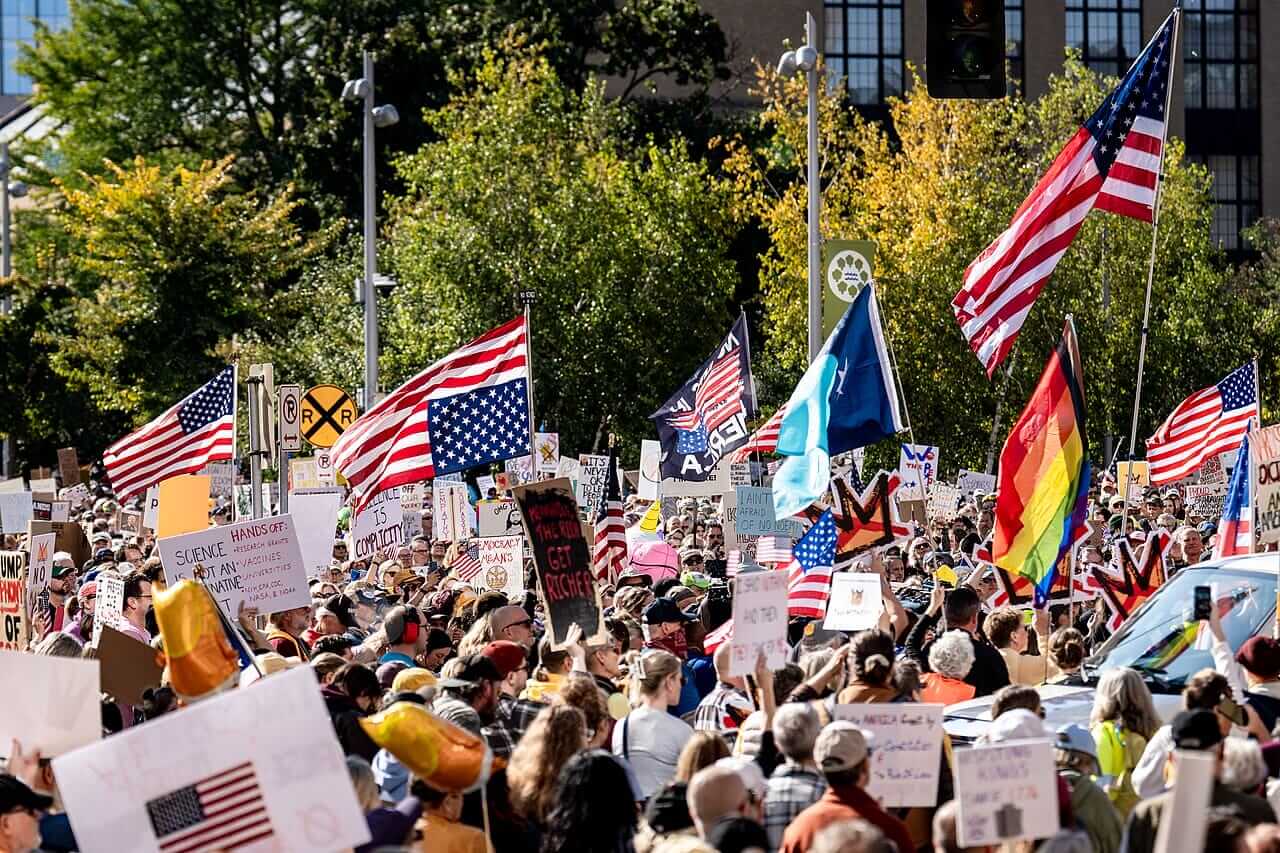
Thousands once protested in Downtown Minneapolis before collective action became illegal. Photo: Chad Davis, Creative Commons Attribution-Share Alike 4.0
A Day in the Life
Work starts with the module. Twenty minutes, four questions, a score that goes in your file next to your sales numbers. Your manager isn't a believer. You can tell by how carefully he doesn't editorialize. He just needs the department average up.
Lunch is fine. You talk about a show. Everyone talks about the show.
The cameras on your block feed facial recognition. Your transit card writes your movements to a file. Your phone knows the route. None of it feels like surveillance because none of it feels like anything — it's just the texture of a Tuesday, the way traffic is.
Privacy stopped being a right and became a symptom. Wanting it is the tell.
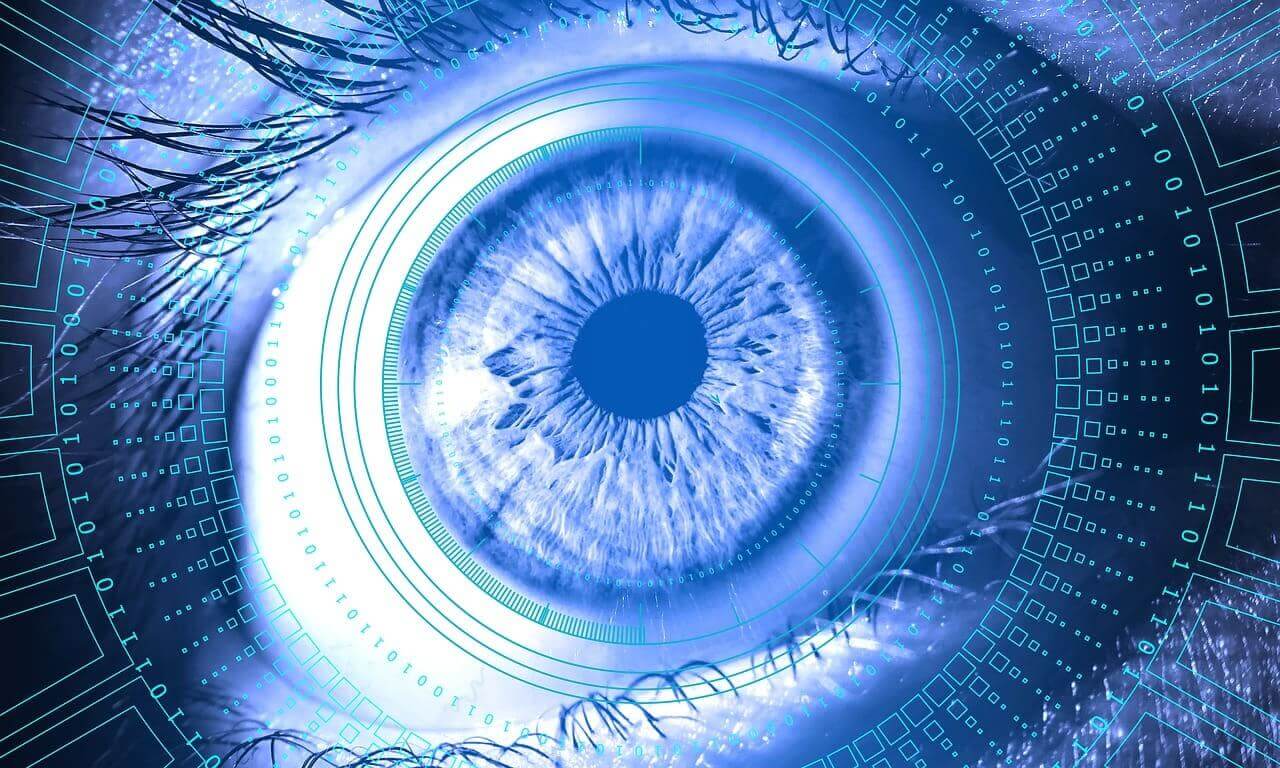
The state is watching for any sign of dissent. Pete Linforth/Pixabay
And then it stops being about watching. Watching is only the collection. The use comes after.
A man in your building complained at a school board meeting in March. In April his disability payments stopped — an administrative review, they said, twelve to sixteen weeks. In June the IRS opened a case. In August he was pulled out of the security line at the airport over a terrorism flag that no one could explain and no one could remove.
Nobody arrested him. That's the elegance of it. There was nothing to appeal, and nothing to name.
The Role of Technology
The DOGE crews came through the agencies early, before most people understood what was being taken. Young men with laptops and legal cover, walking out with the Social Security files, the tax files, the health files.
Palantir stitched it together. One record per American — what you earn, what you're prescribed, who you call, where you were on a Thursday in 2024.
Officials promised it would make government efficient. It did. It made retaliation efficient.
The information war got easier after a consortium of billionaire investors, coordinating with Israeli Prime Minister Benjamin Netanyahu, bought TikTok. They said out loud what it was for: too much pro-Palestinian video was reaching too many people while journalists were locked out of Gaza. Buy the pipe, own the story.
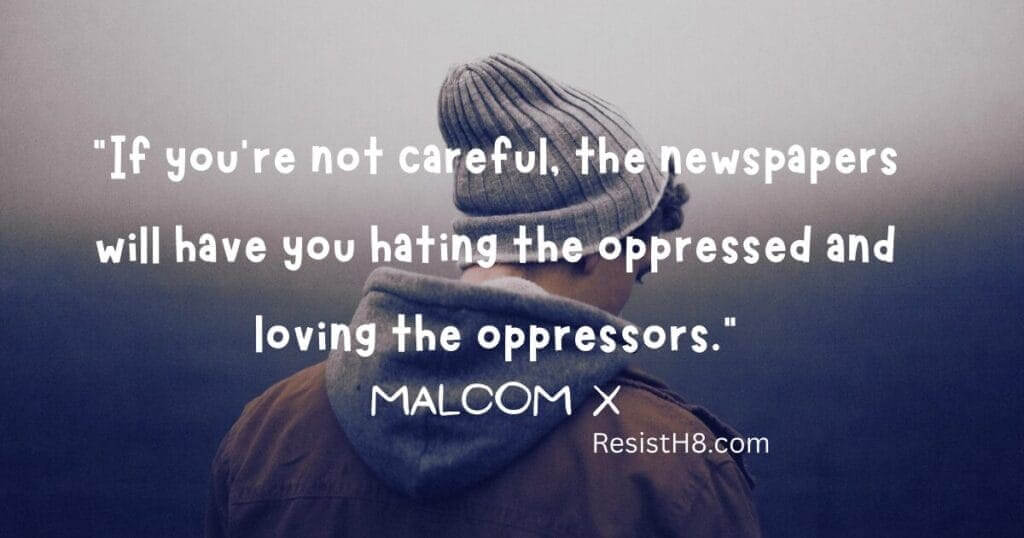
By Serena/Resisth8.com
VPNs help. Encrypted apps help. Federal cyber teams spend their days trying to get inside both, and sometimes they do, and when they do, a group of forty people becomes forty case files.
Law and Order in a Dystopia
Local police, state police, and federal agents were folded into a single National Police Force reporting to the president through Homeland Security. Every independent inspector, review board, and oversight office was dissolved in the same reorganization. Efficiency.
Recruitment ads run constantly — good pay, pension, purpose, patriotism. They never mention what the job actually is. Some recruits are true believers. Most are people who worked out that it's safer to be inside the machine than in front of it.

News report about one of their recruitment efforts
Warrants are optional. Charges are optional. Due process still exists on paper, the way a fire exit exists in a building where every door is chained.
And the punishments run downhill. Say the wrong thing and your sister loses her housing voucher. Criticize the administration as a governor and your state's disaster relief gets held up through hurricane season. It teaches everyone around you to manage you before the state has to.
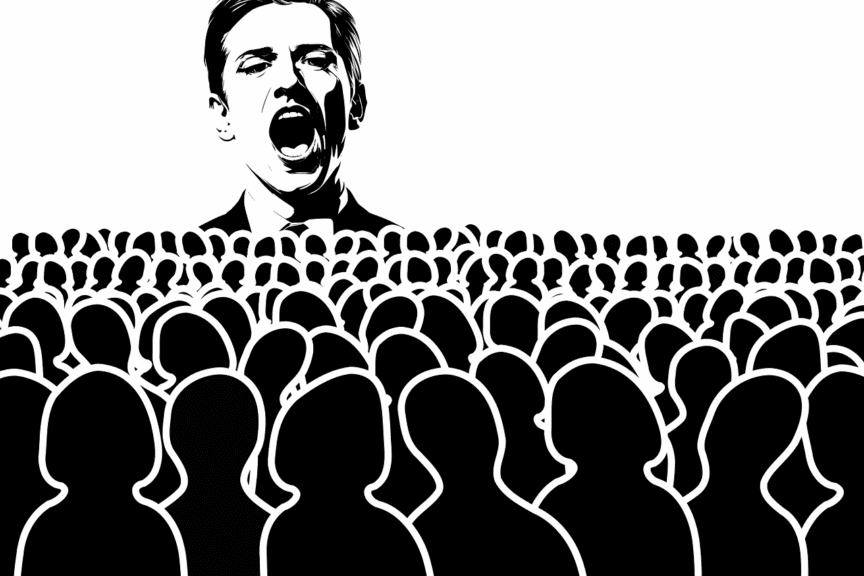
Illustration: Gerd Altmann
What Gets Forgotten
The textbooks were rewritten in a single procurement cycle.
The civil rights movement is three paragraphs now, mostly about restoring order. The mass protests of the 2020s are a footnote about foreign agitation. Kids grow up with no working example of a country changing because ordinary people insisted, so they have nothing to compare this to.
That's the real project. Not convincing you this is good. Convincing your children it's normal.
Hope
They meet in kitchens.
Teachers, librarians, retired lawyers, a couple of teenagers who are much better at encryption than any of them. They call themselves Constitutionists, half as a joke. They pass around scanned pages, and they argue — actually argue, out loud, the way people used to — about what a new Bill of Rights would need to say so this couldn't happen again.
Getting caught means the camps. They go anyway, because the alternative is a life spent editing yourself in your own head.
The old man in the White House is very old. Everyone has noticed. In the kitchens, they've started planning for the after.
Artists bury things in the work. Musicians hide lines in bridges. A song went around last winter that was just a list of names, and everyone who needed to understand it did.
Back to Reality
None of that happened. Every ingredient in it has.
Masked federal agents. Citizens swept up in raids. Detention camps. Protest reclassified as terrorism. A national database built out of your records without your consent. Executive orders written to punish states that disagree.
The point of imagining the end isn't despair. It's calibration — because a country doesn't fall in one recognizable moment. It falls in a hundred small ones that each seem survivable.
The Constitution isn't self-enforcing. It's a piece of paper that works only as long as enough people refuse to let it be treated as optional. Courts help. Journalists help. Lawyers help. None of them are enough alone, and every one of them has needed public pressure at its back to hold the line.
Rights don't disappear. They get redefined, quietly, until nobody remembers what they used to include.
Say what you think out loud. That's how you find out you're not the only one.
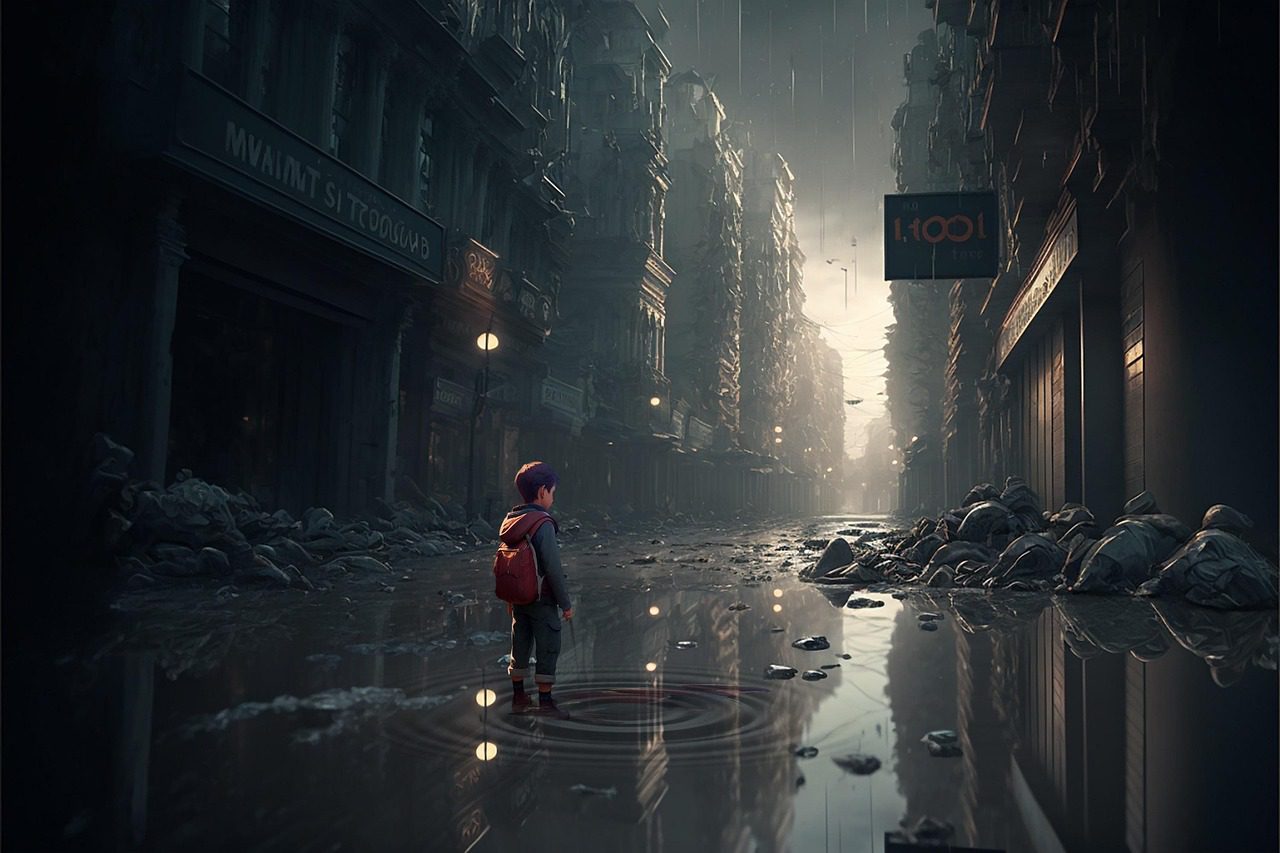
Main image of American dystopia is by Emily Krause