
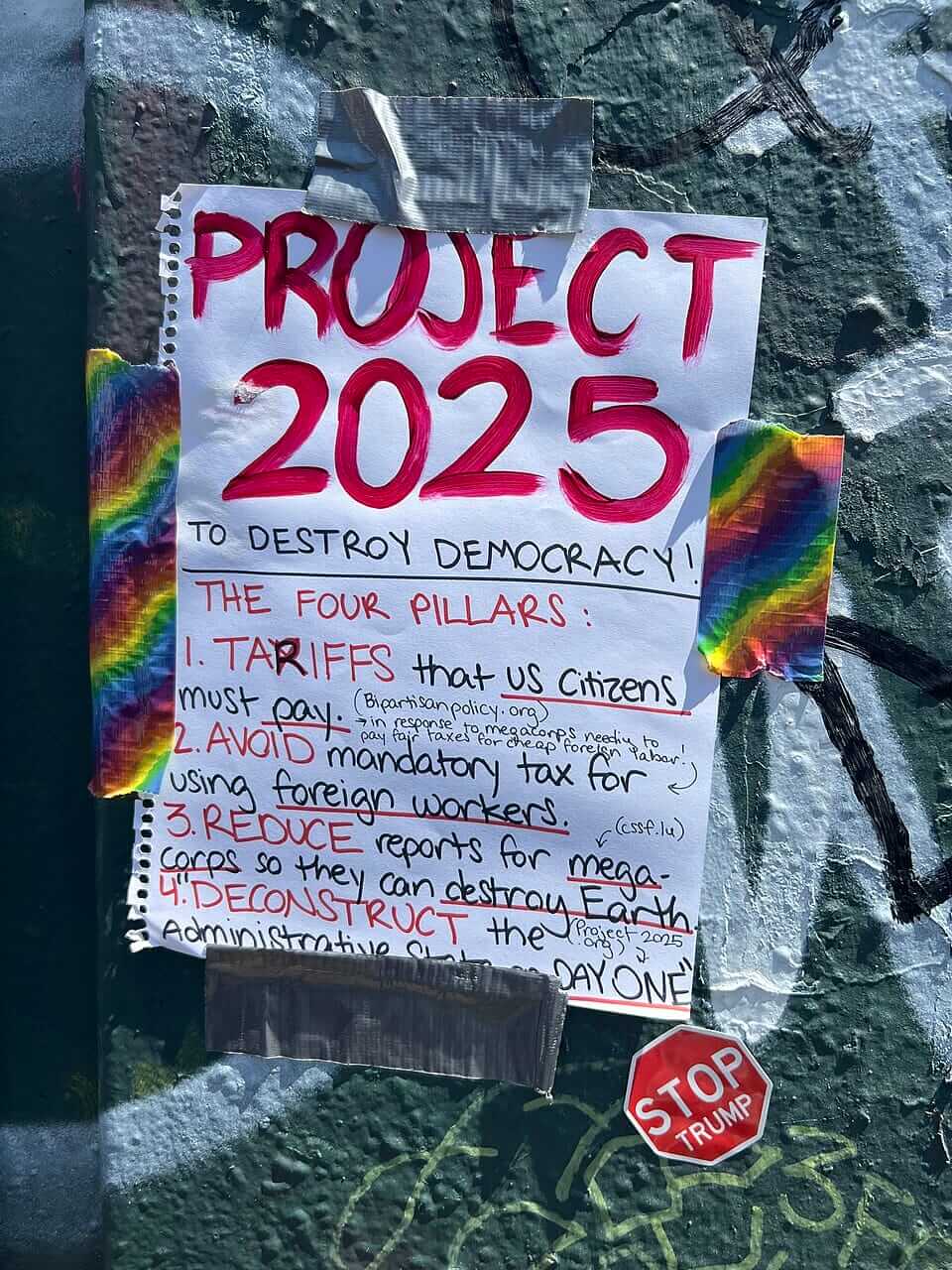
Project 2025 is a 900-page instruction manual for taking over the federal government. The Heritage Foundation, a right-wing think tank in Washington, D.C., wrote it for the next Republican president. That president turned out to be Donald Trump.
The book's official title is Mandate for Leadership: The Conservative Promise. Hundreds of conservatives helped write it. Most of them worked for Trump during his first term or on his 2024 political campaign.
The idea behind it is simple, and that's what makes it scary: Give the President complete power by putting him in charge of everything. Then have him use that power to reshape the country around one narrow set of conservative beliefs.
Who Is Behind Project 2025?
The Heritage Foundation has published a Mandate for Leadership before nearly every presidential election since 1981. Heritage calls it a "policy bible." It brags that Ronald Reagan tried to carry out about two-thirds of the ideas in its 1981 edition.
This version is different. It goes much further on culture war issues, and it's built to be implemented quickly.
Project 2025 had four parts:
- The book. The policy playbook this guide covers.
- A personnel database. A list of people vetted for loyalty, ready to be hired into government jobs.
- A training academy. Online courses, including training videos, to prepare those people to "hit the ground running."
- A secret playbook. A plan for what each agency should do in the first 180 days. It was never made public.



Paul Dans ran the project until August 2024. Heritage president Kevin Roberts took over after that. In July 2024, Roberts said the country was in the middle of a "second American Revolution, which will remain bloodless if the left allows it to be."
Why It Became a 2024 Campaign Issue
At first, most people had never heard of Project 2025. That changed once people started reading it.
At the BET Awards in June 2024, actress Taraji P. Henson looked into the camera and told viewers to look it up and read it. Comedian Kenan Thompson also called it out. Democrats hauled an oversized copy of the book onto the stage at their national convention.
The backlash worked, at least for a while. On July 5, 2024, Trump posted that he knew nothing about Project 2025. His campaign said its Agenda 47 platform was the only official plan. But anyone who compared the two could see how much they overlapped.
After he won, Trump named several of the book's authors to top jobs. Russ Vought went back to running the budget office. Brendan Carr became head of the FCC. Peter Navarro became a senior trade adviser. Tom Homan, a contributor, became "border czar."
So much for knowing nothing about it.

The Big Picture: What Project 2025 Wants
Before we go chapter by chapter, here are some of the plan's biggest goals. Several have already happened through executive orders.
✔️ Cut overtime protections for 4.3 million workers
✔️ Stop efforts to lower prescription drug prices
✔️ Limit food assistance, which more than 40 million people in about 21.6 million households rely on each month
✔️ Eliminate Head Start, the early education program for young children from low-income families
✔️ Cut American Rescue Plan programs that created or saved 220,000 jobs
✔️ Restrict access to medication abortion
✔️ Push more of the roughly 33 million people in Original Medicare toward private Medicare Advantage plans
✔️ Expose the 368,000 children in foster care to more discrimination
✔️ Deny student loans to students at colleges in 25 states and Washington, D.C. because those states offer in-state tuition to undocumented immigrants


✔️ Roll back civil rights protections, including DEI programs and LGBTQ+ protections in health care, schools, and workplaces
What Some of These Directives Look Like in Real Life
Erasing LGBTQ+ people, DEI, and climate change
The book tells the president to scrub certain words and ideas out of the federal government. Not just from policy. From documents, websites, and databases too.
- The words "climate change" were removed across federal agencies.
- LGBTQ+ terms, which the book lumps into what it calls "transgender ideology," were removed.
- Federal workers were ordered to take pronouns out of their email signatures.
- DEI was scrubbed from government. Then the pressure spread outward. Trump threatened private companies until many ended their DEI programs, and he threatened to pull funding from universities that kept theirs.
Defense Secretary Pete Hegseth ordered a search of Pentagon databases for anything "woke." The results would be funny if they weren't so damaging. Hundreds of books were pulled from military academy libraries.
A photo of the Enola Gay, the B-29 that dropped the atomic bomb on Hiroshima, got flagged because the pilot named the plane after his mother and her name included the word "Gay." Pages honoring the achievements of women and people of color in the military came down.


One federal building had a "wall of words" painted with values like "integrity" and "honor." Someone had to paint over it. One of the words was "diversity."
Shutting down NOAA
The book calls the National Oceanic and Atmospheric Administration (NOAA) one of the main drivers of the "climate change alarm industry." It wants NOAA broken up.
Here's the problem. NOAA runs the National Weather Service. That's the agency that warns you when a hurricane or tornado is coming. The plan also calls for undoing everything the Biden administration did to slow climate change and build clean energy, and for burning more fossil fuels.

Gutting abortion access
- Revive the Comstock Act, an 1873 law, to stop abortion pills and supplies from being mailed.
- Reverse the FDA's approval of mifepristone, one of the two pills used in most medication abortions.
Mass deportations
- Raids and mass deportations targeting immigrant communities
- End birthright citizenship
- Separate families
- Dismantle the asylum system
Warrantless surveillance
- Use the executive branch's huge spying powers on Americans
- Remove the guardrails that keep a president from abusing those powers
Force against protesters and the press
- Target journalists and protesters, in violation of the First Amendment
Limiting access to voting
- Use executive power to interfere in elections, treat voting as a crime scene, and weaken fair representation
Censoring classrooms
- Censor lessons about race, gender, and systemic oppression
Rolling back trans rights
- Remove federal nondiscrimination protections for LGBTQ+ people
- Require the federal government itself to discriminate against them
- Ban trans people from military service
- Let taxpayer-funded, faith-based contractors turn trans people away from disaster aid and from programs caring for unaccompanied refugee children
What Is in Project 2025? A Chapter-by-Chapter Breakdown
The book has 30 chapters split into five sections. Here is each chapter, its author, and the key points.
Four days into Trump's second term, a Time analysis found that nearly two-thirds of his executive actions matched or partly matched proposals in the book. This guide walks through what's in it, chapter by chapter, in plain English. Open the full manual in a new tab if you want to follow along.
- Who Is Behind Project 2025?
- Why It Became a 2024 Campaign Issue
- The Big Picture: What Project 2025 Wants
- What Some of These Directives Look Like in Real Life
- Erasing LGBTQ+ people, DEI, and climate change
- Shutting down NOAA
- Gutting abortion access
- Mass deportations
- Warrantless surveillance
- Force against protesters and the press
- Limiting access to voting
- Censoring classrooms
- Rolling back trans rights
- What Is in Project 2025? A Chapter-by-Chapter Breakdown
- SECTION 1: TAKING THE REINS OF GOVERNMENT
- Chapter 1: The White House Office
- Chapter 2: Executive Office of the President
- Chapter 3: Central Personnel Agencies — Managing the Bureaucracy
- SECTION 2: THE COMMON DEFENSE
- Chapter 4: Department of Defense
- Chapter 5: Department of Homeland Security
- Chapter 6: Department of State
- Chapter 7: The Intelligence Community
- Chapter 8: Media Agencies
- Chapter 9: Agency for International Development (USAID)
- SECTION 3: THE GENERAL WELFARE
- Chapter 10: Department of Agriculture
- Chapter 11: Department of Education
- Chapter 12: Department of Energy
- Chapter 13: Environmental Protection Agency
- Chapter 14: Department of Health and Human Services
- Chapter 15: Department of Housing and Urban Development
- Chapter 16: Department of the Interior
- Chapter 17: Department of Justice
- Chapter 18: Department of Labor and Related Agencies
- Chapter 19: Department of Transportation
- Chapter 20: Department of Veterans Affairs
- SECTION 4: THE ECONOMY
- Chapter 21: Department of Commerce
- Chapter 22: Department of the Treasury
- Chapter 23: Export-Import Bank
- Chapter 24: Federal Reserve
- Chapter 25: Small Business Administration
- Chapter 26: Trade
- SECTION 5: INDEPENDENT REGULATORY AGENCIES
- Chapter 27: Financial Regulatory Agencies
- Chapter 28: Federal Communications Commission
- Chapter 29: Federal Election Commission
- Chapter 30: Federal Trade Commission
- Why What’s in Project 2025 Still Matters
SECTION 1: TAKING THE REINS OF GOVERNMENT
Chapter 1: The White House Office
Author: Rick Dearborn, former deputy chief of staff in Trump's first White House
This chapter is about being ready on day one. The authors claim the federal government has been taken over by "woke" ideology. Their fix is a tightly organized transition team that moves fast.
The chapter says Trump didn't fill enough jobs with political appointees in his first term, which held him back. It pushes the next president to fill the government with appointees and remove anyone who isn't loyal. It warns against giving power to nonpartisan "experts," whom it claims pursue their own goals rather than the president's.
Heritage built a database of possible hires to make that easy. Everyone on the list was screened for loyalty to Trump and the conservative agenda. Applicants even had to name a living policy figure they admired and explain why.
Chapter 2: Executive Office of the President
Author: Russ Vought, Trump's budget director in his first term and again in his second
This is one of the most important chapters in the book. Vought argues the president should use the full, "aggressive" power of the executive branch. His main tool is the Office of Management and Budget (OMB).
The OMB writes the president's budget, manages agency staff, oversees regulations, and handles communication with Congress about proposed laws. Vought says it's the only office in the White House strong enough to force the rest of the government to fall in line.
According to Stop The Coup 2025's breakdown, Vought wants to:
- Put political appointees in direct control of how money flows to agencies. OMB has six big budget offices covering national security; natural resources, energy, and science; health; education, income, and labor; transportation, justice, and homeland security; and treasury, commerce, and housing.
- Add a new layer of political deputies to replace career experts who manage that money.
- Hire an aggressive White House counsel ready to fight agency lawyers who say the president's plans break the law.
- Create "regulatory advance teams" to push agencies toward conservative goals.
- Replace National Security Council (NSC) staff seen as disloyal, and send non-essential NSC staff home on day one. He also wants the NSC to have its own lawyer.
- Put the National Economic Council in charge of coordinating economic policy.
- Use the Office of the U.S. Trade Representative to fight China and globalization.
- Rewrite climate research through an executive order. In his words, the Biden administration's "climate fanaticism will need a whole-of-government unwinding."
Vought singles out the White House Gender Policy Council for elimination. He says getting rid of it would end the government's promotion of abortion, comprehensive sex education, and gender-affirming care. He wants a special assistant to the president focused on "life and family" instead.
Where it stands: Trump disbanded the Gender Policy Council in his first days back in office.
Chapter 3: Central Personnel Agencies — Managing the Bureaucracy
Authors: Donald Devine, Dennis Dean Kirk, and Paul Dans
This chapter covers the agencies that hire, fire, and protect federal workers. It's the nuts and bolts of replacing civil servants with loyalists.
Key points:
- Bring back Schedule F. This job category lets the president reclassify tens of thousands of career workers so they can be fired like political appointees. Trump signed an order reviving it on his first day back, January 20, 2025.
- Reward managers and employees who carry out conservative policies.
- Tie pay and performance reviews to "merit" as defined by the administration.
- Make the Merit Systems Protection Board, not the Equal Employment Opportunity Commission, the main referee in federal job disputes.
- Restore Trump's first-term executive orders that weakened federal unions.
- Give the president and OMB more power to fast-track appointees.
For context, only about 4,000 federal jobs were political appointments at the end of Biden's term. Schedule F turned tens of thousands more into jobs that depend on loyalty instead of experience.
SECTION 2: THE COMMON DEFENSE
Chapter 4: Department of Defense
Author: Christopher Miller, Trump's acting Defense Secretary during the last months of his first term
Miller's big-picture plan:
- NATO allies should handle conventional warfare against Russia, with the U.S. mainly providing nuclear deterrence.
- Taiwan, Australia, and other Asian allies should build a shared defense system against China.
- In the Middle East, the U.S. should keep backing Israel while pushing Gulf allies to handle their own air and missile defense.
- The U.S. should pour money into modernizing its nuclear weapons because China and Russia are doing the same.
Other key points:

- Refocus the military on war fighting and chain-of-command accountability.
- Make "irregular warfare" a core part of U.S. strategy abroad.
- Buy new and experimental weapons faster by cutting red tape, and boost U.S. weapons sales.
- Increase military support for border security at home.
- Help Taiwan build a "denial defense" against China.
- Shift from a defense-only posture to building offensive missile and space defense systems.
- Remove people with gender dysphoria from the military, and stop paying for gender-affirming surgery or abortion travel for service members.
- Push through a major restructuring of the Marine Corps called Force Design 2030.
- Eliminate DEI offices and what the book calls "Marxist indoctrination" and "divisive critical race theory."
- Monitor military schools and end tenure for "leftist" scholars.
- Reinstate service members discharged for refusing the COVID vaccine, with back pay.
- Invest in U.S. Cyber Command.
Where it stands: The Bulletin of the Atomic Scientists called the book's nuclear plans the biggest buildup since the Reagan years.
Chapter 5: Department of Homeland Security
Author: Ken Cuccinelli, former acting deputy secretary of Homeland Security under Trump
This is a massive chapter. If immigration is your issue, read the whole thing in the full manual.
The main idea: Break up DHS and build a new, standalone border and immigration agency. It would combine Customs and Border Protection, ICE, Citizenship and Immigration Services, and pieces of other departments into one law enforcement giant with more than 100,000 employees.
Immigration:
- Drastically expand ICE's power to arrest, detain, and deport people anywhere in the country.
- Eliminate the Office of the Immigration Detention Ombudsman, which investigates complaints about detention conditions, and the ombudsman office that helps people stuck in the citizenship process.
- Stop helping undocumented immigrants and DACA recipients get benefits.
- Move refugee resettlement, the immigration courts, and the government's immigration lawyers under DHS control.
- Raise fees on asylum seekers. The book calls it "an opportunity for a significant influx of money."
- Aggressively build the southern border wall.
- Withhold FEMA disaster money from cities and states that won't cooperate with immigration enforcement.
Personnel and civil rights:
- Only political appointees should talk to congressional staff.
- Shrink the Office for Civil Rights and Civil Liberties and move it under the department's lawyers.
- Use a trick to put loyalists in "acting" positions with full authority, avoiding Senate confirmation.
- Re-vet Coast Guard promotions and hires made under Biden.
- Cut the Secret Service budget and move some of its agents to ICE and the Justice Department.
- Eliminate the Office of Intelligence and Analysis.
Other departments pitching in on immigration:
- Housing: Only U.S. citizens and lawful permanent residents could live in federally subsidized housing.
- Education: Deny federal student loans to non-citizens and to students at colleges that give in-state tuition to undocumented immigrants.
- Labor: Eliminate the two lowest wage levels for foreign workers.
- Treasury: Tax working visa holders the same as citizens and give DHS all tax information on undocumented immigrants.
A related 2024 Heritage working group went even further. It drafted plans for a militarized, nationwide law enforcement command under the president's direct control, including "counter intelligence" against people who oppose the agenda.
The human cost of this chapter: It's families pulled apart, people held in camps, and neighbors disappearing from their communities. Follow our ICE & Immigration hub for that reporting.
Chapter 6: Department of State
Author: Kiron K. Skinner, former director of policy planning at the State Department, with help from 17 contributors and Heritage staff
Key points:
- Remove Biden officials before Inauguration Day and put conservative loyalists in charge, using "acting" roles so they can make decisions before the Senate approves them.
- Put more loyalists in foreign policy jobs.
- Use career diplomats who agree with the conservative agenda.
- Freeze and review all international treaties to make sure they fit the president's priorities.
- Focus foreign policy on Iran, Venezuela, Russia, North Korea, and China. Reverse Biden's Iran policy.
- Cut funding to international groups that support abortion or progressive social policies, including the World Health Organization.
Skinner thinks most State Department employees are too left-wing. When journalist Peter Bergen asked her to name a single time they blocked Trump's policies, she couldn't.
Chapter 7: The Intelligence Community
Author: Dustin J. Carmack, former chief of staff to the Director of National Intelligence
Key points:
- Rewrite the executive order tied to the 2004 intelligence reform law to give the president broader domestic intelligence powers, even at the cost of civil liberties and privacy.
- Expand the intelligence agencies, including the FBI, and modernize their technology, especially to compete with China.
- Treat the Chinese Communist Party as the top global threat.
Chapter 8: Media Agencies
This chapter has two parts.
U.S. Agency for Global Media — Author: Mora Namdar, former vice president of the agency, with input from Victoria Coates, Michael Pack, Frank Wuco, and what the book calls "several brave whistleblowers"
- Completely overhaul the U.S. Agency for Global Media and Voice of America, or shut them down if that's not possible.
- Give the president and National Security Council oversight of Voice of America's content.
- Vet employees more strictly, claiming the agency is exposed to foreign spies.
- Never use the agency for broadcasts inside the U.S.
Corporation for Public Broadcasting — Author: Mike Gonzalez, senior fellow at the Heritage Foundation
- Cut all federal funding for public broadcasting, claiming PBS and NPR have a liberal bias.
- Strip NPR, PBS, and Pacifica stations of their noncommercial educational status. That would force them to pay fees they don't pay now and could push them off the low end of the FM dial.
Where it stands: Congress canceled public broadcasting's federal funding in July 2025, and the Corporation for Public Broadcasting began shutting down. FCC chair Brendan Carr, who wrote Chapter 28, opened an investigation into NPR and PBS.
Chapter 9: Agency for International Development (USAID)
Author: Max Primorac, former acting chief operating officer at USAID
Key points:
- Cut USAID's budget back to 2019 levels.
- "Deradicalize" the agency by removing DEI and gender programs and realigning it with conservative Christian values.
- Make countering China a top priority.
- Rescind all climate policies in foreign aid.
- Make anti-abortion policy a central goal.
- Reinstate the "Mexico City Policy," which blocks U.S. aid to groups that provide or discuss abortion.
- Remove words like "gender," "gender equality," "gender equity," "abortion," "reproductive health," and "sexual and reproductive rights" from every USAID website, document, contract, and grant.
- Make "international religious freedom" central to the agency's work.
- Make sure groups receiving PEPFAR HIV/AIDS funding line up with the president's values.
- Move money away from UN agencies and big aid groups toward local, especially faith-based, organizations.
Where it stands: The administration went further than the book. It froze foreign aid in January 2025 and dismantled USAID, folding what remained into the State Department that summer.
SECTION 3: THE GENERAL WELFARE
Chapter 10: Department of Agriculture
Author: Daren Bakst, senior fellow at the Competitive Enterprise Institute, with help from Rachael Wilfong
Key points:
- Reverse Biden-era food and animal safety rules, including rules for large-scale farms.
- Remove "Climate Smart" farming programs.
- Push "America First" farm policy.
- Make it harder to get food assistance: add work requirements to SNAP, tighten eligibility for SNAP and WIC, and limit school lunch access.
- Replace required food labeling with voluntary labeling.
- Rewrite federal dietary guidelines.
- Bring back Trump's order to boost timber sales and logging.
Chapter 11: Department of Education
Author: Lindsey M. Burke, director of Heritage's Center for Education Policy. She later became a top policy official at the Education Department in Trump's second term.
Key points:
- Eliminate the Department of Education as a Cabinet agency and give its money and power to states.
- Push federal dollars toward private, charter, trade, and religious schools, including vouchers that can be used anywhere.
- Let Title I, the program that sends about $18 billion a year to schools in low-income areas, expire.
- Reverse student loan forgiveness and crack down on repayment.
- Remove protections tied to sexual orientation, gender identity, and race from Title IX and Title VI rules, and define sex as biological sex at birth.
- Require teachers to get written permission from parents before using a trans student's pronouns.
- Create parent savings accounts and give parents more control over what's taught.
Where it stands: Trump signed an order in March 2025 directing the department's shutdown "to the maximum extent" the law allows, and deep staff cuts followed.
Chapter 12: Department of Energy
Author: Bernard L. McNamee, former member of the Federal Energy Regulatory Commission
The chapter says the department should focus on energy security, promoting U.S. energy abroad, basic science, cleaning up old nuclear weapons sites, and building nuclear weapons and naval reactors. Here's what that means in practice:
- Repeal the Inflation Reduction Act's clean energy programs.
- Close the Office of Energy Efficiency and Renewable Energy and the Office of Clean Energy Demonstrations.
- Close the Loan Programs Office, which the Inflation Reduction Act grew from $40 billion to $400 billion in lending authority.
- Cut funding for the Grid Deployment Office to slow the expansion of the power grid that renewable energy needs.
- Redirect national lab research away from climate change.
Chapter 13: Environmental Protection Agency
Author: Mandy M. Gunasekara, former EPA chief of staff under Trump
The chapter describes its goals in “friendly” terms:
- Let states make more environmental decisions.
- Focus only on "tangible" environmental problems.
- Cut programs it calls wasteful or duplicated.
- Lower the economic cost of EPA actions.
- Be "transparent" about which science the EPA uses.
The specifics tell a different story:
- Close the EPA's Office of Environmental Justice and External Civil Rights.
- Revisit the 2009 "endangerment finding," the ruling that lets the government regulate the pollution driving climate change.
- Stop California and other states from setting stricter car pollution rules.
- Limit the EPA's use of private health data to study how pollution harms people.
Chapter 14: Department of Health and Human Services
Author: Roger Severino, Heritage's Vice President of Domestic Policy and former head of the HHS Office for Civil Rights
The chapter says HHS should "return to being known as the Department of Life" and center everything around an anti-abortion agenda.
Abortion, contraception, and family:
- Declare that abortion is not health care.
- Have the FDA reverse its approval of mifepristone and misoprostol, and enforce the ban on mailing abortion pills.
- Drop the Affordable Care Act requirement that insurance cover the morning-after pill and let employers opt out of covering Plan B.
- Defund Planned Parenthood.
- Keep Medicaid from paying for abortions.
- Have the CDC promote "fertility awareness" methods, like period-tracking apps, as birth control.
- Require states to report the reason for every abortion and where the patient lives.
- Cut off federal research money for creating three-parent embryos.
- Define marriage and family in "biblically based" terms.
Sex and gender:
- Treat sex as strictly binary and dismiss anything else as "junk science."
- Deny gender-affirming care, which the chapter claims causes "irreversible physical and mental harm."
Insurance:
- Make private Medicare Advantage plans the default for new Medicare enrollees.
- Cut Medicaid with funding caps, lifetime benefit limits, stricter work requirements, and more cost-sharing for patients.
Chapter 15: Department of Housing and Urban Development
Author: Ben Carson, Trump's HUD secretary in his first term
Key points:
- Replace Biden-era HUD leaders with political appointees fast.
- Kill the Affirmatively Furthering Fair Housing rule, which requires communities to address housing segregation.
- Bring back the rule barring "mixed-status" families, where some members are undocumented, from public housing. Tens of thousands of families, including U.S. citizen children, could lose their homes.
- Add time limits and work requirements to housing assistance.
- Let homeless shelters sort people by sex assigned at birth instead of gender identity.
- Roll back "disparate impact" rules that fight housing discrimination.
- Shrink the government's role in mortgages and cut HUD's climate programs.
Chapter 16: Department of the Interior
Author: William Perry Pendley, who led the Bureau of Land Management under Trump
Key points:
- Open more federal land and water to oil, gas, and coal, including the Arctic National Wildlife Refuge and Alaska's National Petroleum Reserve.
- Repeal Biden's Public Lands Rule, which put conservation on equal footing with drilling and grazing.
- Shrink national monuments created under the Antiquities Act.
- Take grizzly bears and gray wolves off the endangered species list, and weaken the Endangered Species Act.
- Drop the "30 by 30" goal to protect 30% of U.S. land and water by 2030.
Where it stands: Trump signed orders reopening large parts of Alaska, including the Arctic refuge, to drilling in his first days back.
Chapter 17: Department of Justice
Author: Gene Hamilton, former Trump Justice Department official and former general counsel at America First Legal
The chapter claims the Justice Department is full of people "infatuated with the perpetuation of a radical liberal agenda." Its fix is to put the department and the FBI firmly under the president's control.
Key points:
- Make the FBI director personally accountable to the president.
- Stop the FBI from working to counter misinformation.
- Use the Civil Rights Division to go after governments, colleges, and private employers that run DEI or affirmative action programs.
- Enforce the Comstock Act against mailing abortion pills.
- Expand the federal death penalty and carry out executions.
- Cut back consent decrees, the court agreements that force abusive police departments to reform.
- Go after state and local officials who don't cooperate with immigration enforcement.
Where it stands: Trump signed an order restoring the federal death penalty on his first day back.
Chapter 18: Department of Labor and Related Agencies
Author: Jonathan Berry, former Trump Labor Department official
Key points:
- Keep the overtime pay threshold low, which leaves millions of salaried workers without overtime pay.
- Require extra pay for working on Sundays because, the book says, "God ordained the Sabbath as a day of rest."
- Stop the government from collecting workplace data on race and gender, and reverse DEI in labor policy.
- Ease workplace safety enforcement for small businesses.
- Let teenagers work in some dangerous jobs with training and parental consent.
- Weaken the National Labor Relations Board and allow company-run employee groups as an alternative to unions.
- Push Congress to require federal contractors' workforces to be 70% U.S. citizens, then 95%.
Chapter 19: Department of Transportation
Author: Diana Furchtgott-Roth, Heritage's Energy and Climate Director and a former Trump transportation official
Key points:
- Cut federal money for public transit, especially the Capital Investment Grants program that helps cities build new rail and bus lines.
- Roll back fuel economy standards for cars.
- Scale back climate programs funded by the 2021 bipartisan infrastructure law.
- End government support for electric vehicles.
- Move air traffic control out of the FAA.
Chapter 20: Department of Veterans Affairs
Author: Brooks D. Tucker, former VA Chief of Staff under Trump
Key points:
- Send more veterans to private doctors through "community care."
- Rewrite how the VA rates disabilities for compensation.
- Remove DEI programs and end abortion services and gender-affirming care at the VA.
- Make it easier to fire VA employees.
Critics warn that pushing care to private providers drains money from VA hospitals that many veterans depend on.
SECTION 4: THE ECONOMY
Chapter 21: Department of Commerce
Author: Thomas F. Gilman, former Commerce Department official under Trump
Key points:
- Break up NOAA, which lives inside the Commerce Department, and move more weather forecasting to private companies.
- Abolish the Economic Development Administration, which helps struggling communities build jobs.
- Merge the Census Bureau, the Bureau of Economic Analysis, and the Bureau of Labor Statistics into one agency, and fill statistics jobs with political appointees.
- Add a citizenship question to the census.
- Toughen export controls against China.
Where it stands: In August 2025, Trump fired the head of the Bureau of Labor Statistics after a weak jobs report.
Chapter 22: Department of the Treasury
Authors: William L. Walton, Stephen Moore, and David R. Burton
Key points:
- Replace current income tax brackets with two rates: 15% for income up to the Social Security wage cap, and 30% above that.
- Get rid of most deductions and credits. Analysts say this would raise taxes on millions of low- and middle-income households.
- Cut the corporate tax rate from 21% to 18%.
- Cut the capital gains tax for high earners to 15%.
- Make the 2017 Trump tax cuts permanent.
- Require a three-fifths vote to raise taxes in the future.
- Eventually replace the income tax with a national sales tax.
- Merge several banking regulators into one.
Chapter 23: Export-Import Bank
This chapter is a debate between two authors.
Veronique de Rugy, of the Mercatus Center, argues the bank should be abolished. She says it hands out corporate welfare, mostly to big companies like Boeing.
Jennifer Hazelton, a former bank official, argues it should stay, as a tool to compete with China.
Chapter 24: Federal Reserve
Author: Paul Winfree, former Trump domestic policy adviser
Key points:
- Drop full employment from the Fed's job. The Fed would only fight inflation, even if that means more people lose work.
- Consider "free banking" or backing the dollar with gold.
- Shrink the Fed's balance sheet and stop it from bailing out banks.
- Increase congressional oversight of the Fed.
Chapter 25: Small Business Administration
Author: Karen Kerrigan, president of the Small Business & Entrepreneurship Council
Key points:
- Cut SBA programs back to their core.
- End direct lending by the agency.
- Remove equity and DEI initiatives.
- Crack down on fraud from pandemic-era loan programs.
Chapter 26: Trade
Another debate, and this one matters because the "winner" is now running trade policy.
Peter Navarro argues for "fair trade." That means higher tariffs, matching what other countries charge on U.S. goods, aimed especially at China, the European Union, and India.
Kent Lassman, of the Competitive Enterprise Institute, argues for free trade. He wants lower tariffs and more trade deals, and says tariffs from both Trump and Biden hurt the economy and U.S. alliances.
Where it stands: Trump made Navarro his senior counselor for trade and manufacturing. You've seen the tariffs.
SECTION 5: INDEPENDENT REGULATORY AGENCIES
Chapter 27: Financial Regulatory Agencies
This chapter has two parts.
Securities and Exchange Commission — Author: David R. Burton, Heritage senior fellow
- Loosen rules on private investments and crowdfunding.
- Kill the SEC's climate disclosure rule, which would have required companies to report climate risks.
- Limit how investment managers can consider environmental and social factors.
Consumer Financial Protection Bureau — Author: Robert Bowes, former Trump housing official
- Abolish the CFPB, the agency that protects people from predatory lenders, scams, and junk fees.
- Until then, freeze its rulemaking and stop it from pursuing discrimination cases based on "disparate impact."
Where it stands: The administration moved to gut the CFPB early in 2025, halting its work and trying to lay off most of its staff.
Chapter 28: Federal Communications Commission
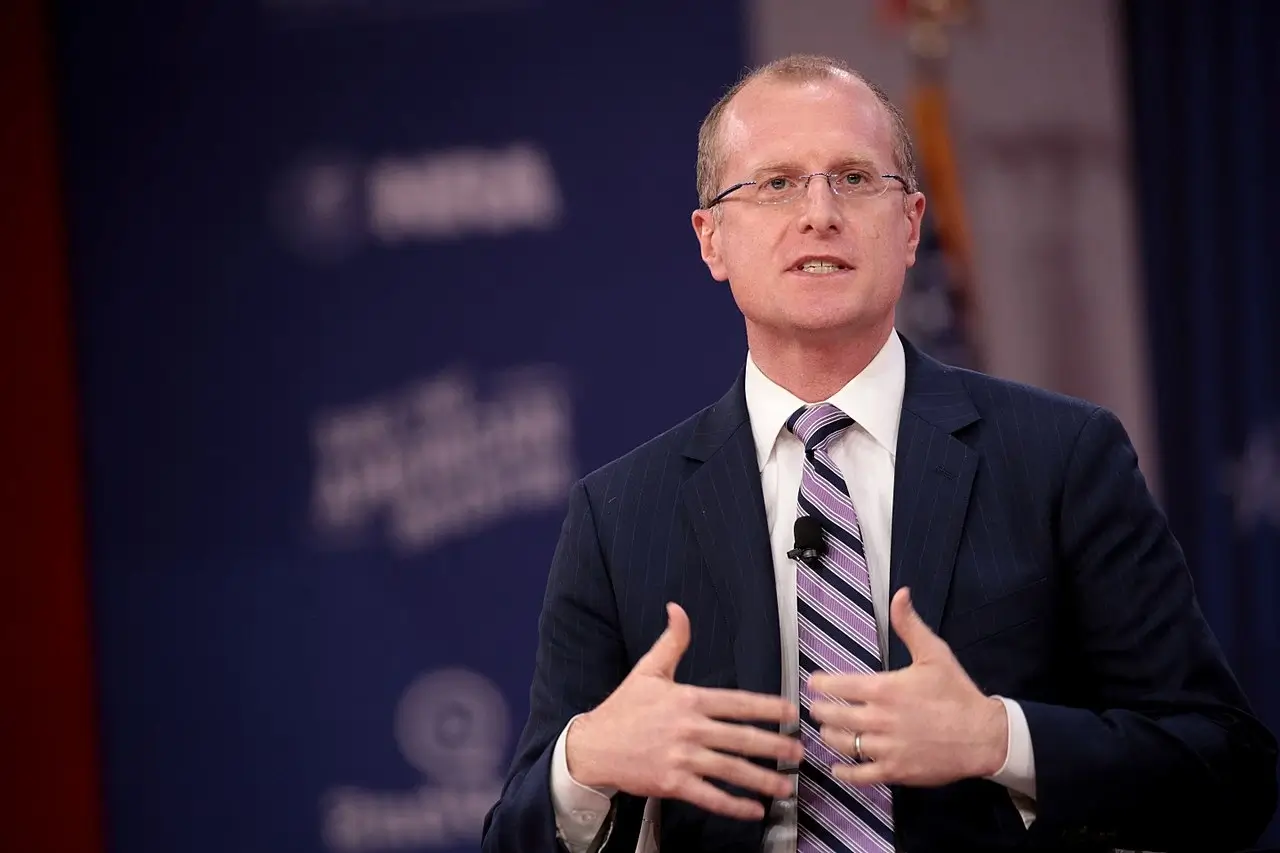
Author: Brendan Carr, now Trump's FCC Chair
Key points:
- Narrow Section 230 legal protections for Big Tech, with the goal of stopping platforms from removing conservative content.
- Make tech companies pay into the fund that supports rural and low-income internet access.
- Ban TikTok.
- Loosen media ownership rules, which could let big companies buy up more local TV stations.
Where it stands: As chair, Carr has used the FCC to pressure broadcasters over coverage the administration doesn't like.
Chapter 29: Federal Election Commission
Author: Hans von Spakovsky, Heritage senior legal fellow known for pushing voter fraud claims
Key points:
- Keep the FEC out of countering election misinformation and disinformation.
- Scale back campaign finance enforcement.
- Protect the privacy of political donors.
The Brennan Center warned that Project 2025 could put the weight of the federal government behind attacks on election officials.
Chapter 30: Federal Trade Commission
Author: Adam Candeub, law professor and former Trump Commerce official
Key points:
- Consider abolishing the FTC, the agency that enforces antitrust and consumer protection laws, or moving its antitrust work to the Justice Department.
- Stop the FTC's "progressive" rules, like its ban on noncompete agreements.
- Use the FTC to go after Big Tech companies for "censoring" conservatives.
- Push for online age verification to protect kids.
The chapter also backs putting the FTC under direct presidential control.
Where it stands: In 2026, the Supreme Court helped make that possible in Trump v. Slaughter, overturning the 90-year-old precedent that protected independent agencies like the FTC.
Why What’s in Project 2025 Still Matters
Project 2025 isn't a campaign promise anymore. It's a to-do list, and the administration has been checking off boxes since January 20, 2025.
The best defense is knowing what's on the list. When you see a new executive order, a firing, or a program cut, you can trace it back to a chapter in this book. That makes it harder for anyone to claim it came out of nowhere.
Check out our Project 2025 Topic Hub for all related news and videos.