
County election officials met in South Carolina this month for a training session on a scenario that would have sounded ridiculous a few years ago: what to do if federal agents arrive with a warrant and take the ballots before they can be counted.
The Committee for Safe and Secure Elections has 126 training events booked this year, nearly twice as many as in 2024. Part of the curriculum is psychological resilience — how to do your job as strangers threaten you and your family.
MAGA Psychology
In an article from The Conversation, three psychologists set out to learn why people in the MAGA movement behave the way they do — attacking public officials, threatening their lives, and their families.
They researched MAGA psychology — a term we use for the psychological behaviors of Trump supporters — to analyze the MAGA movement’s willingness to commit acts of violence against anyone they perceive as a threat to the movement. This includes the psychological tactics used by Trump to manipulate his supporters
Tina Barton, a Republican city clerk in Michigan, told NPR about the voicemail she received after the 2020 election. The caller said he would kill her when she least expected it.
Threats against local officials spiked roughly 300% in a single month last fall, Princeton's Bridging Divides Initiative found, and threat assessment cases involving members of Congress rose 58% between 2024 and 2025. Three out of four local officials now say the hostility has made them less willing to do parts of their job.
The psychologists who analyzed MAGA psychology are Magnus Linden and Fredrik Björklund of Lund University and Claire Campbell of Ulster University. Here’s what they found.
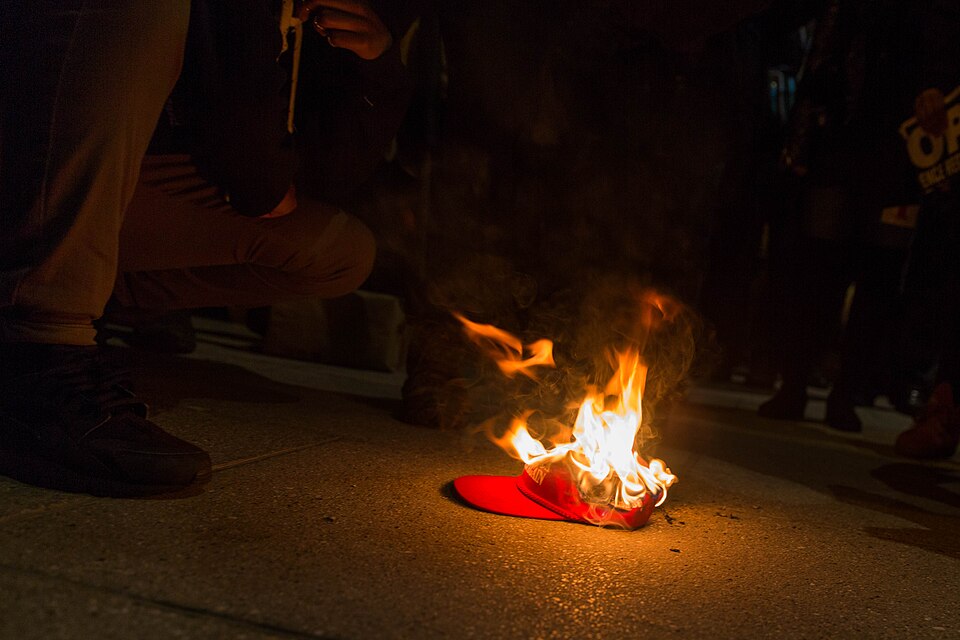
The hat isn’t a vote. It's a self.
Psychologists call it identity fusion — when someone’s sense of self becomes intertwined with a group’s identity. Wearing a MAGA hat stops being a statement about who someone voted for and becomes a statement about who they are.
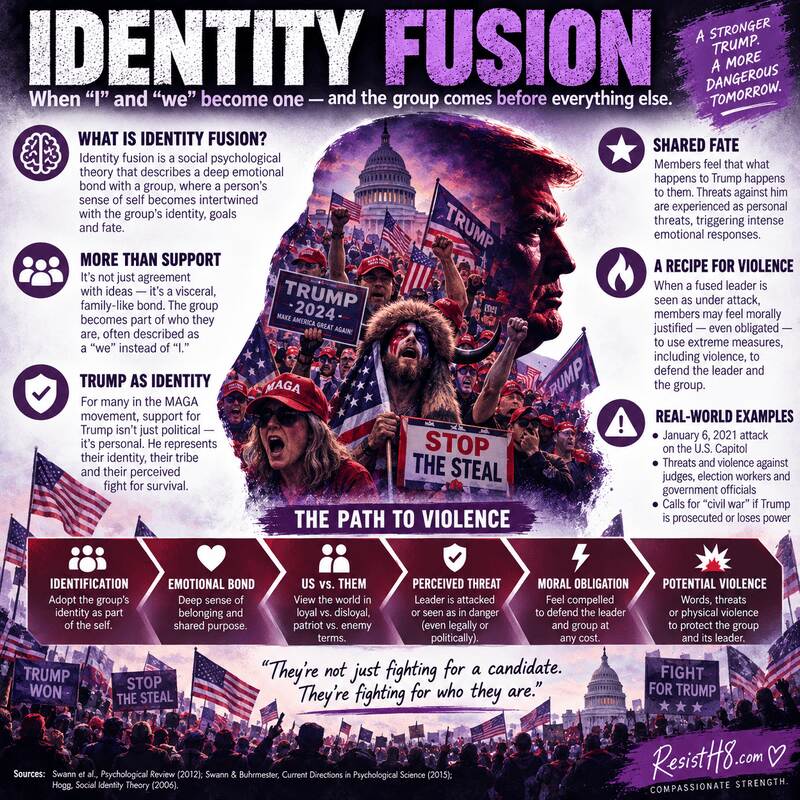
A study in PS: Political Science & Politics found that people fused with Trump absorbed his election fraud claims as personal truth rather than political opinion, and fusion research consistently links that state to a reported willingness to do extreme things — hurt people, destroy property — on the group's behalf.
Researchers also found something counterintuitive about what draws people in. Resentment of migrants, liberals and feminists is part of it. But positive identification with white nationalism turned out to be the stronger predictor of who identifies with MAGA.
The draw isn't only about who you're against. The feeling of belonging and pride offers a way, as one study of the movement's symbolic status politics put it, to recover esteem people feel they lost.
Good people, evil enemies
The second mechanism is moral sorting. MAGA rhetoric engages in a type of black-an-white thinking to divide the country into good and evil — real Americans who built the nation on one side, and on the other, everyone else — threats to the nation.
When a leader delivers that message from a podium, it does more than insult the people the movement is against. It creates an obligation. If your enemies are evil and your side is pure, then acting against them isn't aggression, it's duty.
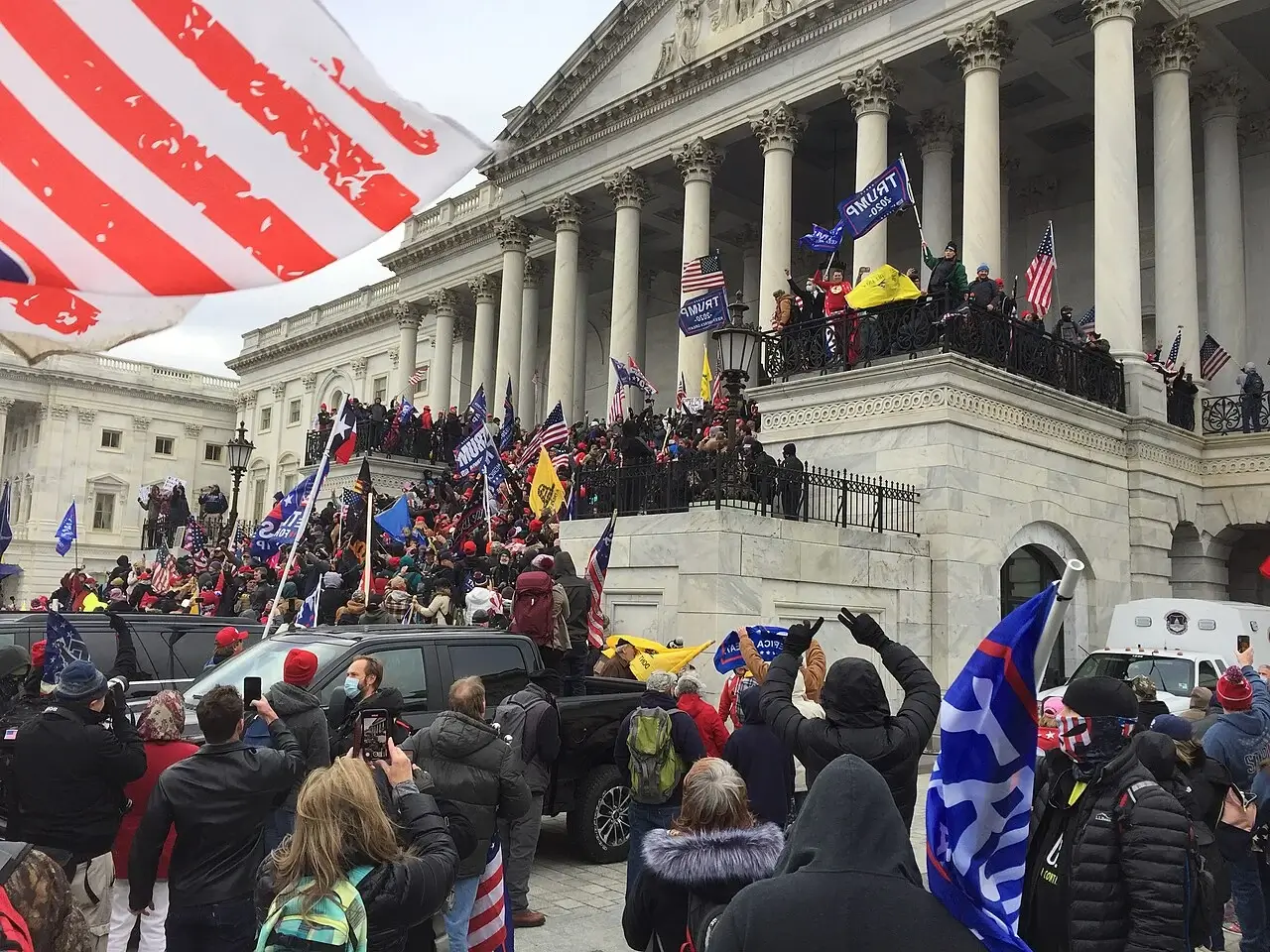
Researchers connect this directly to what happened at the Capitol on January 6, 2021 — and to what happens when that sense of moral superiority is challenged.
Of the roughly 1,500 people Trump pardoned — people convicted of crimes that included the violent assault of police officers — a growing number have been arrested again on unrelated charges.

Somebody has to be on top
Third is social dominance orientation — the belief that some groups are simply above others. People who score high on it tend to see society as a competitive jungle where groups fight for position, and they're more willing to set basic democratic principles aside when those principles get in the way of their group staying on top.
Polling has also found MAGA supporters far more likely than other Americans to expect a civil war and to say violence would be justified to advance the movement's goals.
It's visible in threats against judges and in the shootings of two Minnesota Democratic legislators and their spouses — violence against people whose offense was being in a position of authority on the wrong side.
Aggression without deference
The fourth finding is complicated. Researchers who study authoritarian followership usually measure three things: submission to authority, adherence to conventional values, and willingness to act aggressively when an authority signals approval.
Trump supporters in 2016 scored higher on the third than backers of other Republican candidates, and not especially high on the other two. They weren't unusually obedient or unusually traditional.
They were unusually ready to attack people who violated group norms, once someone they accepted as a leader gave the nod. Sociologists describe this as a distinct authoritarian profile, defined mainly by prejudiced aggression toward out-groups.
It also explains why the hostility toward the press is so intense. To them, "enemy of the people" isn't an insult. It's a permission slip.



What the polling shows
Public Religion Research Initiative’s (PRRI) January 2026 survey of 5,547 adults found that most Americans reject violence outright, and on the blunt question — whether "true American patriots may have to resort to violence to save our country" — Republicans and Democrats polled within a couple of points of each other, at 19% and 17%.
The sharper divides showed up elsewhere. 63% of Republicans favored the January 6 pardons, compared with only 4% of Democrats. 60% backed stripping citizenship from people the government deems a threat, against 27% of Democrats.
And PRRI's earlier authoritarianism research found that 75% of Republicans who view Trump favorably score high on right-wing authoritarianism, compared with 39% of Republicans who don't.
So the danger isn't that tens of millions of people are ready to pick up a weapon. It's that a large bloc has come to accept punishment of the other side as a legitimate part of governing — and that a small fraction will act on it.
The part that isn't fixed
Radical movements surge when the conditions in society feel threatening. Personality shapes who answers the call; circumstance decides whether the call goes out at all.
That's not a comforting finding, but it’s a hopeful one, because circumstance can change. None of this is genetic. None of its permanent. The people volunteering to work at polling places in six weeks are betting their safety on it.