

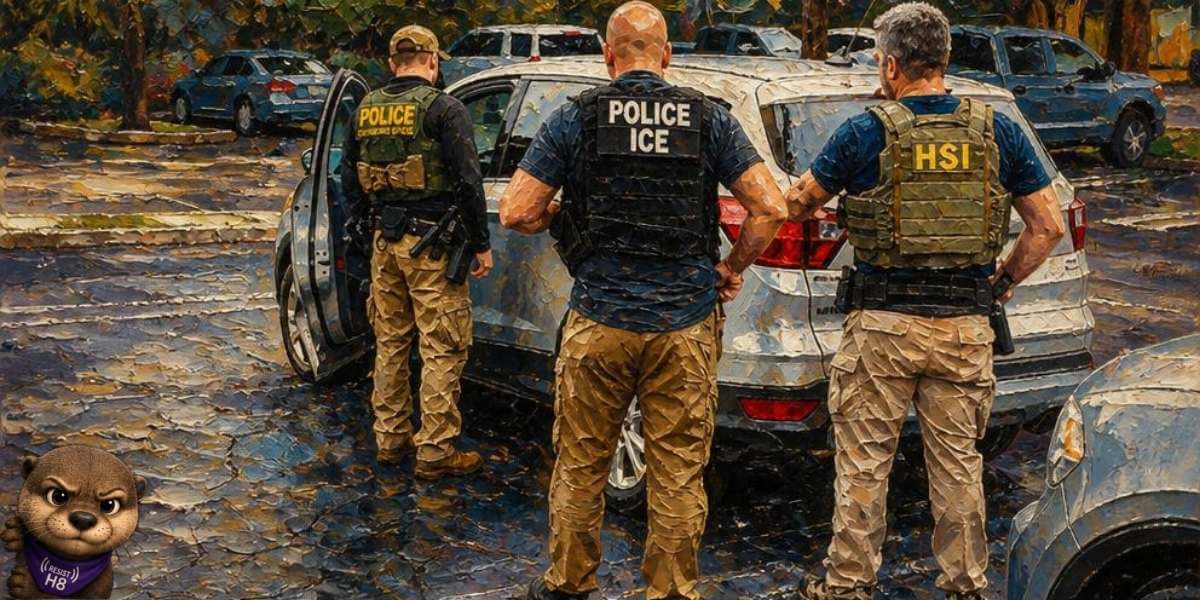

ICE has an internal affairs office. Its job — according to ICE's own description — is to investigate misconduct by ICE employees and contractors.
It's the office that's supposed to look into detention deaths, abuse allegations, and officers who break the rules.
Instead, it's knocking on the doors of Americans who criticized ICE.
According to a court declaration filed by an ICE official in Boston, the Office of Professional Responsibility investigated 131 cases involving alleged "doxxing and threats" against ICE employees between January 2025 and March 2026.
A Wired investigation found the office has opened more than 100 inquiries into private citizens.
Americans who criticized ICE online are being tracked and intimidated

The Verge reports that when acting ICE director Todd Lyons gave written testimony to House appropriators in April, he touted OPR's detention inspections and hiring vetting — and never mentioned that his internal watchdog was busy investigating people for social media posts.
Two cases out of New York show exactly what that looks like in practice.
An email, five months, three federal agents
In January, David Streever of Rochester sent an angry email to Lyons.
It contained no threats and no personal information — just harsh criticism, comparing ICE's conduct to that of the Gestapo.

That kind of speech sits squarely inside the First Amendment, however much the agency dislikes it.
Five months later, while Streever was on vacation in Finland with his 7-year-old daughter, his doorbell camera caught two Homeland Security Investigations agents (HSI) waiting on his porch.
They left a warning notice claiming his email "may constitute a violation" of federal law — citing Title 19 of the U.S. Code, which covers customs duties, not speech.
When Streever flew home through JFK, a third agent tracked him to his airport hotel and left a business card at the front desk.
His attorney still doesn't know how the government got his cell number or knew where he was staying.
(Perhaps DOGE knows something about this? Just speculating. It’s more likely related to the leaked memo directing the FBI to track Americans with certain views.)
Streever is now suing DHS with help from the Foundation for Individual Rights and Expression. FIRE attorney Adam Steinbaugh said: the government "doesn't get to dispatch federal agents to your door" and follow you across the state because it didn't like your email.
He also noted the timeline destroys any safety rationale — nobody waits five months to act on a genuine threat.
The damage is already done, though. Streever says he has self-censored online and fears surveillance and prosecution.
That chilling effect is the point.
Agents inside a polling place
The same day agents visited Streever's home, two ICE officers walked into a polling place in Syracuse during New York's primary elections to confront poll worker Paigelynn Gonyea — carrying copies of her social media posts, her driver's license, and a file with her address, height, weight, and eye color.
Her offense?
A January Instagram post about Jonathan Ross, the ICE agent who shot and killed Renee Good, a 37-year-old mother and U.S. citizen, in Minneapolis on January 7.



Gonyea's post noted that the Minnesota Star Tribune had already publicly identified Ross, and said she'd like to see him indicted.
He hasn't been.
DHS claimed she committed a federal crime by posting an officer's home address.
The post contains no address, and the department has repeatedly declined to substantiate the claim.
Gonyea refused to sign the warning notice or delete anything — and refused to step outside with the agents.
“I don't trust going outside or dealing with ICE agents at all," she told NPR, referencing what happened to Good.
Rep. John Mannion has demanded written answers from DHS Secretary Markwayne Mullin by July 10: who authorized the visits, why OPR was involved, and how many other Americans have gotten these letters.
Repurposing the watchdog
DHS defends the campaign by citing eye-popping statistics — a 1,300% increase in assaults on personnel, an 8,000% spike in death threats — figures NPR notes it has not independently verified.
Real threats exist, and real doxxing cases — like one involving a posted home address and a swatting attempt — have led to actual arrests through actual courts.
But naming a publicly identified officer isn't doxxing.
An angry email isn't a threat.
The Supreme Court settled this decades ago: Brandenburg v. Ohio protects even inflammatory speech unless it incites imminent violence, and Bantam Books v. Sullivan forbids exactly this kind of informal government intimidation.
An office built to hold ICE accountable has been converted into a tool for shielding it from accountability — while deaths in ICE custody keep mounting and the agent who killed Renee Good faces no charges.
The internal affairs unit found its target. It just isn't inside the agency.