

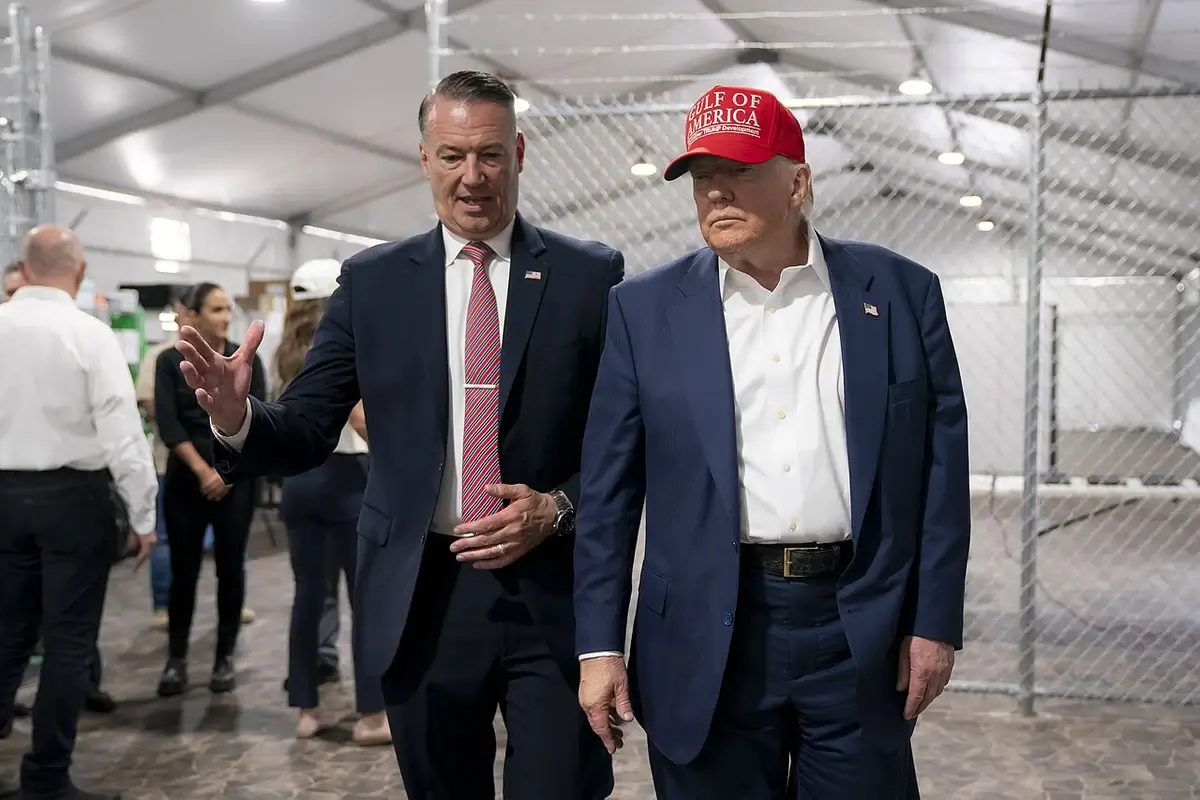

Acting ICE Director Todd Lyons, the man who oversaw the deadliest stretch of immigration detention in the agency’s history and compared his deportation goals to Amazon’s delivery logistics, resigned on Thursday — hours after telling Congress that at least 44 people have died in ICE custody on his watch.
His last day will be May 31. He’s heading to the private sector.
The Timing
Todd Lyons submitted his resignation letter to Homeland Security Secretary Markwayne Mullin on April 16, the same day he testified before the House Appropriations Subcommittee.
“We need to get better at treating this like a business. Like Prime, but with human beings.”
During that hearing, Rep. Lauren Underwood of Illinois pressed Lyons on whether ICE had implemented any internal policies or set any goals to reduce the number of people dying in its detention facilities.
Lyons’ answer: No. There is no policy to try to reduce deaths.
That exchange happened in the morning. By evening, DHS announced he was leaving.
Mullin praised Lyons in a statement, calling him a great leader who helped the Trump administration remove “murderers, rapists, pedophiles, terrorists, and gang members” from American communities.
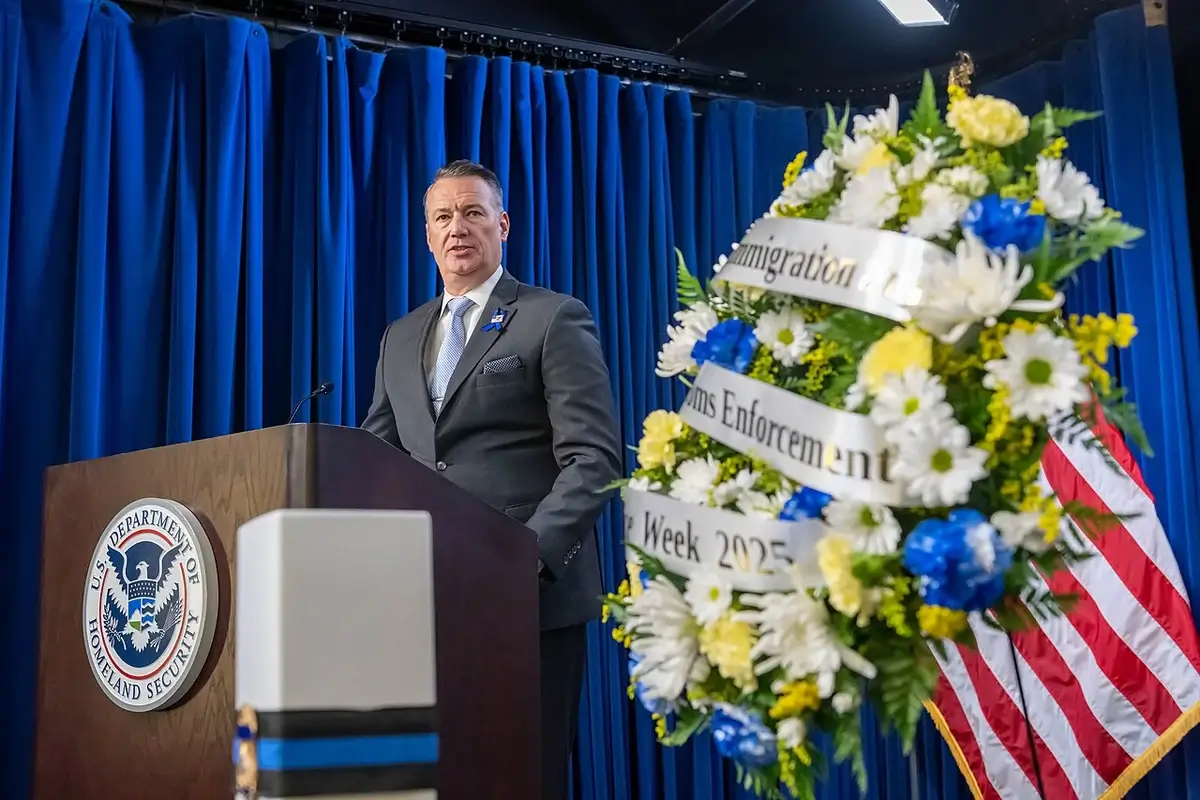
The White House called him “an American patriot who made our country safer.” Neither statement mentioned the 44 dead detainees, the two U.S. citizens shot and killed by federal agents in Minneapolis, or the multiple federal court orders his agency has defied or circumvented during his tenure.
No reason was given for the resignation beyond a vague reference to the private sector. No successor has been named.
What Lyons Built
Todd Lyons joined ICE in 2007 as an immigration enforcement agent in Texas. He was elevated to acting director in March 2025 after President Trump reassigned his predecessor, Caleb Vitello. From that point forward, Lyons became the operational architect of Trump’s mass deportation agenda.
Under his leadership, ICE oversaw roughly 584,000 deportations since Trump’s inauguration.
The agency underwent a massive hiring boom fueled by a congressional cash infusion, expanded its detention capacity to hold more than 52,000 people — nearly 10,000 beyond its budgeted capacity — and ramped up arrests in what the administration framed as targeting dangerous criminals but which, in practice, swept up U.S. citizens, legal residents, students, asylum seekers, and people with valid work authorization.
Lyons signed the memos that made much of this possible. In May 2025, he authored a secret internal directive — later leaked by whistleblowers — that authorized ICE officers to forcibly enter people’s homes using administrative warrants alone, without a judge’s approval.

The memo was so tightly held that most ICE personnel weren’t even permitted to retain copies of it. A separate memo broadened the agency’s interpretation of when officers could make arrests without any warrant at all, effectively granting field agents the power to detain anyone they suspected of being undocumented on the spot.
He was also the man who, at the 2025 Border Security Expo in Phoenix, told a room full of defense contractors that deportation logistics should be modeled after Amazon Prime’s delivery network. His exact words: “We need to get better at treating this like a business. Like Prime, but with human beings.”
The Body Count
The number that will define Lyons’ tenure is 44 — the count of people who died in ICE custody during his time as acting director, which he confirmed to lawmakers on the same day he resigned. USA Today’s independent tracker puts the number even higher, at 48 deaths since Trump took office.
Either figure represents the highest death toll in ICE detention since the agency was created in 2003.
In 2026 alone, 16 people have died in custody, including a Colombian man named Brayan Rayo-Garzon who reportedly died by suicide on April 8 after his scheduled mental health evaluation was delayed multiple times.
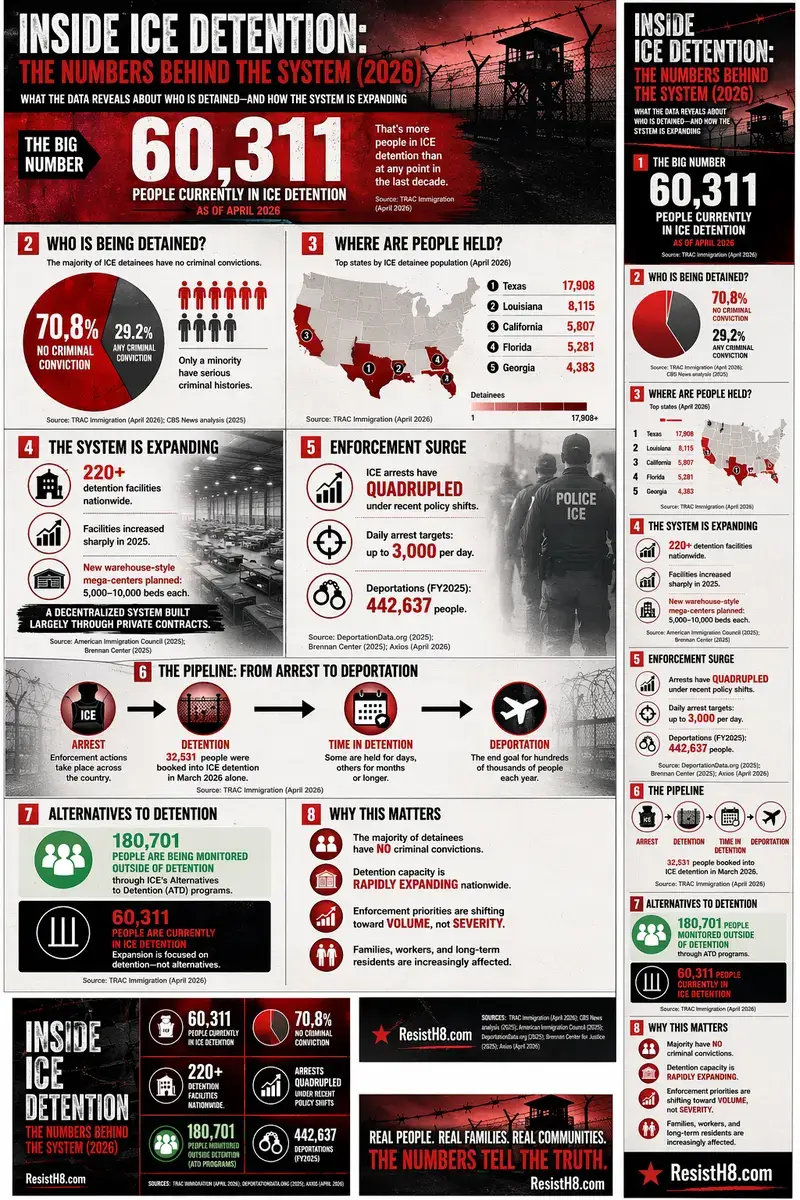
When Underwood asked Lyons about the record death toll, he attributed it to the record number of people in detention. He did not characterize it as a problem to solve. He did not describe any corrective action. He stated it as a mathematical outcome of scale.
Meanwhile, ICE quietly changed its own disclosure policy. The agency had previously required public and congressional notification within two days of a detainee death. That practice appears to have been abandoned since mid-December. NBC News reported that ICE has limited disclosures on the circumstances of deaths, and the agency’s public tracker has consistently lagged behind actual totals.
Operation Metro Surge and the Minneapolis Killings

Lyons’ resignation also comes against the backdrop of Operation Metro Surge — the massive immigration enforcement deployment that sent 3,000 federal agents into Minneapolis beginning in late 2025. Under Lyons’ command, that operation resulted in the fatal shootings of two U.S. citizens: Renee Good, a 37-year-old mother killed by ICE agent Jonathan Ross on January 7, and Alex Pretti, a 37-year-old ICU nurse killed by Border Patrol agents on January 24.
Video footage contradicted the government’s account of Good’s death. Federal investigations into both killings remain stalled months later. Just today — the same day Todd Lyons resigned — a Minnesota prosecutor filed the first criminal charges against a federal agent from the operation, charging ICE officer Gregory Donnell Morgan Jr. with pointing a gun at two civilians during a rush-hour road rage incident.



At a February congressional hearing following the Minneapolis killings, Lyons was unapologetic. He blamed protesters and elected officials for escalating tensions that endangered his officers and delivered a warning that became a defining soundbite of his tenure: “Let me send a message to anyone who thinks they can intimidate us. You will fail.”
A Pattern of Departure
Lyons is the latest in a string of senior DHS officials to exit during the immigration crackdown. Trump fired Homeland Security Secretary Kristi Noem in March, partly after scrutiny over a $220 million ad campaign featuring her prominently, and partly in the wake of the Minneapolis fallout. Markwayne Mullin, former U.S. senator from Oklahoma, was brought in to replace Noem.
Gregory Bovino, the Border Patrol sector chief who led operations in several major cities, announced his retirement the same month.
Each departure has followed a pattern: aggressive enforcement, public backlash, congressional heat, and then a quiet exit before the political cost compounds further. Lyons fits the template precisely. He testified about 44 dead detainees in the morning and resigned by evening.

What He Leaves Behind
Todd Lyons leaves behind an agency that is larger, more aggressive, and less transparent than when he took over. ICE now operates with expanded warrantless arrest authority, the power to enter homes without judicial warrants, and a detention system that is overcrowded, underfunded, and killing people at a rate the agency itself has no plan to address.
He leaves behind two dead Americans in Minneapolis, 44 dead detainees in facilities across the country, and a policy legacy built on treating human beings like packages to be processed and shipped.
He’s going to the private sector. He wants to spend more time with his family.
The people who died in ICE detention under his leadership don’t get that option.