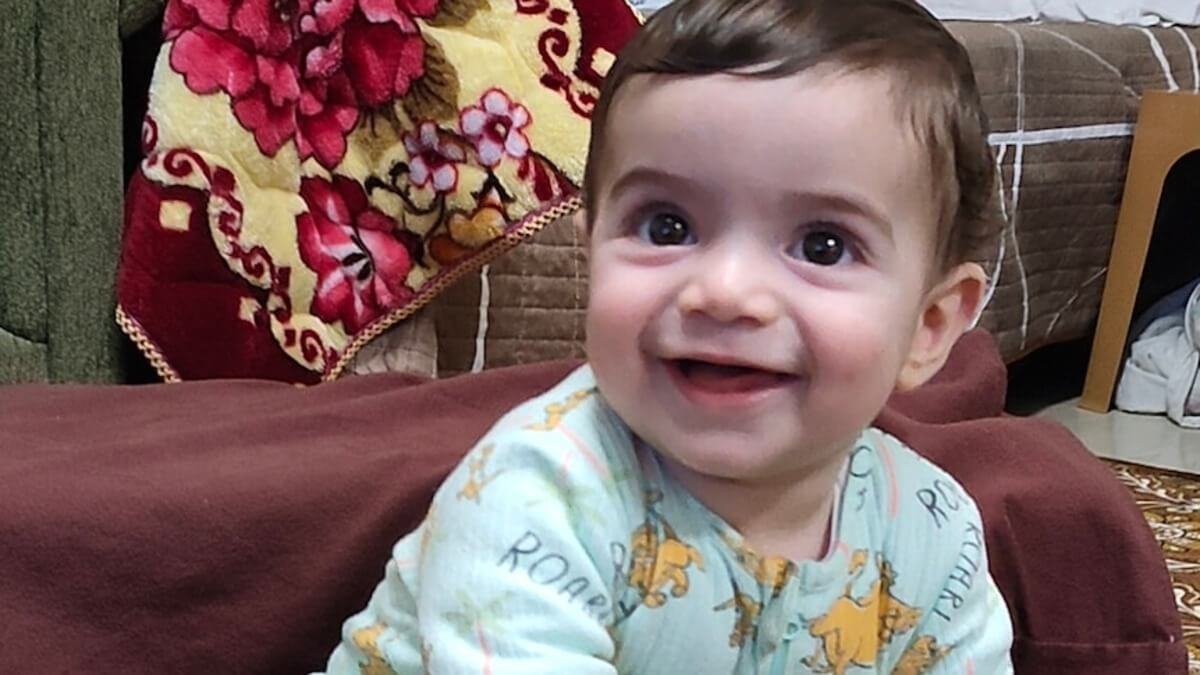

Sam Abu Haikal was seven months old. He had not yet learned how to walk. He had not said his first word.
On Friday, June 5, 2026, he was sitting in the back seat of his family’s car, held in his mother’s arms, when an Israeli soldier in the West Bank opened fire and a bullet tore through his face and into his mother’s cheek.
He died.
He was a baby.
For days, the Israeli military provided the same explanation it [almost] always does: the soldiers felt threatened when the car ‘accelerated toward them’ so they fired in response.
It’s the same statement we get for: every Palestinian family shot dead in their car, every article written on the IDF’s sexual abuse of Palestinians in Gaza, every rape or torture of Palestinians held in Israeli prisons without charges, and for every negative story that makes the national news — the kind of statement meant to end discussions about the story before anyone can look into it.
If you believed their version of events, there was a threat, a split-second decision, and it ended with a tragedy.
Then the video came out.
Video Evidence Shows What Happened the Day Seven-Month-Old Sam Abu Haikal Was Murdered

What the Footage Actually Shows
On Tuesday, June 9, the Israeli human rights organization B’Tselem released footage of the shooting, which took place in the Tel Rumeida neighborhood of Hebron, in the occupied West Bank.
The video has no sound. It doesn't need any.
The Abu Haikal family was driving home from visiting relatives. Fahed Abu Haikal, 41, was at the wheel.
He saw soldiers standing in the road ahead and slowed down, preparing to stop, exactly as a driver is supposed to do.
The footage shows two soldiers standing just meters from the car as it decelerates.
The vehicle is not racing toward them. It’s coming to a stop.
According to B’Tselem’s analysis, the car was far from the soldiers and posed no danger to them whatsoever.

A soldier fired anyway.
A second video captures what came after.
Fahed is out of the car, cradling his infant son, pressing his bare hands against the wound in Sam’s head, trying to hold the bleeding back.
Daniyah, Sam’s mother, sits on the ground beside the car. She has also been shot.
The same burst of gunfire that killed her baby lodged a bullet in her cheek while she held him.
Fahed was shot in the hand. Around them, family members and onlookers call out for an ambulance.
The two soldiers walk away. They don't approach the car. They don't check on the bleeding seven-month-old. They don't offer help.



As B’Tselem points out, they also don’t move to arrest anyone — which is telling, because if the family had genuinely been a threat, an arrest is exactly what would have followed.
“It Can’t Be a Mistake”
Sam Abu Haikal was buried in Hebron on Saturday, June 6. At his funeral, his father refused to accept the explanation being offered for his son’s death.
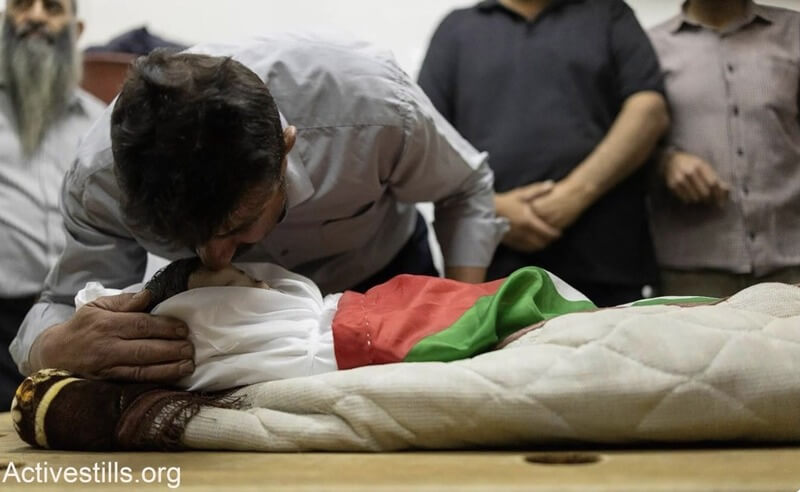
“When more than one bullet is fired, when there’s no warning shot and no warning at all, it can’t be a mistake,” Fahed said.
The military told AFP it was “checking” the footage, and the IDF said it has opened an investigation, expressing “deep sorrow.”
But these investigations have a long and well-documented history of going nowhere.
They rarely follow-through with investigations, and on the rare occasions they do, the soldiers are almost always cleared.
The promise of an inquiry functions less as accountability and more as a way to wait out the news cycle until the world looks elsewhere.
Yuli Novak, B’Tselem’s executive director, placed Sam’s death in a larger and more damning context.
Over the past two and a half years, she said, Israel has killed tens of thousands of children in Gaza and the West Bank — and the impunity it receives from the international community has produced a reality in which Palestinian lives are treated as entirely disposable.
Even, she said, a seven-month-old baby.
The lack of response from U.S. leadership is stunning. Massive protests are still taking place in other countries today, yet the silence from world leaders is deafening.
The father of the seven-month-old shot by IDF soldiers recounts the shooting
WARNING: Viewers may find this video distressing

Why the Video Matters
A camera shouldn't be required for a child’s life to matter. But it did here, and it does again and again.
The first official account was a clean story: a perceived threat, a defensive response.
The footage dismantled it in seconds — the same pattern that has played out countless times when independent videos surface after a Palestinian is killed, and the initial explanation can’t survive the undeniable evidence.
Sam Abu Haikal will not grow up. His parents survived gunfire only to bury their son.
And somewhere, a soldier who shot into a family car as it’s slowing down, is being investigated by the same institution that first told the world the car was a threat.
He was seven months old. Remember his name.