

Tens of thousands of people were part of a mass migration from Morocco that surged into Ceuta recently. Most of them have gone back, but not all of them. Hundreds of unaccompanied minors are stranded in Ceuta after they lost a parent when they got separated from them in the rush, or the parent was killed during the crossing.
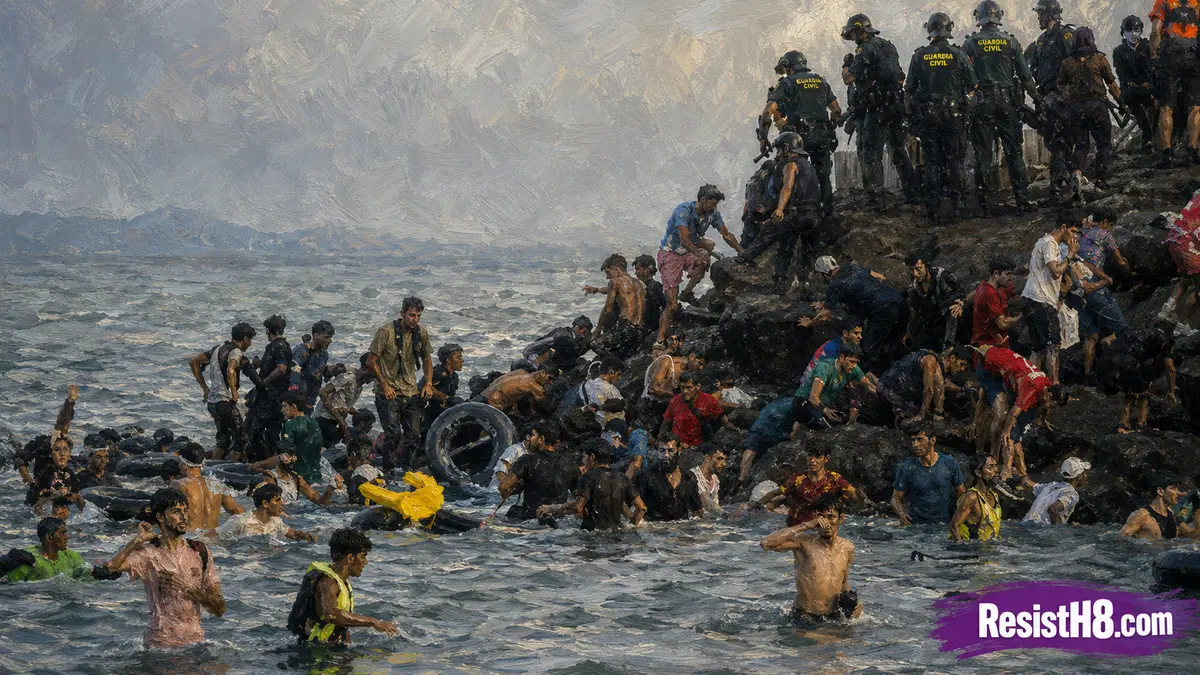
A 17-year-old girl from Tangier, Morocco, reached the Spanish shore.
Her 8-year-old brother didn't.
She watched Spanish police pull his body from the water. Somewhere in the crush of tens of thousands of people, she lost her mother too.
She told the Associated Press that people were stepping on the dead.
Days later, having found the government facility for children in need already full, she lives on whatever local residents hand her.
"Now we are children begging on the street," she said through a translator.
She’s one of more than 800.
What's Left After the Crowds Went Home
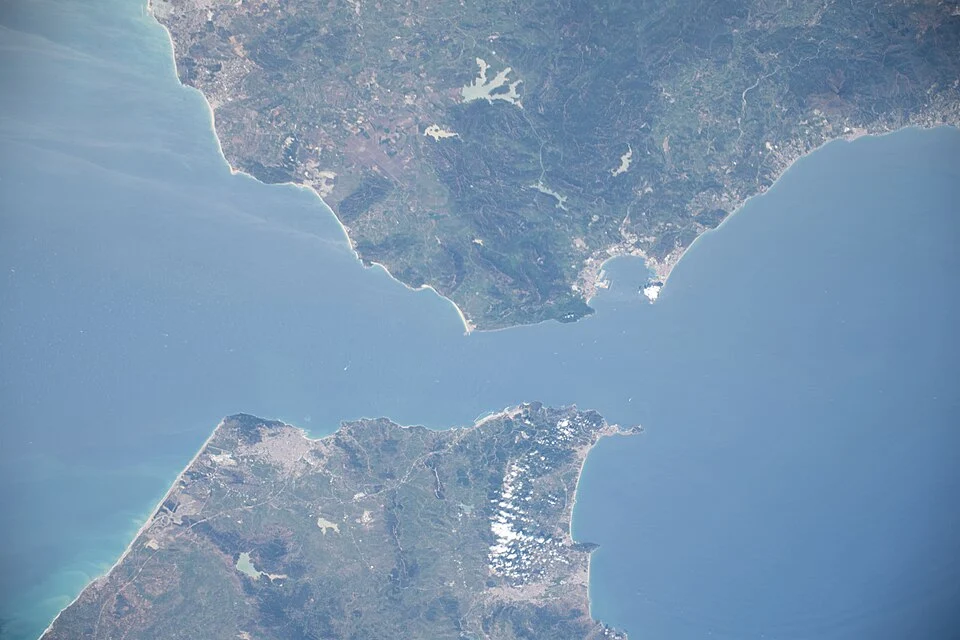
We covered the crossing itself last week — roughly 60,000 people surging around the Tarajal breakwater into a seven-square-mile Spanish city on the North African coast.
And the President of the United States looked at the footage and called it a “midterm talking point.”
Most of the Moroccan adults are gone now. They went home voluntarily or were pushed back by Spanish police.
The death toll of 67 has climbed to 72.
What remains is roughly 3,000 to 5,000 people who avoided expulsion — including Sudanese families fleeing that country's war, Palestinians from Gaza, Afghans, and people from across the African continent.
And more than 800 children with no adult to speak for them.
Ceuta's migrant center holds 600 people. It’s full. Food is scarce.

Children are sleeping on the beach and in the hills above the city, where on a clear day you can see mainland Europe across the water.
The Numbers Are Not a Rounding Error
Ceuta's ordinary capacity for unaccompanied minors is 29 beds.
City officials now calculate occupancy at roughly 2,872 percent — 862 children and adolescents already in the system, with more expected.
Mayor-president Juan Jesús Vivas put the figure at about 2,400 percent at the height of the surge.
The city has scattered them across the La Esperanza center, a warehouse at Tarajal, and improvised space at Piniers, and is converting more buildings.
Spain's Law is Not Ambiguous
Article 35 of Spain's 2000 foreigners' law is direct: when police identify a migrant child traveling without an adult, that child must be taken into protection and receive immediate attention from Spain's child welfare services.
Not screened. Not queued. Protected.



They stay under the guardianship of the city — with housing, food, healthcare, and schooling — until family can be found or they turn 18.
Spain's courts have already said this out loud, twice, recently:
- In January 2024, the Supreme Court ruled the 2021 mass returns of children to Morocco illegal, because officials skipped individual case files and never gave the kids a hearing.
- On July 8, 2026, the Supreme Court struck down parts of the 2024 Aliens Regulation that had watered down the duty to care for unaccompanied children found on Spanish soil.
UNICEF Spain has spent this crisis repeating a single point: returns of children can never be collective. One child, one file, one hearing.
It Only Held Because People Were Watching
On Monday, an AP journalist watched Spanish soldiers walk a 12-year-old boy toward the Morocco border.
He was crying.
He was begging not to be sent back.
He got within a few yards of the crossing. Then local residents began insisting he was a child, journalists were standing there with cameras, and a lieutenant colonel in the Spanish Army stopped it.
The boy was handed to the Civil Guard instead of pushed across.
Think about that. The legal protection existed the entire time. What actually saved that child was a crowd of neighbors and a photographer.
The Push to Make it Legal
Rather than fund the shelters, Vivas has openly called to legalize summary returns of minors.
Ceuta's government is backing a People's Party bill in Congress to extend the border-rejection regime to anyone entering Ceuta or Melilla irregularly by land or sea — a change that migrant-rights groups including the Jesuit Migrant Service warn would gut individual safeguards for these children.
Courts rule the practice unlawful. Officials respond by trying to rewrite the law so the practice becomes lawful.
The children in the warehouse don't move either way.
Why Americans Should Care That Unaccompanied Minors Are Stranded in Ceuta
We’ve already watched our own government treat unaccompanied minors as a logistics problem rather than a legal obligation — and this administration was going to use Ceuta as a campaign talking point before the bodies had been identified.
The children on that beach didn't cross for ideology.
Youth unemployment in Morocco is above 37 percent.
They saw TikTok videos promising that kids get protection in Spain, and they swam.
Some of them were right about the law. Now they’re just waiting for someone to enforce it.