


The federal government can tell you how many people it has booked into immigration detention. It cannot — or will not — tell you how many children those people left behind. What are the effects of mass deportation on kids?
That silence is the subject of a new analysis from the Brookings Institution, which set out to estimate a number the government simply does not track: how many American children are losing a parent to the Trump administration's deportation campaign.
The baseline estimate is staggering. Since the administration began, roughly 400,000 people have been booked into ICE detention after an interior arrest — overwhelmingly adults.
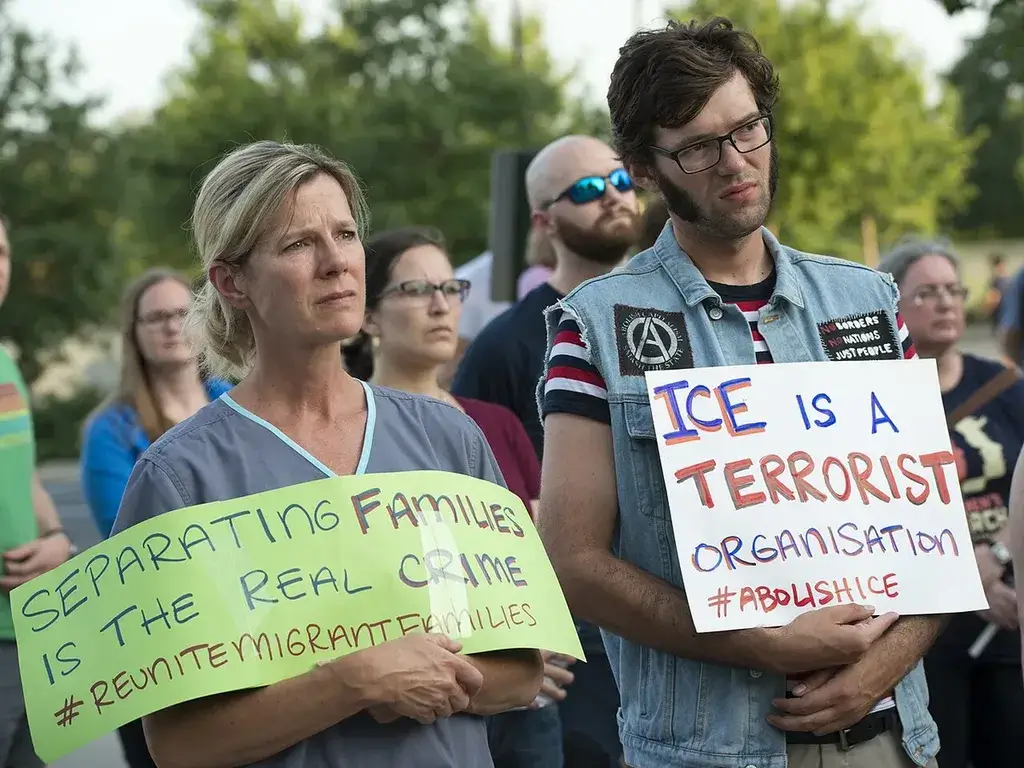
But behind those adults are families. Brookings estimates that about 205,000 children, including roughly 145,000 U.S. citizens, have likely experienced the detention of a parent.
More than 22,000 U.S. citizen children have had every parent in their household detained, and roughly 1,000 have already passed through the child welfare system — placed with relatives, family friends, or, in some cases, foster care.
If the current pace of enforcement continues, the researchers project the detention total could climb toward 1.45 million people, pulling far more children into its wake.
Because the government publishes no reliable count, the team built its estimate by combining detainee records from the Deportation Data Project with Census Bureau survey data, matching detainees to the likely undocumented population by age, country of origin, and family structure.
They are careful to call these projections rather than a headcount — which is precisely the problem.
As Tara Watson, one of the report's authors, told ProPublica, many of the affected families simply "are not being written down."
Who Are These Children?
Brookings found that about 36% are under the age of 6, too young to understand why a parent didn't come home.
The largest share — roughly 54% of affected citizen children — have a parent from Mexico, with many others from Guatemala and Honduras.
And a parental detention is rarely a brief interruption. A ProPublica investigation tracking ICE arrests of mothers of U.S. citizen children found that roughly 60% of those mothers were ultimately deported — about four times the rate under the previous administration.

ProPublica's reporting, which Brookings drew on, puts faces to the figures. Using a deliberately conservative method, the outlet documented that the parents of at least 11,000 U.S. citizen children were detained in just the first seven months of the crackdown.
It found a mother separated from her breastfeeding infant, and reported that a toddler, a preschooler, and a 7-year-old — all American citizens — were deported even though their documented parents had asked that the children be allowed to stay in the United States.
Quietly, the administration also revised the internal directive guiding how ICE officers handle parents, stripping out a reference to treating them humanely.

The Department of Homeland Security has repeatedly said the agency does not separate families, framing these outcomes as the product of parents' own decisions about whether to take their children with them.
But the documented record shows something different
Traumatic Effects of Mass Deportation on Kids
A congressional review compiled 128 cases of children — citizens and noncitizens alike — who were injured, left unattended, or otherwise endangered during enforcement operations.
Some were exposed to chemical agents, placed in restraints, or held at gunpoint.
The physical harm, lawmakers warned, is compounded by trauma that will outlast the raids and never appear in any agency's statistics.
This is where the missing data stops being a technicality.
When the government separates a child from a parent and then declines to track what happens next, it prevents even the possibility of accountability.



The Brookings authors argue that caring for these children should be treated "not as optional, but as a necessary governmental responsibility" — a duty that follows directly from the foreseeable consequences of mass deportation.
A government that can count 400,000 detentions can count the children attached to them. Choosing not to is itself a decision.