
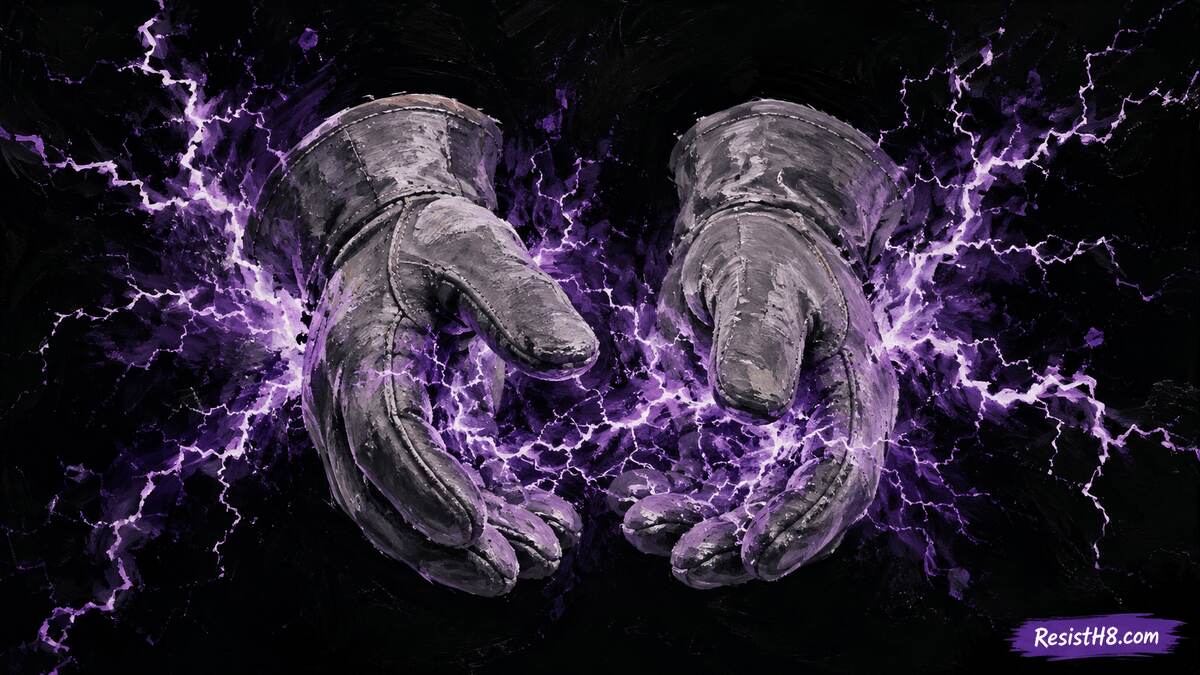

The federal government is about to spend as much as $20 million so ICE officers can shock people with their hands.
That’s not a metaphor. According to a notice published Monday by the Department of Homeland Security — first reported by The Associated Press — Immigration and Customs Enforcement plans to buy thousands of what the agency calls conductive distraction and de-escalation devices.
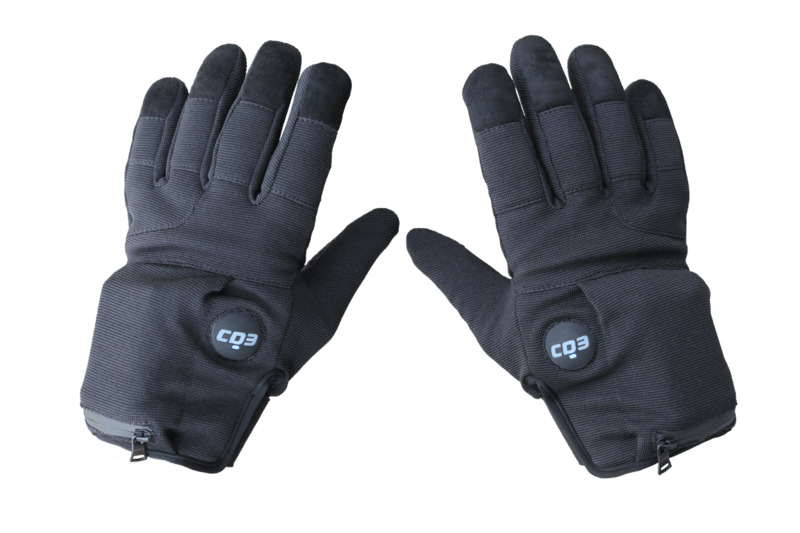
In plain English: gloves wired to deliver an electric shock through a person's skin.
The devices are called the G.L.O.V.E., short for Generated Low Output Voltage Emitter, and they're made by Compliant Technologies, a company based in Lexington, Kentucky.
DHS wants them in (on) officers' hands as quickly as possible.
CBS News reported that the contract is expected to be no-bid, with the solicitation possibly going out as soon as this Friday.
How They Work

They look like ordinary patrol gloves. That's the point.
The manufacturer describes a switch the officer flips to turn on the electrical mode.
After that, the officer only has to touch someone's skin.
The shock is meant to stop a person from — in the company's own clinical phrasing, per Axios — "performing coordinated muscle movement" by hurting them until they stop resisting.
John Peters, who runs the Institute for the Prevention of In-Custody Deaths and has been studying how the device gets used, described the sensation to the AP: "It's immediate and sharp, and it will distract you. I call it like a bee sting."
He said the gloves give an advantage to officers who are smaller, weaker, or older, because they end confrontations faster.

He also expects some officers to misuse them, which he framed as normal — the way a small number of employees misuse any policing technology.
The Part Nobody Can See
Jenn Rolnick Borchetta, deputy project director on policing at the ACLU, pointed out how a shock delivered by a gloved hand leaves almost no trace. No crackle of a Taser. No visible weapon drawn.
No warning. A bystander filming an arrest on a phone would see an officer grabbing someone's arm.
Borchetta called it a recipe for more harm to the public and less accountability, and questioned why civil immigration enforcement — a system of administrative violations, not crimes — requires pain-compliance technology at all.
She's asking the right question. Being in the country without authorization is a civil matter.
The people ICE is arresting at courthouses, outside schools, at check-ins showed up to voluntarily, and now at airports are overwhelmingly not accused of violence. They are accused of paperwork.
The Manufacturer's Own Warnings
Compliant Technologies' user guide tells officers the device should never be used as punishment, and should not be used on someone who is merely “mouthing off.” That’s not very comforting when multiple ICE officers are on video pulling a gun on someone who was ‘merely mouthing off.”
It also warns against using it on high-risk people: children, pregnant women, the elderly, and people with serious disabilities.
ICE detains children. ICE detains pregnant women. ICE has hauled away grandparents and people with disabilities.
The agency is operating under White House pressure to make roughly 2,000 arrests a day — a quota that rewards speed and volume over judgment. Expecting an ICE officer to pause mid-arrest to assess whether the person in front of him is pregnant, or diabetic, or 71 years old, is not a safety rule.



It's a liability disclaimer.
Officers have to complete a course and recertify every two years.
This is Not a Hypothetical Agency
These ICE electric shock gloves are coming at a time when officers’ use of force has been anything but careful.
Last month, agents attempting vehicle stops killed two immigrants — one in Biddeford, Maine, one in Houston, Texas.

In both cases, agents weren’t wearing body cameras.
DHS has since pledged that every arrest team will have at least one officer with a camera — a promise that arrives conveniently alongside a weapon designed to be invisible on video.
A DHS spokesperson said officers are highly trained in de-escalation (pause for laughter) and receive ongoing use-of-force training. Compliant Technologies CEO Jeff Niklaus told the AP the company couldn't discuss the matter.
What it Says About Us
There’s a version of this story that’s just an announcement of new equipment. ‘Federal agency buys equipment; vendor ships product; line item closes.’
You buy electric shock gloves because you expect to hurt people, repeatedly, at scale, and you want it to be quick and quiet.
You don’t spend $20 million on ‘pain-compliance devices’ for a law enforcement agency that champions due process rights and respects voluntary compliance.
You spend it on an agency that specializes in fear.
Somewhere right now a mother is deciding whether it's safe to take her kid to a clinic. A father is calculating whether to show up to his own asylum hearing.
Those decisions just got harder, because the answer to "what happens if they grab me" now includes the possibility of an electric shock that nobody can see.
Ask your representatives in Congress if there will be oversight of ICE officers’ use of these gloves. Ask why a no-bid deal is moving in under a week.
And keep filming — even if the ICE electric shock gloves are designed so you won’t see anything on the video