

Today (May 16), more than 90 civil rights, faith, labor, and community organizations are converging on Selma and Montgomery, Alabama, for the “All Roads Lead to the South” National Day of Action.
Sixty-one years after John Lewis was beaten bloody on the Edmund Pettus Bridge for the right to vote, his successors are walking the same ground for the same reason.
Thousands are expected. The trigger is the Supreme Court’s April 29 ruling in Louisiana v. Callais, a 6-3 decision that effectively gutted Section 2 of the Voting Rights Act of 1965 — the provision that for six decades required states to draw electoral maps giving Black, Latino, and other voters of color a fair chance to elect candidates of their choice.
In other words: the law that John Lewis bled for has been hollowed out, and Southern legislatures are already moving — in days, not years — to redraw districts in ways that will erase Black political representation from Congress on down to school boards.
All Roads Lead to the South: The Day
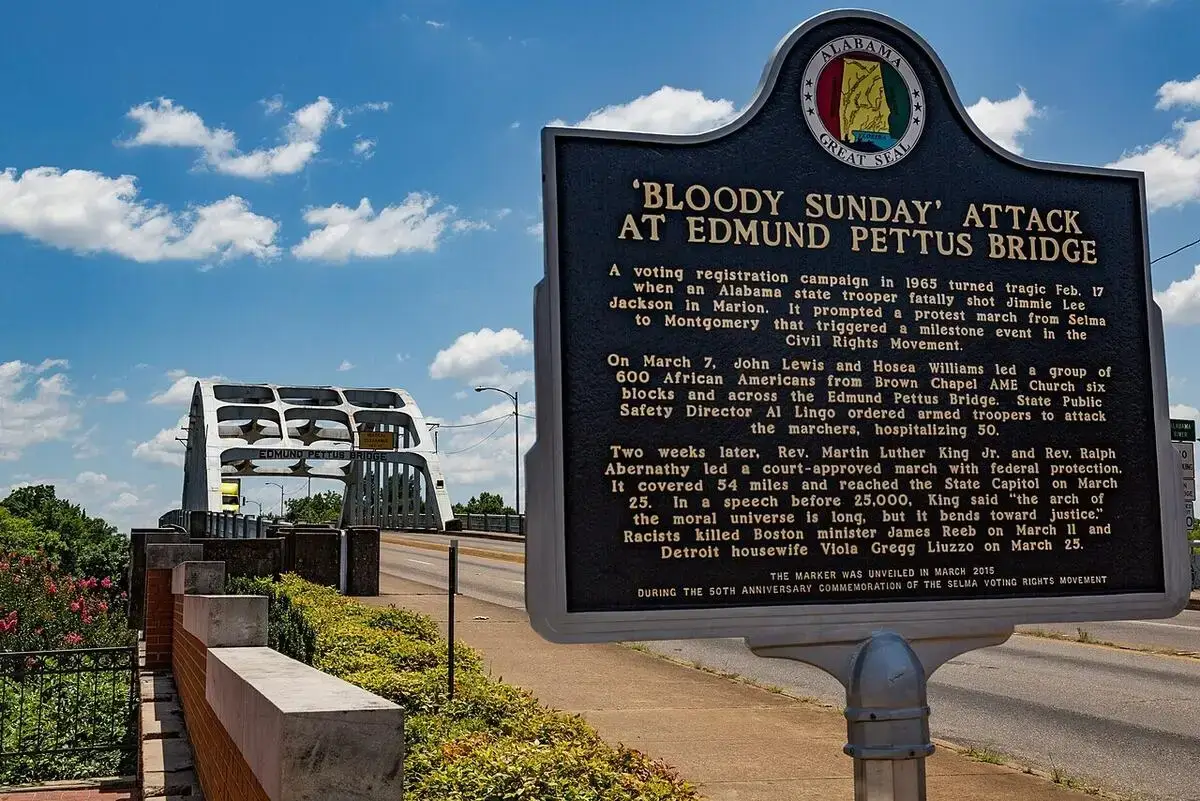
The day begins at 9 a.m. Central Time at the Edmund Pettus Bridge in Selma, where faith leaders and organizers will gather for prayer and remembrance.
Choosing that bridge is not a coincidence.
It’s where state troopers fractured John Lewis’s skull on March 7, 1965, on what became known as Bloody Sunday — and the public horror of those images is what finally pushed Congress to pass the Voting Rights Act later that year.
At 1 p.m., the action moves to the steps of the Alabama State Capitol in Montgomery for a national rally. Rev. Dr. Bernice A. King, CEO of The King Center and daughter of Martin Luther King Jr. and Coretta Scott King, is among the headline speakers. Cities across the country are holding satellite rallies for people who can’t make it to Alabama.
Wisdom Cole, senior national director of advocacy for the NAACP, told The Root that this is the start of a sustained campaign, not a one-day catharsis: “Black folks from across the country are gonna be busing in, flying in, to show up and to really begin organizing to turn out in the November election.”
What the Court Actually Did

For people who haven’t followed the case closely, here’s the plain version of what happened.
The Voting Rights Act was passed in 1965 to stop states — particularly in the South — from using literacy tests, intimidation, violence, and gerrymandered maps to keep Black Americans from voting.
Section 2 of the law specifically banned voting practices that discriminate on the basis of race, and over the decades it became the main tool used to challenge maps drawn to dilute the power of nonwhite voters.
In Louisiana v. Callais, the Supreme Court’s conservative majority ruled that Louisiana broke the law when it created a second majority-Black congressional district — a district drawn specifically to comply with the Voting Rights Act. The 6-3 decision essentially declares that drawing districts to give Black voters fair representation is itself unconstitutional racial discrimination.
The dissent, and most civil rights legal scholars, argue this turns the Voting Rights Act inside out: a law written to protect Black voters is now being used to dismantle the districts that gave them representation in the first place.
Within days of the ruling, Republican-controlled states began rushing to redraw their maps. Alabama Governor Kay Ivey called a special legislative session. Louisiana Governor Jeff Landry postponed his state’s congressional primaries — even though tens of thousands of absentee ballots had already been cast.
Asked on camera what would happen to those ballots, Landry said they would be “discarded,” and called it “not a big deal.”
It is a big deal. Voting rights groups estimate that across ten Southern state legislatures, Republicans could gain more than 190 seats currently held by Democrats — most of them Black representatives in majority-minority districts.
Why it Matters Beyond the South
The fallout doesn’t stop at congressional maps. The ruling also applies to state legislative districts and to county and municipal elections — meaning school boards, city councils, and statehouses across the country are also fair game for redistricting that wipes out Black political power.
Kristen Clarke, the former head of the Justice Department’s Civil Rights Division under Biden and now general counsel for the NAACP, has called it a return to Jim Crow conditions, and warned that the Trump administration is simultaneously pushing to take federal control of elections in at least eight states.
The math is straightforward and ugly: if you can’t win an argument with voters, you change who counts as a voter.
A New Generation, the Same Fight
What’s striking about today’s mobilization is the deliberate decision to root it in the geography and the language of the original civil rights movement. The “All Roads Lead to the South” framing isn’t nostalgia.
It’s a statement that the South — the place where the right to vote was hardest won, and where it’s being dismantled fastest — is where the next chapter has to be written.

The coalition has framed this as the start of a Freedom Summer-style organizing push that will run through the November midterms: voter mobilization, civic education, economic pressure, legal advocacy, and direct action.
It’s also being backed by the No Kings coalition, the broader pro-democracy network that has organized against authoritarian overreach by the Trump administration.
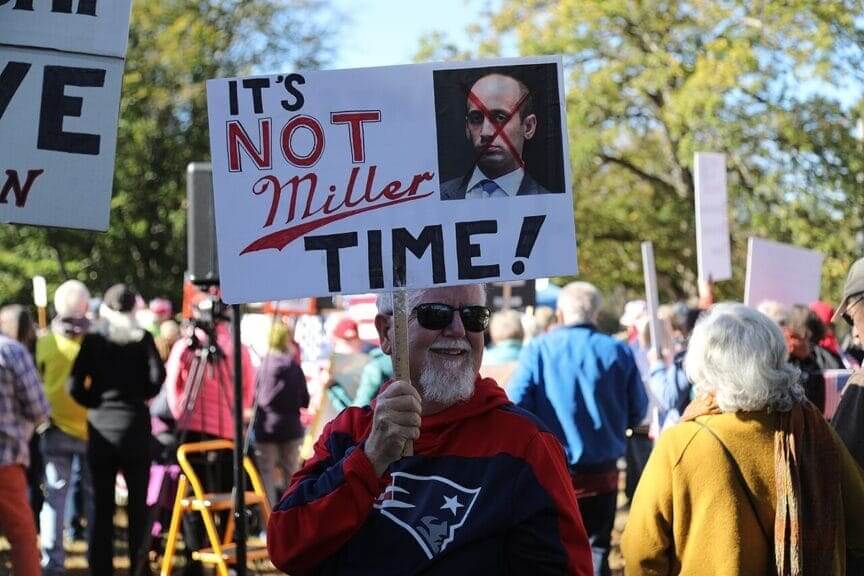
NAACP President Derrick Johnson framed the stakes bluntly in an interview with the Associated Press: “How do we as a country really address the effort to shrink us backwards into a 1950s reality?”
That’s the question today’s rally is meant to answer — not with a single answer, but with bodies in the street, on a bridge, on the steps of a Capitol, refusing to let the answer be silence.
How to Plug in
For people not in Alabama, satellite actions are happening in cities across the country. Black Voters Matter, the NAACP, the Leadership Conference on Civil and Human Rights, and the ACLU all have event listings and ways to get involved.
The work after today — registering voters, fighting redistricting in court, pressuring Congress to pass the John Lewis Voting Rights Advancement Act — is what determines whether this moment turns into a movement.
The Voting Rights Act was never a gift. It was extracted, with blood, from a country that didn’t want to give it. Today [Saturday] is a reminder that what was won that way can also be lost that way — and that the people who built it are still here, and they brought their grandchildren.