
With the midterms barely six months away, an extraordinary effort is underway to tilt the playing field before a single vote is counted. The Trump administration, congressional Republicans, and a 6-3 conservative Supreme Court are working in parallel — and at times, in concert — rigging elections, rewriting the rules, redrawing the maps, and reshaping who gets to participate in American democracy.
When Trump claims the Democrats are “rigging elections,” it’s projection.
Here are seven of the most consequential moves happening right now.
1. The Supreme Court Just Gutted the Voting Rights Act
On April 29, the Supreme Court handed down its decision in Louisiana v. Callais, ruling 6-3 that Louisiana’s congressional map containing two majority-Black districts was an unconstitutional racial gerrymander. Justice Samuel Alito wrote the majority opinion. Justice Elena Kagan, in dissent joined by Justices Sotomayor and Jackson, said the ruling renders Section 2 of the Voting Rights Act “all but a dead letter.”
Section 2 has been the backbone of federal voting rights enforcement for sixty years. It allowed Black and brown voters to challenge district maps that diluted their voting power, even without proving discriminatory intent. That backstop is now functionally gone. Analysts at the New York Times estimate the ruling could flip up to twelve House seats from Democratic-leaning to Republican-leaning across the South — effectively rigging elections ahead of the 2026 Midterms.
Within twenty-four hours of the decision, Louisiana’s Republican governor announced the state would suspend its May 16 primary to redraw the map. Trump posted on Truth Social that Tennessee would be next. Georgia’s governor said he’d consider it.
2. States Are Racing to Redistrict Before November
The mid-decade redistricting frenzy didn’t start with Callais — it started with Texas last year, when Trump pressured the legislature to redraw maps already approved after the 2020 census. California countered with Proposition 50. Now, with Section 2 hollowed out, the brakes are off. Republican-controlled states across the South are rushing to get new maps in place before November, knowing that courts are reluctant to intervene in election rules this close to a vote.
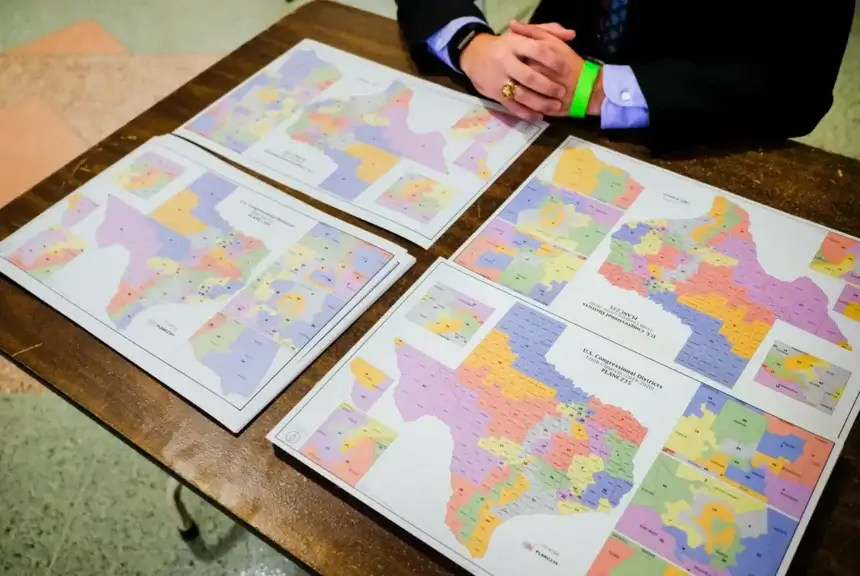
The math is brutal and intentional: even a handful of redrawn districts could be enough for Republicans to keep the House.
3. An Executive Order to Seize Control of Mail-In Voting
On March 31, Trump signed an executive order titled “Ensuring Citizen Verification and Integrity in Federal Elections.” It directs the Department of Homeland Security to compile lists of “approved” voters and instructs the U.S. Postal Service to refuse delivery of mail ballots from voters not on those federal lists.
There is no constitutional basis for this. Article I, Section 4 of the Constitution gives election authority to the states and Congress — not the president. At least four lawsuits have been filed, including one from a coalition of twenty-three Democratic state attorneys general and another from the League of Women Voters.
A nearly identical Trump executive order was struck down in court last year. If implemented even briefly, this one would threaten the ballots of military service members overseas, Americans abroad, elderly voters, and voters with disabilities who rely on mail voting.
4. The SAVE Act: Documentary Proof of Citizenship to Register
The Safeguard American Voter Eligibility Act passed the House in February and is currently being debated in the Senate. It would require every American to present documentary proof of citizenship — a passport or birth certificate — in person to register to vote or update an existing registration. Driver’s licenses, including REAL IDs, would not qualify.

The numbers tell the story. Roughly 146 million Americans don’t have a valid passport. According to the Brennan Center, more than 21 million voting-age citizens lack ready access to citizenship documents. As many as 69 million American women don’t have a birth certificate matching their current legal name because they changed it at marriage. Online and mail registration would effectively end.
Voter registration drives would become nearly impossible. Election workers could face up to five years in prison for registering someone with the wrong paperwork.
Utah recently audited more than two million voter records over nine months and found exactly one case of noncitizen registration and zero noncitizen votes. The problem the SAVE Act claims to solve does not meaningfully exist. The barriers it would create absolutely do.
5. The DOJ Is Suing States to Seize Voter Data
The Department of Justice has sued thirty states and the District of Columbia for refusing to hand over their complete, unredacted voter rolls — including driver’s license numbers and partial Social Security numbers. In some cases, like California, demands extended to party affiliation and voting history. Five federal courts have already dismissed these lawsuits on the merits.
According to former DOJ attorney Justin Levitt, each of the seventeen state voter rolls already collected represents “a criminal violation” of federal privacy law. The Justice Department’s own privacy officer in the Civil Rights Division resigned in April as the agency prepared to transfer that data to the Department of Homeland Security.
Two former DOGE staffers were referred to a watchdog for potential Hatch Act violations after they communicated with a political advocacy group about matching Social Security numbers against voter rolls to hunt for fraud.
6. Building a National Voter Database Through the Back Door
The DOJ plans to run state voter rolls against DHS’s SAVE system — a database originally built to verify immigration status for public benefits, not for elections. Common Cause sued the DOJ on April 21 to block the creation of what amounts to a national voter database. The plaintiffs cite Anthony Nel, a Texas voter whose registration was wrongly canceled after the SAVE system flagged him as a noncitizen.
Internal documents obtained through public records requests show DOGE personnel coordinating with an outside organization that helped fuel 2020 election conspiracies, sharing password-protected voter data in what the documents describe as a covert arrangement. The Privacy Act was written specifically to prevent the federal government from compiling exactly this kind of consolidated database on American citizens.
7. Manufacturing Doubt for What Comes After
Even bills that won’t pass are doing political work. The SAVE Act needs sixty Senate votes and is unlikely to clear the filibuster. But Senate Majority Leader John Thune has already said the bill will become a campaign issue if it fails. The point isn’t passage — it’s pretext.
If the SAVE Act dies and Republicans lose seats in November, the groundwork has already been laid to claim the results were tainted by fraud committed by voters who weren’t required to prove citizenship.


This is the throughline connecting all seven moves. Each one creates a basis for contesting outcomes the administration doesn’t like. Voter rolls labeled unreliable. Mail ballots labeled suspect. Districts labeled illegitimate. Whatever happens in November, the machinery to dispute the result is being assembled in plain sight.
The defenses are still working. Courts have struck down Trump’s earlier voting executive order, dismissed five DOJ voter-data lawsuits, and twenty-three states are now in active litigation against the latest order. State attorneys general, civil rights organizations, and election officials are doing the unglamorous, essential work of holding the line.
But the volume and velocity of Republicans’ attempt at rigging elections matters. With every executive order, every lawsuit, every redrawn map, the burden shifts onto voters and the people defending them to prove the system still works.
The 2026 midterms will not be a normal election. They will be a stress test of whether American democracy can function while one of its two major parties is actively rigging elections to bend the rules in its own favor — with the highest court in the land providing cover.