

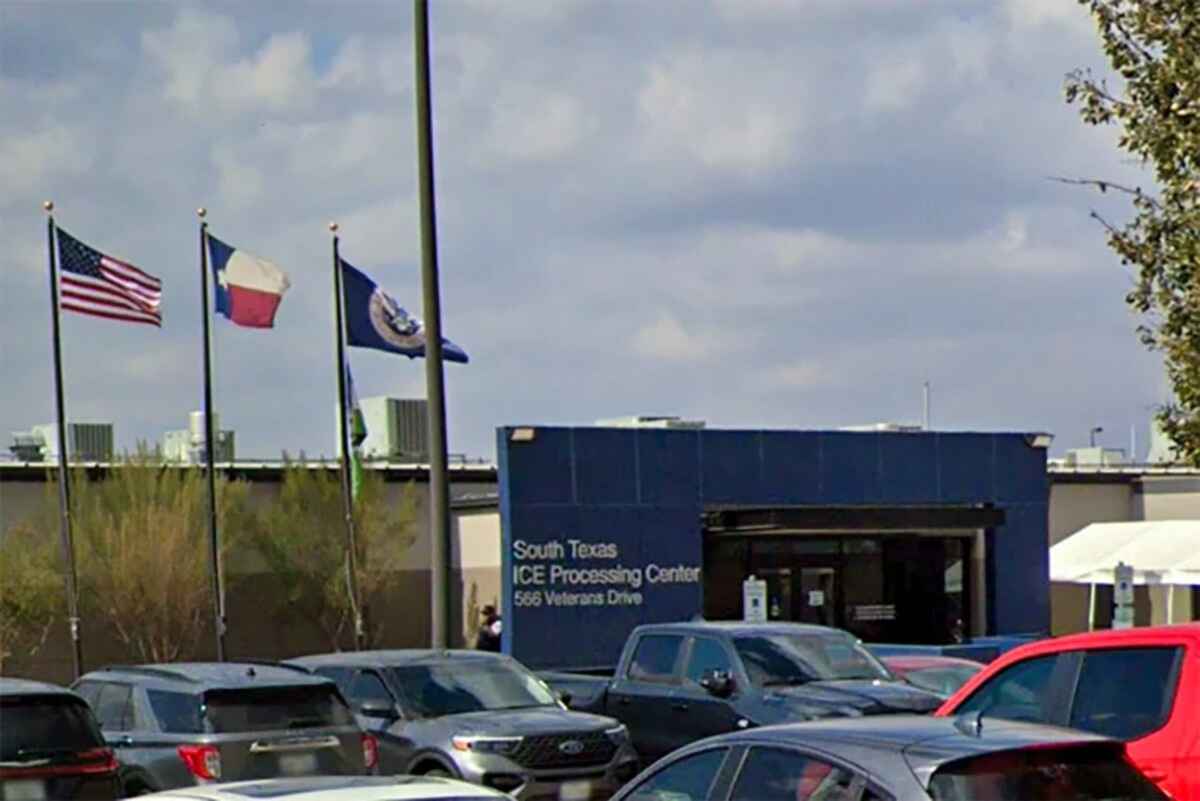

Four days before Christmas, a 33-year-old pregnant woman in an ICE detention center in Texas began banging her head against the wall.
Guards tried to put her in a vehicle to take her to the hospital. She refused. So they called 911.
That call, made from a GEO Group-run facility in South Texas, was one of more than 1,000 emergency requests placed from just six immigration detention centers over the past year. NBC News obtained the detailed logs.
Twenty-eight of those calls involved serious incidents of self-harm. One man swallowed a razor blade. Another drank cleaning chemicals. At least three cut their own wrists.
This is what the Trump administration’s mass detention policy looks like from the inside.
The Numbers ICE Doesn’t Want You to See
There have been five successful suicides in ICE detention so far in 2026. The year isn’t even half over. That is the highest number in two decades.
Over the entire four years of the previous administration, which held roughly half as many people in detention, there were two suicides total. Five months into this year, the count is already two and a half times that.
The total number of deaths in ICE custody tripled from 2024 to 2025. The detention population has roughly doubled, from about 34,000 under the Biden administration to nearly 60,000 today. Average detention length has jumped from 36 days to 50.
NBC News only got call logs from six jurisdictions in Washington, California, Georgia, Michigan, and Texas. There are sixteen large detention centers nationwide.
The 28 documented self-harm incidents are almost certainly a significant undercount.
And the Department of Homeland Security wants you to know that this is fine.
“Consistent with data over the last decade, as of April 30, death rates in custody under the Trump administration are 0.009% of the detained population,” a DHS spokesperson told NBC News. “As bed space has rapidly expanded, we have maintained a higher standard of care than most prisons that hold U.S. citizens — including providing access to proper medical care. For many illegal aliens this is the best healthcare they have received their entire lives.”
Read that last sentence again. The official position of the United States government, in response to a documented spike in suicides and self-harm, is that the detainees should be grateful.
What Was Actually Happening Inside
Gabriel Leiva was being held at a Michigan ICE detention facility when staff removed him from his pod with other detainees for being unruly. As he was shackled and handcuffed, he asked the staff to kill him.
They put him in solitary confinement. He covered the window, started kicking the door, then fashioned his clothes into a noose. Guards found him in time and called 911.
When police arrived, Leiva told them he didn’t understand why he had been taken away from the other detainees. The responding officer’s report contains a single devastating line:
“No one has told him why he is by himself.”
ICE told NBC News there is no longer anyone by that name at the North Lake facility.
At a Michigan facility, another detainee refused his psychiatric medications, stopped eating for eight days, and collapsed in his cell. The call logs document at least 39 emergency calls involving inmates in “acute psychosis” or an “altered mental state.”
Victor Manuel Diaz was arrested on an immigration violation in Minneapolis on January 6 and transferred to Camp East Montana in El Paso, Texas. Eight days later, ICE reported him dead by suicide.
His family spoke with him by phone shortly after he arrived at the facility. He seemed okay. They do not believe he killed himself.
Diaz’s autopsy was not performed by the local coroner. Instead, a military coroner conducted it, and military coroners typically do not release their findings publicly, citing “sensitive operations.” The family has now ordered a second autopsy and is awaiting results.
“The family is deeply suspicious,” said Randall Kallinen, the attorney representing them.
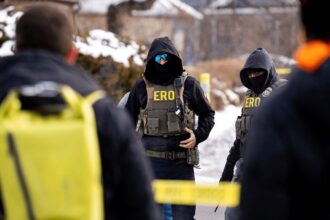

Their suspicion is not paranoid. At the same El Paso facility, another death was initially announced as a “presumed suicide.”
Later the local coroner determined it was actually a homicide. The FBI and the inspector general are now investigating.

The Suicide Prevention Standards Nobody Follows
ICE has a policy on the books. Detainees deemed at risk of suicide are supposed to be monitored every 15 minutes. Staff are supposed to receive annual suicide prevention training. Only clinicians, not custody officers, are supposed to remove someone from suicide watch.
That’s the policy. Here’s the practice.
The most recent suicide in ICE custody happened earlier this month at the Stewart Detention Center in Georgia, which is operated by CoreCivic, a private prison company. According to an ICE inspection from March 2025, Stewart had failed to complete suicide prevention training for all staff.
The facility had also failed to conduct the required 15-minute checks on suicidal detainees. In some cases, officials waited 125 minutes between checks.
That’s more than two hours. A determined person needs about four minutes.
Nationwide, ICE inspectors have documented 19 separate instances since the start of Trump’s second term in which detention facilities failed to meet suicide prevention standards. Nineteen facilities, knowingly out of compliance, while the detained population doubled.
Dr. Sanjay Basu, an epidemiologist and physician at the University of California, San Francisco, who has researched ICE deaths, told NBC News these deaths are “highly preventable” with early assessments and regular monitoring.
The standards exist. They are simply not being followed.
According to a senior DHS official who spoke to NBC News anonymously, no new guidance has been put in place on how to handle immigrants at risk of self-harm in light of the recent cases. They do not care.
Five suicides this year. Triple the deaths from the year before. And no new internal guidance.
Less Oversight, More Detention
While the detained population has doubled, the inspections of these facilities have collapsed.
At least four offices within DHS conduct ICE inspections. Two of them have been gutted.
When Representative Mike Levin (D-California) made a surprise visit to ICE’s Otay Mesa Detention Center in San Diego, he was handed a new policy: he could not speak to any detainee unless he provided their names two days in advance and obtained a signed permission form.
A surprise inspection by a sitting member of Congress, now requires 48 hours of notice and individual paperwork.
“It’s just making it difficult, more difficult for us to do our jobs to be able to see what’s really going on inside these facilities,” Levin told NBC News. “Keeping people in the dark is how we got into this mess in the first place.”
He’s right, and the policy is the point.
The DHS Office of Inspector General typically conducts between four and six unannounced inspections per year. A recent $20 million funding increase is projected to boost that tenfold.
Whether those inspections produce any consequences when standards are violated remains to be seen, because so far the documented violations at facilities like Stewart have not produced any.
Who is Actually Detained
More than 20,000 people currently in ICE custody have no criminal background beyond their immigration violation itself. They overstayed a visa. They crossed the border without papers. That is the entirety of the offense.
Of the nine suicides during Trump’s second term, all were men, ages 19 to 45. Three had histories involving violent crime. Four had nonviolent records like driving without a license or disorderly conduct. Two had no criminal record at all.
A pregnant woman banging her head against a wall four days before Christmas. A man asking guards to kill him because he didn’t understand why he was being moved. A father whose family does not believe the cause of death listed on his official paperwork.
Simon Sandoval-Moshenberg, an immigration attorney in Maryland, recently had a client released after 11 months in detention. That length of detention would have shocked him a few years ago. Now it is routine.
“The issue is not just the terrible god-awful conditions in the detention centers,” he said. “It’s the feeling of not knowing when or even if people will get out of those conditions.”
He believes the self-harm incidents would decline “if people had an end date in sight, even if they didn’t know what the outcome would be.”
What This Actually is
The official position is that the deaths are tragic and rare, that the healthcare is excellent, that the percentages are small. The percentages are small because the denominator is now nearly 60,000 people.
The deaths are not rare. They are the highest in twenty years and climbing.
The suicide prevention standards exist on paper and are violated in practice.
The inspectors who would catch the violations have been gutted.
The members of Congress who could spot-check the facilities are being handed new paperwork requirements.
The autopsies are being handled by military coroners who do not publish their findings.
The detention is being extended indefinitely with no end date in sight.
This is a system functioning as designed. The cruelty is not a malfunction. It’s the point. The opacity is not a bureaucratic accident.
People in custody are being driven to the edge of what a human mind can bear, and then past it, and the policy response is a press statement about how grateful they should be for the medical care.
Five people are dead. The year is not half over.
If you or someone you know is in crisis, call or text 988 or go to 988lifeline.org to reach the 988 Suicide & Crisis Lifeline.