

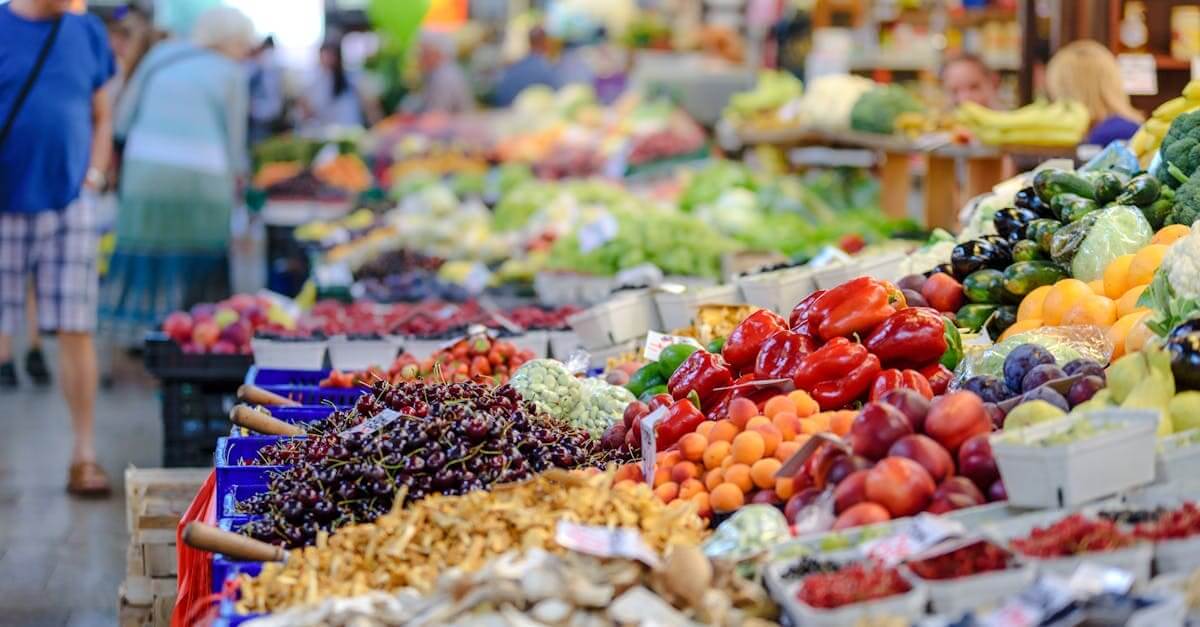

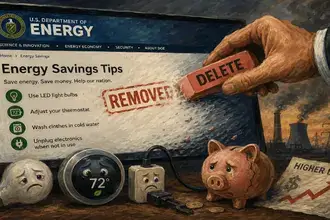
We know tariffs raise food prices for consumers. President Trump doesn’t seem to understand this, but most Americans do. According to an article from Grist, tariffs could also increase food waste.
People began searching for information on tariffs after Donald Trump won the 2024 election. Even Zany got in on the tariff action and published an article educating the public about what tariffs are, what they do, and how they will affect consumers.
Food prices will go up as a result of some of President Trump’s tariffs. Mass deportation is another policy of this administration that will drive up food prices.
Mass deportations will also result in certain jobs, normally performed by human workers, being replaced with automation (employers would rather do this than increase wages to attract American workers), and rob the federal government of billions in tax revenue from working undocumented immigrants. They paid over $96 billion in federal, state, and local taxes in 2022.
Republicans like to scare people by claiming that undocumented migrants are stealing benefits away from the American people. In reality, these undocumented farmworkers and those working in the service or construction industry, pay into Medicare and Social Security when they will never benefit from those programs.
For the party that talks about how the Social Security program will run out of money, they certainly aren’t helping by taking away billions in yearly contributions to the program from undocumented workers.
Spring has sprung, and you can tell by looking at Dig’s online menu. The fast-casual chain known for its bountiful salads and bowls is promoting a new sandwich for the spring — the “avo smash,” wherein a hearty piece of chicken or tofu is embraced by a brioche bun, pesto aioli, and plenty of bright-green avocado.
The lunch spot’s seasonal menus are planned at least three months in advance, said Andrew Torrens, Dig’s director of supply, meaning the avo smash has been in the works for a while. However, if the United States decides to escalate a global trade war next month, Dig will have to come up with a backup plan fast.
“If avocado prices explode, what’s our backup? How do we pivot?” said Torrens on a recent phone call.
Since his inauguration in January, President Donald Trump has repeatedly threatened tariffs on imports from Mexico and Canada — creating confusion for restaurant owners, food distributors, grocers, and consumers who rely on the United States’ neighbor to the south for fruits and vegetables year-round.
On February 1, the president signed an executive order levying a 25 percent tariff on goods from Canada and Mexico. However, he has twice pushed back the start date; earlier this month, he paused tariffs on most goods coming in from Mexico and Canada until April 2. What will actually happen on that date — which Trump has dubbed “Liberation Day” — is still largely unclear.
A tariff on goods from Mexico, the single largest supplier of horticultural imports to the U.S., would almost certainly mean higher prices at the grocery store. It could also, according to experts, increase food waste along the supply chain.
Dig sources most of its avocados from Mexico, where the warm climate is ideal for growing these fruits. This is common — in fact, about 90 percent of avocados consumed in the U.S. come from Mexico, according to the U.S. Department of Agriculture. “We rely on imports, from Mexico in particular, on things like fresh fruit and vegetables in order to meet year-round consumer demand,” said David Ortega, a professor focused on agricultural economics and policy at Michigan State University.
Tariffs have the potential to send those prices soaring by raising the cost of production. But the lack of clarity around U.S. trade relations is already impacting operations in the food and beverage industry.
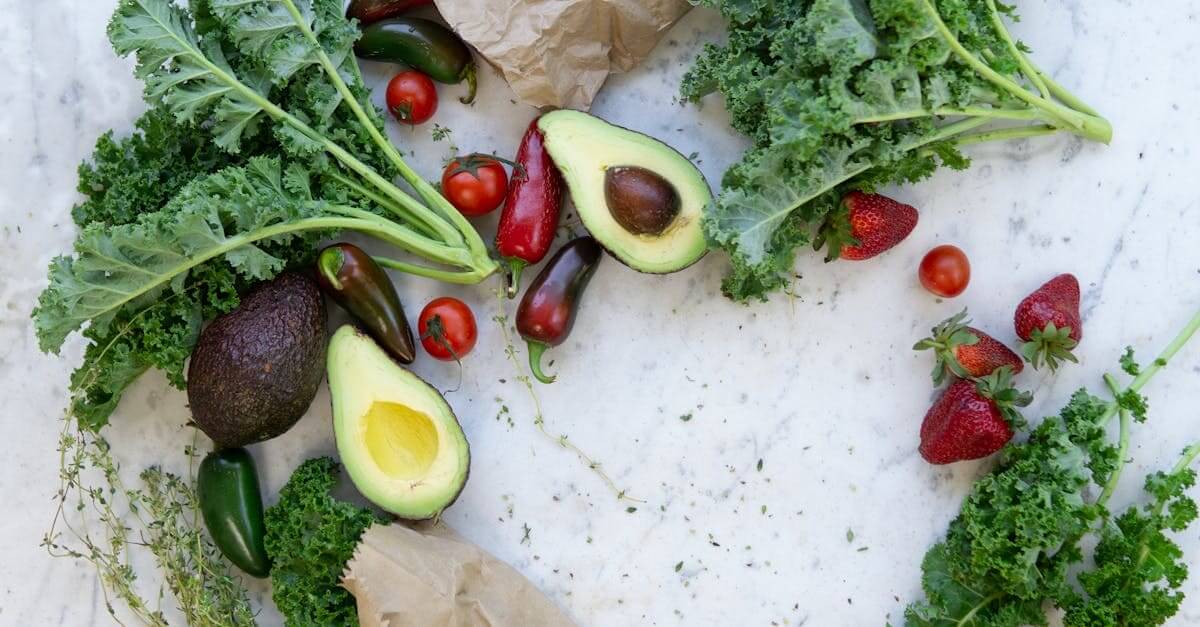
Photo by Elle Hughes via Pexels
“There’s so much uncertainty, you don’t know how to operate your business and you don’t know how to plan for it,” said Torrens. “If you knew what the new reality was, you’d adapt to it.”
Other food chains are reeling from the Trump administration’s policies. In an annual filing with the U.S. Securities and Exchange Commission, the salad chain Sweetgreen listed “international trade barriers” as one factor that could spike the cost of ingredients like avocados; it also mentioned the threat of mass deportation of undocumented workers as a supply chain disruption.
Asked about tariffs, Scott Boatwright, the CEO of the Mexican-inspired burrito giant Chipotle, told reporters that the company would not pass on higher costs to the customer. “It is our intent as we sit here today to absorb those costs,” Boatwright told NBC Nightly News on March 2, just days before Trump announced a one-month pause in tariffs for goods covered by the U.S.-Mexico-Canada Agreement, or USMCA, the trade agreement he negotiated during his first term.
Much has been written and said about the economic impacts of tariffs. One lesser-known side effect — which could also have environmental consequences — is the potential for more food loss and waste. This can happen at various points along the food supply chain, from the farm to the U.S.-Mexico border to grocery store shelves.
“I think tariffs are a bit of a supply chain disruption,” not unlike the ones felt during the pandemic, said Brenna Ellison, professor of agribusiness management at the University of Illinois Urbana-Champaign. The trouble stems from the fact that fruit and vegetables are highly perishable.
“If we’re having trouble getting them in the country because it costs more, if that creates more hesitation among U.S. buyers to get those products into the country, the clock is ticking really fast,” said Ellison. Items that normally would make their way to U.S. consumers will “go to waste quickly unless we can find some alternate use for them.”
Food loss and waste are measured by looking at how much edible food grown for human consumption doesn’t end up feeding people — whether that’s at the harvesting and processing stage or further along the way to the consumer, like in stores or kitchens.
When organic matter, like fruits and vegetables, is thrown out, it often winds up in landfills — where it emits methane, a powerful greenhouse gas, as it rots. In the U.S., a majority of wasted food — about 60 percent — goes to landfills, according to the Environmental Protection Agency. The EPA also found that every year, 55 million metric tons of carbon dioxide equivalents are emitted from food waste in landfills.


During the pandemic, there were reports of farmers leaving food to rot in the fields, as restaurants shut down and growers lost access to their regular customers. Ellison states this could happen again, if tariffs raise the price of agricultural goods to the point that growers are not confident they’ll be able to sell as much product as they’re used to and recoup the cost of harvesting.
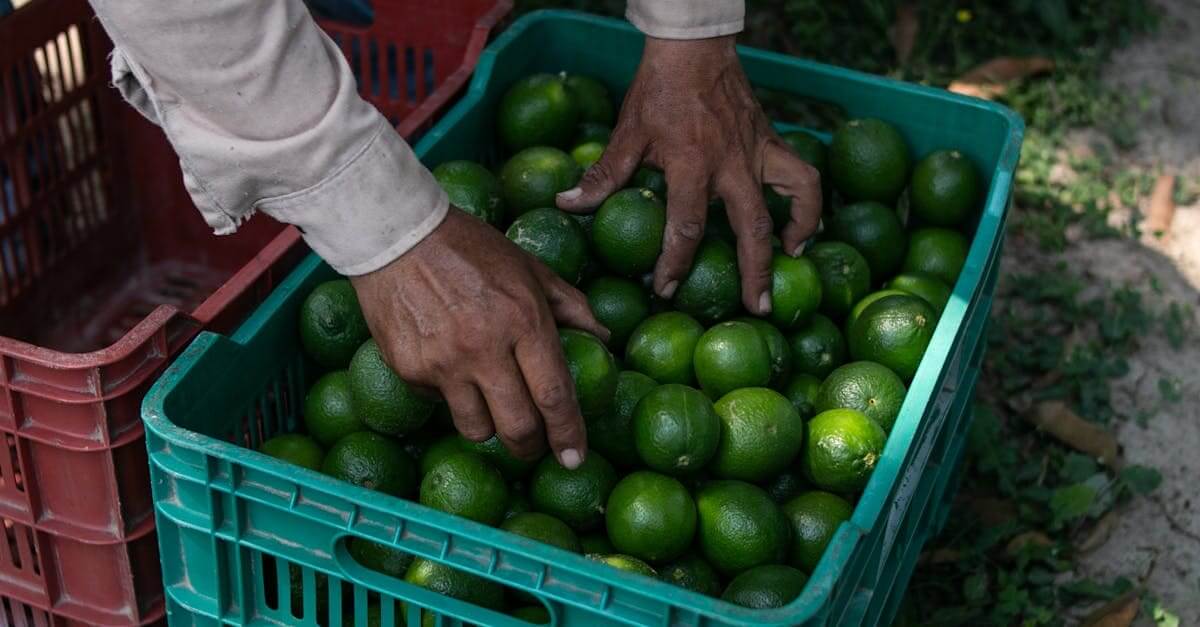
But she noted that it does not necessarily mean those crops are sent to a landfill. “In some cases, depending on the crop, it can be tilled back into the soil,” sending plant nutrients back to the earth, said Ellison.
However, more waste can happen further along the supply chain — on the way to market or in grocery stores. If tariffs lead to delays in processing at the border, that could lead to more produce spoiling before or as it meets the consumer, said Ortega. He also mentioned that when the Trump administration first announced tariffs, “a lot of importers started to do what we call ‘front-loading’; they started to get as much product over the border in an effort to beat the tariff.”
Ordering fresh produce in excess means you have to sell it. Multiple Whole Foods Market stores in New York City in mid-March had a promotion on Mexican produce, including avocados and mangos. Whole Foods did not respond to a request for comment about whether the sale was related to tariff announcements. United Natural Foods Inc. — the importer for Whole Foods — had no comment, said Kristin Jimenez, the corporation’s vice president of corporate communications.
When food is left on grocery store shelves, it can also lead to food waste, said Ellison at the University of Illinois Urbana-Champaign. That can happen when retailers over-order produce and can’t sell all of it — or when prices go up and “people just can’t afford” to buy it, Ellison added.
There’s also a chance that consumers could end up seeing more limited availability of goods as retailers try to switch up their sourcing to avoid tariffs.
While Trump campaigned on lowering the cost of goods at the grocery store, a 25 percent tariff on goods from Mexico could make basics like fruits and vegetables even more expensive. That has hunger relief organizations worried, too.
“We’re obviously concerned that anytime there’s a potential disruption in the supply chain, particularly with fruits and vegetables, it could impact our ability to feed those in need,” said Jen Cox, the chief development officer at Food Forward, a food rescue operation focused on redistributing fresh produce to food banks, after-school programs, and more. She added that tariffs could exacerbate an already challenging cost-of-living situation for many people in the U.S., leading to an increase in hunger.
The U.S. set a goal of cutting food waste in half by 2030 — we’re nowhere near that. Should tariffs drive an increase in food sent to landfills, it will be one of multiple knock-on effects that trade barriers will have on consumers. “It’s sort of a conflation of all of these situations,” said Cox. Those compounding crises — economic, social, and environmental — mean that organizations like hers could have their hands full in the coming months, working to fill the gaps that “America First” trade policies will likely create.