


Gabe Bergemann was at Phantom Ranch with his family Saturday afternoon when the sky opened at the start of the Grand Canyon flash flood.
He described it to the Associated Press as a monsoon dropping directly on the cabins.
He and roughly sixty other people were told to run — out of the cabins, across a footbridge, up and away from the water.
That footbridge, and nearly every other one spanning Bright Angel Creek, is gone now.
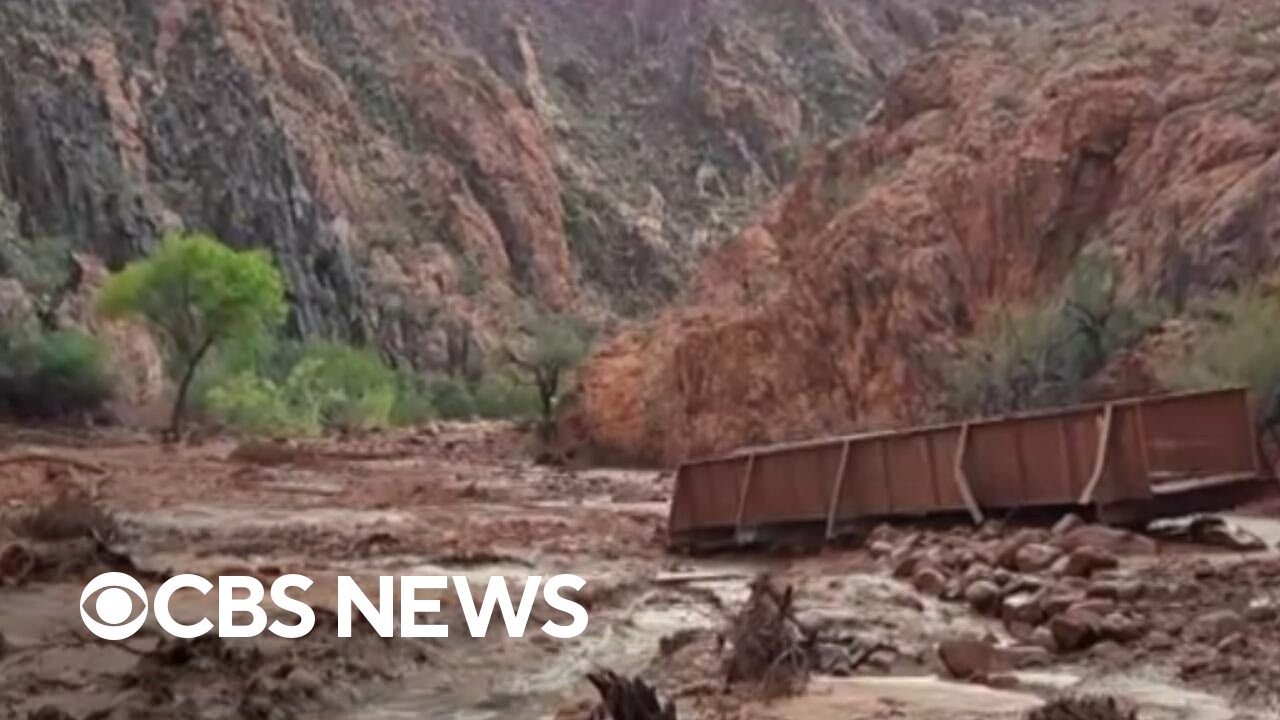
At about 2:30 p.m. on August 29, a wall of muddy water, boulders, trees and debris came down Bright Angel Canyon at the bottom of Grand Canyon National Park.
The video below is to provide footage of the Grand Canyon flash flood. The reporting is stale. Disregard the death toll and missing counts given by the news anchor.
Al Jazeera reported that 62 people were airlifted out and taken to the Maswik Lodge cafeteria on the South Rim, where the American Red Cross set up to help them.
As of Monday, the National Park Service says two bodies have been recovered and about 15 people are still missing or unaccounted for.
Hikers who went down for a weekend. Backpackers with a permit and a plan. Their families are watching the news right now, doing the math about when they were supposed to call.
What actually happened down there
The National Weather Service says three waves of rain moved through first, priming the drainages and getting the creeks running.
Then the fourth wave hit. Between half an inch and a full inch of rain fell in about thirty minutes over steep, rocky terrain that drops fast.
NWS meteorologist Justin Johndrow told the AP that almost none of it soaked in.
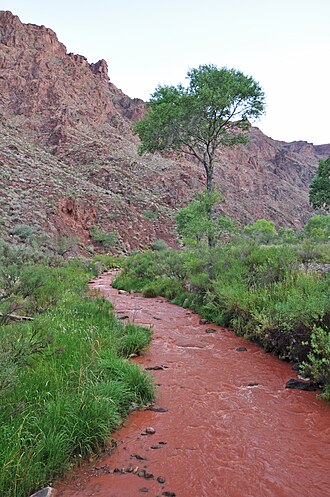
Bright Angel Creek rose more than five feet in ten minutes before the monitoring sensor itself was destroyed by the water.
Parth Desai, hiking with a group of fellow doctors and a park ranger, told the AP he watched waterfalls appear where there had been none — "boulders, mud, landslides happening everywhere."
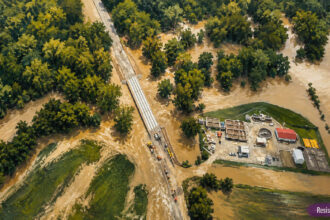
The flood widened the creek bed, carved what looks like an entirely new rapid into the Colorado River, and swept metal structures and what appeared to be pieces of a bunkhouse downstream.
Phantom Ranch, the Bright Angel Campground, the North Kaibab Trail and the Black and Silver bridges are all closed indefinitely.
Rafting on that stretch of the Colorado has been halted because of floating debris.
This risk was documented, in advance, on federal letterhead
In July 2025, the lightning-sparked Dragon Bravo Fire burned more than 227 square miles across the North Rim and destroyed the historic Grand Canyon Lodge.
Burned ground doesn't absorb rain — high-severity fire can bake soil until it repels water almost like pavement.
Everything runs off, fast, carrying whatever it picks up.
The Park Service knew exactly which watersheds were affected.
Its own Colorado River alerts page lists them by name — including Bright Angel Creek, "which flows through Phantom Ranch" — and warns of increased flash flood and debris flow risk during monsoon storms.
A post-fire assessment identified upper Bright Angel Creek as one of the steep, confined drainages most likely to produce a debris flow.
In February 2026, the park installed three new USGS stream gauges and three North Rim precipitation gauges in that watershed specifically to provide early warning for this exact scenario.
So the hazard was mapped. The monitoring was installed. And then a burn scar, a monsoon and a canyon did what the paperwork said they would do.
The park was already running on fumes
Grand Canyon National Park hosted 4,430,653 visits in 2025, making it the fourth most-visited park in the country.
It’s doing that with a badly thinned workforce.
The National Park Service has lost roughly 4,000 permanent employees — about 24% of its permanent staff — since January 2025, through firings, buyouts, deferred resignations and a hiring freeze that left the vacancies empty.
Many of the people who left did wildland fire and search-and-rescue work.
President Trump has been taking money from the NPS and using it for all of his projects in Washington, D.C. on top of the staff cuts.
Last year, Grand Canyon publicly warned visitors to expect delayed search and rescue because of limited staffing — at a park where rescues save more than 300 people a year.
The administration's FY2027 budget proposal would cut $736 million, about 20% of park operations, and roughly 3,000 more positions.
The infrastructure tells the same story.
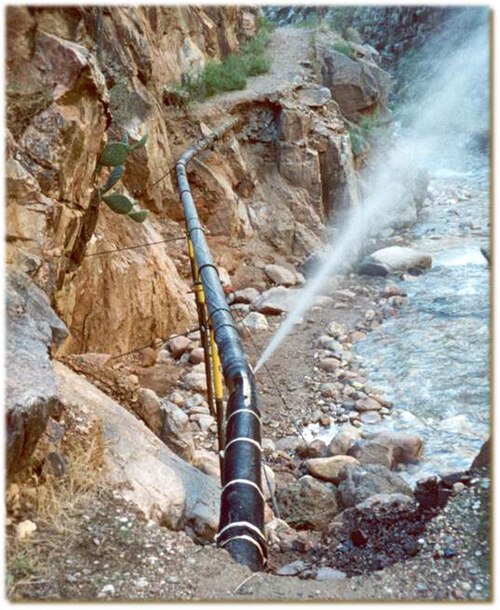
The Transcanyon Waterline — a single 12.5-mile pipe built in the 1960s that supplies drinking water to the entire South Rim and inner canyon — has suffered more than 85 major breaks since 2010.
It broke again on August 3 near Cottonwood Campground. Saturday's flood destroyed or damaged roughly 40% of it.
The park is now under Stage 4 water restrictions, and overnight stays inside the park have been suspended starting August 31.
A $208 million replacement, awarded in 2023, isn't due to be finished until 2027.
What comes next
More storms are forecast.
The National Weather Service has flagged continued risk of excessive rainfall across the Four Corners region, and forecasters are specifically worried about additional runoff off the Dragon Bravo scar.
Search and recovery crews are working in a canyon that could flood again while they're in it.
Nobody caused this rain.
Monsoons are not a policy failure.
But a hotter, drier West producing bigger fires, followed by burn scars that turn ordinary downpours into debris flows, running through parks stripped of a quarter of their staff and held together by sixty-year-old pipe — that is a set of choices.
Rangers are not a luxury line item.
Neither is a water pipeline.
Neither is the person on the other end of the radio when the creek comes up five feet in ten minutes.
Fifteen families are waiting for a phone call. The least we owe them is an honest accounting of why the canyon was unprepared.