

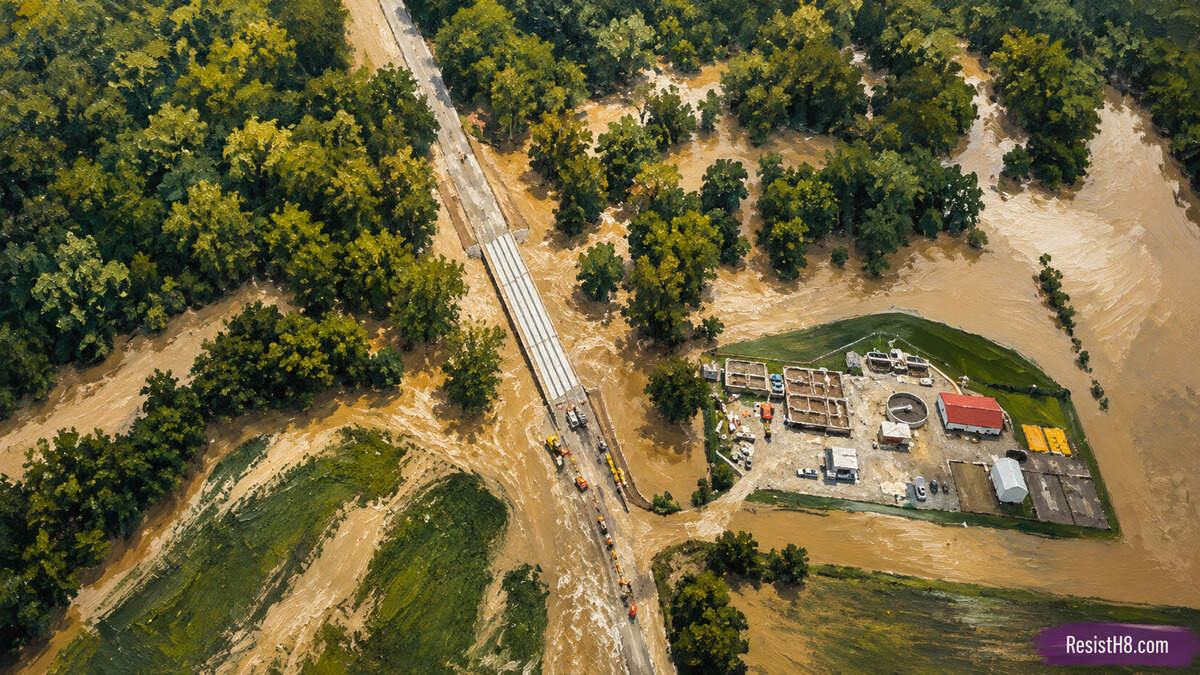

Seven people are dead after Indiana storms caused flooding, damage, and power outages. About 1,000 people are displaced. Rivers that had held their record high-water marks since 1913 broke them.
And the federal aid that would actually put Indiana families back in their homes hasn't been approved — because that decision belongs to a president who has spent his second term turning disaster relief into a favor he grants or withholds.
Eleven days that reshaped a state
It started with wind. On the morning of August 11, a thunderstorm complex rolled out of eastern Iowa and slammed into Indiana. The National Weather Service's Storm Prediction Center preliminarily classified it as a derecho — a rare, long-lived windstorm that behaves less like a thunderstorm and more like a horizontal hurricane.
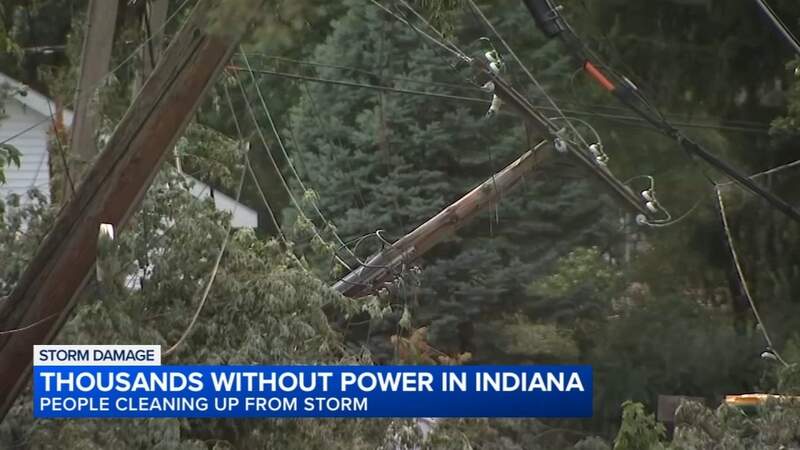
The strongest measured gust hit 99 mph in Gary. The system also spun up at least two tornadoes, dropped large hail, and knocked out power to roughly 300,000 customers at its peak.
Then the rain came, and it didn't stop.

A frontal boundary stalled over the Midwest, pinned in place by a heat dome to the south, while Gulf moisture kept feeding it. Central and southern Indiana got 6 to 9 inches in a matter of hours, with a two-day total of 11.5 inches recorded near New Lisbon in Henry County. CNN reported that parts of the state experienced a 1-in-1,000-year rainfall event on August 12.
Water that fell on saturated ground had nowhere to go but into the rivers. The White River at Anderson crested at roughly 24.93 feet, surpassing the 23.6-foot record set during the Great Flood of 1913. Noblesville set a new record too. By August 15, the crest reached Indianapolis, where the Ravenswood gauge topped 16.53 feet — more than two feet above the 2013 record. Mayor Joe Hogsett told residents of Ravenswood and Rocky Ripple to get out immediately.
The people, not the numbers
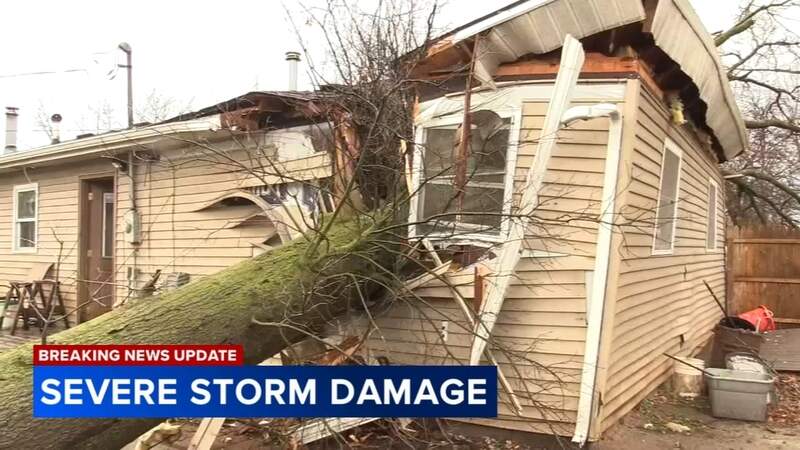
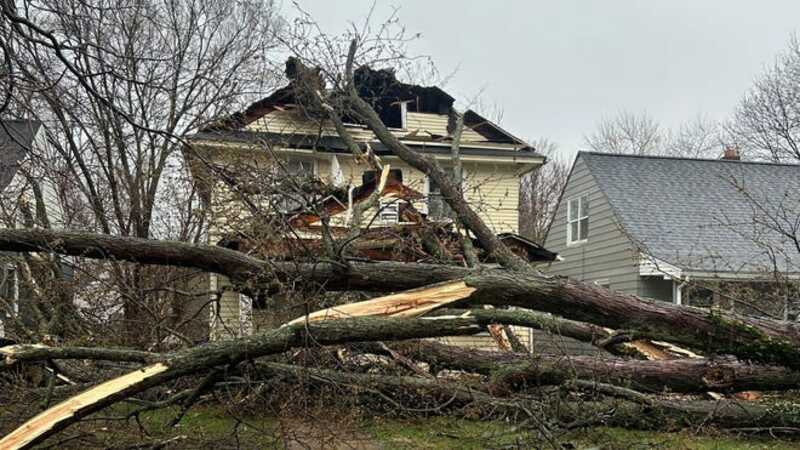
In Jennings County, a 4-year-old boy was killed when a tree came through his bedroom during the windstorm. In Delaware County, sheriff's deputies recovered the body of 18-year-old Matthew Morey, an incoming Purdue freshman who went missing after entering the swollen Mississinewa River. A woman died trying to drive through floodwater. Five more Hoosiers were lost across Lake, Porter, LaPorte, and Henry counties.
In New Castle, Cyndee Gillmore watched five feet of water move through the campground and retreat center she runs. "I'm standing in my house right now and it smells to high heaven, but it's just stuff," she told NPR. "Everybody is pitching in and the community is supporting one another and it's beautiful to see."
Delaware County emergency management had to warn residents that the floodwater itself was hazardous, carrying sewage, gasoline, and other chemicals capable of releasing toxic gases. The Yorktown Public Library took on a foot of water. In Connersville, salon owner Alissa Gerber lost her home entirely and told Free Press Indiana she's leaning on donations, not the government. "We're gonna at least apply for it," she said of federal aid. "It doesn't hurt to at least try."
What Indiana has, and what it doesn't
Gov. Mike Braun issued a statewide disaster declaration on August 13. On August 15, President Trump approved an Emergency Declaration covering 53 counties.
That sounds like the cavalry. It isn't — not yet.
An emergency declaration unlocks up to $5 million and lets FEMA do things like clear roads, help with search and rescue, and restore emergency power. It is limited to direct federal assistance for governments. Not one dollar of it reaches a family whose furnace is full of river mud.
The money that helps people — temporary housing, home repairs, replacing a car or a crib — requires a major disaster declaration, which only the president can grant. Braun's administration submitted the request after joint damage assessments with FEMA, and he expects an answer within about ten days. He's also warned that this kind of assistance is "not offered very often."
Indiana received a major disaster declaration last year for spring tornado and flood damage — and FEMA provided no individual assistance at all, restricting the money to local governments and nonprofits.
Braun says the state's $4 billion reserve can cover relief if Washington declines. The state has already opened its own disaster relief fund and is issuing housing vouchers through the Indiana Housing and Community Development Authority. Hoosiers with damage should call 211 or 866-211-9966 — and should not contact FEMA yet, because premature applications can delay assistance later.
Indianapolis
Federal disaster aid used to be boring. A state met a damage threshold, FEMA verified it, the president signed. Presidents of both parties approved all 69 qualifying state requests for snow assistance since George W. Bush, with one exception involving a fraud investigation.
That norm is gone.

An Associated Press analysis found Trump has approved about 80% of disaster requests from Republican governors and roughly 60% from Democratic ones, and has taken longer to decide than any president since 1989.
In July, POLITICO obtained emails and more than 150 pages of state documents showing Trump denied aid to New York, New Jersey, Massachusetts, and Rhode Island after FEMA and NOAA regional offices confirmed all four met federal thresholds following February's record blizzard.
Maryland's appeal after historic flooding was denied outright, with Gov. Wes Moore noting FEMA had validated roughly three times the state's damage threshold. Illinois has been rejected twice.
Shouldn't a president of the United States who refuses to provide for and protect a majority of the country face impeachment? If that isn’t a “dereliction of duty,” what definition is Congress using?



Red states aren't immune. Arkansas Gov. Sarah Huckabee Sanders — Trump's own former press secretary — had to publicly beg him to reverse a denial after tornadoes killed three people in her state.
The administration isn't hiding the strategy. Trump and former Homeland Security Secretary Kristi Noem had repeatedly floated eliminating FEMA, and a National Security Council spokesman told Stateline the federal government should focus only on "truly catastrophic disasters" while accusing state and local governments of being "an impediment to their own community's resilience."
Indiana is a red state with a Republican governor, which improves its odds.
The flood maps are lying, too
Here's the quieter scandal. Many of the Hoosiers standing in ruined living rooms right now don't have flood insurance, because FEMA's maps told them they didn't need it.
An NPR investigation found those maps have failed for decades to account for rainfall and flash flooding, relying instead on coastal storm surge and large-river data — even as a warming atmosphere holds more moisture and dumps it faster. First Street, a climate risk modeling firm, found more than twice as many Americans live in dangerous flood-prone areas as FEMA's maps show.
When Hurricane Helene hit western North Carolina in 2024, 98% of damaged homes fell outside FEMA's mapped floodplains. Most owners had no coverage to claim.
Indiana's physical defenses have the same problem. Levees, floodgates, and bridge clearances across the state were calibrated against the 1913 flood, which stood as the worst case for 113 years. This August broke it — over the summer, without a drop of snowmelt.
What this is, for real
This wasn't a freak event. It was a 1-in-1,000-year rainfall in a state whose infrastructure was built for a 1913 worst case, mapped by an agency using outdated risk models, in a country where the president has made emergency aid conditional on his own preferences.
Seven Hoosiers are dead. A thousand are out of their homes. Whether they get help shouldn't depend on politics, and increasingly, it does.
How to Help
Hoosiers with storm damage can report it through Indiana 211 at 211 or 866-211-9966. Farmers should report agricultural losses to their local USDA Farm Service Agency.
Those looking to support recovery can give through the American Red Cross of Indiana or local United Way chapters, which are funding shelter and cleanup on the ground.