


WASHINGTON — After approximately three months away from the Senate following a fall, hospitalization and rehabilitation, Sen. Mitch McConnell returns!
He returned to Capitol Hill Monday, proving once again that neither illness, gravity nor the passage of geological time can permanently separate the Kentucky Republican from the United States Senate.
McConnell, 84, arrived in a wheelchair and cast his first Senate vote since June.
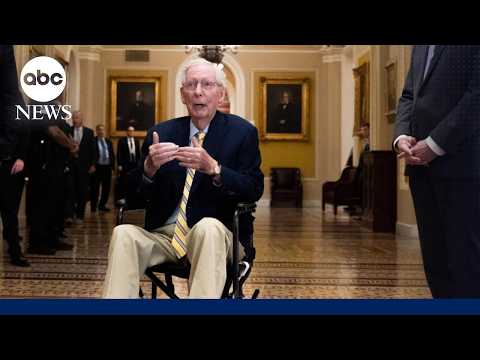
“Time to get back to work, finish the job for this Congress,” McConnell told reporters.
Which raises an important question:
What job?
Congress has been trying to finish approximately seven jobs since 1789.
McConnell’s return ends months of speculation about his health and whereabouts, during which Americans received occasional updates from his office while the senator remained largely out of public view.
For most politicians, disappearing from Washington for three months would constitute a major political crisis.
For Congress, apparently, it constitutes working remotely.
The Senate’s Most Durable Office Fixture Returns

(Sen. McConnell's Office)
McConnell was first elected to the Senate in 1984.
For perspective, when Mitch McConnell entered Congress, Ronald Reagan was president, “Ghostbusters” was in theaters, the original Macintosh computer had just been introduced, Mark Zuckerberg was an infant, and congressional legislation was presumably delivered by carrier pigeon.
McConnell has now served in the Senate for more than four decades, including 18 years as Republican leader, making him less a senator at this point than a load-bearing component of the Capitol.
Historians believe that if McConnell were ever permanently removed from the building, engineers would first need to install temporary support beams.
His current term ends in January 2027, and McConnell has already announced he will not seek another one.
This means Washington is approaching something previously believed impossible:
A United States Senate without Mitch McConnell.
The Congressional Budget Office has reportedly been asked to determine whether such a thing is constitutionally permitted.
“Not Quite Back to 100%”
McConnell acknowledged Monday that his recovery has been difficult and that he remains “not quite back to 100%.”
That part deserves seriousness.
McConnell survived polio as a child, and its lingering effects have contributed to mobility problems throughout his life. His recent fall required hospitalization, rehabilitation and continued physical therapy.
Nobody deserves ridicule for aging, disability or illness.



Fortunately, Mitch McConnell has provided approximately 40 years of political material that requires none of those things.
This is, after all, the man who transformed obstruction into an artisanal craft.
McConnell didn’t invent the Senate blockade.

He perfected it.
Other politicians obstruct legislation. McConnell could obstruct Tuesday.
If Democrats introduced a resolution declaring that puppies are adorable, McConnell could somehow send it back to committee until 2034.
The Man Who Stole a Supreme Court Seat Has Returned to Finish Some Paperwork
McConnell’s legacy is already enormous.
And by “enormous,” we mean constitutional-law professors will be fighting about it until the sun burns out.
In 2016, McConnell refused to allow President Barack Obama’s Supreme Court nominee Merrick Garland to receive a confirmation hearing, arguing that voters should have a say because it was an election year.
Four years later, when Justice Ruth Bader Ginsburg died weeks before the 2020 presidential election, McConnell discovered an exciting new constitutional doctrine known as:
Never mind what I said before.
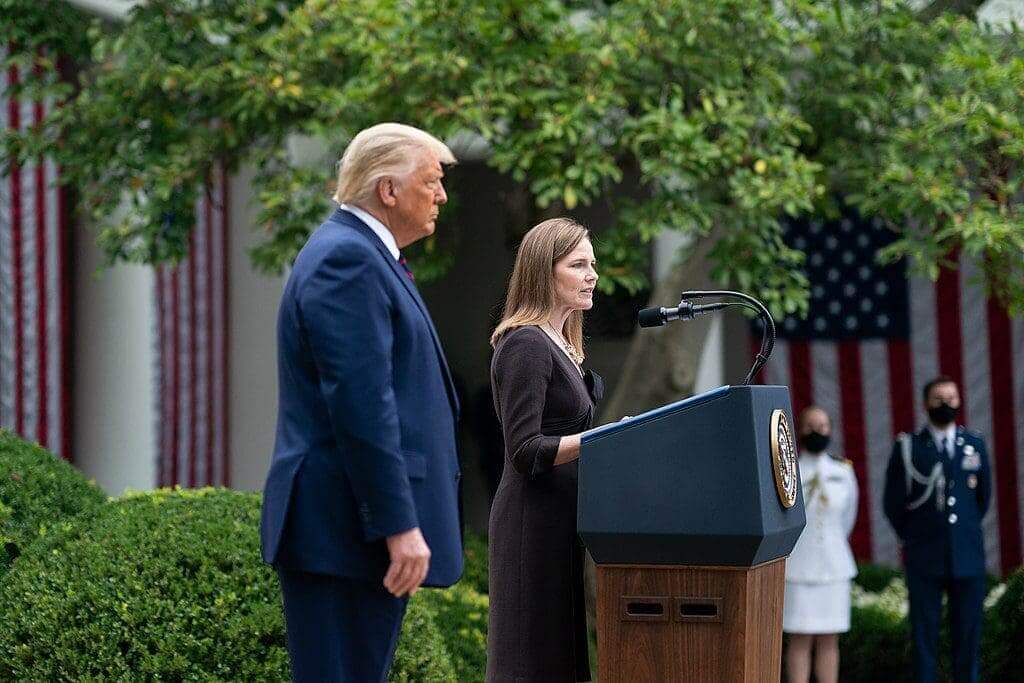
Republicans confirmed Amy Coney Barrett eight days before Election Day.
McConnell demonstrated an important principle of American government:
Rules are extremely important until they become inconvenient, at which point they become suggestions written in disappearing ink.
That maneuver helped cement a 6–3 conservative Supreme Court majority whose decisions will shape American law long after McConnell leaves Washington.
So while McConnell may be retiring soon, Americans shouldn’t worry.
Parts of Mitch McConnell will remain in government for decades.
Sort of like glitter.
Except glitter hasn’t overturned Roe v. Wade.
Back Just in Time to Save Congress From Doing Something
McConnell says he wants to work on the farm bill, support NATO and Ukraine, and participate in important Senate votes.
And credit where credit is due: McConnell has become one of the Republican Party’s more forceful defenders of NATO and continued resistance to Russian aggression, increasingly putting him at odds with parts of the MAGA movement.
Politics has become so strange that Mitch McConnell occasionally wanders into a debate and somehow finds himself standing in the reasonable corner.
It’s deeply unsettling.
Still, his return provides Republicans with another vote in a closely watched Senate while Congress confronts its traditional fall agenda:
Pass legislation.
Fight about passing legislation.
Threaten not to fund the government, then go on television to blame the other party for not funding the government.
Nearly shut down the government.
Pass something at 2:13 a.m. that nobody had time to read, declare victory, and take another recess.
Democracy!
One Final Lap Around the Capitol
McConnell has only a few months remaining in the institution where he has spent nearly half his life.
Whatever Americans think of him, his departure will mark the end of an extraordinary political career.
He reshaped the federal judiciary.
He transformed Senate procedure.
He frustrated Democrats.
He frustrated Republicans.
He survived Donald Trump publicly insulting him.
He survived Republican leadership battles.
He survived decades of Kentucky elections.
And now, after a serious fall and months of rehabilitation, he has returned to Washington for one final stretch.
There is something almost poetic about it.
Most people approaching retirement spend their final months cleaning out their office, giving away old coffee mugs and wondering whether anyone wants the extra stapler.
Mitch McConnell apparently looked at the United States Senate and thought:
I have a few more things I’d like to obstruct before I go.
And somewhere deep beneath the Capitol, an ancient parliamentary clock began ticking again.
Mitch is back.
God help the cloture motions.