
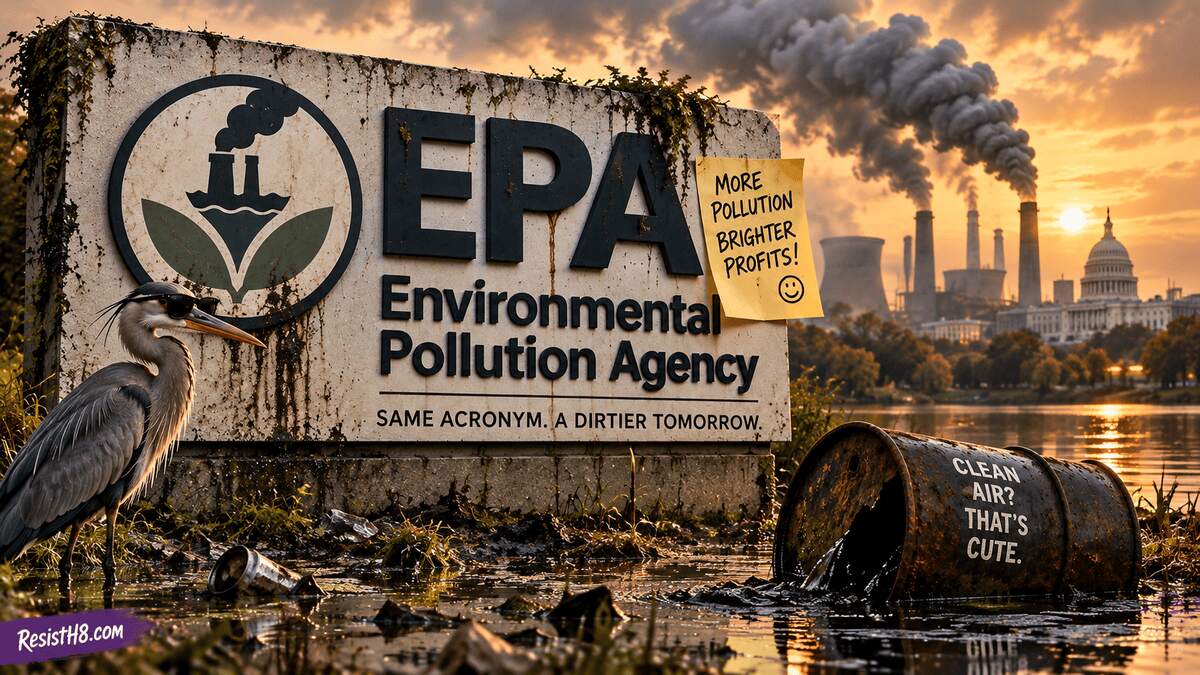

The Environmental Protection Agency (EPA) announced plans to change the name of the agency to Environmental Pollution Agency following environmental deregulation wins.
The good news: They don’t even have to change the acronym.
The rebranding follows the success of environmental deregulation efforts under President Donald Trump and EPA Administrator Lee Zeldin.

The agency itself announced 31 deregulatory actions in March 2025, calling it the “greatest day of deregulation” in American history. Those actions targeted or reconsidered rules involving power plants, oil and gas operations, mercury and other toxic air pollution, greenhouse-gas reporting and wastewater, among others.
It turns out that was just the appetizer.
Welcome to the Environmental Pollution Agency
The newly imagined EPA will retain its familiar logo, although officials are reportedly considering replacing the flower with a smokestack and changing the agency motto to:
“Have you tried not breathing so much?”
Its mission statement will also be modernized:
Old mission: Protect human health and the environment.
New mission: Protect human health and the environment, provided doing so does not inconvenience ‘Big Oil.’
The agency’s Air Quality Division will become the Air Availability Division, tasked with ensuring Americans continue to have access to some form of atmosphere.
The Office of Water will be renamed the Office of Exciting New Liquids.
And the Office of Enforcement and Compliance Assurance will become a Spirit Halloween every October because nobody will be using the building anyway.
Carbon Dioxide Has Been Informed It No Longer Endangers You
Perhaps the biggest transformation came in February 2026, when the EPA finalized the rescission of the landmark 2009 greenhouse-gas Endangerment Finding and eliminated federal greenhouse-gas emission standards for highway vehicles and engines.
The EPA itself called it the “single largest deregulatory action in U.S. history.”
This was wonderful news for carbon dioxide, which had spent 17 years unfairly burdened by the stigma of being associated with climate change.
CO₂ released a brief statement: “I would like to thank the administration for believing in me when the overwhelming majority of climate scientists did not.”
Under the February rule, vehicle and engine manufacturers no longer have future federal obligations to measure, control, or report greenhouse-gas emissions from highway vehicles and engines.
Apparently if you stop measuring something, it becomes considerably less troublesome. This groundbreaking scientific principle is expected to revolutionize American life.
Your cholesterol is high? Stop checking it.
Floodwater in your basement rising? Throw away the ruler.
Meteor heading toward Earth? Defund NASA.



Problem solved.
Coal Is Back, Baby
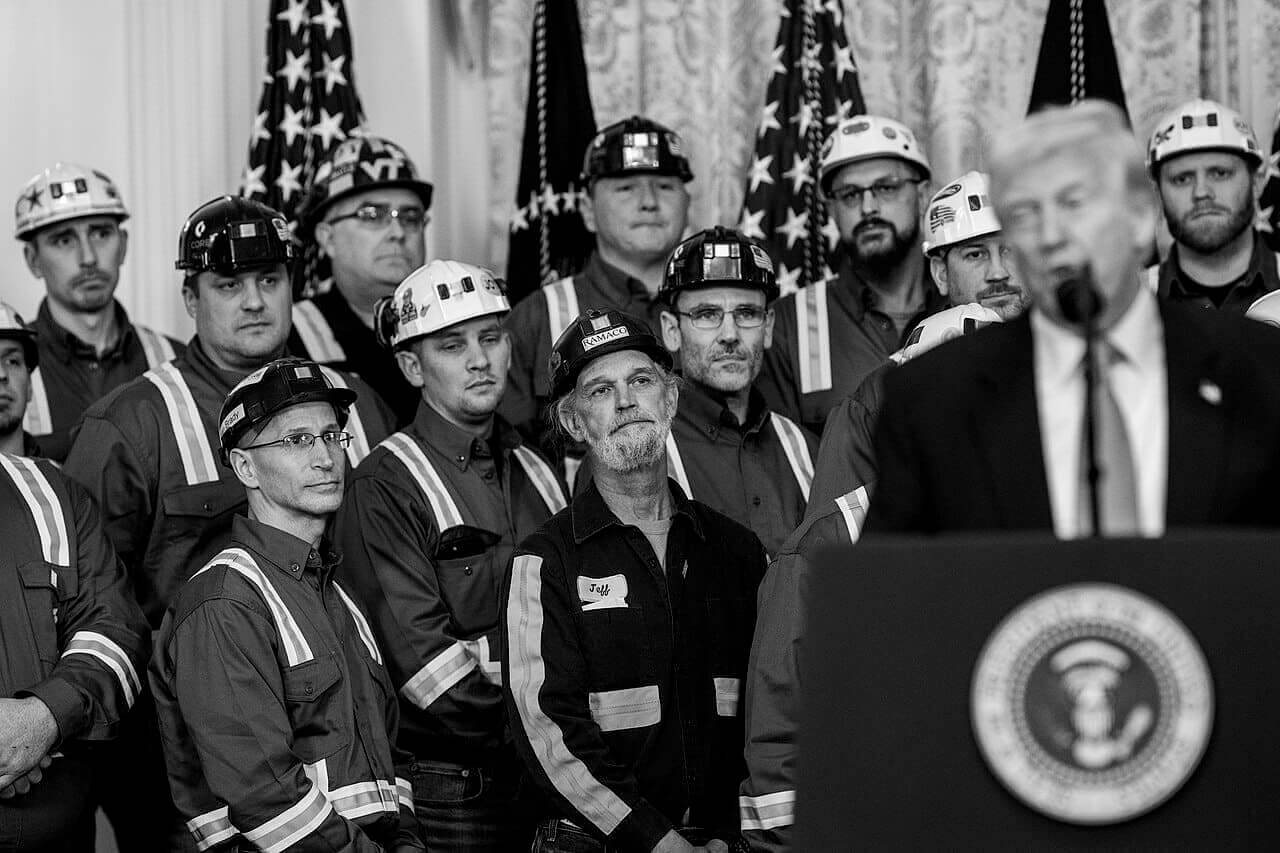
Coal has also received the governmental equivalent of a spa weekend.
In February 2026, the EPA repealed the Biden administration’s 2024 amendments strengthening Mercury and Air Toxics Standards for coal- and oil-fired power plants, returning to earlier requirements. The agency said the change would save an estimated $670 million.
Mercury, for readers unfamiliar with it, is the adorable neurotoxin historically associated with damage to the brain and nervous system. Very rude of regulations to discriminate against it.
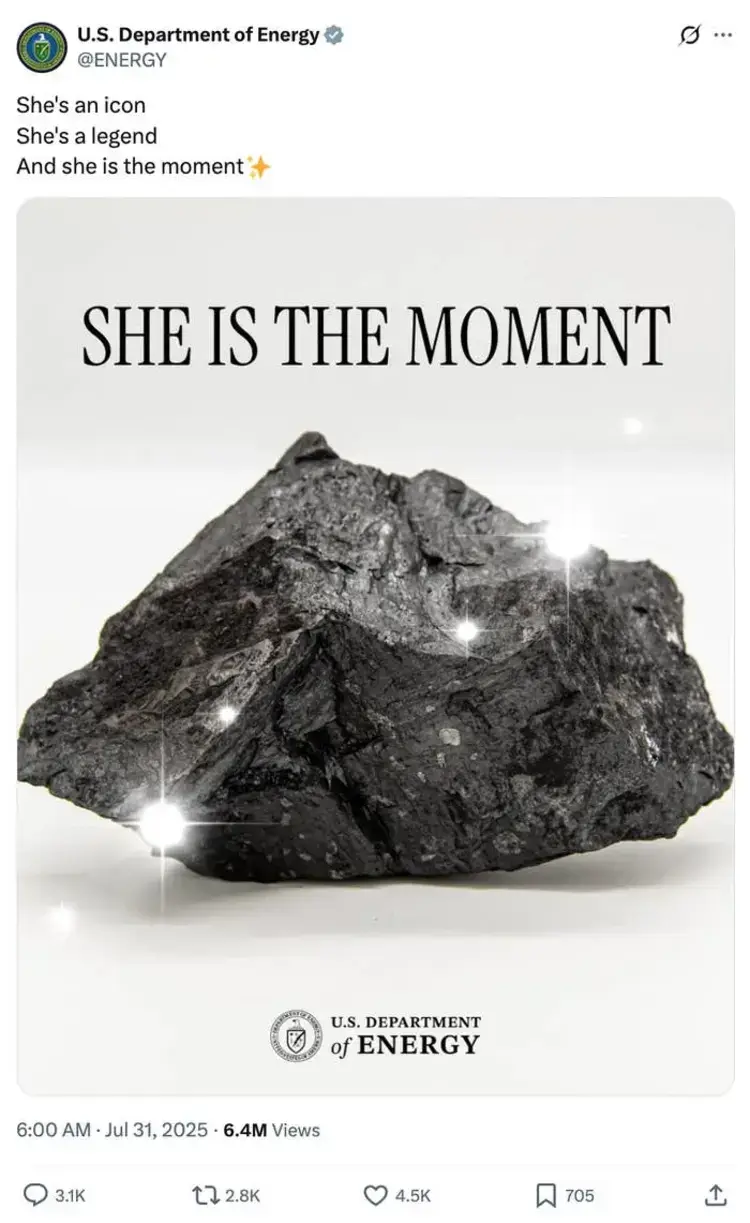
Then, on September 14, 2026, the EPA finalized the repeal of most of the Biden-era greenhouse-gas requirements for fossil-fuel power plants and proposed eliminating the remaining federal greenhouse-gas standards for the power sector. The agency estimates the finalized portion will produce roughly $310 billion in savings.
The EPA’s own fact sheet says coal use by the power sector is expected to increase more than tenfold as a result of deregulation.
Which is certainly one approach to climate policy.
Most countries discuss solar panels, wind turbines, batteries and next-generation nuclear power. America has apparently found a lump of coal in an old Christmas stocking and shouted: “WE’RE BACK!”
The EPA Would Like Everyone to Stop Being So Negative About Pollution
Critics may accuse the Environmental Pollution Agency of abandoning its historical mission. Agency officials would presumably reject that characterization. The environment remains extremely important.
It is where the drilling happens.

The EPA has also moved to reconsider methane regulations for the oil and gas industry, greenhouse-gas reporting requirements, and wastewater regulations affecting oil and gas development. Its FY2026 budget justification describes regulatory flexibility for treating and reusing oil-and-gas “produced water,” which is the wastewater produced by oil and gas companies, including potential uses involving data-center cooling, irrigation, firefighting and power generation.
The agency has additionally revised its approach to environmental reviews, saying in June that EPA comments on other agencies’ environmental impact statements had sometimes become too expansive and delayed projects.
This streamlined process should make environmental review much easier.
PROJECT: Giant industrial complex beside river.
ENVIRONMENTAL CONCERN: River.
RESPONSE: Have you considered that the river is being dramatic?
PERMIT: Approved.
Environmental Deregulation Ushers In New Era of Environmental Vocabulary
The administration has also introduced some useful terminology.
Regulations are now “barriers.”
Fossil fuels are “energy dominance.”
Deregulation is “commonsense.”
Coal is, according to EPA press-release language, “beautiful clean coal.”
And environmental protections apparently become much less appealing when you describe them exclusively in terms of compliance costs.
Under this linguistic framework, the Clean Air Act may eventually be renamed the Affordable Respiratory Flexibility Act.
The Clean Water Act could become the Freedom From Excessive Moisture Regulation Act.
And climate change itself could be reclassified as Seasonal Weather Plus™.
At Least the Acronym Still Works
There is an undeniable efficiency to the proposed Environmental Pollution Agency rebrand.
No new stationery, no new email addresses, and no expensive website migration. Employees can continue answering the phone: “EPA, how may I direct your call?”
The only difference is that Americans will finally know which EPA they’re talking to. For decades, the Environmental Protection Agency operated on the quaint theory that its job involved protecting the environment.
In 2026, the agency is openly celebrating actions it describes as the largest environmental deregulation moves in American history, including the elimination of greenhouse-gas rules governing vehicles and the repeal or proposed repeal of major greenhouse-gas restrictions on fossil-fuel power plants.
So perhaps a rebrand really is overdue.
Environmental Pollution Agency. Same building. Same acronym. Considerably less false advertising.
This article is satire. The policy actions and regulatory changes referenced are real; the agency name change, quotations attributed to carbon dioxide, imaginary offices, slogans and other comedic elements are not.