



After 3 weeks with no answers, people want to know. Is Mitch McConnell alive? Is he dead?
The Senator has not been seen in public since mid-June. He has not voted since June 11.
And for more than three weeks, his office has refused to tell the people of Kentucky — or anyone else — what is actually wrong with him.
Here is what we know — and it took emergency dispatch audio, not official disclosure, to find out.
On the morning of June 14, paramedics were dispatched to McConnell's Washington, D.C. townhouse for an "unconscious" person.
A dispatcher called in a "cardiac arrest," and a medic on scene reported "CPR in progress," according to scanner audio obtained by NBC News and reviewed by CBS News.
The 84-year-old senator was transported by an Advanced Life Support ambulance and admitted to the hospital that same morning.
His office's statement that day was 17 words long: he was admitted, and he is "receiving excellent care."
Since then, the updates have been variations on a theme — he "continues to improve" and is "working closely with his staff."
No diagnosis. No prognosis. No timeline.
His office has never confirmed the cardiac arrest at all.
What the Medical Evidence Says
The gap between "working closely with staff" and "received CPR at home" is enormous, and medical experts have been blunt about it.
Out-of-hospital cardiac arrest is one of the most lethal medical events that exists, and age makes it far worse.
Research indicates that fewer than five percent of patients in their eighties survive an out-of-hospital cardiac arrest to hospital discharge — and among those who do survive, neurological injury from oxygen deprivation is common.
Dr. Jeremy Faust, an emergency physician at Brigham and Women's Hospital, was on CNN warning that even when resuscitation succeeds, elderly patients with underlying conditions face "a long road to recovery," and that most patients who survive CPR after cardiac arrest cannot independently manage their own basic needs.
CPR itself is physically brutal — it routinely breaks ribs and fractures the sternum, leaving survivors in significant pain for weeks.
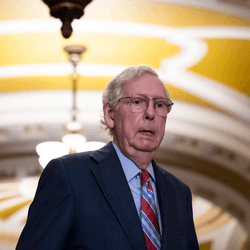
And McConnell's underlying health picture was already deeply concerning.
A childhood polio survivor whose office has attributed his wheelchair use to the disease's lingering effects, he underwent triple bypass heart surgery in 2003.
His recent history includes multiple falls, “freezing” episodes, and an eight-day hospitalization.
- A 2023 fall that caused a concussion and rib fracture.
- Two on-camera freezing episodes in 2023 — which neurologists reviewing the footage said were likely seizures, disputing his office's "lightheadedness" explanation.
- A fall at a Senate lunch in December 2024.
- Two falls in quick succession in February 2025.
- A fall at the Capitol last October.
- Hospitalized for eight days this February for "flu-like symptoms."
None of this is speculation for its own sake.
It is the informed context his office's silence forces the public to rely on.
Is Mitch McConnell Alive? The Transparency Problem
Charles Booker, the Democratic nominee running for McConnell's open seat, has said what much of Washington will not.



Pointing to the contradiction between the CPR reports and the office's breezy assurances, Booker called the effort to keep McConnell propped up in the seat "elder abuse" — and demanded a clear, honest accounting for Kentuckians of every political stripe.
The same accusation of elder abuse was levied against Nancy Pelosi’s daughter as she wheeled Dianne Feinstein around the Capitol when her health was failing and she was clearly in cognitive decline.
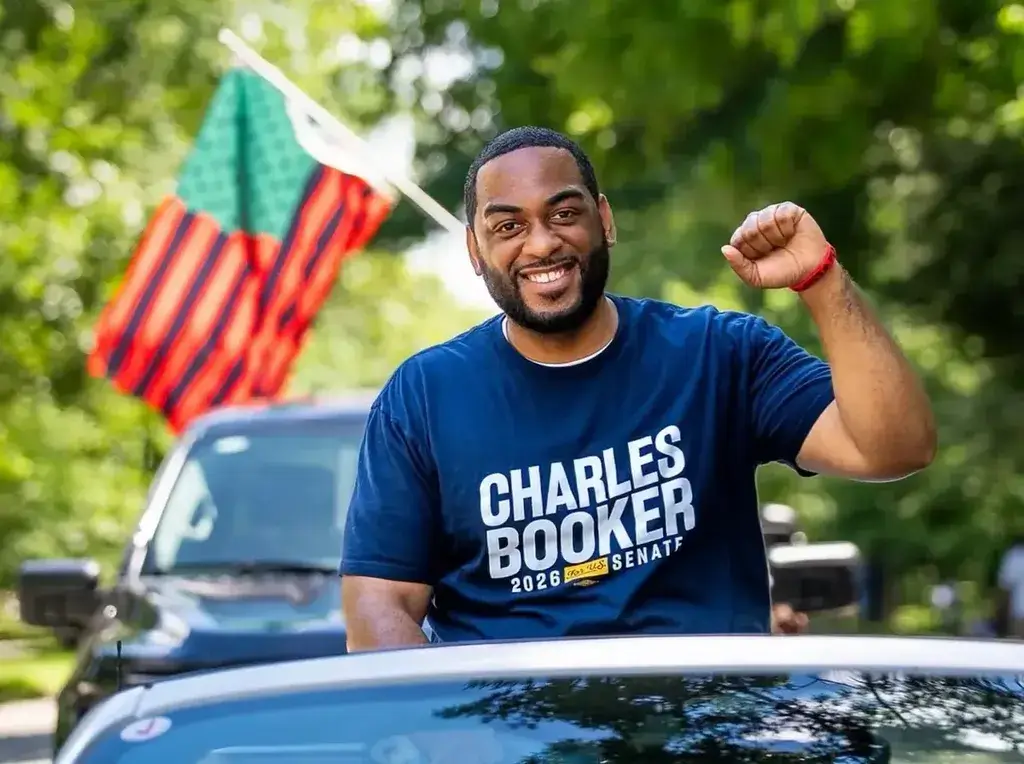
He's right that this isn't a partisan question.
A Senate seat represents millions of people.
When those people cannot learn whether their senator is conscious, the seat is not being represented at all.
The optics grew stranger over the weekend, when the Daily Beast reported that McConnell's wife, former Transportation Secretary Elaine Chao, traveled to Beijing just three days after his hospitalization, meeting Chinese Vice President Han Zheng on June 17 for talks Chinese state media described as “strengthening U.S.-China relations.”
A spokesperson has characterized the trip as pre-planned and philanthropic.
Perhaps so. But a family enmeshed in high-level international meetings while refusing to answer basic questions about a sitting senator's condition is exactly the kind of opacity voters now refuse to tolerate.
The Old Guard's Silence is Fueling Its Own Extinction

Kentucky Governor Andy Beshear, asked about the hospitalization, said he didn't want to "speculate on anyone's health."
That reflexive decorum — treating a public official's capacity to serve as an impolite subject — is precisely what a new generation of Democrats is running against.
Candidates like Melat Kiros in Colorado and Abdul El-Sayed in Michigan, are winning the attention of voters by clearly stating where they stand and what they'll do.

Voters aren't rejecting experience.
They're rejecting a political culture where "civility" means never telling the public the truth.
McConnell, first elected in 1984, announced last year he would not seek re-election; his term ends in January 2027, closing out 42 years in the Senate.
He is owed compassion in what is clearly a serious medical crisis — and his constituents are owed honesty about it.
Those two things are not in conflict. Only the silence is.