
“Don’t Look Up.”
It’s not an official slogan. No one prints it on bumper stickers. But in America, it operates like an unspoken rule.
Keep your head down.
Keep arguing left versus right.
Keep fighting the people next to you.
Just don’t look up.
We Are Not Enemies
For decades, working-class Americans have been trained to see each other as the enemy. Cable news panels frame every issue as a battle. Social media feeds amplify outrage. Politicians turn neighbors into threats. And while we’re busy defending our “side,” something else happens quietly above us.
Wealth consolidates.
Power centralizes.
Laws are written in boardrooms.
The people arguing online aren’t the ones running the game.
The voters — Democrats and Republicans who clock in at work, pay rent or mortgages, worry about healthcare bills, and stretch paychecks to cover groceries — aren’t the other’s existential threat.
The real divide in America isn’t left versus right. It’s the working class versus the billionaire class.
And the billionaire class knows something we often forget: working people make up the overwhelming majority of this country. If that majority ever stopped looking sideways at each other and started looking up at the rich and powerful, the balance would shift overnight.
That terrifies the sh*t out of them.
Not that we disagree on social issues. Not that we argue about policy.
Disagreement is normal in a democracy.
The real danger to entrenched power would be unity around basic economic fairness — higher wages, fair taxes, affordable healthcare, stronger labor protections, and an economy that works for the people who actually keep it running.
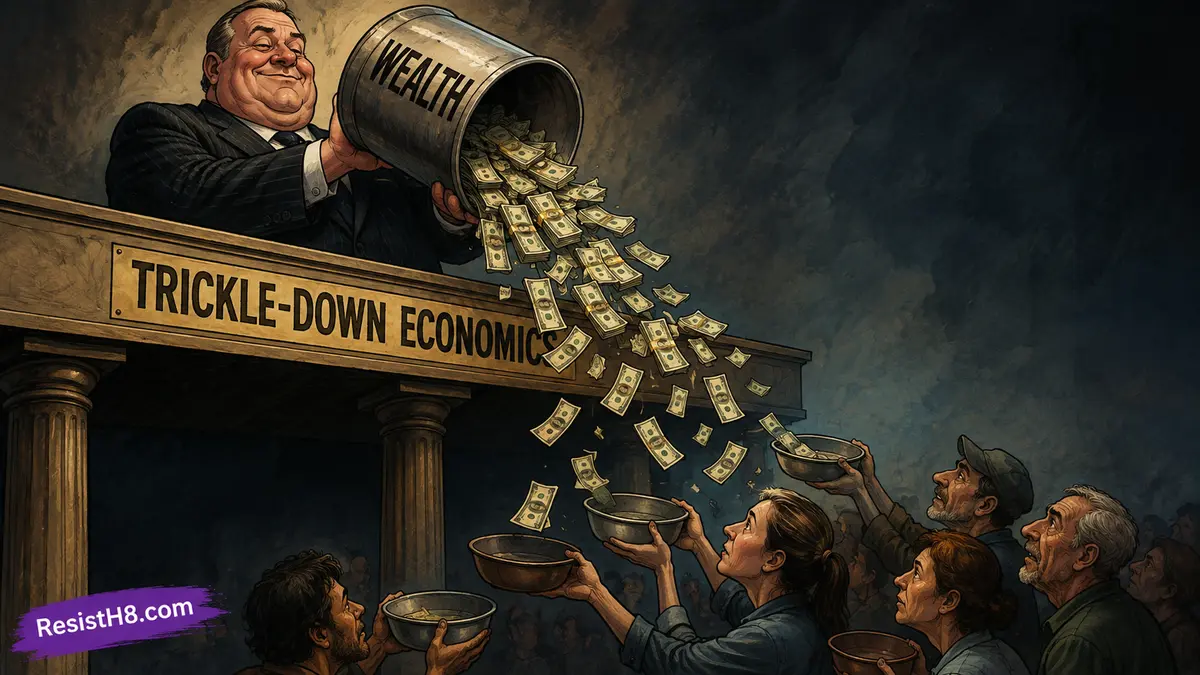
Not that trickle-down bullsh*t.
We don’t have to agree on every cultural issue. We don’t have to sing in harmony or pretend differences don’t exist.
Democracy isn’t about unanimous agreement. It’s about shared survival.
Imagine what could happen if Americans who disagree on social issues still agreed that:



✔️ No one working full-time should live in poverty
✔️ No corporation should pay less in taxes than the families who buy its products
✔️ No billionaire should accumulate more wealth in a week than a teacher earns in a lifetime
That kind of bipartisan agreement is dangerous — not to the country, but to the power structure that thrives on division.
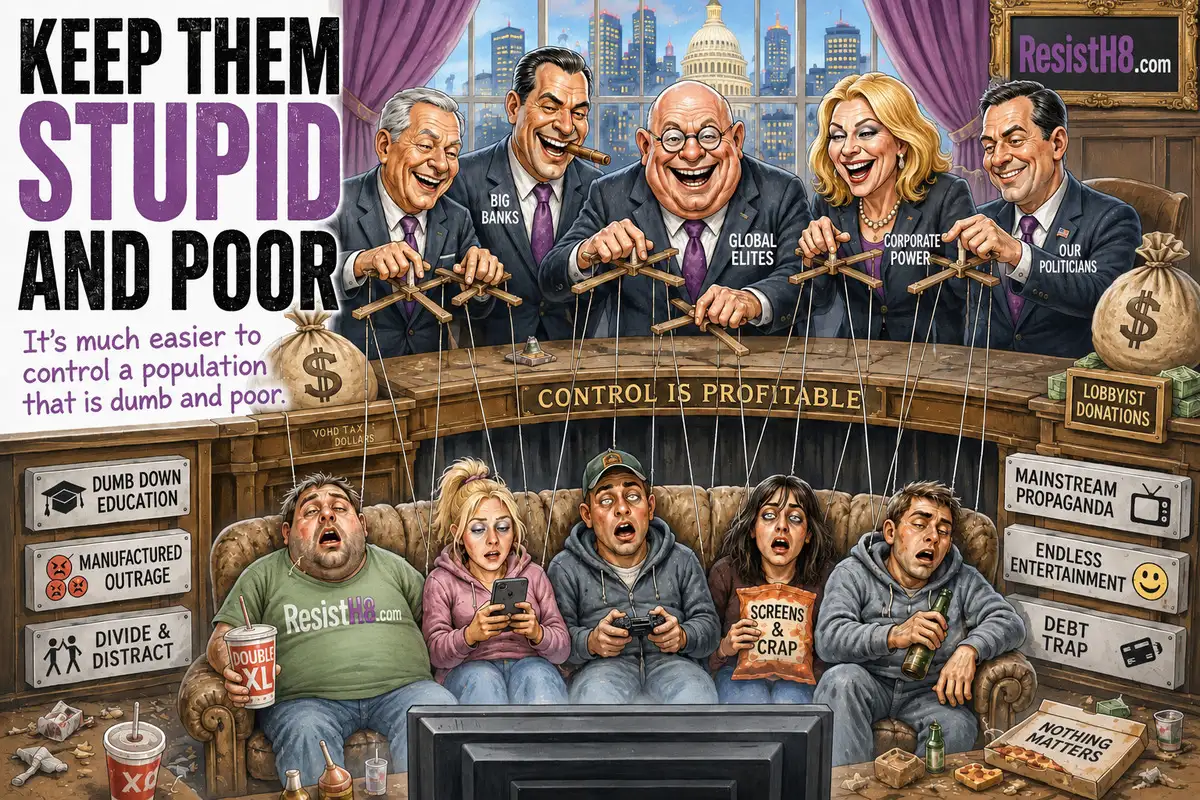
The phrase “Don’t look up” fits because it captures the distraction strategy perfectly.
While we debate pronouns, statues, child sex traffickers, and culture wars, trillion-dollar tax breaks pass, corporate mergers shrink competition, and donor money rewrites policy in fine print.
We are encouraged to look left.
We are encouraged to look right.
We are constantly warned about the threat posed by people with less than us.
But we are rarely encouraged to look up.
And if we ever do?
Their illusion collapses.
Don’t Look Up
There’s a reason the most effective political messages are short.
Campaign strategists have known for decades that three- and four-word slogans outperform complicated explanations. They’re easy to remember. Easy to chant. They fit on a baseball cap.
“Lock her up!”

“Drain the swamp.”
You don’t have to understand policy details to repeat them. That’s the point. They bypass thought to target emotion.
So if you’re going to counter a system built on distraction, you need something just as simple — but aimed upward instead of sideways.
“Don’t Look Up.”

Three words. Memorable. “Chantable.” Fits on a baseball cap.
It doesn’t tell you what to believe about cultural issues. It doesn’t force agreement on social policy. It just asks one thing: pay attention to the people in power.
Then they gaslight us. They take our words and use them as political weapons:
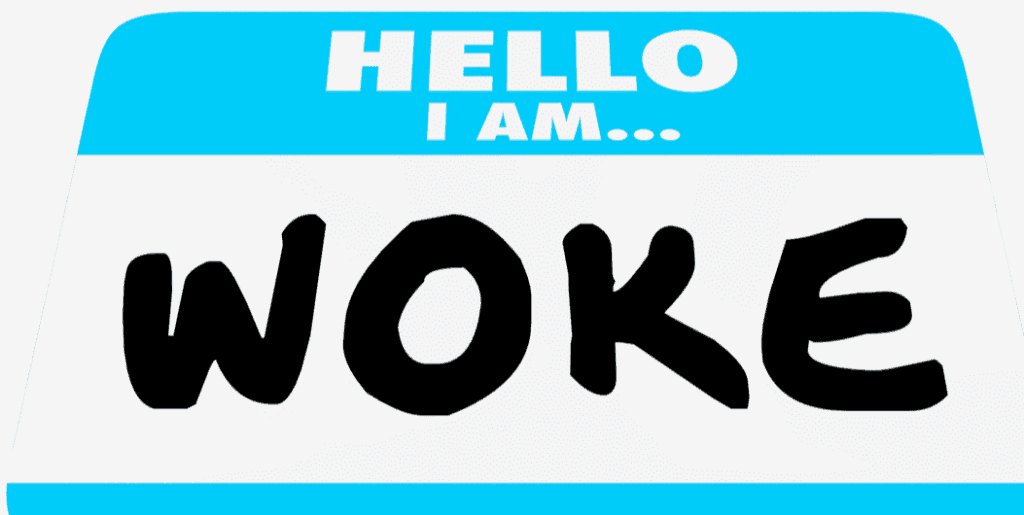
Stay Woke
Originally, being “woke” meant being aware of and actively attentive to important societal issues, especially racial and social justice.
Issues like corruption, systemic racism, a two-tiered justice system, and income inequality.
So ask yourself: why has awareness become controversial?
Why has the word itself become something to mock, legislate against, or declare war on?
When politicians launch a “war on woke,” they don’t define it. The term becomes elastic — sometimes meaning corporate diversity programs, sometimes school curricula, sometimes Disney movie characters. It shifts depending on the target.
But at its core, the backlash shares a common thread: resistance to conversations about power and inequality.
It’s hard to build a durable distraction machine if people start examining who benefits from the status quo.
It’s much easier to rally voters against a cultural concept than to explain why executive compensation has grown hundreds of times faster than worker wages over the past several decades.
If “woke” means paying attention, then discouraging people from being “woke” is, in essence, discouraging people from looking up.
And that’s the through-line.
Look left.
Look right.
Debate endlessly.
Just don’t look up.
The strategy doesn’t stop at distraction. It extends to language itself.
“Woke” didn’t just fall out of fashion. It was redefined.
Woke was reframed as something extreme, irrational, or dangerous.

The word was stretched until it could mean almost anything: corporate HR trainings, school library books, Pride flags, workplace policies.
When a word loses its definition, it becomes a tool. And tools can be weaponized.
DEI
The same transformation happened with “DEI” — diversity, equity, and inclusion.
On paper, DEI refers to efforts by organizations to ensure qualified people from different backgrounds have access to opportunity.
In public discourse, however, the acronym has been reduced to a caricature: shorthand for “unqualified hire.”
That reframing is powerful because it bypasses how hiring actually works in most large companies.
In reality, DEI programs don’t require companies to select unqualified candidates. Hiring pools are composed of applicants who already meet the qualifications for the role.
From among qualified candidates, companies may prioritize building teams that reflect our society.
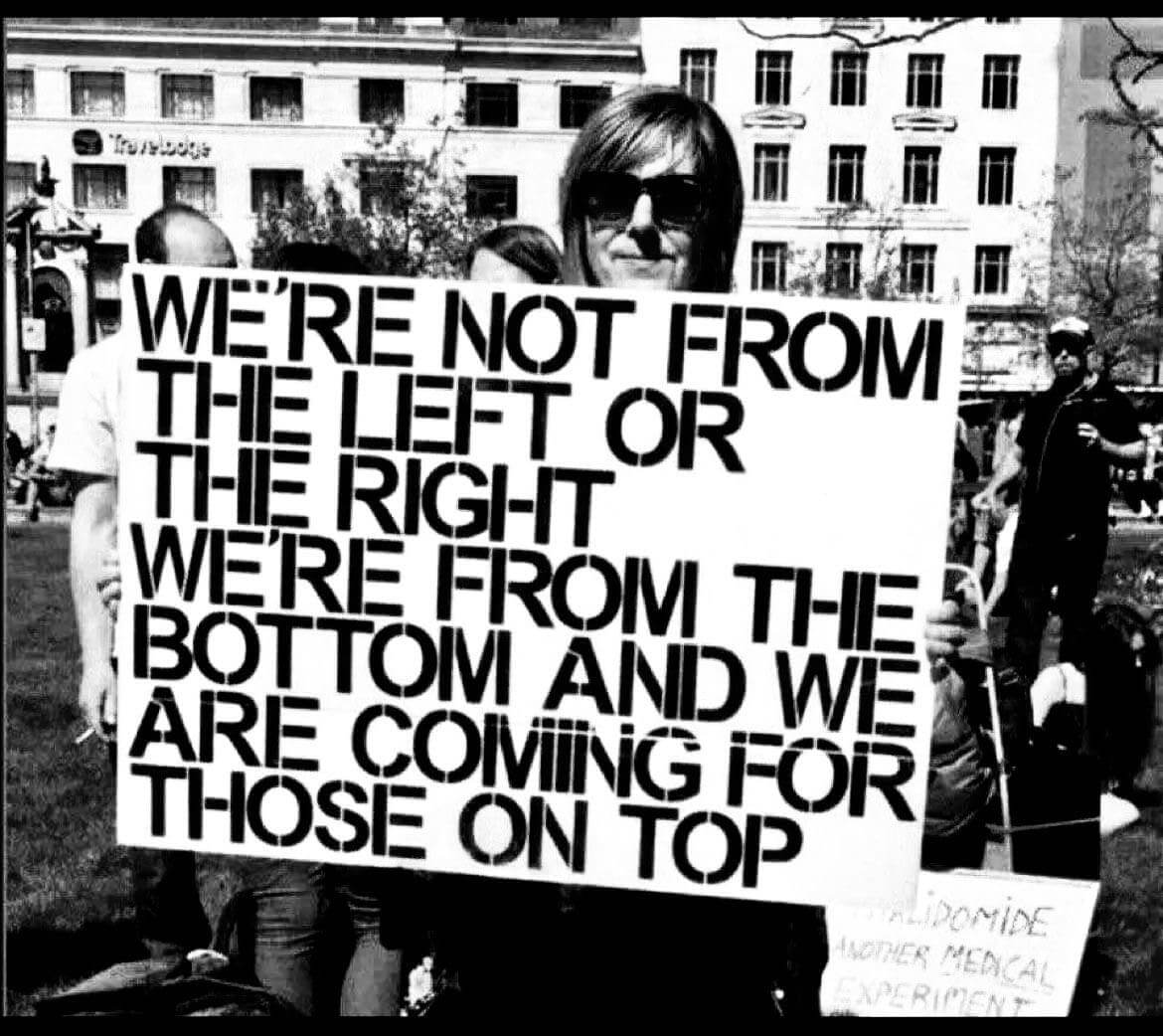
And there’s a reason corporations adopted these policies in the first place.
Research has repeatedly found correlations between diversity and financial performance. A widely cited 2015 McKinsey report found that companies in the top quartile for racial and ethnic diversity were 35% more likely to have financial returns above their national industry medians.
Public companies answer to shareholders. Executives answer to revenue. If diversity initiatives harmed profitability, many corporations would have abandoned them years ago.
The narrative that DEI exists solely as charity or ideology ignores the economic incentives behind it.
Yet in today’s media ecosystem, the term has become an explanation for unrelated failures. After a plane crash, for example, some commentators immediately speculate about whether “DEI” was involved — often before any official investigation has released findings.
When the cause of a tragedy is unknown, attaching it to a culture war topic generates clicks, engagement, and outrage. It also reinforces a preexisting storyline: that diversity equals incompetence.
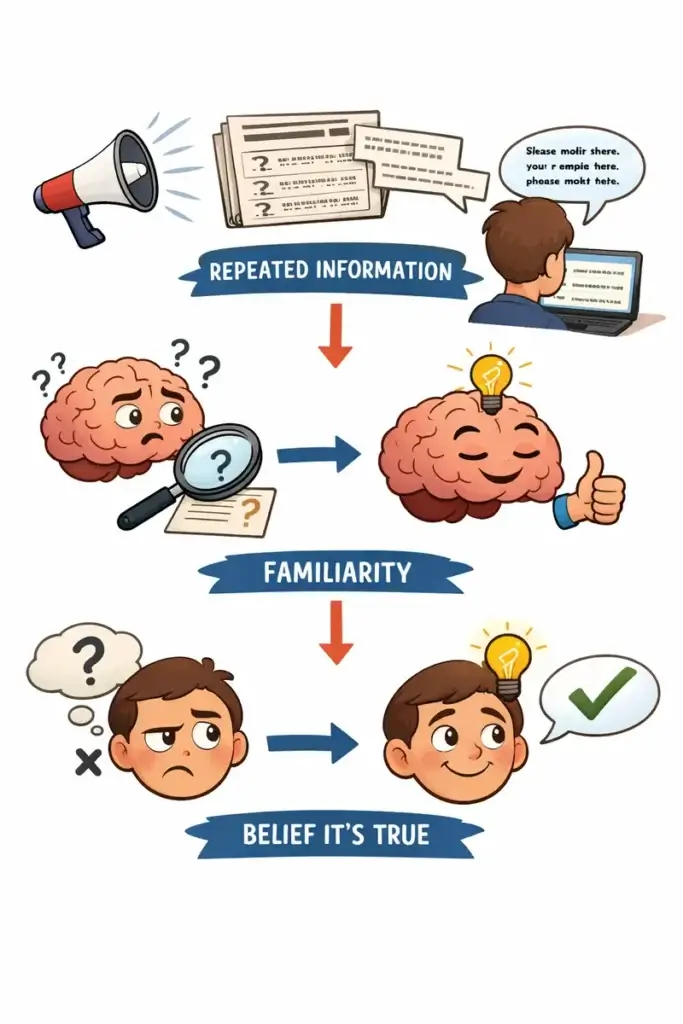
Notice the pattern? If the pilot fits the majority demographic, the focus shifts to mechanical failure or weather conditions. If the pilot does not, the conversation pivots to identity.
The outcome becomes less about facts and more about narrative reinforcement.
This is how language manipulation works. First, redefine the term. Then repeat the new meaning until it feels natural. Finally, use it as shorthand in unrelated situations.
The result?
Another sideways fight. Another cultural battlefield. Another moment where Americans argue with each other about identity instead of looking at the systems affecting their lives.
And once again, the spotlight moves away from the oligarchs and the people in power and back onto the people next to us.
Look left.
Look right.
Just don’t look up.
DEI Isn’t the Enemy
When someone says a person of color was hired “because of DEI,” what they mean is clear: “they wouldn’t have gotten the job otherwise.”
That assumption rests on something uncomfortable — the belief that race or gender signals lower competence. Judging someone’s intelligence or qualifications based on identity is, by definition, prejudice.
Yet that concept has become normalized in politics.
We see similar patterns in how certain public officials are described. Women of color in Congress who hold advanced degrees are frequently labeled “low IQ” or “stupid” by partisan commentators or the President of the United States.
Consider how narrative framing works.
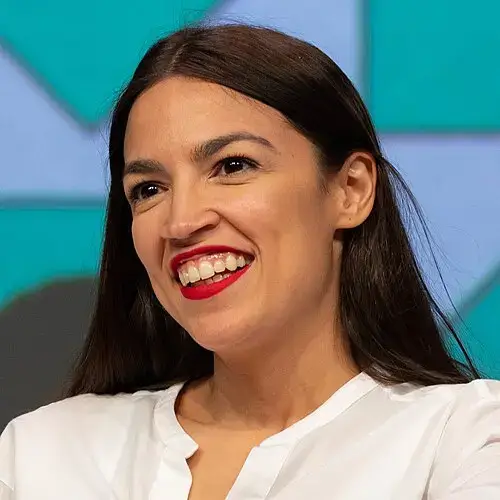
A conservative podcast once ran a weeks-long bracket competition titled “Dumbest Person in Congress.”
After rounds of audience voting, Listeners ultimately voted Alexandria Ocasio-Cortez the “winner.” Not Tommy Tuberville, the Republican Senator who appeared on Fox News and said there are entire sports teams of trans women.
But step back from the spectacle.
Ocasio-Cortez holds two bachelor’s degrees from Boston University — one in International Relations and one in Economics.
The point is not whether you agree with their politics. The point is how easily credentials and experience are dismissed when a narrative demands it.
Once intelligence itself becomes partisan, expertise becomes suspect.
Over the past several years, higher education and scientific institutions have increasingly been framed as ideological adversaries rather than knowledge centers.
Universities are portrayed not as places of research and innovation but as cultural battlegrounds. Scientists are sometimes cast as political actors instead of specialists in their fields.
When expertise is politicized, it becomes easier to erode trust in institutions — whether that’s universities, regulatory agencies, or scientific bodies.
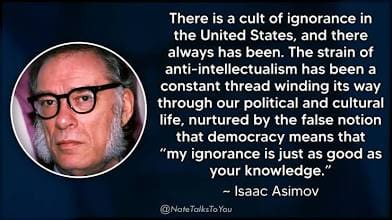
And when trust erodes, accountability weakens.
Meanwhile, public rhetoric about “merit-based hiring” often collides with political reality.
Political appointments, by nature, involve ideology, loyalty, and alignment — not just résumés.
That dynamic is not new, nor is it unique to one administration. But the contrast between rhetoric and practice is worth noticing.
At moments like this, unity isn’t sentimental. It’s strategic.
Division is profitable. Distraction is useful. Exhaustion is convenient. When people feel isolated or overwhelmed, they disengage. And when they disengage, power consolidates quietly.
That’s why coming together matters.
Not to erase differences. Not to abandon deeply held beliefs. But to recognize that democracy is bigger than any single culture war headline.
It’s about wages that keep up with the cost of living.
It’s about healthcare that doesn’t bankrupt families.
It’s about schools that educate rather than indoctrinate.
It’s about an economy that works for workers — not just shareholders.
Staying engaged is not radical. It’s civic responsibility.
Keep organizing.
Keep voting.
Keep showing up.
If you believe in peaceful protest, participate. If you believe in reform, advocate for it. If you believe in accountability, demand it.
Movements don’t grow because everyone agrees on everything. They grow because enough people agree on something fundamental: concentrated power without accountability is dangerous.
The slogan still stands.
Don’t look left.
Don’t look right.
Look up.
And once you see clearly, don’t look away.