


Before dawn on Sunday, August 16, Russian missiles set fires across Kyiv and left a city book market burning. Six people were hurt in the capital. In Kryvyi Rih, two people were killed and 14 wounded, and one more person died in Sumy.
President Volodymyr Zelenskyy's summary of the night was devastating: wherever Russian ballistic missiles could reach, they hit civilian infrastructure.
It was not an unusual night. In July, Russian attacks killed at least 377 civilians in Ukraine and wounded 2,129 more — the deadliest month of the invasion since April 2022.
And when Ukrainian investigators pull those weapons apart, they keep finding the same thing: parts made in the United States.
5,816 Foreign Parts, 202 Weapons Systems
On August 10, Ukraine's military intelligence directorate — known as HUR — laid out its evidence for Foreign Minister Andrii Sybiha and a room full of Ukrainian ambassadors.
As of this month, HUR says it has catalogued 5,816 foreign-made components across 202 Russian weapons systems, including cruise missiles, ballistic missiles, strike drones, and armored vehicles.
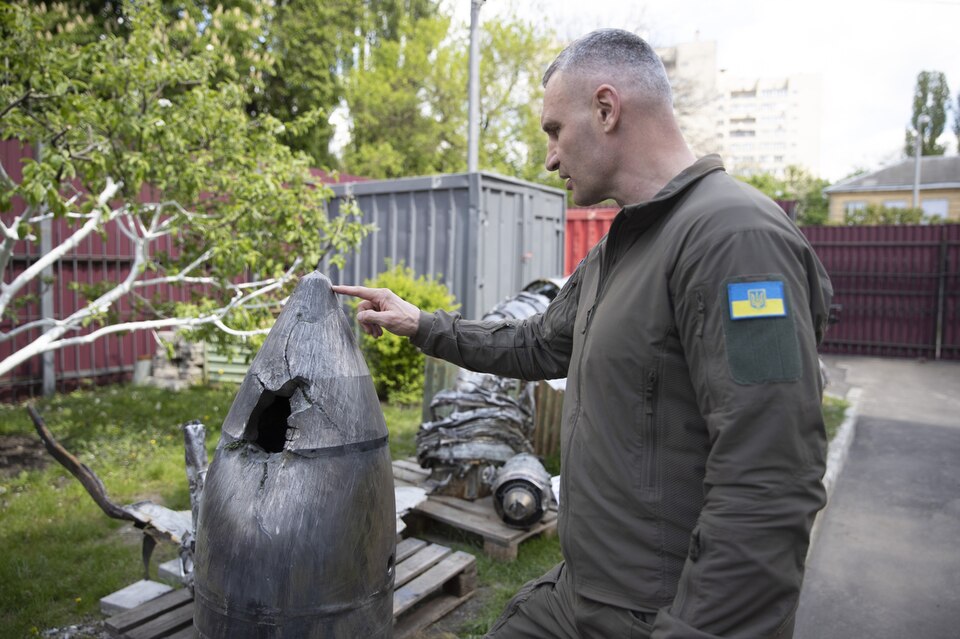
Most of the electronics inside those weapons, HUR says, were not made in Russia.
They came from Europe, Asia, and North America, moved through what investigators call "gray" supply routes — resellers, shell companies, and middlemen in third countries whose only real job is to launder the paperwork.
Speaking of shell companies, the Treasury Department recently made the news for doing something “sneaky:” As Moneywise.com reported:
The Treasury Department announced on Tuesday that it would stop collecting data that determines the owners of private businesses as mandated under the Corporate Transparency Act. That registry was used by law enforcement to crack down on the use of shell companies for money-laundering and drug trafficking among other illegal activities.
The Treasury Department also announced that FinCEN will permanently delete all previously reported ownership data of American individuals and domestic entities from its anti-money laundering database.
Coincidence? We’re just asking questions.
The samples of parts they found in Russian missiles and drones were specific. An inertial guidance module built with parts from Texas Instruments and Japan's TDK Corporation.
Components pulled from a Geran-2 attack drone and a Banderol cruise missile.
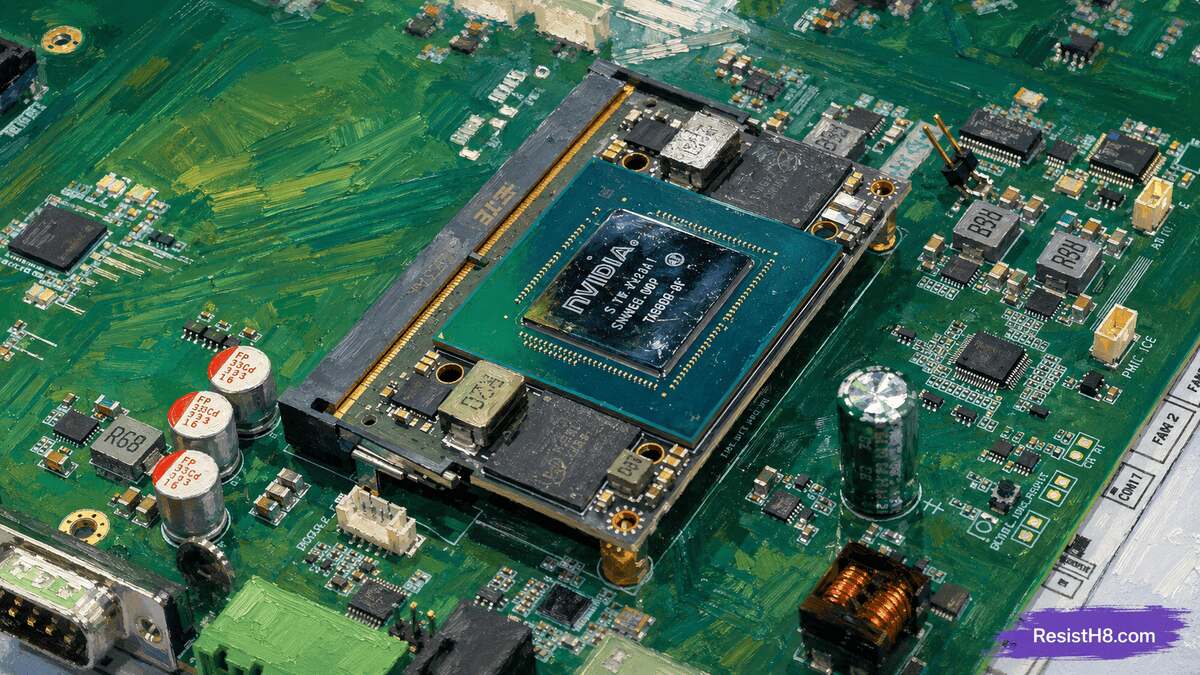
And, most striking, an Nvidia Jetson Orin NX module recovered from the wreckage of Russia's new S-71M "Monochrome" cruise missile — a small AI computer sold to students, hobbyists, and robotics startups, apparently repurposed to help a missile recognize what it's about to hit.
Nvidia told reporters it doesn't sell into Russia and doesn't build the module for weapons.
It also acknowledged the obvious limit of that position: "Pre-owned Jetsons are available through many reseller channels," a spokesperson said, adding that the company can't track hardware after it's sold.
That’s the problem.
The Lawsuit: "Merchants of Death"
Ukrainian families decided to test that problem in an American courtroom.
In December 2025, five lawsuits were filed in Dallas County on behalf of Ukrainian civilians against Texas Instruments, Intel, Advanced Micro Devices, and Mouser Electronics — a Mansfield-based distributor owned by Berkshire Hathaway.
The plaintiffs are represented by Austin trial lawyer Mikal Watts, Dallas attorney Charla Aldous, and the firm BakerHostetler.
The suits center on five strikes between 2023 and 2025, all on places with no military value: a school dormitory in Rzhyshchiv, a nine-story apartment building in Uman, a playground in Kryvyi Rih, a children's hospital.
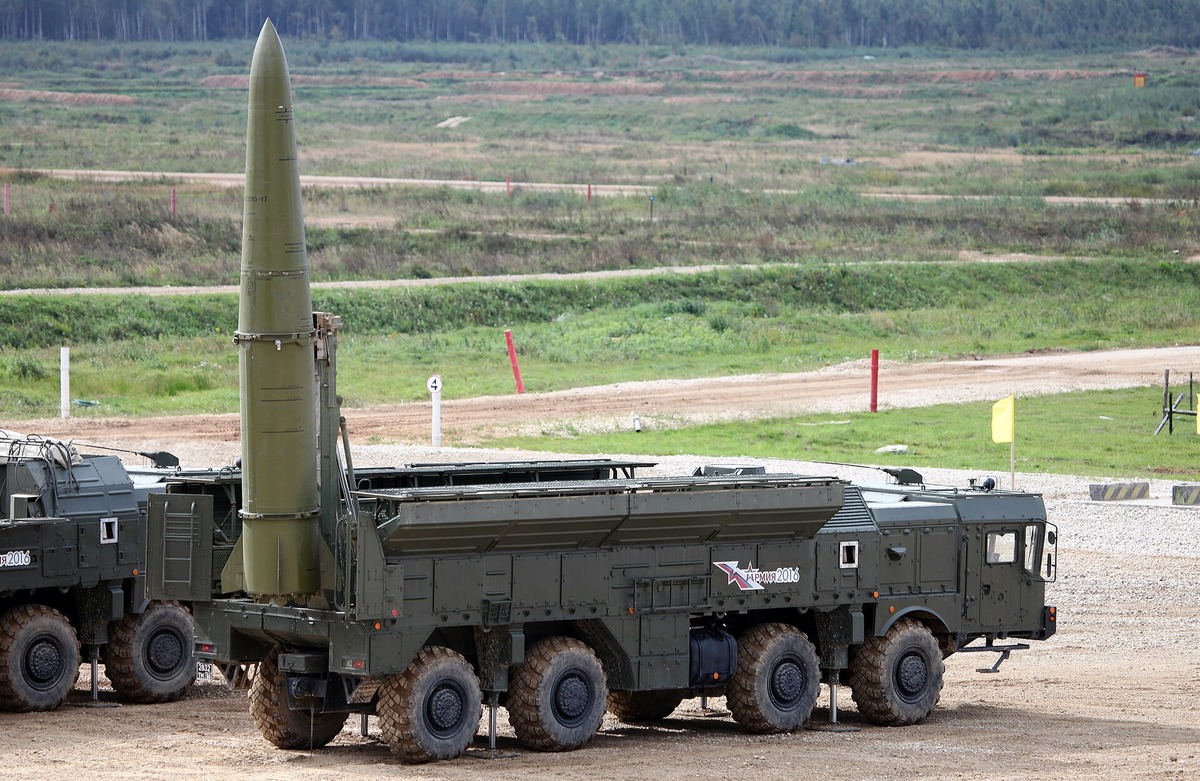
Among the dead was a three-year-old boy named Tymofii, killed by an Iskander missile while playing on a swing set. His grandmother was standing a few feet away.



The legal theory isn't that these companies sold anything to Moscow. It's that they knew — or should have known — that their distribution networks were leaking into Russia, and did too little to stop it.
Watts spent nine days in Ukraine building the cases, telling reporters that each downed drone carries the equivalent of a black box that survives impact, with manufacturer names still legible on the chips inside.
The families' stated goal was never really money. Several told the legal team all they really wanted was for the missiles to stop.
What the Judge Ruled
The companies moved the cases from state court to federal court, then asked U.S. District Judge Sidney Fitzwater to throw them out on three grounds: that federal export law preempts state tort claims, that the plaintiffs waited too long, and that they never linked these specific chips to these specific attacks.
On July 1, 2026, Fitzwater issued a split decision.
He rejected the preemption argument — meaning American export law does not automatically shield chipmakers from being sued in state court over where their products end up.
That's a meaningful door left open.
But he dismissed the cases anyway, ruling the plaintiffs hadn't plausibly pleaded causation. The same reporting that documents U.S. parts in Russian weapons, he noted, also documents parts from many other manufacturers — which makes it hard to say these four defendants caused these particular deaths.
The chain from a chip sale to a missile strike, he wrote, is too attenuated.
"Tragic facts alone do not establish liability," Fitzwater wrote.
He gave the plaintiffs 28 days to refile with stronger allegations.
That window closed in late July; as of this writing, no public reporting confirms whether an amended complaint has been filed.
The Broken Enforcement Gap
The courtroom fight is related to a regulatory failure Congress documented years ago and never repaired.
A Senate Permanent Subcommittee on Investigations report led by Sen. Richard Blumenthal found that the Commerce Department's Bureau of Industry and Security lacks the money, staff, and technology to trace modern smuggling networks, leaving enforcement largely dependent on companies policing themselves.
Blumenthal's summary: "Our present sanction system is a sieve."
Texas Instruments has consistently said it opposes military use of its products and that "any shipments of TI chips into Russia are illicit and unauthorized."
Intel says it suspended shipments to Russia and Belarus at the start of the war. Those statements are probably accurate. They’re also, four years in, beside the point.
Nobody has to intend a child's death for the supply chain to deliver one.
A resistor sold in Dallas passes through Hong Kong, then Armenia, then a Russian assembly line, then a guidance module, then a playground in Kryvyi Rih.
Every link is legal-looking. Every actor has plausible deniability. And the ordinary people at the end of that chain — the ones sorting through a burned book market on a Sunday morning — get no say in any of it.
Judge Fitzwater was right that tragedy isn't the same as liability. But somebody built the thing that fell on Tymofii, and somebody sold them the parts.