



Today the national average for a gallon of regular gas is $4.09, up 15 cents in a single week. Most states are now over four dollars. Back in January, the average was $2.84. Politicians still talk about the United States achieving ‘energy independence.’
Here’s the thing: the United States is producing more oil than at any point in its history.
American wells pumped a record 13.6 million barrels a day in 2025, and the Energy Information Administration expects 2026 to land right around that mark.
We’ve been a net petroleum exporter since 2020. This spring, U.S. crude and fuel exports hit an all-time high.
Record production. Record exports. Four-dollar gas.
Both things are true at once, and it isn’t a glitch. It’s how the oil market is built.
“Energy independence” — the promise that if we drill enough at home, we stop caring what happens 7,000 miles away — is not an economic concept.
As Andrew Campbell, who runs UC Berkeley’s Energy Institute at Haas, put it, the phrase is a political slogan, not a technical one.
Politicians use it to suggest a country can be walled off from world energy markets. Almost none ever are.
Everyone’s Oil Goes Into the Same Bathtub
Oil is what economists call a fungible global commodity. A barrel of Texas crude and a barrel of Saudi crude of the same grade are interchangeable, and both are priced off the same global benchmarks.
Clayton Seigle, an energy security fellow at the Center for Strategic and International Studies, gave NPR the clearest picture of it: imagine one enormous bathtub.
Every producing country pours its barrels in. Every consuming country draws from it.
If a war chokes off supply on the far side of the tub, the water level drops for everyone — including the people standing right next to the faucet.
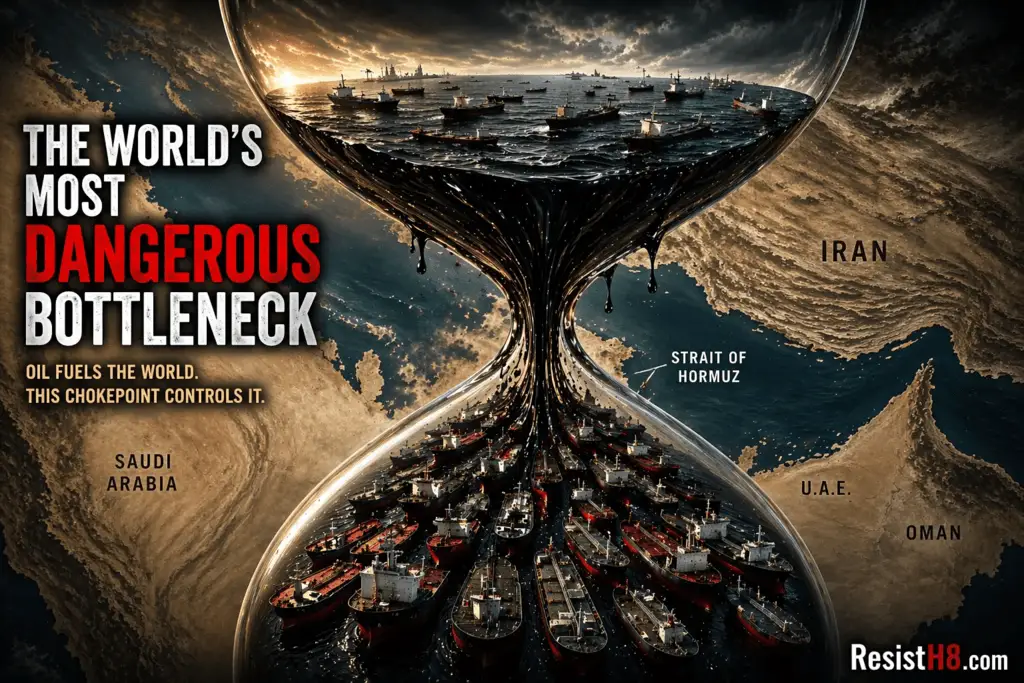
That’s exactly what’s happening now. Iran’s attacks on tankers and the near-shutdown of the Strait of Hormuz have pulled millions of barrels a day off the market, pushing Brent crude back near $90.
Roughly a fifth of the world’s oil normally moves through that waterway. It doesn’t matter that almost none of it was headed to the United States. The tub is shared.
Michael Cembalest, who chairs market strategy at JPMorgan Private Bank, was blunt about it: the idea that the U.S. is shielded from a Hormuz closure is mostly false.
American fuel prices have climbed right alongside everyone else’s — in some categories, faster.
“American Oil” Isn’t America’s Oil
This is the concept some people don’t understand: The oil under Texas and New Mexico does not belong to the country. It belongs to private companies, and those companies sell it to whoever pays the most.
That buyer might be a refinery in Louisiana. It might just as easily be one in South Korea.
Congress made that explicit in December 2015, when it repealed the 1975 ban on exporting American crude — a ban enacted after the Arab oil embargo for exactly the reason you’d guess: to keep domestic oil home and insulate American consumers from world prices.
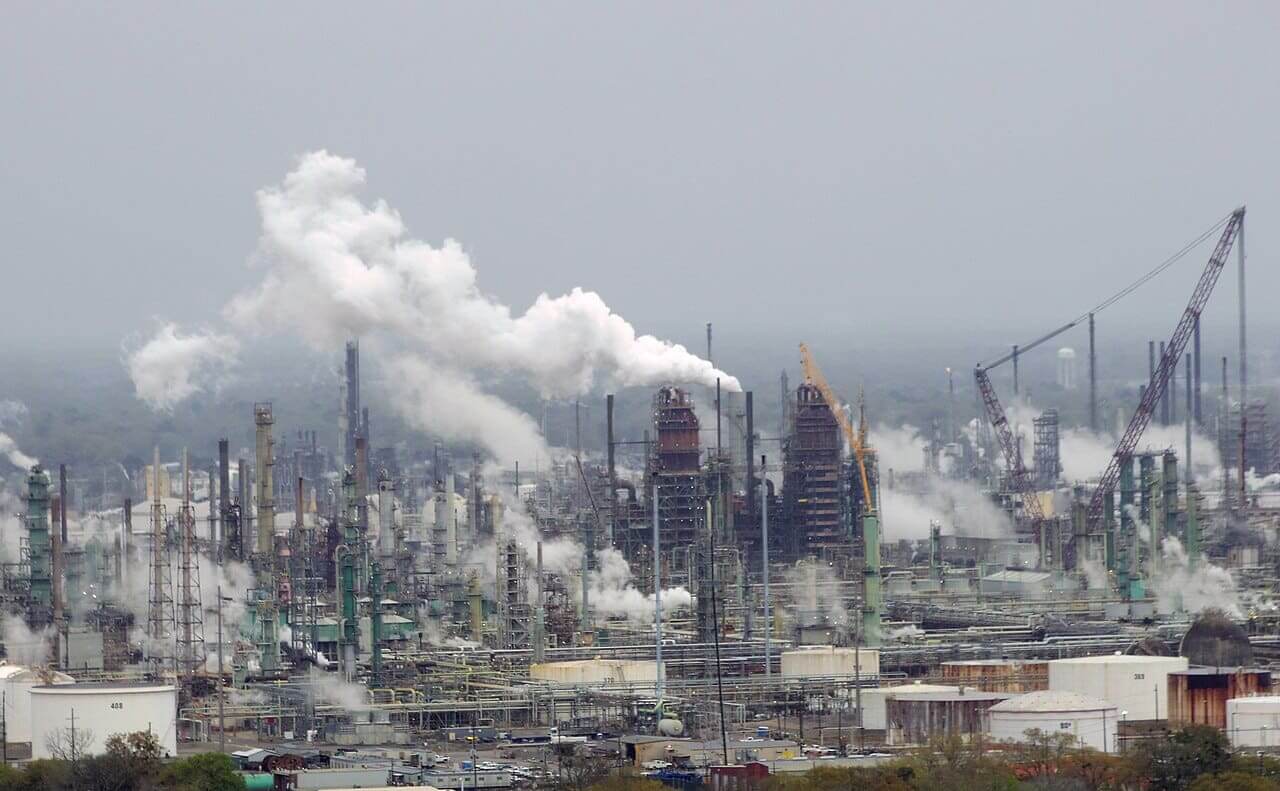
Once it was gone, U.S. crude exports climbed from under half a million barrels a day to nearly three million in four years. Today they run higher still.
So when a politician promises that “drill, baby, drill” means cheaper gas for you, ask the follow-up question: what obligates any of those barrels to be sold to you, at a discount, instead of to the highest bidder on earth?



Nothing does. The extra profit from a price spike flows to shareholders. You still pay the world price.
We Drill the Wrong Kind of Oil
There’s a second wrinkle. U.S. shale produces light, sweet crude — low sulfur, easy to process. But Gulf Coast refineries spent tens of billions of dollars in the 1980s and ’90s retooling for heavy, sour crude, back when everyone assumed the future belonged to Venezuelan and Canadian barrels.
Energy analyst Robert Rapier makes a correction worth getting right: American refineries absolutely can run shale oil, and do every day.
It’s not a technical wall, it’s economics.
Light crude leaves billion-dollar heavy-crude units idle and squeezes margins, so refiners blend domestic light with imported heavy and ship the surplus abroad to plants built for it.
That’s why we export and import crude at the same time. It looks like a contradiction; it’s just optimization. And it means “drill more” doesn’t translate into “more gas from American refineries” the way the slogan implies.
Presidents Don’t Control the Drill Bit
Even the industry says so. In the Dallas Fed’s first-quarter energy survey, with oil sitting near $90 a barrel — far above the $66 producers say they need to profitably drill a new well — most executives weren’t rushing to add rigs.
Half said their 2026 drilling plans hadn’t budged since January.
Their reasoning was straightforward: a war-driven price spike is temporary, and you don’t commit capital to a decade-long well on a price you expect to collapse.
One respondent said the volatility makes it hard to “drill, baby, drill” at all.
Asked how much extra oil they’d actually produce because of the Iran war, the most common answer for 2026 was a quarter of a million barrels a day or less — a rounding error against the millions Hormuz took offline.
Oil companies drill when it’s profitable for oil companies. Not when a president asks them to.
What More Drilling Does — and Doesn’t — Do
Domestic production isn’t worthless. More supply in the global tub does soften prices somewhat.
Being a net exporter means a price spike sends money into American producers rather than only out. It reduces the risk of a 1973-style embargo aimed at us specifically.
Industry groups argue, reasonably, that added supply from anywhere helps everywhere.
What it cannot do is decouple your gas bill from a shooting war in the Persian Gulf.
A 2012 Congressional Budget Office assessment said as much: the world oil market makes true separation nearly impossible for a country the size of the United States.
That was true when we produced 6 million barrels a day. It’s still true at 13.6 million.
The only thing that actually shrinks a household’s exposure to global oil prices is needing less oil — a more efficient car, transit that works, an electrified furnace, a shorter commute.
The NRDC’s point is hard to argue with: if the U.S. could drill its way to energy security, it would have already.
Meanwhile, the family choosing between filling the tank and filling the fridge this month isn’t paying $4.09 because America doesn’t drill enough.
They’re paying it because a commodity market, a repealed export ban, and a war none of them voted for decided it for them.