
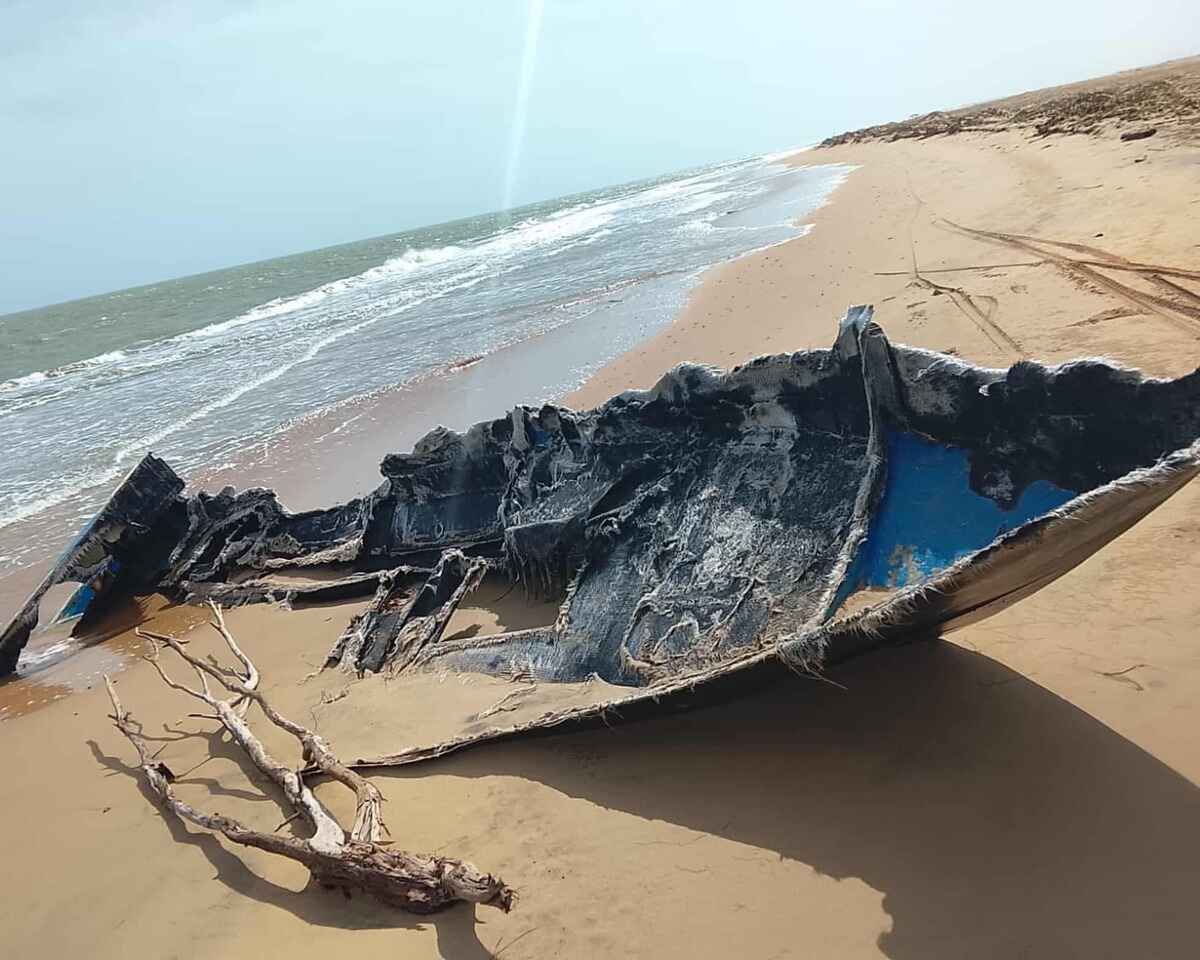

Over 192 people have been killed in boat strikes in the Caribbean and Pacific over the last nine months. The Trump administration refuses to tell the American public who was on the boats we bombed. The official line is always the same — “narco-terrorists,” eliminated. No names. No dignity. No humanity.
No evidence. Just a grainy black-and-white video, a press release from Pete Hegseth, and another handful of people erased.
A new investigation has started to reveal those names. And once you know them, the administration’s narrative falls apart.
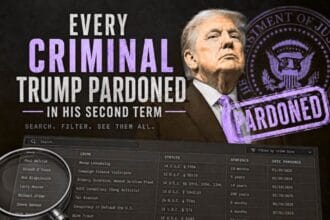
The administration’s narrative should have fallen apart after Trump pardoned a convicted drug-trafficker, and former Honduran President who trafficked tons of cocaine headed for the U.S. through Honduras. Trump also pardoned a drug-trafficker convicted of operating a multi-million dollar trafficking ring in Baltimore, Maryland.
Presidential Pardon of Drug Trafficker Juan Orlando Hernández
The pardon of former Honduran President and drug trafficker, Juan Orlando Hernández mention deserves more explanation for any reader not aware of the details.
Hernández had been sentenced to 45 years in prison in June 2024 after a U.S. federal jury convicted him of conspiring to import cocaine into the United States and related firearms offenses. According to the U.S. Department of Justice, Hernández and his co-conspirators trafficked more than 400 tons of U.S.-bound cocaine through Honduras between 2004 and 2022.
Hernández is said to have selectively extradited rival drug traffickers to the United States and used the Honduran security forces to facilitate cocaine trafficking through Honduras. In exchange for this protection and support, Hernández is said to have received campaign contributions and other bribes from drug traffickers, including Joaquín "El Chapo" Guzman, the then-leader of the Mexico-based Sinaloa Cartel. He once had a man killed in prison in order to protect himself and his corrupt dealings with drug cartels.
A former DEA official provided an assessment of the pardon’s impact on U.S. national security, saying it was likely to extend beyond Honduras, damaging the credibility of the United States and its drug trafficking investigations internationally.
Trump pardoned high-level drug traffickers while simultaneously killing low-level “drug runners” and fishermen on tiny boats with no due process, no evidence, no conviction.
What the Investigation Found
A coalition of 20 journalists from across Latin America, the Caribbean, and the UK — led by the Latin American Center for Investigative Journalism (CLIP), and including reporters from Colombia’s Verdad Abierta and CasaMacondo, Venezuela’s Alianza Rebelde Investiga, the Trinidad and Tobago Guardian, and the UK-based monitoring group Airwars — managed to identify 13 of the men killed in the strikes.
Their report is titled “Bombed, Without the Right to a Defense.”
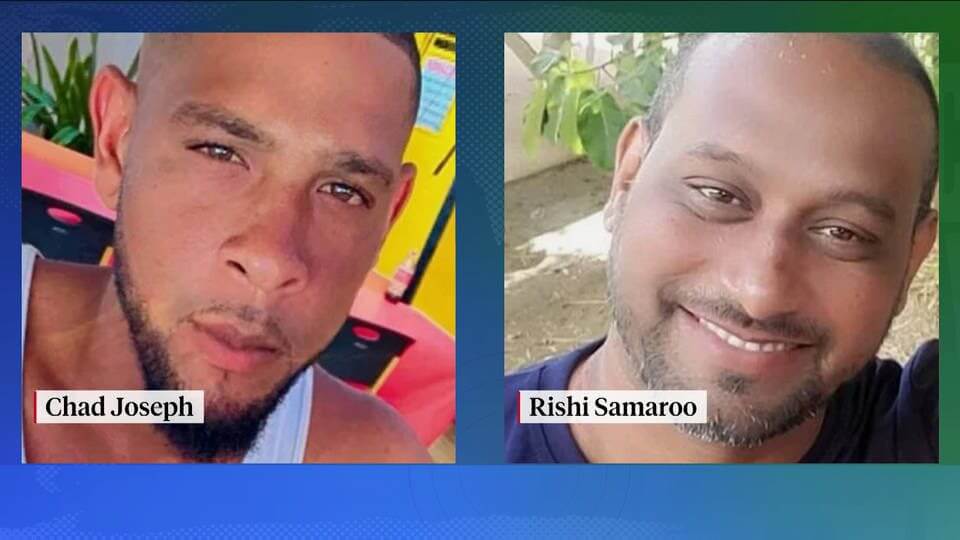
The Trump administration has confirmed 57 boat bombings since September 2025, killing at least 192 people. Until now, the public has only known the names of three: Trinidadians Chad Joseph and Rishi Samaroo, whose families are suing in U.S. federal court, and Colombian Alejandro Carranza Medina, whose family filed a complaint with the Inter-American Commission on Human Rights.
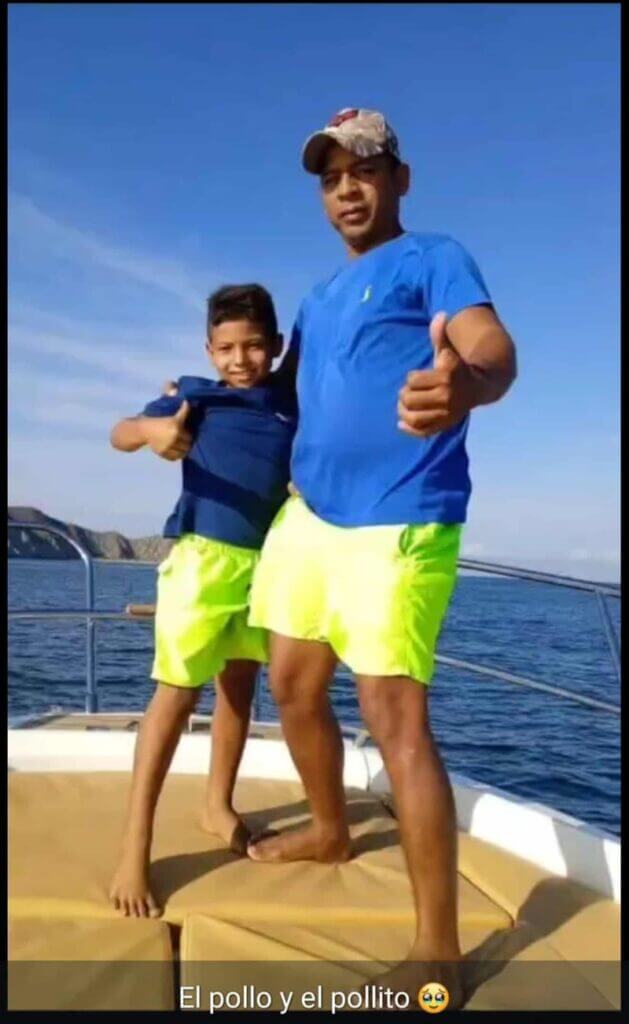
(Photograph: Courtesy of Carranza family)
The 13 newly identified men were not cartel kingpins. They were poor.
“There is no death penalty for cocaine trafficking.”
The People in the Boats
Juan Carlos Fuentes was a bus driver. After his bus broke down, he told his family he was “going to have to do something risky to see if I can make ends meet.” He left behind three children and a grandson.
Luis Ramón Amundarain drove a motorcycle taxi and fished. He had a wife and five children. He was killed alongside his cousin, Robert Sánchez.
Eduard Hidalgo was a fisherman. The U.S. had already deported him in December 2025. Then the U.S. came back and killed him.
Eduardo Jaime was, by his community’s account, a beloved indoor soccer player from Güiria, Venezuela.
Ricky Joseph was a well-known fisherman in Savannes Bay, Saint Lucia. His family lost contact with him after a bombing on February 13.
Pedro Ramón Holguín Holguín was a registered fish and seafood wholesaler in Ecuador.
Carlos Manuel Rodríguez Solórzano survived the strike on his boat long enough to be rescued by Costa Rican authorities. He died from his injuries.
Adrián Lubo, of Riohacha, Colombia, was remembered by someone who knew him as “a great captain.”
Also named: Jesús Carreño, Luis Alí Martínez, Ronald Arregocés, and Dushak Milovcic, a student at Venezuela’s National Guard Academy who, according to the report, became involved in drug transporting after starting as a lookout for smugglers.
Of the 13, only two had any documented criminal history connected to trafficking. The rest were working people in the kinds of jobs that don’t pay enough to live on in countries the U.S. has spent decades destabilizing.
The Story That Doesn’t Hold Up
The administration’s justification is that these boats were trafficking drugs to the United States — that Hegseth and Trump are protecting Americans from fentanyl and cocaine, doing what previous administrations were too weak to do.
The investigation pokes a hole in this big enough to sail a boat through.
Juan Carlos Fuentes and Luis Ramón Amundarain were traveling from Trinidad and Tobago to Venezuela when they were killed. María Teresa Ronderos, director of CLIP, spoke to The Guardian: “Boats carry drugs from South America northwards, not the reverse.” The vessel was going the wrong way to be a drug shipment to the U.S.
The U.S. Customs and Border Protection data tells the same story. Adam Isacson of the Washington Office on Latin America has tracked seizures: fentanyl interdictions at the U.S.–Mexico border had been declining sharply since mid-2023. Since the boat strikes began, those declines have stopped. Halfway through fiscal year 2026, seizures are almost exactly half of 2025’s full-year total — a flat line, not a victory.
Brian Finucane of the International Crisis Group told The Guardian the strikes were never “a serious counter-drug operation.” He called them a “military spectacle to give the illusion of the administration doing something ‘macho’ about drugs.”
What the Law Says
Even setting aside whether the targets were actually drug traffickers — and most of them clearly weren’t — the strikes are illegal.
Trump informed Congress in October that he considers the United States to be in an “armed conflict” with drug cartels. No such conflict has been formally declared. No enemy has been identified. The administration is simply asserting that the laws of war now apply to whatever boats it decides to bomb in international waters.
Steven Watt, an ACLU attorney working on the Trinidadian families’ case, told the investigators that the deaths of Joseph and Samaroo were “clearly extrajudicial killings.” A “war on drugs,” he said, cannot legally excuse killing people without trial. As Ronderos pointed out: “There is no death penalty for cocaine trafficking.” Even if every man on every boat had been guilty of exactly what the administration claims, the punishment under U.S. and international law would be prosecution and prison — not a missile.
There is also the question of the “double-tap” strikes, in which the U.S. military has reportedly attacked survivors of the initial bombings — a tactic widely considered a war crime when employed by anyone else.
What This Is Really About
John Walsh of the Washington Office on Latin America described what the administration gains by keeping the victims anonymous: “It’s a double tragedy — not only because of the unlawful killings, but because the victims are erased, reduced to anonymity.”
That anonymity is the whole point. A faceless “narco-terrorist” is easier to kill than a bus driver named Juan Carlos who couldn’t afford to fix his bus. An unnamed body in the ocean doesn’t generate a funeral, a photograph, a grieving cousin asking on camera where the drugs are.
The families know this. Chad Joseph’s great-uncle, Cecil McClean, 93, called the strike that killed his nephew “perfect murder.” His cousin Afisha Clement asked the question the administration has spent eight months refusing to answer: “If you say a boat has narcotics on it, where is the narcotics? We want evidence, we want proof. There is nothing.”
The report notes that families in Venezuela and Santa Marta, Colombia, have received threats for speaking publicly. The communities the victims came from are some of the poorest in the hemisphere. In Uribia, Colombia, where bodies have washed ashore, 92 percent of residents lack adequate education, healthcare, or basic public services. “In those conditions,” the report observes, “recruiting young men to transport cocaine is easy work — and the pay can be good.”
The young men get bombed. The people who own the cargo — “almost always outsiders, even international players,” a local boatman told CLIP — do not.
Names, Returned
The Trump administration is going to keep doing this. As recently as May 8, Hegseth announced another strike. There will be more press releases. There will be more videos of small boats erupting into smoke. The official count of dead “narco-terrorists” will keep climbing.
What the CLIP investigation does is small but important: it puts names back on a few of the bodies. Juan Carlos Fuentes. Luis Ramón Amundarain. Eduard Hidalgo. Ricky Joseph. Robert Sánchez. Adrián Lubo. Eduardo Jaime. Pedro Ramón Holguín Holguín. Carlos Manuel Rodríguez Solórzano. Jesús Carreño. Dushak Milovcic. Luis Alí Martínez. Ronald Arregocés.
Add them to Chad Joseph, Rishi Samaroo, and Alejandro Carranza Medina. That makes 16.
There are at least 176 more.
“It’s a double tragedy — not only because of the unlawful killings, but because the victims are erased, reduced to anonymity,” said John Walsh of WOLA, a Washington-based human rights organization focused on Latin America.